

Clay vs. Concrete Tile Roofs: How They Differ and Which to Choose
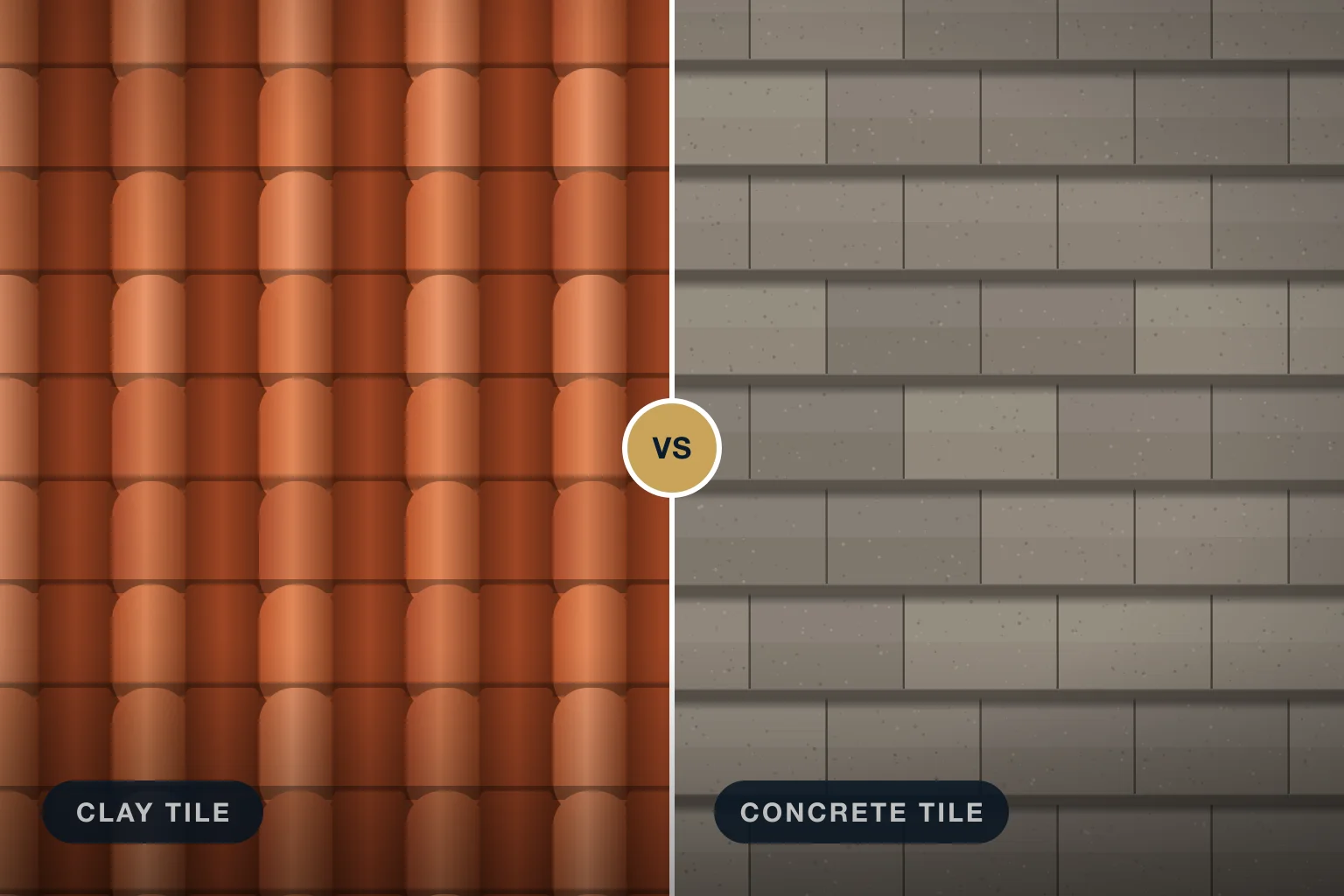
Clay vs. concrete tile is a choice most tile roof owners in Southern California face sooner or later, whether they are replacing a roof or just matching a few broken pieces. From the street the two can look alike, but they are made from different materials and behave differently on a roof.
This guide explains the differences, how to tell which you have and what to weigh when you choose.
Clay vs. Concrete Tile at a Glance
How to Tell Which Tile You Have
- Look at a broken edge. Clay is one fired color all the way through. Concrete shows gray cement and sand inside, even when the surface is colored.
- Look at the surface. Clay stays smooth and keeps its color. Older concrete tile often looks rough or sandy, with faded color.
- Check the age and style of the home. Many older Spanish Revival homes have clay tile; many newer tract homes have concrete.
- Ask a roofer. A roof inspection identifies the tile and its condition, with photos.
Stay off the roof. Tiles of both kinds crack underfoot, and a wet tile roof is slippery.
How Clay and Concrete Tile Age
Both can protect a home for decades. Clay holds its color and surface well. Concrete tile can turn brittle and porous as its surface wears away, which is one reason older concrete roofs sometimes need new tile rather than a reset.
With either one, the underlayment beneath the tile wears out well before the tile itself. Our guide to tile roof underlayment explains why, and a tile lift and relay renews it while keeping sound tiles.
Weight Matters When You Switch
Concrete tile is generally heavier than clay. Replacing clay with concrete, or putting tile on a home built for shingles, means the framing has to be checked first and may need reinforcing.
Matching Tiles for Repairs
Matching an older tile, especially a clay tile whose color has aged, can take some searching. Salvaged or close-match tiles can go on less visible slopes, so the original tiles stay where people see them. See tile roof repair.
Which Should You Choose?
Which of these sounds most like your roof? Tap a card.
Clay tile
Best when
The home’s style calls for it, or you want color that holds
Keep in mind
Usually costs more; matching aged clay takes care
Concrete tile
Best when
You want a tile roof at a lower cost, or a profile clay does not come in
Keep in mind
Heavier, and its color and surface can wear
Keep your tiles (lift and relay)
Best when
Your existing tiles are still sound
Keep in mind
Only works when the tiles can be reused
QRS installs concrete tile and clay tile roofs, and slate tile, across Los Angeles and Orange County.
Frequently Asked Questions
Which is better, clay or concrete tile?
Neither is better for every home. Clay holds its color and is generally lighter; concrete usually costs less and comes in more profiles but is heavier and can fade. The home’s style, framing and budget decide it.
Is concrete tile heavier than clay?
Generally, yes: about 820 to 1,100 pounds per 100 square feet for concrete against about 600 to 950 for clay, depending on the profile.
Can I replace a few clay tiles with concrete ones?
It is better to match the material and profile. A close match placed on a less visible slope keeps the roof looking right and sheds water the same way.
How do I know if my roof is clay or concrete tile?
A broken edge tells you: clay is one fired color all the way through, while concrete shows gray cement and sand inside. A roof inspection confirms it.
Get Your Tile Roof Checked
Book a free roof evaluation. A roofer identifies your tile, checks it and the underlayment, and gives you a written scope and price before any work.