

Tile Roof Underlayment: When Should It Be Replaced?
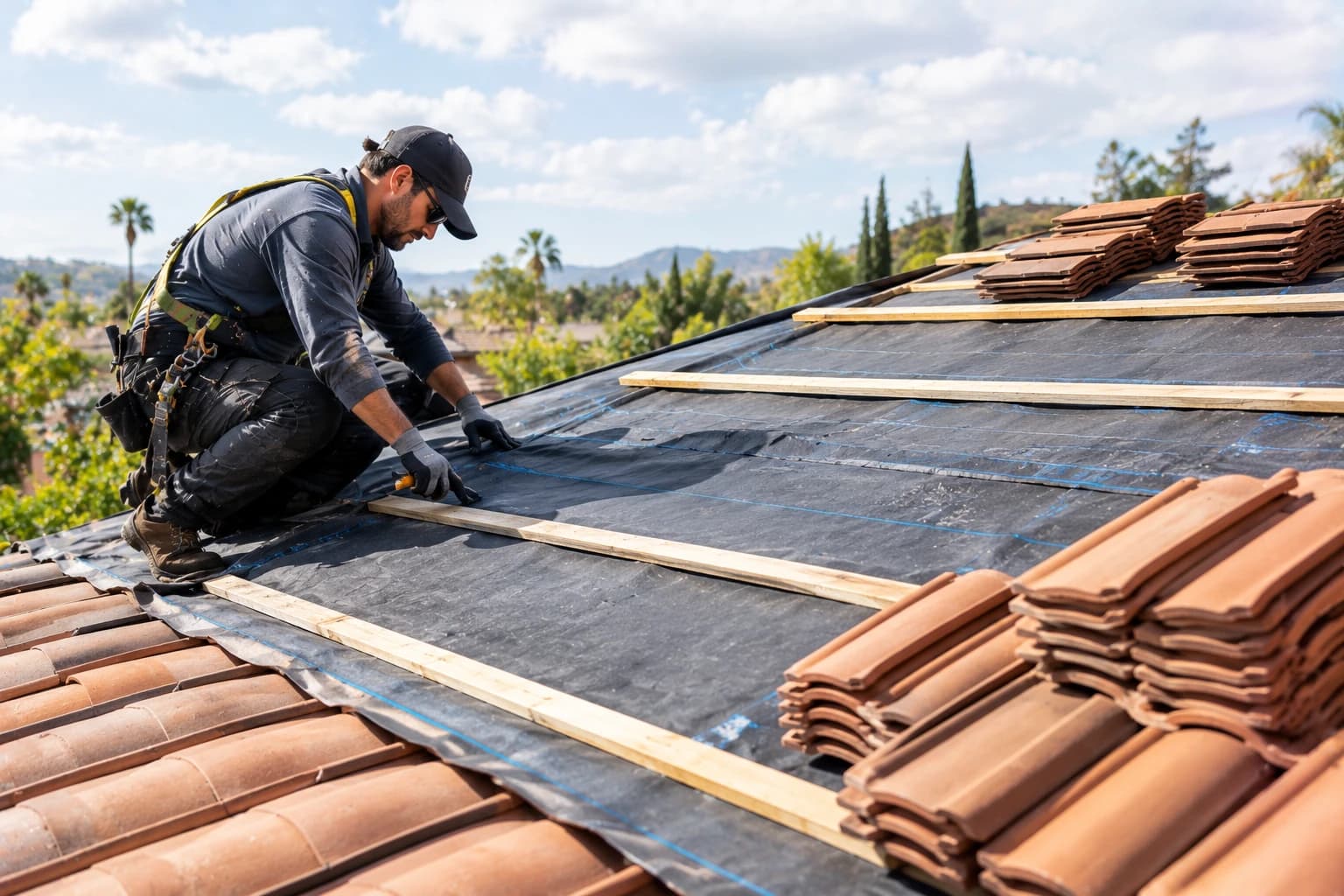
Clay and concrete roof tiles can protect a Southern California home for decades, but the waterproofing layer beneath them has a different job and a different service life.
When tile roof underlayment deteriorates, water can reach the roof deck and create leaks even when the tiles appear intact.
For homeowners in Los Angeles, understanding when underlayment needs replacement can help prevent avoidable water damage and make roof maintenance decisions more informed.
What Is Tile Roof Underlayment?
Tile roof underlayment is a water-resistant or waterproofing layer installed between the roof deck and the clay or concrete tiles.
Roof tiles shed most rainfall, while the underlayment provides a secondary line of defense against water that passes beneath the tile covering.
A complete tile roofing system also relies on properly installed flashing, valleys, penetrations, drainage paths, and sound roof decking.
California’s residential building code requires roof underlayment to meet applicable material and installation requirements, with the specific assembly depending on the roof covering and installation conditions.
The California Residential Code provides technical requirements for roof assemblies and underlayment installation.
The important distinction: Long-lasting roof tiles do not automatically mean the underlayment beneath them remains serviceable.
How Long Does Tile Roof Underlayment Last?
There is no single replacement age that applies to every tile roof.
The service life of underlayment depends on the product, installation quality, roof design, environmental exposure, and maintenance history.
Southern California’s extended periods of sun and heat, followed by seasonal rainfall, make it worthwhile to evaluate older roofing systems before leaks appear.
The following table provides a practical way to think about underlayment age without treating an estimate as a guaranteed expiration date.
| Roof condition | Recommended approach |
|---|---|
| Recently installed underlayment | Keep installation records and follow manufacturer maintenance guidance. |
| Older roof with no known leak history | Arrange an inspection if the underlayment’s age or condition is unknown. |
| Roof with recurring leaks | Investigate the source rather than assuming the tiles or underlayment are solely responsible. |
| Brittle, torn, or visibly deteriorated underlayment | Have a roofing professional assess the affected area and the wider roof assembly. |
| Roof undergoing tile replacement or major reroofing | Evaluate the deck, underlayment, flashing, and applicable code requirements together. |
A roof inspection can help establish whether the existing system remains serviceable or whether replacement should be planned.
7 Signs Your Tile Roof Underlayment May Need Replacement
Underlayment is largely concealed by the tile covering, so many warning signs appear inside the home or around other roof components.
The following symptoms warrant investigation, although none independently proves that the underlayment has failed.
Water stains on ceilings or walls
Brown discoloration, bubbling paint, peeling finishes, or damp drywall can indicate water intrusion.
The leak could originate from underlayment, flashing, damaged tiles, roof penetrations, or another part of the building envelope.
Leaks that return after repairs
A recurring leak may mean the original repair addressed the visible symptom rather than the underlying source.
Repeated repairs in the same area justify a more comprehensive roof assessment.
Deteriorated or brittle underlayment
During authorized roof work, a contractor may discover material that has become brittle, cracked, torn, or difficult to handle without damage.
These findings can indicate that the material no longer provides dependable water protection.
Cracked, displaced, or missing roof tiles
Damaged tiles can expose the underlayment to more direct weather exposure and create pathways for water intrusion.
Even a small area of displaced tiles deserves attention, particularly around ridges, valleys, roof edges, and penetrations. A targeted tile roof repair is often the fix when the layers beneath are still sound.
Problems around flashing and roof penetrations
Chimneys, plumbing vents, skylights, and wall-to-roof intersections require carefully integrated flashing and waterproofing details.
Failures in these locations can produce symptoms similar to underlayment deterioration.
Moisture or deterioration in the roof decking
Soft or deteriorated sheathing, visible water damage, and signs of persistent moisture can indicate a more extensive roofing problem.
The affected decking should be evaluated before a replacement system is installed.
An aging roof with little maintenance history
An older roof is not automatically defective, but uncertainty about the installation date, material type, and previous repairs makes an inspection more valuable.
A documented assessment can help prioritize repairs before the next period of heavy rain.
Homeowner tip: Do not lift roof tiles or walk on a sloped tile roof yourself, because tiles can break and the roof surface can be hazardous.
Why Tile Roofs Can Leak Even When Tiles Look Fine
One of the most common misconceptions about tile roofing is that intact tiles guarantee a watertight roof.
Tile coverings are designed to shed water, but wind-driven rain and water moving beneath the tiles can still reach vulnerable roof details.
The underlayment, flashing, and drainage system must work together to manage that water.
Common causes of leaks include:
A professional inspection should trace the likely water-entry path rather than automatically recommending full replacement based on a ceiling stain alone.
Homeowners can also explore roof repair services when a leak or other roofing issue needs investigation.
Can You Replace Underlayment Without Replacing the Tiles?
Yes, in many cases, existing clay or concrete roof tiles can be removed, inspected, and reinstalled with new underlayment.
This approach is commonly called a tile reset or tile lift-and-relay project.
The feasibility depends on the condition of the existing tiles, their availability, the roof deck, the roof design, and the scope of necessary repairs.
A typical project may involve the following steps:
Inspect the roof and document existing damage.
Carefully remove the tiles from the areas included in the project.
Sort and inspect the tiles for cracks, breakage, and deterioration.
Remove the existing underlayment as required by the approved scope.
Inspect the exposed roof deck and repair damaged sections where necessary.
Install the specified underlayment and address flashing and waterproofing details.
Reinstall serviceable tiles and replace unsuitable or missing pieces.
Complete a final inspection of the finished roof assembly.
Reusing existing tiles may reduce material waste and avoid the expense of purchasing a completely new tile covering.
However, it does not eliminate the labor involved in removing and reinstalling the tiles, and brittle or discontinued tiles can make the project more complicated.
The contractor should explain how tile breakage, replacement materials, deck repairs, permits, and any concealed damage will be handled.
Which Underlayment Is Right for a Tile Roof?
The appropriate material depends on the roof assembly, slope, exposure, product specifications, and applicable building requirements.
Three broad material categories commonly encountered in roofing discussions are asphalt-saturated felt, synthetic underlayment, and self-adhered modified-bitumen membranes.
Asphalt-saturated felt
- General characteristics
- Traditional sheet material used in many roofing assemblies.
- What to evaluate
- Product classification, installation requirements, and compatibility with the tile system.
Synthetic underlayment
- General characteristics
- Polymer-based sheets with product-specific strength and handling characteristics.
- What to evaluate
- Approved application, exposure limits, fastening, and compatibility.
Self-adhered membrane
- General characteristics
- Membrane with an adhesive backing designed for specified roofing applications.
- What to evaluate
- Approved use, deck compatibility, installation conditions, and required system details.
These categories are not interchangeable simply because they can be placed beneath roofing materials.
The selected product must comply with the applicable code provisions and the installation instructions for the roofing assembly.
California’s requirements can also vary with roof slope and other installation conditions, so a contractor should confirm the requirements applicable to the particular property.
For additional technical information, consult the California Building Code’s roof assembly requirements.
What Happens During Tile Roof Underlayment Replacement?
Understanding the process helps homeowners evaluate proposals and compare the scope of work between contractors.
Roof inspection and project planning
The contractor evaluates the tile covering, roof geometry, visible damage, flashing, access, and known leak locations.
The assessment should identify areas requiring closer examination and clarify what is included in the proposed work.
Tile removal and sorting
Tiles are removed in a controlled sequence and sorted for potential reuse.
The quantity of reusable tile depends on its actual condition, availability of matching replacements, and the handling requirements of the project.
Roof deck evaluation
Once the existing roofing layers are exposed, the contractor can inspect the deck for water damage, deterioration, and other conditions that were previously concealed.
Any necessary repairs should be documented and addressed before the new roofing layers are installed.
Underlayment and flashing installation
The roofers install the specified underlayment according to the approved system and manufacturer instructions.
Roof edges, valleys, penetrations, walls, and other transitions require appropriate attention because these details can be vulnerable to water intrusion.
You can see tile-rated underlayment going down beneath new clay tile in our Mid-Wilshire tile roof project.
Tile reinstallation and final inspection
Serviceable tiles are reset, unsuitable tiles are replaced as agreed, and the completed work is inspected.
The contractor should explain the applicable workmanship warranty, product warranty, and any maintenance recommendations.
A clear proposal should distinguish the planned work from repairs that may be necessary after concealed conditions are discovered.
What Affects Replacement Costs?
There is no reliable single price for tile roof underlayment replacement without understanding the property and the scope of work.
Two homes with similar roof areas can have substantially different project requirements.
The following factors can influence the estimate:
- Roof size
Larger roof areas generally require more labor and materials.
- Roof complexity
Multiple slopes, hips, valleys, and penetrations can increase installation time.
- Tile condition
Fragile, damaged, or discontinued tiles can complicate removal and reinstallation.
- Underlayment selection
Material type, product specifications, and required layers affect material costs.
- Deck repairs
Damaged sheathing or structural components can add work beyond the original scope.
- Flashing and waterproofing details
Defective or outdated components may need replacement or modification.
- Access and site conditions
Steep slopes, limited access, landscaping, and property layout can affect labor requirements.
- Permits and code compliance
Applicable local requirements and project conditions may affect the work and documentation.
When comparing estimates, check whether each proposal includes tile removal, disposal, underlayment, deck repairs, flashing, tile replacement allowances, cleanup, and final inspection.
A lower initial estimate may cover a different scope of work, so comparing the line items is more informative than comparing the total alone.
For homeowners considering broader roofing work, tile roof replacement and our other roof replacement services provide related options to explore, and roof financing can spread the cost of a larger project.
Preparing Your Tile Roof for Southern California’s Rainy Season
Los Angeles homeowners often experience long dry periods between seasonal rainfall events.
That weather pattern can make roof maintenance easy to postpone until a leak becomes visible indoors.
Planning an inspection before significant rain provides an opportunity to identify visible problems and determine whether additional investigation is needed. A roof maintenance plan can schedule that visit every year before the rains.
Use this checklist as a starting point:
A visual check from the ground cannot establish the condition of concealed underlayment.
If your roof is older, has a history of leaks, or has an unknown maintenance history, a professional assessment can help determine the appropriate next step.
Frequently Asked Questions
How often should tile roof underlayment be replaced?
There is no universal replacement interval for every tile roof. The appropriate timing depends on the installed product, roof conditions, installation quality, maintenance history, and evidence of deterioration.
Can tile roof underlayment fail before the tiles do?
Yes, because the tile covering and the underlying waterproofing layer serve different functions and can age at different rates. A roof can retain many serviceable tiles while the underlayment requires attention.
Does a leaking tile roof always need new underlayment?
No, because leaks can also result from cracked tiles, flashing defects, blocked drainage, and improperly sealed roof penetrations. The source of the leak should be identified before the repair scope is determined.
Can old roof tiles be reused after underlayment replacement?
Often, yes, provided the tiles are in suitable condition and compatible replacement pieces are available when needed. The contractor should assess tile condition and explain the expected reuse and replacement allowances before work begins.
Is synthetic underlayment always better than felt?
Not necessarily, because product performance depends on the specific material, approved application, installation quality, and roof assembly. The appropriate choice should be based on the property’s requirements rather than the material category alone.
Does underlayment replacement require a permit in Los Angeles?
Permit requirements depend on the property’s jurisdiction and the proposed scope of work. Homeowners should confirm the applicable requirements with the relevant building department and contractor before work begins.
Should underlayment be inspected after every major storm?
Not every storm requires a professional roof inspection, but visible damage, new interior leaks, displaced tiles, or recurring water intrusion warrant prompt assessment, and an active leak calls for emergency roof repair. Avoid walking on the roof or attempting to remove tiles to investigate a suspected problem.
Protect the Roof Beneath Your Tiles
The condition of your tile roof underlayment matters just as much as the appearance of the tiles above it.
Recognizing warning signs, investigating recurring leaks, and documenting the condition of an aging roof can help homeowners plan repairs before water intrusion causes additional damage.
Quality Roofing Specialists provides roofing services for residential properties in the Los Angeles area, including roof inspections, tile roof repairs, and roof replacement.
If you are unsure about the condition of the waterproofing beneath your tiles, schedule a free roof evaluation to determine whether maintenance, targeted repairs, or underlayment replacement is appropriate.
Contact Quality Roofing Specialists to discuss your tile roof and plan the next steps for protecting your home.
