
Commercial Roof Inspection Checklist: What to Check and How Often
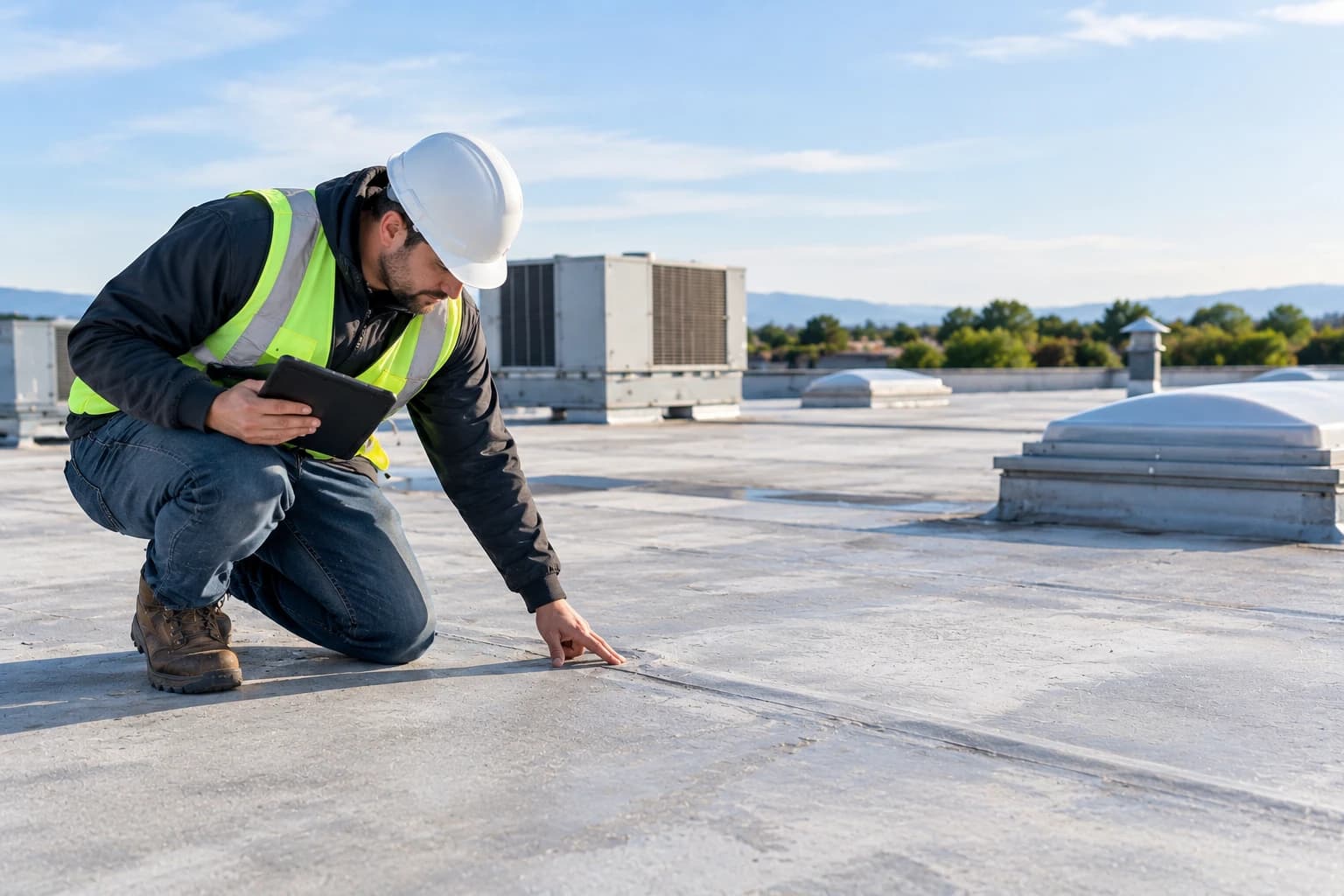
A commercial roof inspection finds small problems while they are still inexpensive to fix. A clogged drain, a lifted seam or a cracked flashing is a minor job today and an interior leak after the next rain.
Owners and property managers can do a basic walk-through safely from the ground and from inside the building. A fuller inspection of the roof itself belongs to a roofer, because working on a roof is dangerous without training and fall protection.
This checklist covers what to check, how often to inspect and what a roofer-led survey should deliver.
How Often to Inspect a Commercial Roof
A good rule is at least twice a year, and after any major storm.
- Before the rainy season
Find and fix weak points while the weather is dry.
- After the rainy season
Check for damage and wear the winter exposed.
- After major storms or high winds
When you buy or lease a building, so you know the roof’s condition up front.
Before a manufacturer’s warranty period ends, if your roof has one.
The Commercial Roof Inspection Checklist
A roofer works through the following on the roof itself. You can check the first and last items yourself.
Safety: Do not send staff onto a roof without fall protection and training. Roof edges, skylights and wet surfaces are serious hazards.
What a Roofer-Led Roof Survey Should Include
A professional survey should leave you with more than a verbal “it looks fine.”
- Photos of each area of the roof, including problems.
- A plain-English report on the condition of the roof.
- A list of what needs attention now and what can wait.
- A written scope and price for any recommended work.
- One clear next step: repair, maintain or replace.
At Quality Roofing Specialists, every commercial project starts with a roofer-led survey, with photo-documented findings for owners and property management clients.
Keep a Record
A simple log makes decisions easier. Keep dated photos and reports for each inspection, along with a note of repairs and who did them.
The record shows how the roof is aging, helps you budget for repairs or replacement, and supports any warranty or insurance claim. If your roof has a manufacturer’s warranty, check whether it requires regular maintenance.
Inspection vs. a Maintenance Plan
An inspection looks at the roof once and tells you its condition. Maintenance goes further, with regular visits that clear drains and gutters, reseal flashing where needed and catch early wear.
Our commercial roof maintenance starts with a baseline roof survey, and every visit ends with a photo report for owners, managers or boards.
Frequently Asked Questions
How often should a commercial roof be inspected?
At least twice a year, before and after the rainy season, and after any major storm or windstorm.
Who should inspect a commercial roof?
A roofer. Staff can do a ground-level and indoor walk-through, but the roof itself is best checked by someone trained, with fall protection.
What does a commercial roof inspection report include?
Photos, a plain-English description of the roof’s condition, what needs attention now and what can wait, and a written scope and price for recommended work.
Does a roof inspection find leaks?
It can find the causes of leaks, such as open seams, failed flashing and clogged drains, and often finds problems before they leak. If you already have a leak, see our guide to commercial roof leak repair.
Do you inspect roofs for buyers and tenants?
A roofer-led survey gives owners, managers and tenants a photo record of the roof’s condition, which is useful when buying, selling or leasing a building. Contact us to set one up.
Inspect Before the Rain, Not After the Leak
A regular commercial roof inspection is one of the least expensive ways to protect a building.
Quality Roofing Specialists provides commercial roof maintenance, commercial roof repair and commercial roof replacement across Los Angeles and Orange County.
To start, request a roofer-led roof survey and get photos, a plain-English report and one clear next step.
Contact Quality Roofing Specialists to schedule a commercial roof survey.