

The Roof Replacement Guide: From First Inspection to Final Walkthrough
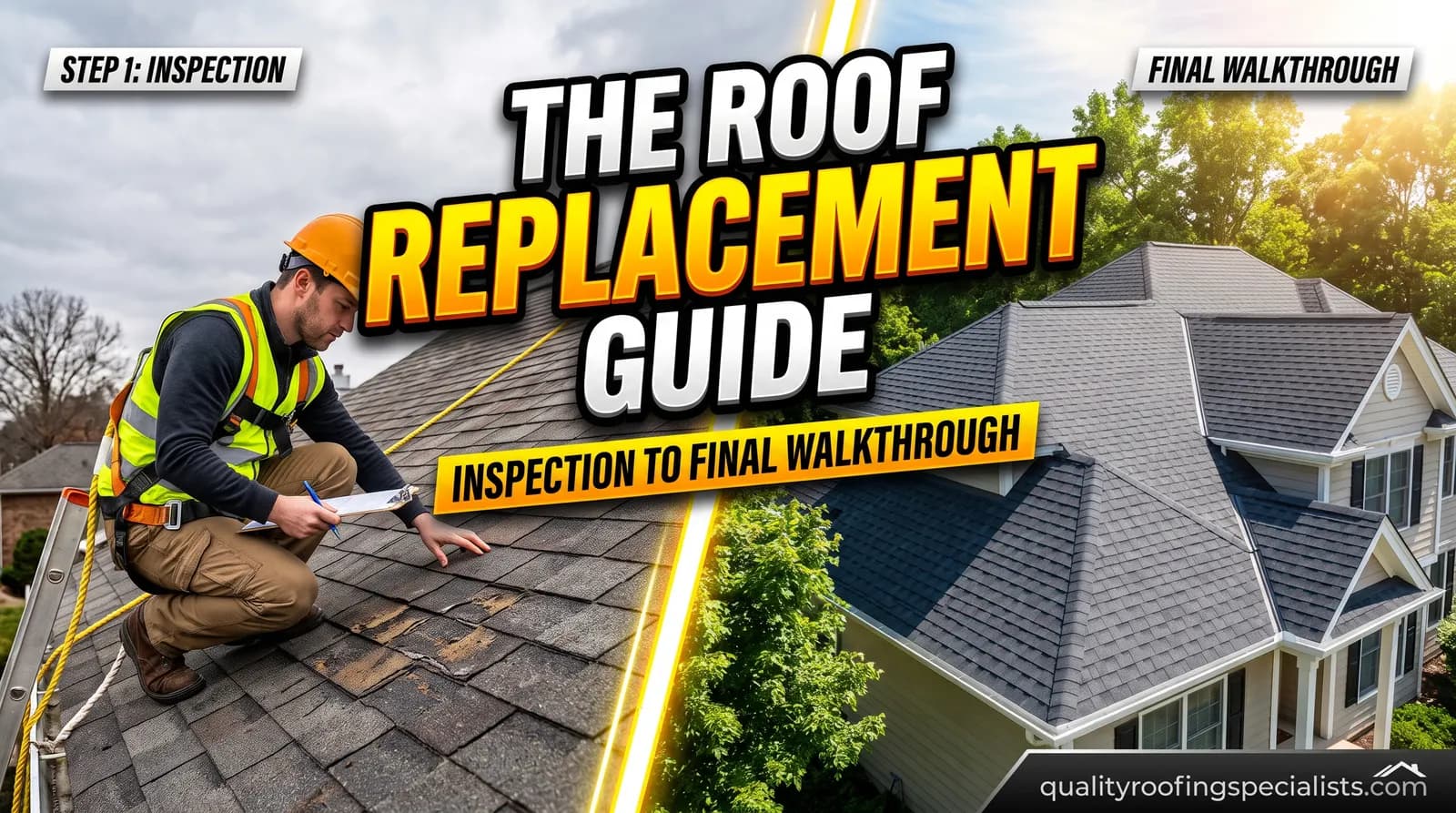
This roof replacement guide walks you through the whole job, from the first inspection to the final walkthrough, the way we explain it to homeowners, so you know what to ask and what to expect at each step.
It is our advice for any homeowner, whoever you hire. For how QRS replaces roofs, see our roof replacement page.
Step 1: Decide Whether You Need a New Roof
Not every old roof needs replacing, and we will tell you when yours doesn’t. A leak at one flashing, a few damaged shingles or broken tiles are repairs. A new roof makes sense when the wear is spread across the whole roof and repairs buy less time each round.
| Usually a repair | Usually a replacement |
|---|---|
| One leak with a clear source | Leaks in several places, or the same one returning |
| A few damaged shingles or tiles | Granule loss, curling or brittle shingles across the roof |
| One failed flashing or pipe boot | A soft or damaged deck in several areas |
| Sound tiles over worn underlayment (a lift and relay) | Brittle tiles, or a change of roof type |
Our guide to roof restoration vs. replacement goes deeper, and on a tile roof a lift and relay can renew the underlayment without new tiles.
Step 2: Get the Roof Inspected
In our view, a good inspection is done by a roofer on the roof, not from a ladder or a photo of the house. You should come away with photos of what was found, a plain-English explanation and a clear recommendation: repair, monitor, maintain or replace.
- Who will look at the roof, and will they go up on it?
- Will I get photos of what you find?
- Will you tell me if a repair is enough?
- Will the price be in writing before any work?
At QRS this is a free roof evaluation with drone photos, explained on our roof inspection page.
Step 3: Compare Bids Line by Line
Two bids with different totals often describe different jobs. Lay them side by side and compare what each one includes, line by line. These are the lines we would check:
| Line item | What to look for |
|---|---|
| Tear-off | Down to the deck, or new layers over the old roof |
| Decking | How damaged decking is found, shown to you and priced |
| Underlayment | Which product, named in the bid |
| Flashings | Which ones are replaced rather than reused |
| Ventilation | Whether vents and attic ventilation are included |
| Permit | Who pulls it |
| Cleanup | Site protection, daily cleanup and nail sweeps |
| Warranty | The workmanship warranty, and the manufacturer’s |
Our roof replacement cost article explains what moves the price and how to read a bid.
Step 4: Permits and Paperwork
A roof replacement usually needs a building permit from your city or county, and the work may be inspected. Ask who pulls it; at QRS, we pull the permits.
This is also the time to settle how you will pay. Our guide on how to pay for a new roof covers savings, financing and insurance, and if storm damage is involved, our guide to roof insurance claims explains the process.
Step 5: Tear-Off Day
Tear-off is the loudest, messiest day of the job. We cover the landscaping and the sides of the house, take the old roofing off down to the deck and send the debris straight into a bin or truck. What we ask homeowners to do before we start:
- Move cars out of the driveway and away from the walls
- Take pictures and fragile items off the walls inside, since hammering carries
- Cover things stored in the attic
- Keep pets and children inside or away from the work
- Let your neighbors know
Step 6: When the Deck Is Bad
The deck, the sheathing under the roof, is hidden until the old roof comes off. Soft spots, rot and delaminated sheets show up then, and on older homes, wide planks with gaps between them. New roofing laid over a bad deck doesn’t hold its nails well and can sag.
When we find damaged decking, we photograph it while it is open, explain it and replace it. On a home in Pico Rivera we covered a gapped plank deck with new sheathing, and on a building in Westminster new plywood went in where the deck needed it. Ask every bidder how decking is handled and priced.
How Long a Roof Replacement Takes
A typical home roof replacement takes 3 to 5 days. A bigger roof, a tile roof, deck repairs, rain and city inspections can add time. Ask for a schedule up front, and how the roof will be protected if rain is coming.
Step 7: Cleanup and the Final Walkthrough
We clean up every day, not just at the end, with magnetic sweeps for nails around the house and yard. When the roof is done, we walk it with you, or walk the yard and go through the photos of each stage. What to check before you sign off:
- Photos of the deck, underlayment and flashings before they were covered
- No nails or debris in the driveway, yard or gutters
- Vents, pipe boots and flashings finished
- Your warranty paperwork and permit sign-off
Warranties: Workmanship and Manufacturer
A new roof usually carries two warranties. The roofer’s workmanship warranty covers how the roof was installed; the manufacturer’s warranty covers the materials, and what it covers depends on the product and its warranty tier. Keep both with your home records.
QRS backs its installs with a 10-year workmanship warranty (call for details).
Frequently Asked Questions
How long does a roof replacement take?
A typical home roof replacement takes 3 to 5 days. Size, roof type, deck repairs, weather and inspections can change that.
Who pulls the permit for a roof replacement?
Usually the roofer. Ask before you sign; at QRS we pull the permits.
What happens if the decking is damaged?
It is found when the old roof comes off. It should be photographed, explained and replaced before the new roof goes on. Ask each bidder how they handle and price it.
Can a new roof go over the old one?
Some roofs can take a second layer, but a tear-off down to the deck lets the deck be checked and repaired and gives the new roof a clean base. Our replacements are tear-offs.
What warranty comes with a new roof?
Usually a workmanship warranty from the roofer and a manufacturer’s warranty on the materials. QRS installs carry a 10-year workmanship warranty (call for details), and manufacturers’ warranties vary by product.
Start With a Roof Evaluation
Book a free roof evaluation. A roofer tells you whether a repair is enough or a new roof makes sense, and gives you a written scope and price before any work. See how we run a roof replacement.
