

How to File a Roof Insurance Claim in California: Step-by-Step (and When to Bring in a Roofer)
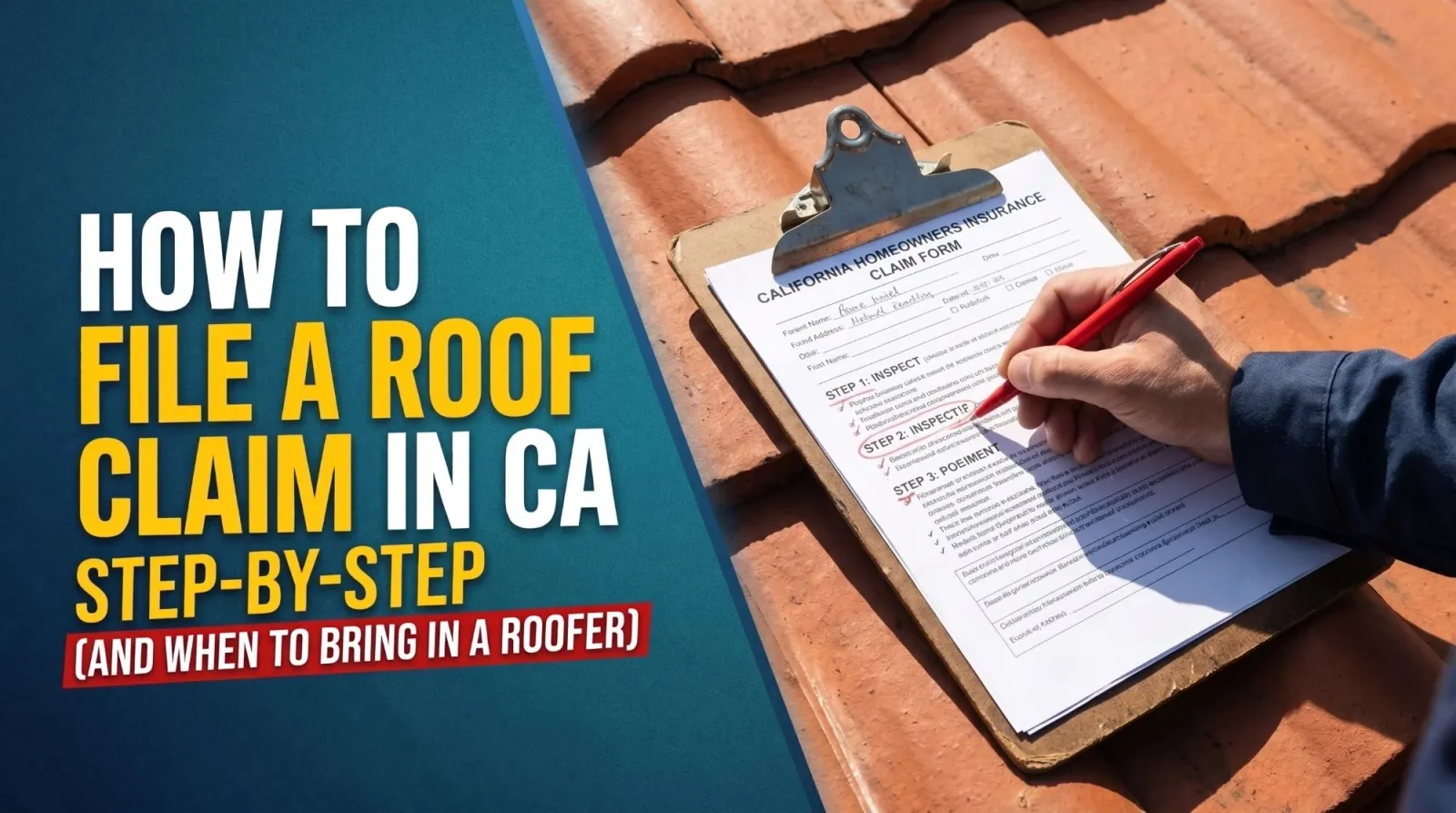
To file a roof insurance claim in California, make the roof safe, photograph the damage, report the loss to your insurer promptly, get a roofer’s written inspection report, and meet the adjuster with that report in hand. Your insurer decides whether the claim is paid. What you control is how well the damage is documented and how quickly the roof is protected.
This guide covers what homeowners insurance usually pays for, each step of a roof claim, the deadlines California insurers must meet, what happens at the adjuster visit, and how we can help as your roofer. Altadena and other fire-area homeowners will find a section of their own near the end.
This is general information, not legal or insurance advice. Policies differ, so read yours or ask your agent.
Does Insurance Cover Roof Replacement in California?
Insurance can cover a roof replacement when the damage came from a sudden, covered event and your policy’s terms allow it. It generally won’t pay to replace a roof that is simply old or worn out.
| Usually covered | Usually not covered |
|---|---|
| Wind damage, such as lifted or torn-off shingles and tiles | Normal wear and tear and age |
| A fallen tree or limb | Damage from skipped maintenance |
| Fire, smoke and heat damage | Slow leaks that went unrepaired |
| Hail and other sudden storm damage | Earthquake damage, unless you carry separate earthquake coverage |
The line between sudden damage and wear is where most roof claims are won or lost. A tile roof whose underlayment has been failing for years, for example, may leak after the first big storm, but the insurer may decide the cause was age rather than the storm. That’s why a written report on the cause of the damage matters so much, and why an old tile roof often needs a tile lift and relay whatever the claim decides.
A roof’s age can also change how a claim is paid. Some policies pay replacement cost, while others pay actual cash value, which subtracts depreciation for an older roof. Check your declarations page for your deductible and how roof damage is valued.
How to File a Roof Insurance Claim in California, Step by Step
These steps work for storm, wind, tree and fire damage, and for small claims and large ones.
Stay safe
Don’t climb onto a damaged roof. Keep away from fallen power lines and from water near light fixtures.
Photograph everything before anything is moved
Take wide and close-up photos and video from the ground, inside the house and in the attic if you can reach it safely. Capture ceiling stains, wet insulation, debris in the yard and any broken tiles or shingles.
Prevent further damage
Have a roofer tarp or temporarily seal the roof, and keep every receipt. Most policies expect you to take reasonable steps to stop the damage from getting worse. See our guide to temporary roof repair options, or call us for emergency roof repair.
Report the loss promptly
Call your insurer or agent, or file online. Write down your claim number, the date you reported it, and the name and contact details of your assigned adjuster.
Get a roofer’s inspection and written scope
A licensed roofer can identify the cause, document it with photos and put the repair and its price in writing.
Keep damaged materials
If it’s safe, hold on to broken tiles, torn shingles and wet underlayment until the adjuster has seen them.
Meet the adjuster
Walk them through your photos and share your roofer’s report. Ask whether your roofer can be on site for the visit.
Review the estimate
Compare the insurer’s estimate with your roofer’s scope line by line. If something is missing, ask in writing and send supporting documentation.
Keep a claim file
Save every email, letter, photo, receipt and note of each phone call, with the date and the name of the person you spoke to.
Roof Insurance Claim Help: Who Does What
Most homeowners file a roof claim once or twice in their lives, so it helps to know who handles which part. Getting the right help from the right person is most of the battle.
| Who | What they do in a roof claim |
|---|---|
| You, the homeowner | Report the damage to your insurer promptly, protect the roof and the house from more damage, keep every receipt and decide who to hire. |
| Your insurer and adjuster | Inspect the damage for the insurance company, decide what your policy covers and calculate the payment, including your deductible and any depreciation. |
| Your roofer | Inspects the roof, photographs the damage, explains the likely cause, tarps it when needed and gives you a written scope and price to share with the adjuster. Then does the repair or replacement once you approve it. |
| A licensed public adjuster (optional) | Represents you in the claim and negotiates with the insurer, for a fee. |
| California Department of Insurance | Helps if you have a problem with how your insurer is handling the claim. |
What to Have Ready Before You Call Your Insurer
- Your policy number and your agent’s or insurer’s claim line
- The date of the storm or the day you first saw the damage
- Wide and close-up photos of the roof, taken from the ground or by a roofer, and of any water inside
- A list of interior damage: stained ceilings, wet insulation, damaged belongings
- Receipts for anything you paid to protect the house, such as a tarp or water cleanup
- A roofer’s written inspection report, if you already have one
California Claim Timelines: What Your Insurer Must Do and When
California’s Fair Claims Settlement Practices Regulations set deadlines insurers must meet. The main ones for a roof claim:
| Deadline | What the insurer must do |
|---|---|
| 15 days after you report the claim | Acknowledge it, send any forms you need, and begin investigating |
| 15 days after you write or call | Respond to your questions and communications |
| 40 days after receiving proof of claim | Accept or deny the claim, in whole or in part, and explain any denial in writing |
| 30 days after accepting the claim | Pay the undisputed amount |
| 60 days before a deadline that affects your rights | Notify you in writing of time limits to collect more benefits or file suit |
The 40-day clock starts when the insurer receives your proof of claim, not when the damage happened. That’s one more reason to send documentation early and keep a record of what you sent and when.
If your insurer misses these deadlines or you have a problem with your claim, you can contact the California Department of Insurance for help or file a complaint. Your policy also sets its own deadline for reporting a loss, so report damage promptly rather than waiting.
Sources: United Policyholders, Insurance Claim Rules in California; California Department of Insurance.
The Adjuster Visit: What to Expect
After you report the loss, your insurer usually sends an adjuster to inspect the damage and write an estimate. Depending on the roof’s pitch and condition, the adjuster may inspect from the roof itself, from a ladder or by drone.
- Have your file ready
your photos, the date of the storm or event, receipts for emergency repairs and your roofer’s written report.
- Show the inside, too
point out ceiling stains, wet insulation and attic damage, which an adjuster focused on the roof can miss.
- Ask if your roofer can attend
a roofer on site can point out damage the adjuster might not see from a ladder, such as cracked tiles under the top row or torn underlayment.
- Ask questions in writing afterward
if the estimate leaves out items, ask why and send your roofer’s documentation.
The insurer’s estimate may differ from your roofer’s. That’s normal, and it’s often a matter of scope, such as whether damaged tiles can be matched or whether the underlayment beneath them must be replaced too. Your policy decides how the payment is calculated, including your deductible and any depreciation.
When to Bring In a Roofer, and How an Inspection Report Helps
Bring in a roofer as soon as the roof is safe to inspect, ideally before the adjuster visits. A licensed roofer’s written report gives the adjuster evidence they can act on. A good inspection report includes:
- Dated photos of the damage, close-up and wide
- The likely cause, explained in plain English, such as wind uplift, impact from a branch or heat damage
- Measurements of the affected area
- A written scope of the repair or replacement, with a price
- Notes on anything hidden, such as damaged underlayment, decking or flashing
That report helps answer the question most roof claims turn on: was this sudden damage, or wear and tear? It is what our roof inspection gives you: photos of what we find, the cause in plain English and a written scope and price.
What a Roofer Can and Cannot Do
A roofer can inspect the roof, document the damage, explain the cause and give you a written scope and price to share with your adjuster. At Quality Roofing Specialists we work with insurance adjusters, and we can give you that documentation; our team is small, so we help where we can.
A roofing contractor cannot file or negotiate your claim for you. That is between you and your insurer, or a licensed public adjuster if you choose to hire one. Be wary of anyone who knocks on your door after a storm and promises insurance will pay for a new roof.
Altadena and Fire-Area Homeowners: What’s Different
If your home survived the Eaton fire or another wildfire, your roof may still be damaged in ways you can’t see from the ground. Smoke, ash and radiant heat can affect roofing even when there are no flames on the house.
What to have a roofer check on a fire-area roof:
- Cracked or heat-stressed clay and concrete tiles
- Warped or discolored metal flashing, vents and gutters
- Melted or brittle underlayment, especially near ridges and vents
- Ember entry points at vents, eaves and gaps under tiles
- Ash and debris packed into valleys, gutters and under tile rows
Don’t power-wash ash off the roof yourself. Ash from burned structures can contain hazardous materials, and cleaning it away before it’s documented can remove evidence of damage. Photograph it first, and let your insurer know before cleanup. We work in Altadena’s neighbor Pasadena and across Los Angeles County.
New California Rules on Smoke Damage Claims
In September 2026, Governor Newsom signed AB 1795, the Smoke Damage Recovery Act. According to the California Department of Insurance, the law:
- Presumes smoke damage within a wildfire impact zone was caused by the wildfire
- Requires insurers to pay for necessary testing and sampling
- Prevents insurers from ending Additional Living Expense benefits until qualifying homes are restored and safe to occupy
- Sets timelines for inspections and claim handling
- Preserves your right to choose your own restoration contractors
- Requires training for adjusters who handle smoke damage claims
The law takes effect January 1, 2027, and several technical standards will be developed over the following years. Ask your insurer or the Department of Insurance how it applies to your open claim.
Other special rules can also apply after a declared state of emergency, including extra time to collect your full replacement cost benefits. United Policyholders publishes free guidance for wildfire survivors.
Common Mistakes With Roof Insurance Claims
- Throwing away damaged material or cleaning up before taking photos
- Waiting to report the loss or to protect the roof
- Signing a repair contract before you understand what your policy covers
- Assuming earthquake damage is covered by a standard policy
- Hiring anyone who goes door to door after a storm and promises the claim will be approved
For help recognizing damage in the first place, see our guide to roof storm damage signs, and if water is already coming in, how to find the source of a roof leak.
Frequently Asked Questions
How do I file a claim for roof damage?
Make the roof safe, photograph the damage, and report the loss to your insurer by phone, online or through your agent. Get a roofer’s written inspection report, then meet the adjuster and compare their estimate with your roofer’s scope. Keep a record of every document and conversation.
How do I file an insurance claim for storm roof damage in California?
The steps are the same as any roof claim, but act quickly. Note the date of the storm, photograph damage before cleanup, and have a roofer tarp the roof to prevent more water damage. California insurers must acknowledge your claim within 15 days and accept or deny it within 40 days of receiving proof of claim.
Does insurance cover roof replacement in California?
It can, if a covered event such as wind, a fallen tree or fire damaged the roof and your policy’s terms allow replacement. Insurance generally won’t pay to replace a roof that is simply old or worn out. Your insurer decides, based on your policy and the cause of the damage.
Does homeowners insurance cover a leaking roof?
It depends on why it leaks. A leak caused by a sudden, covered event is often covered. A leak from age, wear or skipped maintenance usually isn’t. Get the cause documented in writing before anything is repaired.
How long do I have to file a roof insurance claim?
Your policy sets the deadline for reporting a loss, and policies differ. Report damage as soon as you can. Waiting can also let damage spread, which makes it harder to show what the original event caused.
Do I need an insurance-approved roofer?
Ask your insurer whether your policy has any rules about contractors. Whoever you hire should hold an active California contractor license, carry insurance, and give you photos and a written scope you can share with your adjuster. You can check any contractor’s license on the Contractors State License Board website; ours is on our credentials page.
Can a roofer handle my insurance claim for me?
No. A roofing contractor can inspect, document and give you a written scope and price, but cannot file or negotiate the claim for you. For full claim representation, you can hire a licensed public adjuster, who charges a fee.
What does roof insurance claim help from a roofer include?
An inspection of the roof, dated photos of the damage close-up and wide, the likely cause in plain English, a tarp when needed to stop more damage, and a written scope and price you can give your adjuster. A roofer can’t file or negotiate the claim; that’s between you and your insurer, or a licensed public adjuster.
Should I call my insurer or a roofer first?
Report the damage to your insurer promptly, since policies set deadlines for that. Then have a roofer inspect the roof, ideally before the adjuster visits, so the damage and its cause are documented with photos when the adjuster arrives.
Where can I get help with a roof insurance claim?
Your insurer and your agent explain your policy, and the California Department of Insurance can help if you have a problem with a claim. A licensed public adjuster can handle the claim for you, for a fee. A roofer helps with the evidence: photos of the damage, the cause in plain English and a written scope and price for your adjuster.
Will filing a roof claim raise my insurance rates?
It can, depending on your insurer and your claim history. Ask your agent before filing if you’re unsure.
Does insurance cover earthquake damage to a roof in California?
A standard homeowners policy generally does not. Earthquake damage usually requires separate earthquake coverage.
What if my insurer denies my roof claim?
Ask for the denial and its reasons in writing. You can send more documentation, ask for a re-inspection, request a copy of your claim file, or contact the California Department of Insurance for help.
Document First, Then Repair
A thorough record of the damage and a clear written scope make roof insurance claims easier for everyone involved.
Quality Roofing Specialists provides emergency roof repair, roof repair, roof replacement and roof inspections for homes across Los Angeles and Orange County, including Pasadena and its neighbors. If your roof has been damaged, schedule a free roof evaluation: a roofer will photograph the damage, explain the likely cause and give you a written scope to share with your adjuster.
This article is general information, not legal or insurance advice. Your policy and your insurer determine what is covered.
Contact Quality Roofing Specialists to get your roof inspected.
