
Fire-Resistant Roofs in Los Angeles: Class A Roofing, Vents and Embers
A fire-resistant roof matters in Los Angeles, where homes sit against brush-covered hills and canyons and fire season comes with strong, dry winds. During a wildfire, burning embers can travel far ahead of the flames and land on roofs, in vents and in piles of dry leaves.
This guide explains what a Class A fire rating means, which roofing materials reach it, the weak spots where embers get in and what you can check before fire season.
Why Embers Are the Biggest Threat to a Roof
Fire researchers have found that many homes lost in wildfires are ignited by wind-blown embers and small fires they start, not by the main fire front. Embers settle in roof valleys, against walls and in debris, and they get into attics through open vents and gaps.
So a fire-resistant roof is two things: a covering that won’t catch fire easily, and details that keep embers out.
What a Class A Fire Rating Means
Roof coverings are rated Class A, B or C in standard fire tests. Class A is the highest rating: the roof resists severe fire exposure from outside.
| Material | Fire rating |
|---|---|
| Clay and concrete tile | Class A |
| Metal | Class A (noncombustible panels; some as part of a rated assembly) |
| Asphalt shingles (fiberglass) | Most are Class A |
| Wood shakes | Untreated shakes are not Class A; treated ones can reach a higher rating with special underlayment |
Some materials reach Class A only as part of a tested assembly, with a specific underlayment. Our guide to wooden roof pros and cons covers wood in more detail.
California’s Rules for Homes in Fire Zones
In California’s fire hazard severity zones, the building code (Chapter 7A) sets wildfire-resistant requirements for roofs, vents and other parts of a home, and a roof replacement may have to meet them. The permit for the job confirms which rules apply to your address.
In a fire hazard zone, attic and soffit vents have to be fire-rated and listed by the State Fire Marshal.
Where Embers Get Into a Roof
- Attic, soffit and gable vents. Open or torn screens let embers into the attic. Ember-resistant vents use fine metal mesh or baffles. See attic ventilation.
- The open ends of tile at the eaves. Barrel tiles leave gaps at the eave where embers and debris collect; eave closures (bird stops) close them.
- Gaps at ridges and hips where caps have slipped or cracked.
- Valleys and corners full of leaves and needles, which catch embers and burn.
- Missing or broken pieces that expose the underlayment and deck.
Before Fire Season: What to Check
- Clear leaves, needles and debris from the roof, the valleys and against walls.
- Look for torn, clogged or missing vent screens.
- Check that tile eave closures are in place.
- Replace cracked, slipped or missing tiles and shingles.
- Trim branches that hang over the roof.
- Photograph the roof so you have a record of its condition.
Our Roof Care Plan includes a fire-code vent check: attic and soffit vent screens and eave closures checked and photographed.
Stay off the roof. Look from the ground or a secure ladder at the eaves, and leave climbing to a roofer.
Replacing a Roof With Fire in Mind
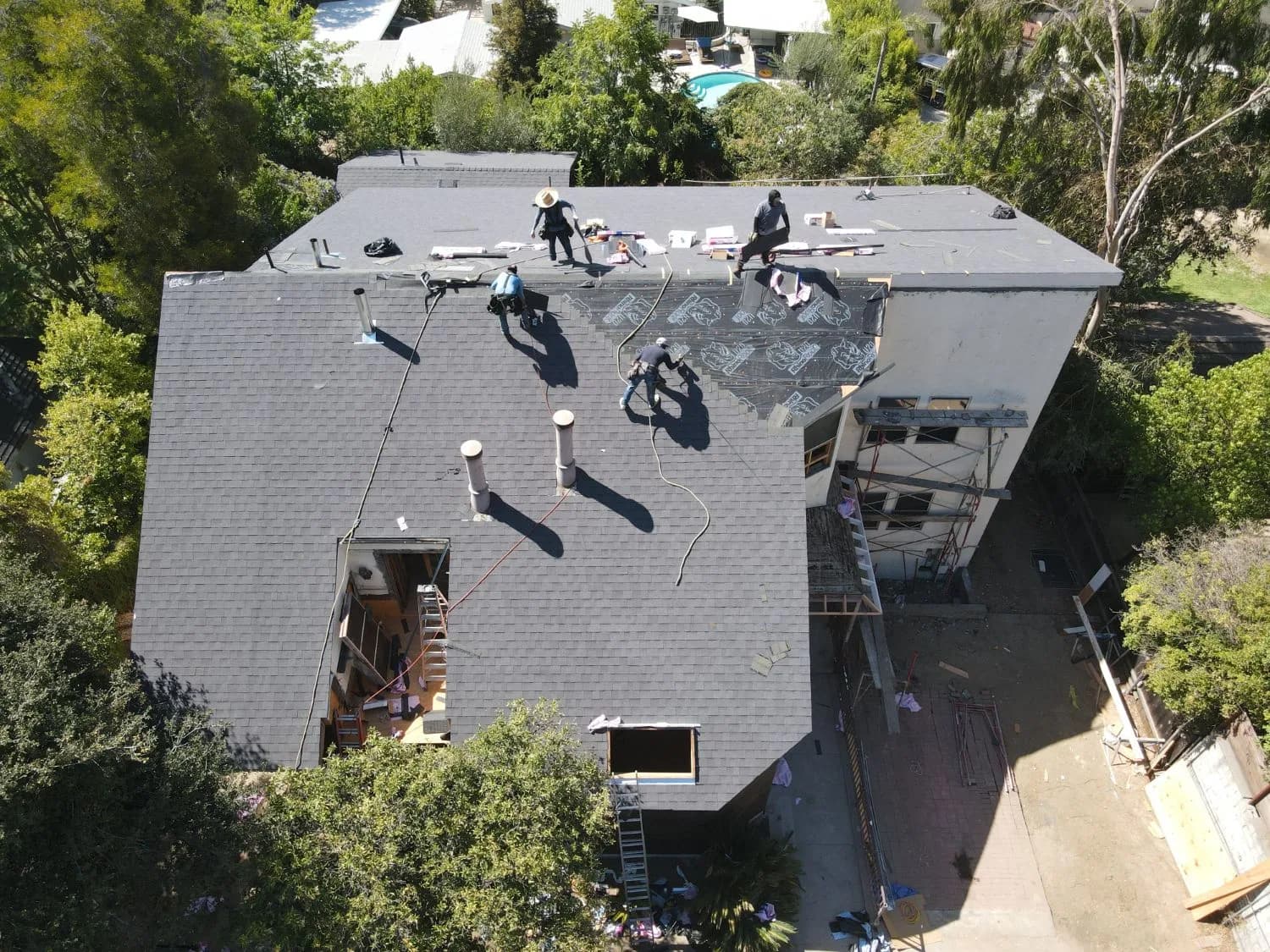
When a roof is due for replacement, it is the moment to choose a Class A covering and fix the details: tile, Class A shingles or a metal roof, whose panels won’t burn, with ember-resistant vents and closed eaves. Ask for the fire rating and the vents to be written into the scope.
QRS replaces tile, shingle and metal roofs across Los Angeles and Orange County, with a written scope and price before any work and permits pulled.
Frequently Asked Questions
What is a Class A roof?
A roof covering with the highest rating in standard fire tests. Clay and concrete tile, metal and most fiberglass asphalt shingles reach Class A, some as part of a tested assembly with a specific underlayment.
Is a tile roof fire resistant?
Clay and concrete tile are rated Class A. The weak spots on a tile roof are the open tile ends at the eaves, slipped ridge caps and debris in the valleys, where embers can lodge.
Are asphalt shingles fire resistant?
Most fiberglass asphalt shingles are rated Class A. Check the rating of the specific product and the underlayment it is tested with.
What vents are required in a fire zone?
In a California fire hazard zone, attic and soffit vents have to be fire-rated and listed by the State Fire Marshal. The permit for the job confirms the rules for your address.
Get Your Roof Ready Before Fire Season
Book a free roof evaluation. A roofer checks the roof, the vents and the eaves, photographs what they find and gives you a written scope and price before any work.