
Wooden Roof Pros and Cons: Is a Wood Roof Right for Your Home?
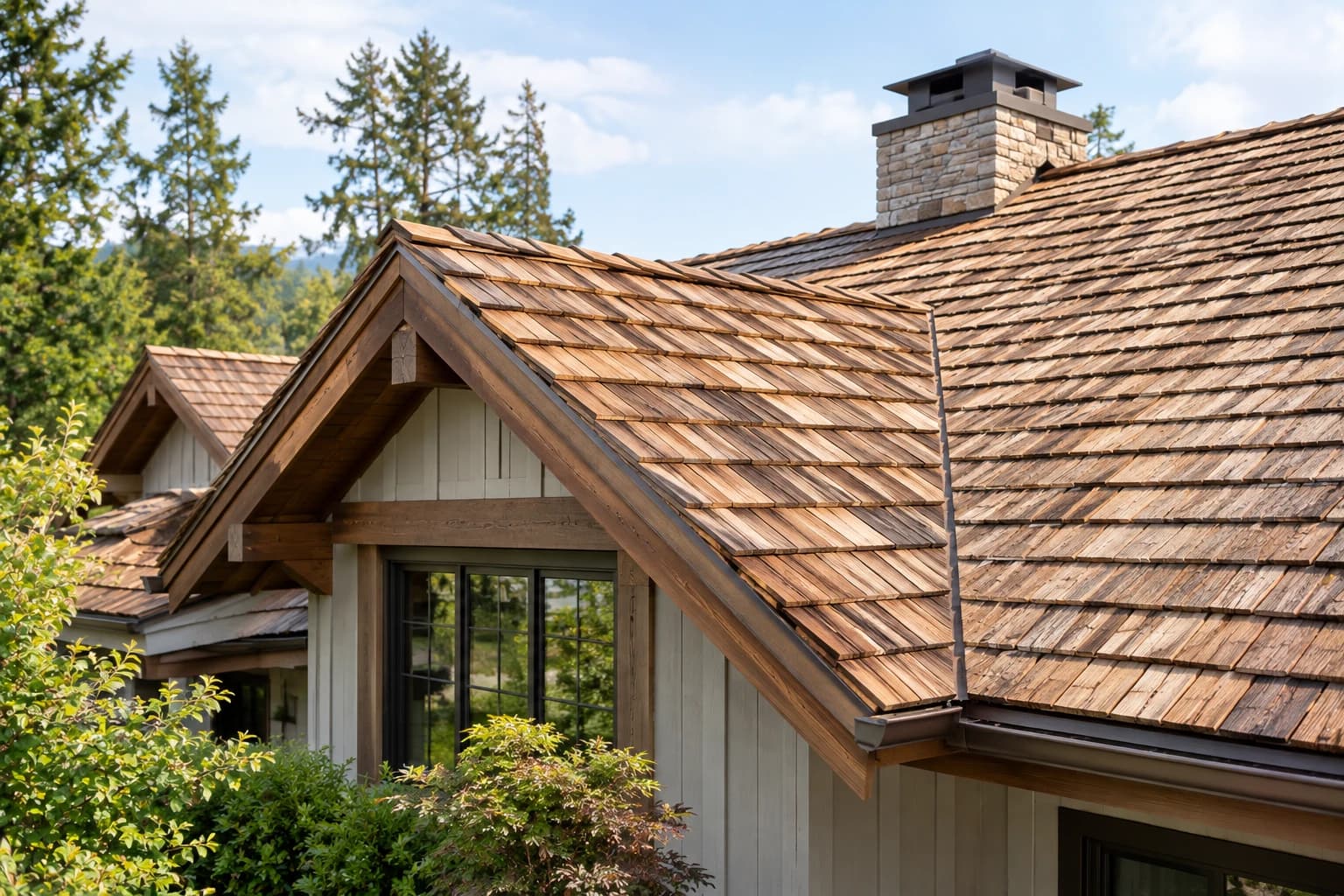
A wooden roof has a warmth that other roofing materials struggle to copy. Cedar and redwood shakes and shingles age to a soft silver-gray, and a good wood roof gives a home real character.
Before you choose one, it helps to know what a wooden roof asks of you in return. In Southern California, fire rules, sun, dry heat and cost all shape the decision, and for most homes the answer ends up being tile or shingle instead.
This guide covers the pros and cons of a wooden roof, what to check before you commit, and the alternatives that look good and perform better where wildfire is a risk.
What Is a Wooden Roof?
A wooden roof is covered with wood shakes or wood shingles, most often cedar and sometimes redwood.
Wood shingles are sawn, so they are thin and uniform. Wood shakes are thicker and rougher, and many are split rather than sawn, which gives them a more rustic look.
Both are installed in overlapping rows over underlayment, and both weather to gray over a few years unless they are stained or treated.
Pressure-treated and fire-retardant-treated wood are also sold, and they change how the roof performs in a fire.
Not the same as asphalt shingles: Asphalt shingles are made of asphalt and fiberglass, and they are far more common on homes today. This article is about real wood.
The Pros of a Wooden Roof
Natural beauty
Wood has a textured, natural look that suits Craftsman, cottage, Tudor and rustic homes. No two roofs weather quite the same way, and many homeowners love the aged, silvery finish.
A natural, renewable material
Wood is renewable when it comes from responsibly managed forests. If that matters to you, ask the supplier where the wood was sourced.
It can last for decades when it is looked after
A wooden roof that has good ventilation, a sound installation and regular upkeep can last a long time. How long varies widely with the wood, the installation and the care it gets.
A look other materials only imitate
Some roofing products are made to look like wood, but they are different materials. If real wood is the look you want, there is no exact substitute.
The Cons of a Wooden Roof
Fire risk, the biggest issue in Southern California
Wood burns. Untreated wood shakes and shingles generally have the weakest fire resistance of any common roof covering, and wind-blown embers during Santa Ana wind events can land on a roof and ignite it.
Roofs are rated Class A, B or C for fire resistance, with Class A the best. In California’s high fire hazard zones, roofs generally have to meet Class A, and many cities restrict wood roofs outright.
Fire-retardant treatment and special roof assemblies can improve a wooden roof’s rating, but the result depends on the product and the installation, and treatment can wear over time.
Upkeep
Wood needs regular attention. Debris has to be cleared, split or curled pieces replaced and, in shaded or damp spots, moss and algae kept in check.
Sun, moisture and pests
Hot, dry sun can split, curl and warp wood, and moisture can lead to rot. Termites and other insects can feed on it, and birds and small animals sometimes nest under loose pieces.
Cost
A wood roof usually costs more than asphalt shingles, and repairs call for roofers who know the material. When the budget matters, wood is often the hardest option to justify.
Insurance and code
Some insurers charge more for a wood roof, or limit coverage, in fire-prone areas. Ask your insurer before you decide.
Wood vs. Shingle vs. Tile
This comparison shows how the three most common choices for a Southern California home stack up.
Wood shake or shingle
- Look
- Natural, textured, weathers to gray
- Fire resistance
- Weakest unless treated or specially assembled
- Upkeep
- Higher
Asphalt shingle
- Look
- Wide range of colors and textures
- Fire resistance
- Many products are rated Class A
- Upkeep
- Lower
Clay or concrete tile
- Look
- Classic Spanish and Mediterranean look
- Fire resistance
- Does not burn, and typically rated Class A
- Upkeep
- Lower
Fire ratings depend on the specific product and how the whole roof is assembled, so check the rating of the exact roof system you are considering.
Is a Wooden Roof Right for Your Home?
For most Southern California homes, wood is a difficult fit because of the fire risk, the upkeep and the cost.
A wooden roof can still make sense in a few cases, such as a home outside a high fire hazard zone where wood roofs are allowed, or a historic home whose look depends on wood and whose owner is ready to budget for upkeep.
Even then, check these before you commit:
Alternatives That Still Look Great
If you love the look of wood but want better fire performance and less upkeep, two options are worth a close look.
Architectural asphalt shingles
These shingles come in a range of colors and have a dimensional, textured surface. See our shingle roofing services, including shingle roof replacement.
Clay and concrete tile
Tile is a classic in Southern California, especially on Spanish and Mediterranean homes, and it does not burn. See our tile roofing services, including tile roof replacement.
Frequently Asked Questions
Are wooden roofs allowed in Los Angeles and Orange County?
It depends on where your home is. Rules vary by city and by fire hazard zone, and many areas restrict wood roofs or require a Class A fire rating. Your city’s building department can tell you what applies to your address before you spend any money.
How long does a wooden roof last?
It varies widely with the type of wood, the installation, ventilation and upkeep. Sun, dry heat, moisture and pests can all shorten a wooden roof’s life, and a roofer can tell you what condition yours is in.
Is a wooden roof worth the cost in Southern California?
For most homes, no. Wood usually costs more than asphalt shingles, needs more upkeep and carries a higher fire risk, so we usually point homeowners to shingle or tile instead.
What can I use instead of a wooden roof?
Architectural asphalt shingles and clay or concrete tile are the two most common choices. Both are available in styles that suit many kinds of homes, and many shingle products are rated Class A for fire.
I already have a wood roof. What should I do?
Start by finding out what condition it is in. A free roof evaluation gives you photos and a plain-English report, and you can then decide whether to keep up the roof or replace it with tile or shingle.
Choosing a Roof That Fits Your Home
A wooden roof is beautiful, but it is a demanding choice, and in much of Southern California the fire risk, the rules and the cost point toward other materials.
Quality Roofing Specialists provides roofing services for homes across Los Angeles and Orange County, including shingle roof replacement, tile roof replacement and roof inspections.
If you are weighing your options, schedule a free roof evaluation to see what condition your roof is in and which choices make sense for your home.
Contact Quality Roofing Specialists to talk through your roof and plan your next steps.