

Keeping Commercial Roof Drains and Scuppers Clear: A Guide for Property Managers
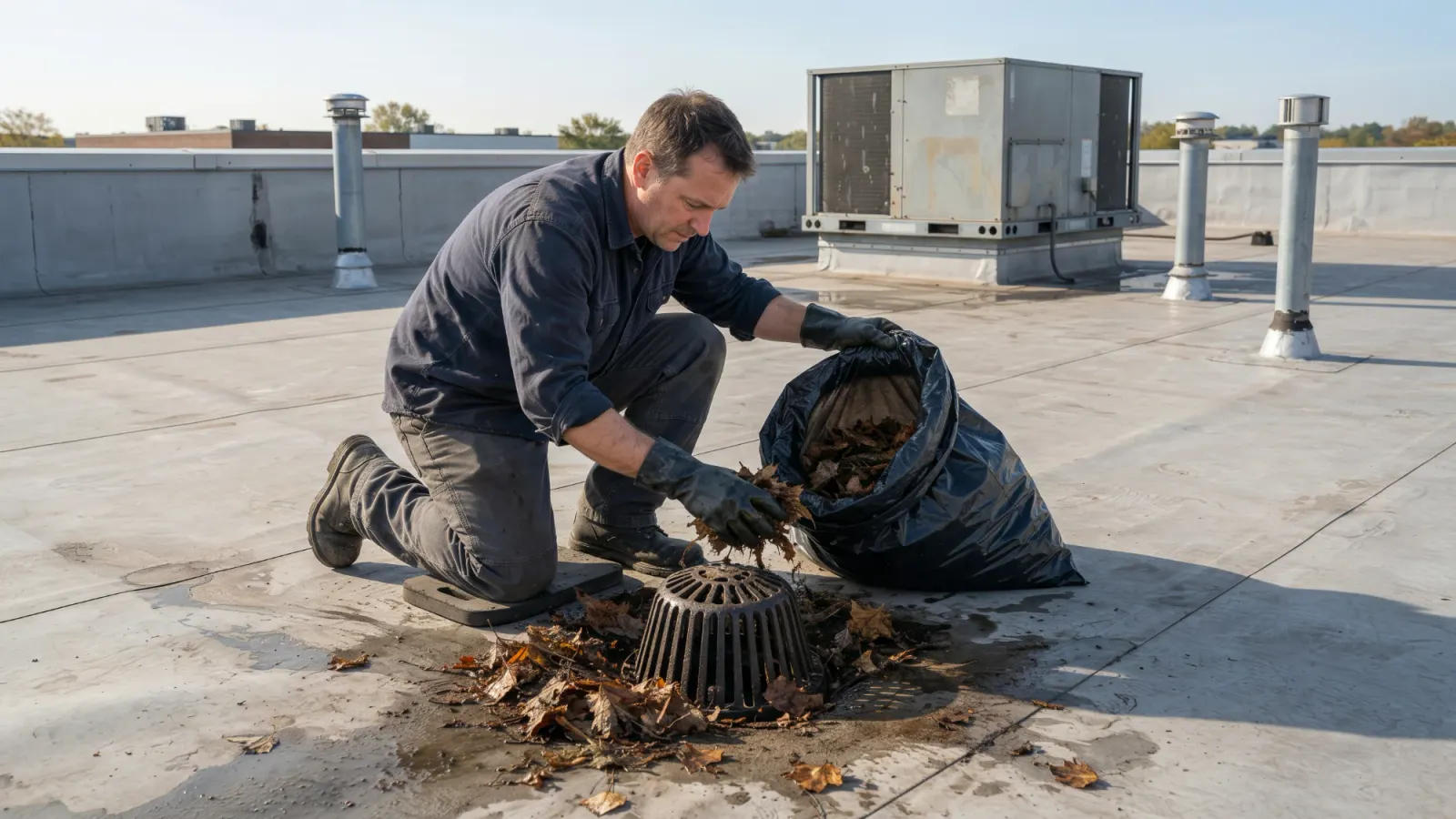
Roof drains and scuppers are the only way rainwater leaves a commercial flat roof. When one clogs, the water has nowhere to go: it backs up across the roof, adds weight, finds any weak seam or flashing, and can end up on a tenant’s ceiling.
Keeping them clear is one of the simplest things a building can do for its roof. Here is how each outlet works, what clogs it, how often to check, a checklist your staff can use, the warning signs, and where the roofer’s job ends and the plumber’s begins.
Why Clear Drains and Scuppers Matter
A commercial flat roof is built with a gentle slope that carries water to its outlets. The roof can only drain as fast as those outlets let it. A drain half-covered with leaves in a light rain becomes a pond in a heavy one, and standing water wears the roof faster, adds weight to the deck and keeps pressing on the flashing around the drain itself.
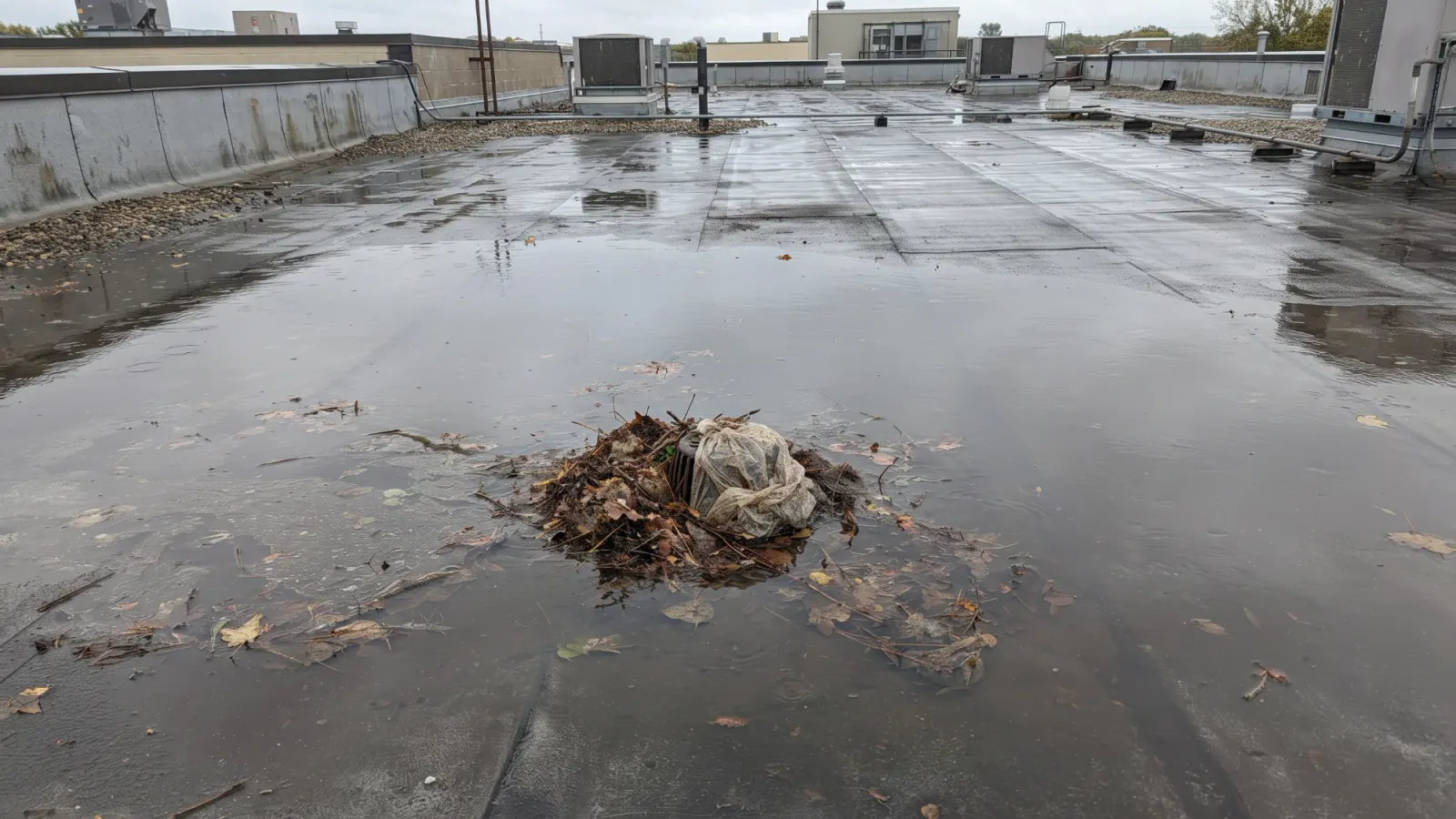
Our guide to ponding water on a commercial flat roof explains what standing water does over time, and our guide to finding a flat roof leak explains why a leak at a drain can show up on a ceiling well away from it.
The Parts of Each Outlet
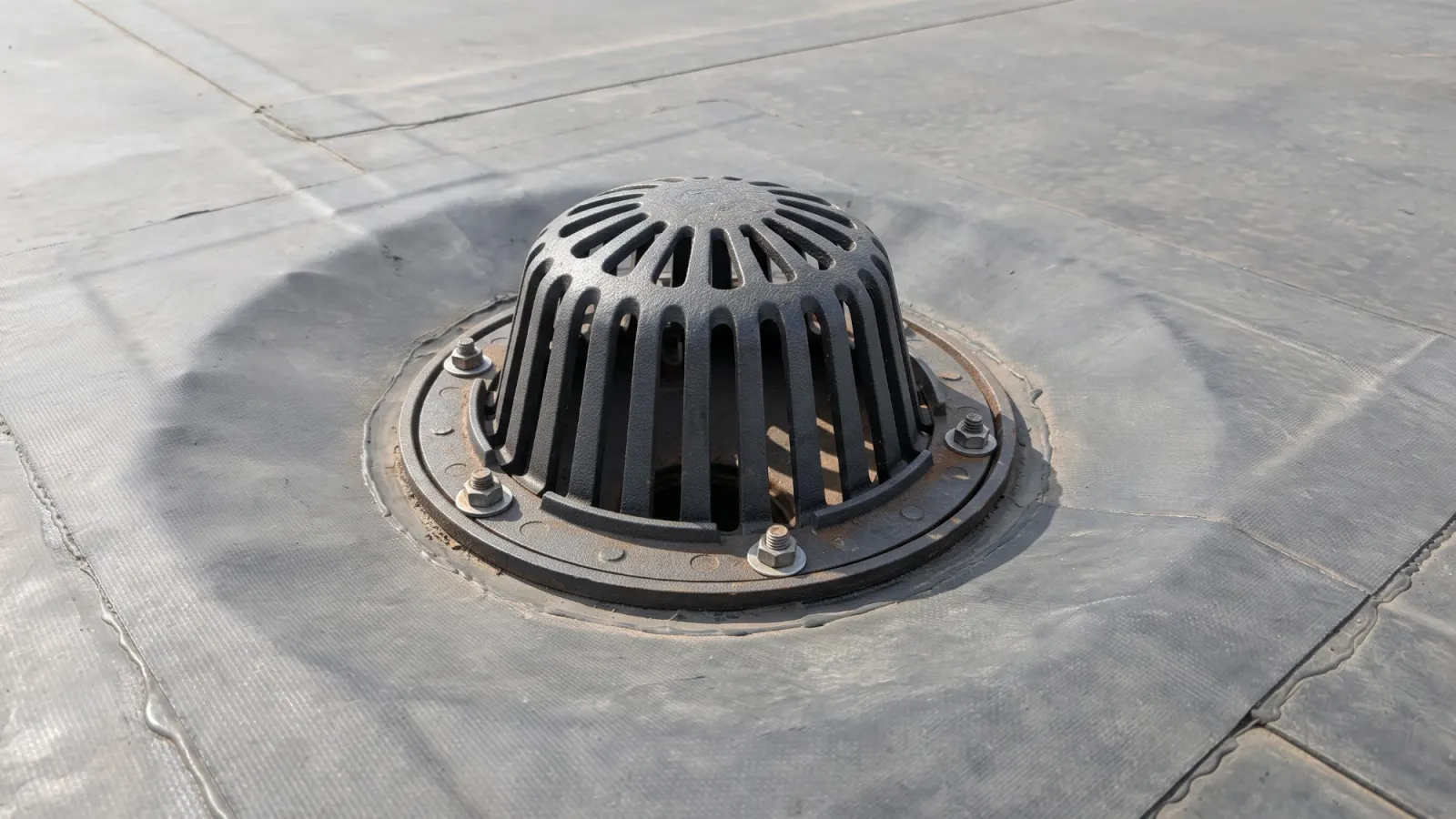
- Roof drain
an opening in the field of the roof with a drain bowl set into the deck, a clamping ring that holds the roofing in place around it, and a dome-shaped strainer on top to keep debris out of the pipe.
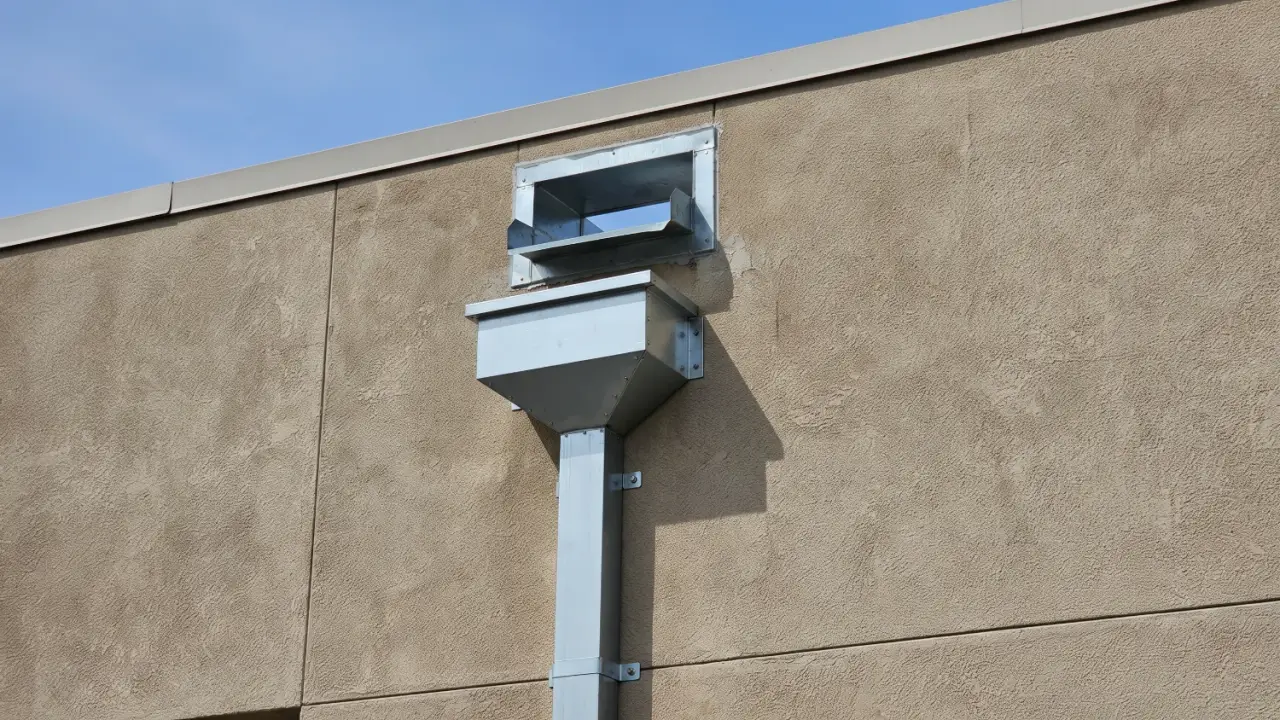
- Scupper
an opening through the parapet wall at the roof’s edge, lined with metal and flashed into the roofing.
- Conductor head and downspout
the box on the outside of the wall that catches the water from a scupper, and the pipe that carries it down.
- Overflow drains and scuppers
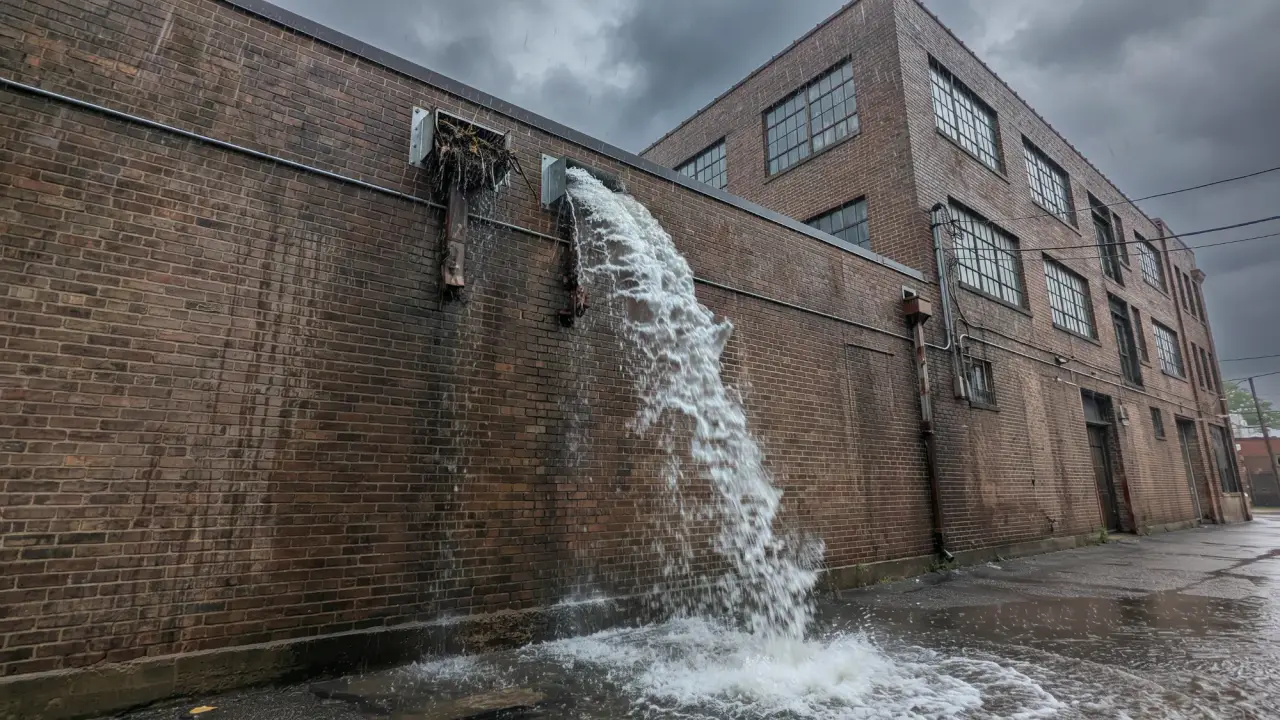
on many buildings, a second set of outlets sits a little higher than the main ones, so water can still get off the roof if a main outlet clogs.
- Crickets
small raised sections that steer water around rooftop units and toward the outlets.
What Clogs Roof Drains and Scuppers
- Leaves, needles and seed pods from nearby trees
- Trash, bags and paper blown onto the roof
- Granules washed off an older cap sheet
- Bird nests, especially in scuppers and conductor heads
- Debris left from rooftop work: filters, screws, cut-offs and packaging from HVAC service
- A missing or broken strainer, which lets debris into the drain line itself
How Often to Check Them
At a minimum, before the rainy season starts. Check again after a big storm or strong winds, after any work on the roof, and more often on a building under trees or next to a lot where trash blows around. A quick look from the hatch after each heavy rain tells you whether water is reaching the outlets and leaving.
Our commercial roof maintenance visits clear drains and debris before the rainy season, check and reseal the flashings where needed, and end with a photo report you can compare visit to visit.
A Checklist for Your Maintenance Staff
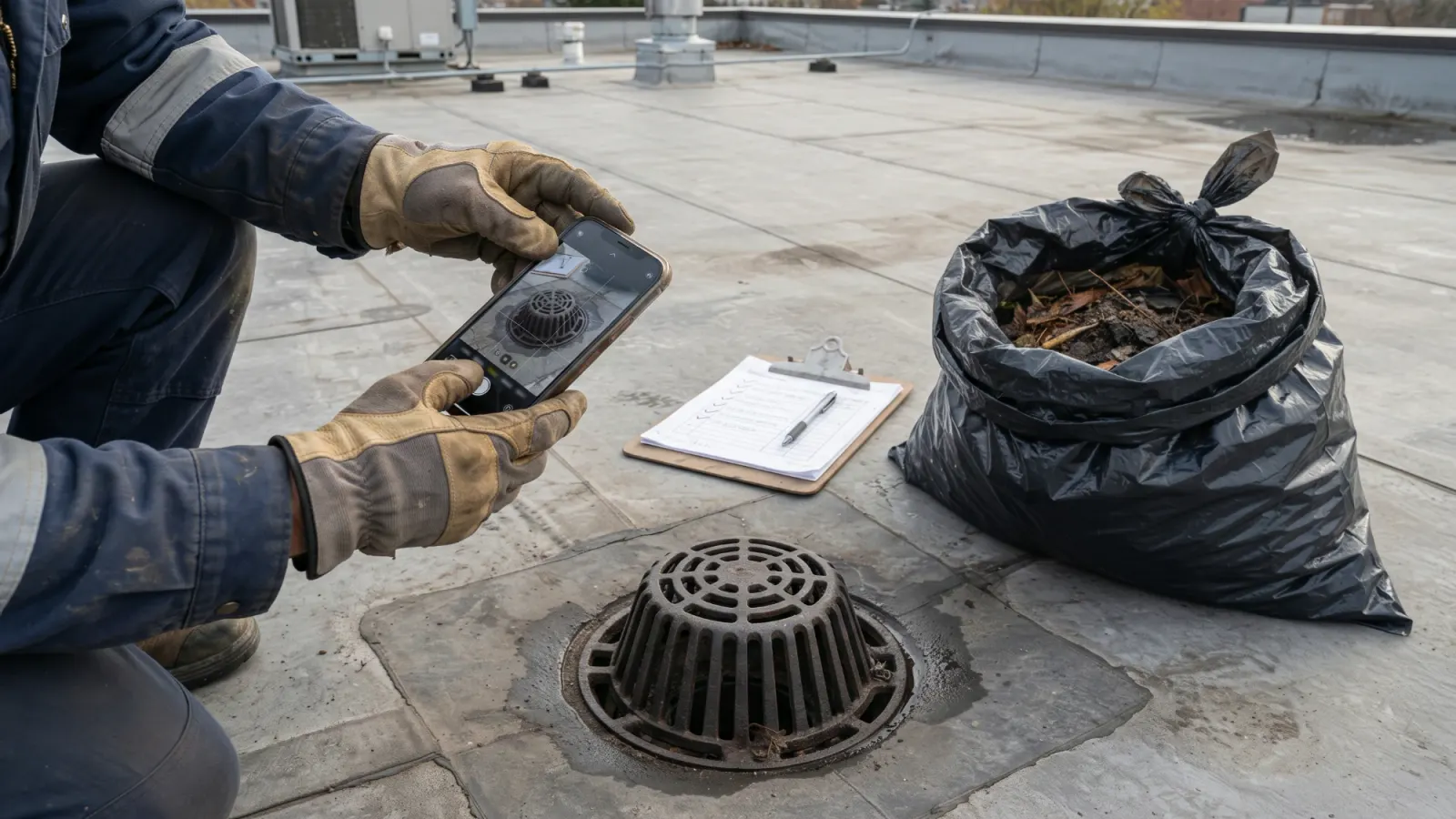
Keep the log with the building records. It helps the next roofer, and it shows a pattern long before a ceiling does.
Warning Signs to Call a Roofer
Water pouring from an overflow scupper or drain
- What it usually means
- The main outlet is blocked
- What to do
- Clear the main outlet, and have it checked if it keeps happening
Water still standing around a drain days after rain
- What it usually means
- The drain is partly blocked, or set higher than the roof around it
- What to do
- Have a roofer look at the drain and the slope
A ceiling stain below or near a drain
- What it usually means
- The flashing around the drain bowl may have failed
- What to do
- Call a roofer, and log the stain
Downspouts that run slowly or not at all
- What it usually means
- A clog in the conductor head or the downspout
- What to do
- Clear it, or have it cleared before the next storm
A missing, cracked or loose strainer
- What it usually means
- Debris can get into the drain line
- What to do
- Have it replaced
Rust streaks on the wall below a scupper
- What it usually means
- Water is getting behind the scupper lining or the conductor head
- What to do
- Have the scupper flashing checked
What Not to Do
Don’t take the strainers off to make water drain faster. Debris goes straight into the pipe.
- Don’t push debris into the drain
Bag it and take it off the roof.
Don’t smear roof cement around a drain that seems to leak. It rarely seals the real gap and makes the proper repair harder.
Don’t store materials or equipment where they block the path to an outlet.
Don’t go up during a storm to clear a drain. Wait until it is safe.
Roofer or Plumber?
A drain has two sides. The roofing side is the strainer, the clamping ring, the drain bowl and the flashing that ties the roof into it, plus the scupper lining, its flashing and the slope that brings water to them: that is our work. The drain line inside the building is the plumbing side.
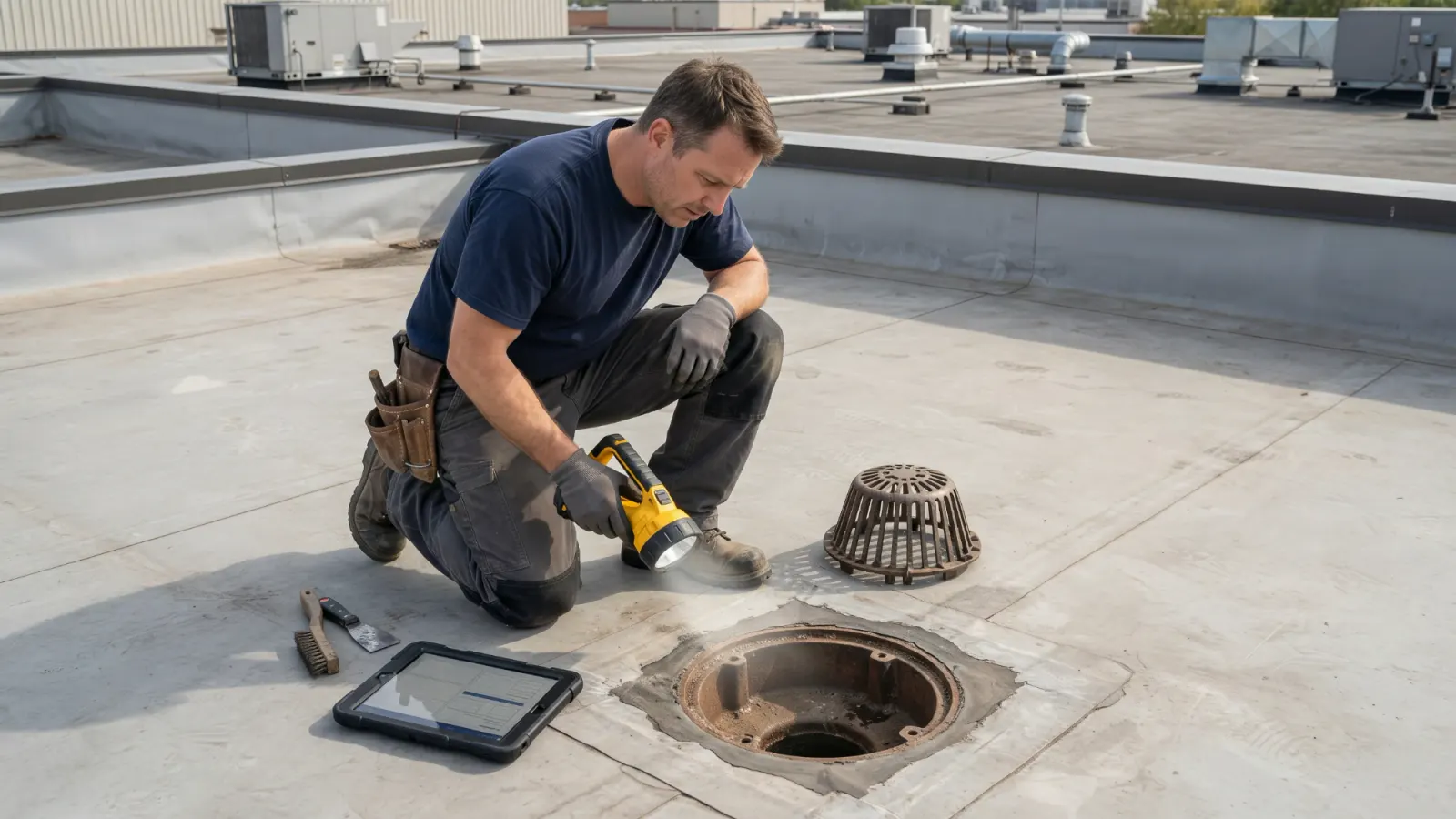
When a drain keeps backing up, we check the strainer, the flashing around the drain bowl and whether low spots keep water from reaching it, and repair the roofing side. If the blockage is deeper in the drain line, we tell you so a plumber can clear it. See commercial roof repair.
How We Help Keep the Water Moving
- A roofer-led roof survey photographs every drain, scupper and low spot, so you can see where water stands and why.
- Repairs at the outlets: new flashing around a drain bowl or a scupper, a new strainer, a worn area around the outlet repaired.
- Better drainage when it is time: crickets around rooftop units, or the slope rebuilt in an area during a phased commercial roof replacement, so the building stays open.
- Scheduled maintenance that clears the outlets before the rains and documents them every visit.
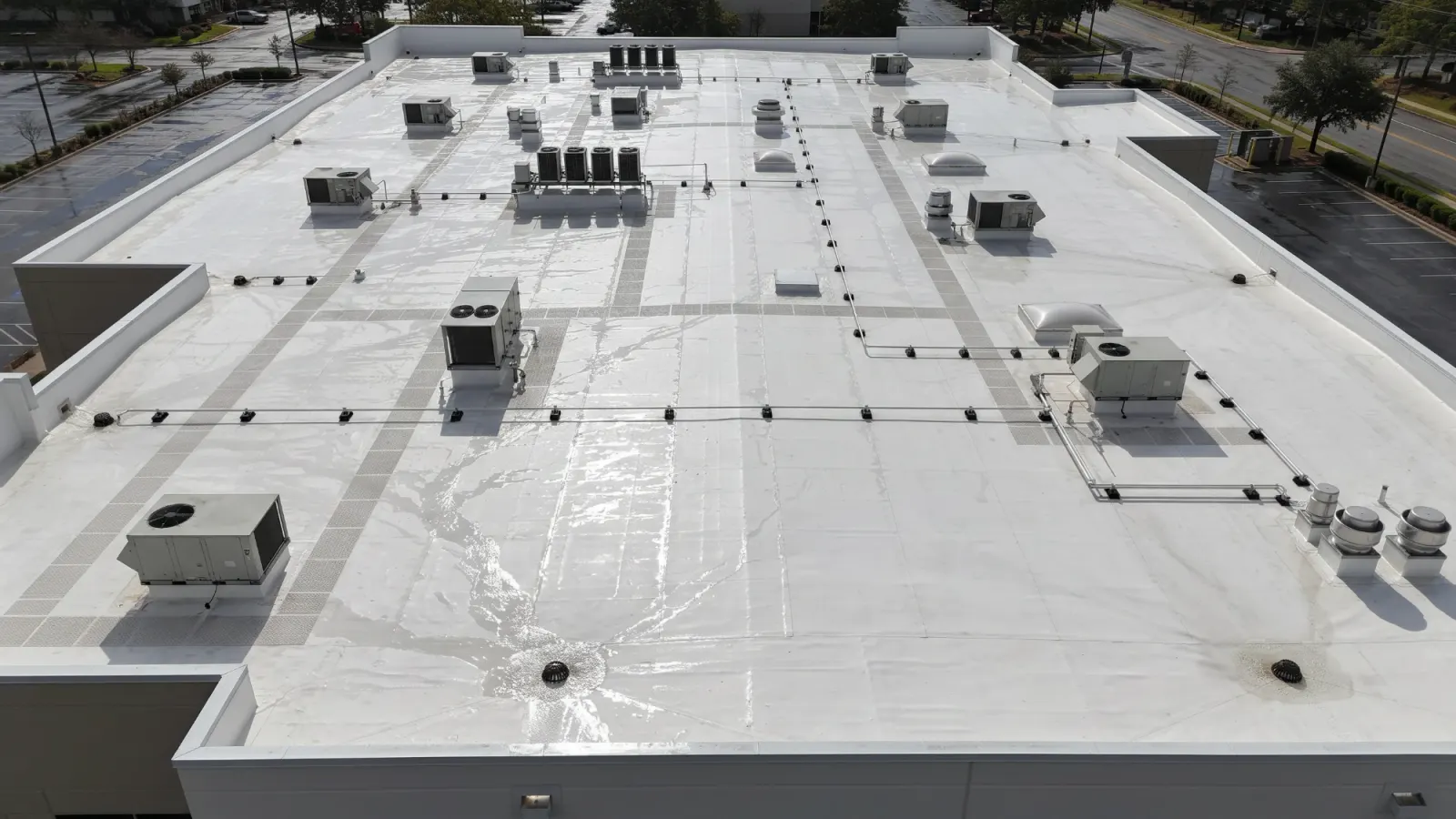
Large, nearly flat roofs have the longest path to a drain, which is why we survey warehouse roofs in sections. If you manage several buildings, see property management roofing.
Frequently Asked Questions
How often should commercial roof drains and scuppers be cleaned?
At least before the rainy season, and again after big storms, strong winds and any work on the roof. A building under trees may need it more often.
What is the difference between a roof drain and a scupper?
A roof drain is an opening in the field of the roof that carries water down through a pipe inside the building. A scupper is an opening through the parapet wall at the roof’s edge that sends water to a conductor head and a downspout outside.
Why is water coming out of our overflow scupper?
Usually because the main drain or scupper it backs up is blocked. Clear the main outlet when it is safe, and have a roofer look at it if it keeps happening.
Who clears a clogged roof drain, a roofer or a plumber?
Both, depending on where the clog is. A roofer handles the strainer, the drain bowl and the flashing around it. If the blockage is deeper in the drain line inside the building, a plumber clears it, and we tell you when that is the case.
Can our maintenance staff clean the drains?
Yes, if they follow your building’s roof access and safety rules: bag the debris by hand, keep the strainers in place and log what they find. Leave repairs to the flashing to a roofer.
Do you clean roof drains as part of maintenance?
Yes. Our commercial roof maintenance visits clear drains and debris, check and reseal flashings where needed and end with a photo report.
Want Your Drains Checked Before the Rains?
Request a roof survey. A roofer photographs every drain, scupper and low spot, tells you in plain English what each needs, and gives you a written scope and price before any work. Or call (310) 340-1643.
