

Ponding Water on a Commercial Flat Roof: When Standing Water Is Normal and When It’s a Problem
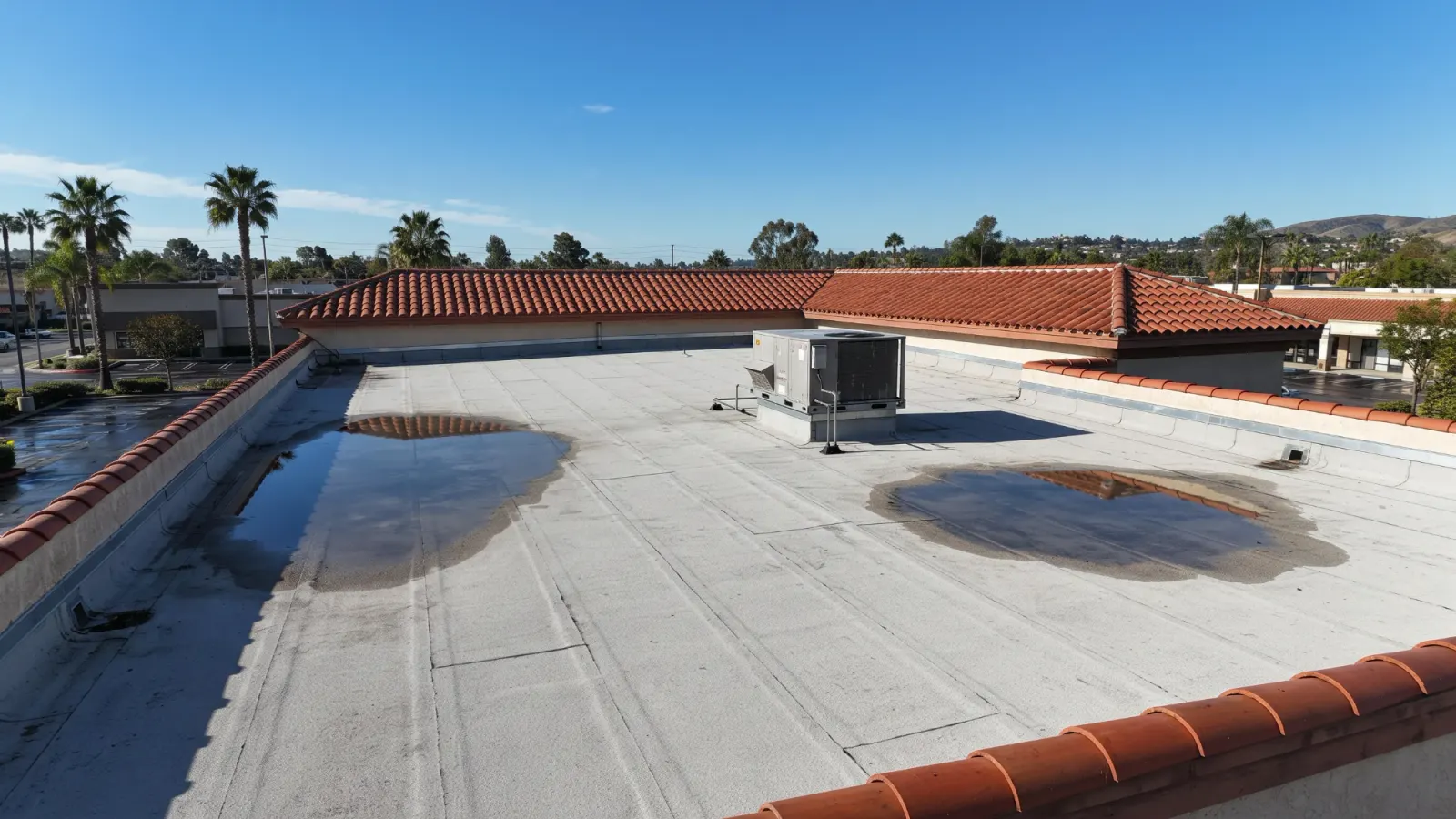
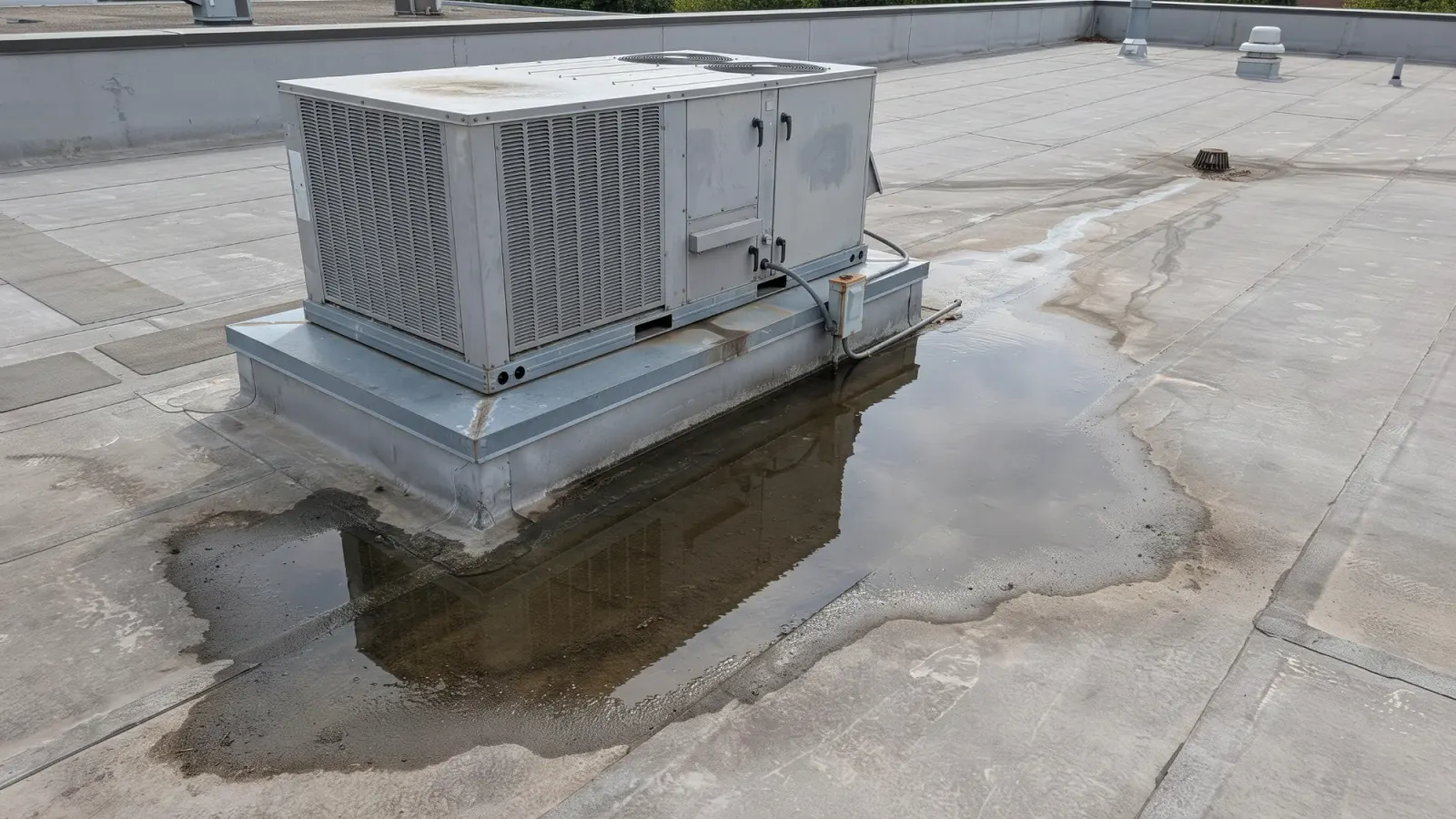
Ponding water is the standing water that stays on a commercial flat roof long after the rain has stopped. Every low-slope roof holds a little water right after a storm. What matters is how long it stays and where.
This guide is for owners, property managers and building engineers: how to tell normal puddles from ponding, why water collects on a commercial roof, what it does to the roof and the tenants under it, how to check it safely, and how we fix it.
Is Standing Water on a Commercial Flat Roof Normal?
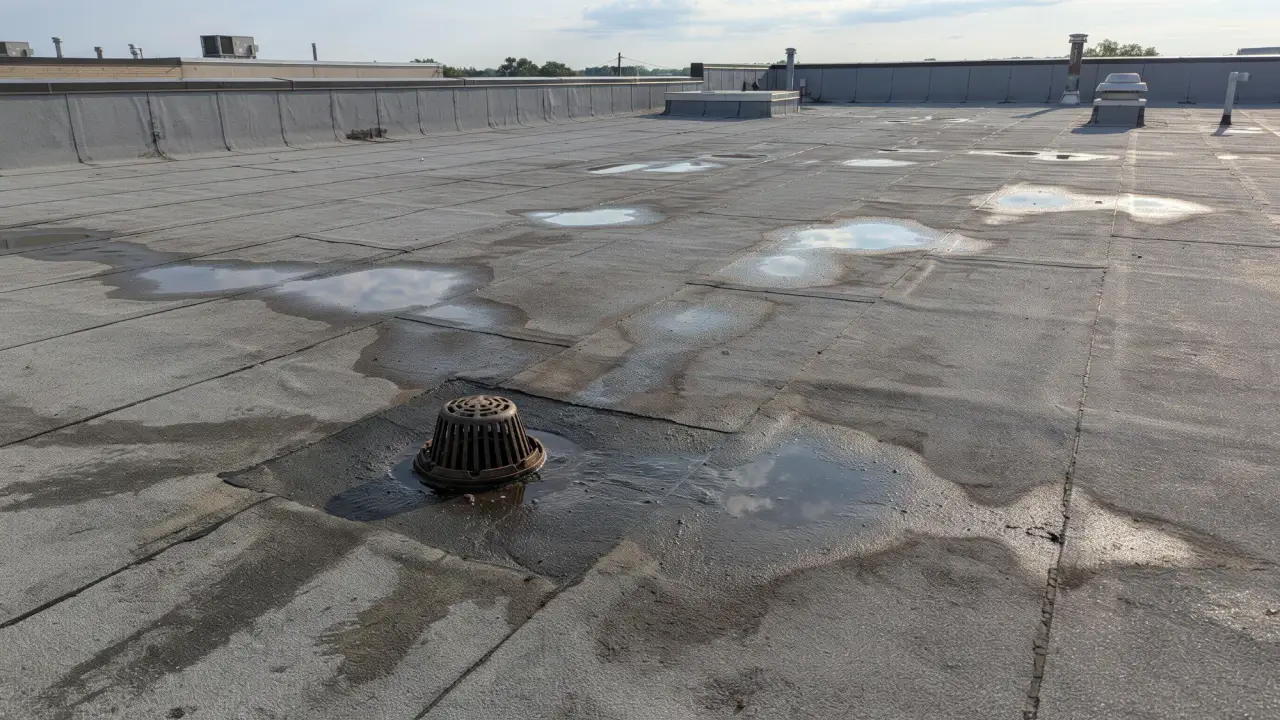
For a few hours after rain, yes. A commercial flat roof isn’t really flat: it has a gentle slope that carries water across a wide span to the drains, the scuppers (openings through the parapet wall) or the gutters, and small puddles in shallow spots are normal while it drains and dries.
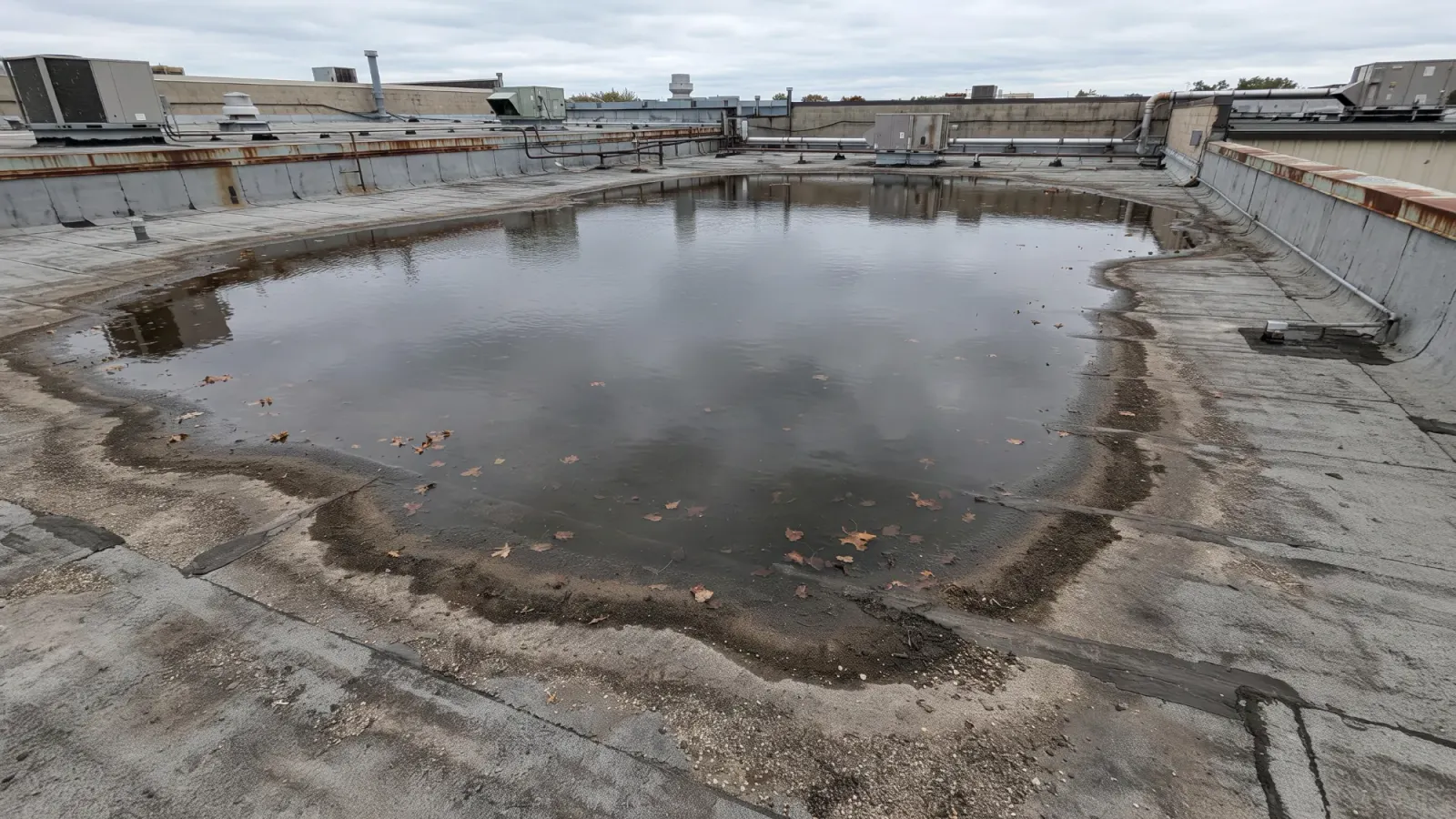
Roofers generally call it ponding when water is still standing about 48 hours after the rain stops, in weather that would normally dry it. Water that hangs around that long is sitting on the roof, not draining off it.
Normal, Watch It or Call a Roofer?
Which of these sounds most like your roof? Tap a card.
Small puddles that are gone within a day or two
What it usually means
Normal drying on a roof that drains
What to do
Nothing, beyond keeping the drains and scuppers clear
The same shallow spots after every rain, still drying within about two days
What it usually means
Low spots worth watching
What to do
Photograph them after each storm and compare
Water still standing two days or more after the rain
What it usually means
Ponding: the roof isn’t draining
What to do
Have a roofer survey the slope and the outlets
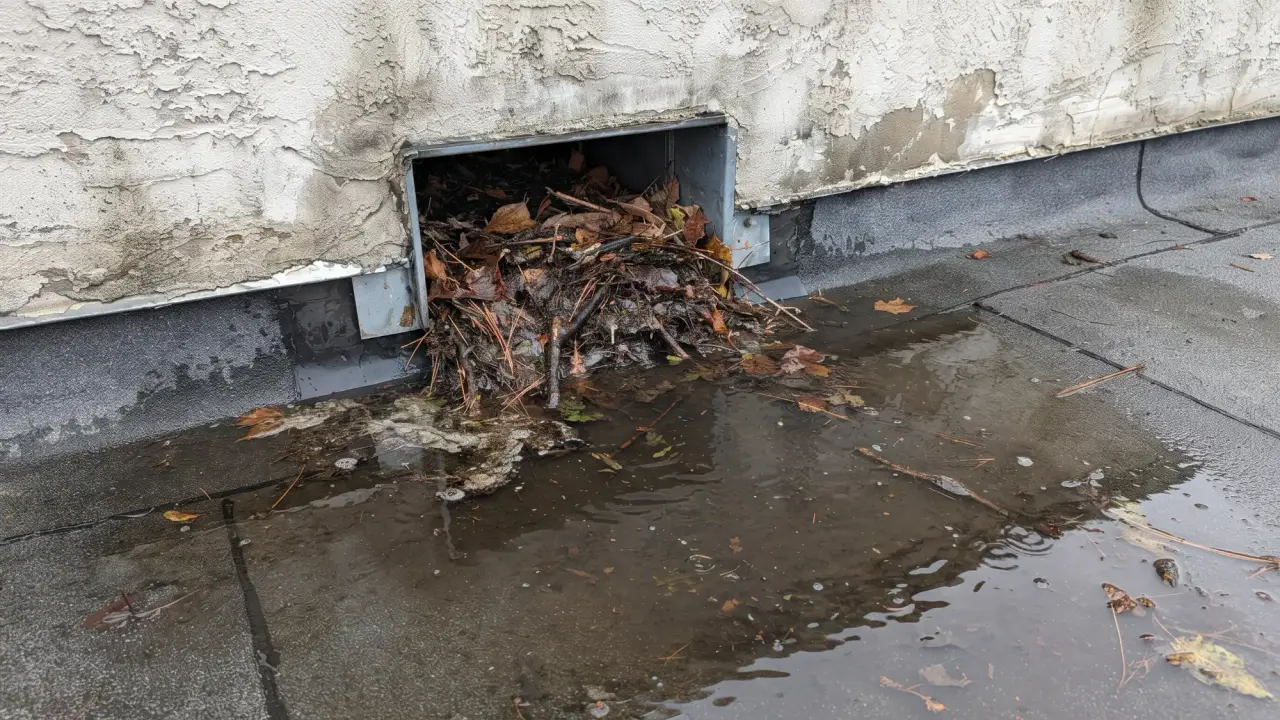
Water backed up around a drain or a scupper
What it usually means
A blocked or undersized outlet
What to do
Have it cleared, and the flashing around it checked
Ponding plus a tenant reporting a stain or a drip
What it usually means
Water is getting through
What to do
Call a roofer now
A pond that gets deeper or wider year after year, or a sag you can see
What it usually means
The deck may be giving way under the weight
What to do
Call a roofer now, and keep people out from under it
Why Water Ponds on a Commercial Flat Roof
- Not enough slope
across a wide span, water travels a long way to a drain, and a roof built too flat, or flattened by an earlier re-roof, leaves it standing.
- A low spot in the deck
framing that has sagged, or a soft area from an old leak, makes a dip that holds water.
- Blocked outlets
leaves and debris in a drain strainer, a scupper or the downspout below it back the water up.
- Outlets in the wrong place
a drain set higher than the roof around it, or too few outlets for the size of the roof.
- Equipment in the way
an air conditioning curb, a skylight or a duct run that dams water on its uphill side, with no cricket to steer it around.
- Layers built up around the edges
each re-roof raises the edges and the area around the drains, leaving the field lower.
What Ponding Costs the Roof, and the Tenants Below
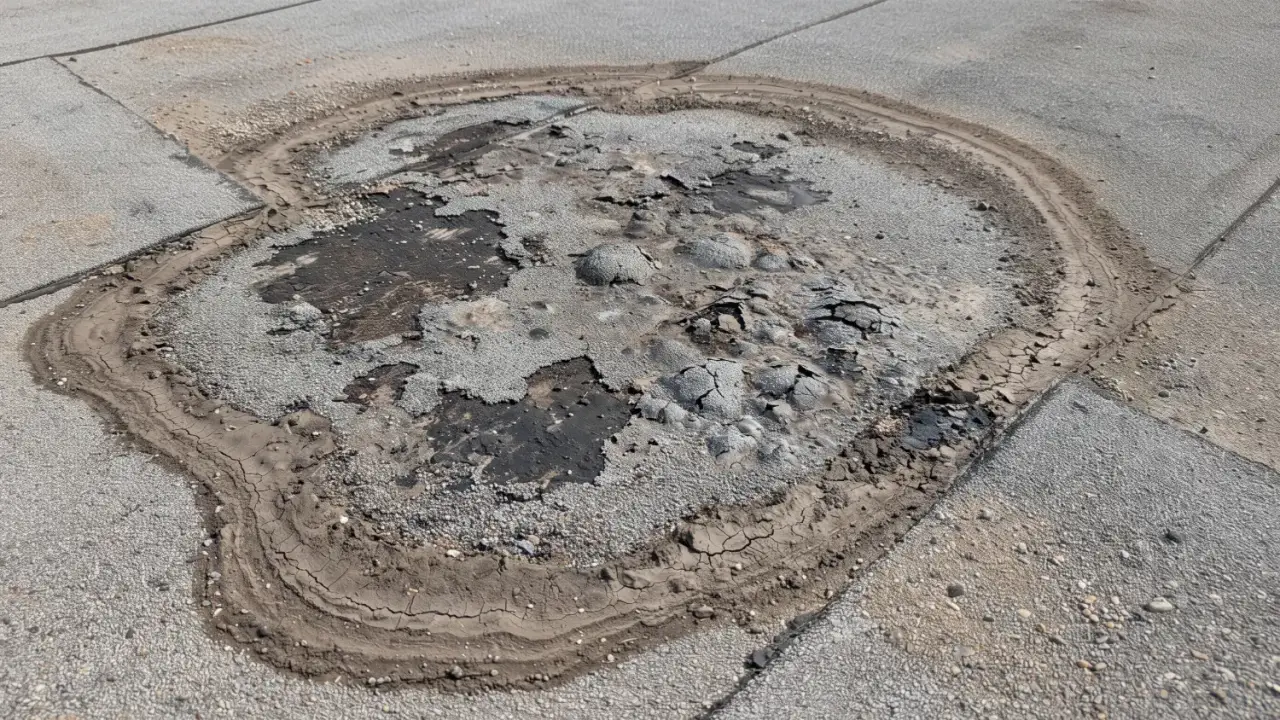
A flat roof is made to shed water, not to hold it. When water sits, the sun works on the wet surface day after day, and the roof wears out first at those spots. Dirt and debris settle in the pond and stay after it dries. Standing water also finds any open lap, seam or flashing, and keeps pushing on that weak spot for days instead of minutes.
Water is heavy, too. A pond adds weight to the deck in the very spot that is already low, and a deck that bends a little holds a little more water the next time.
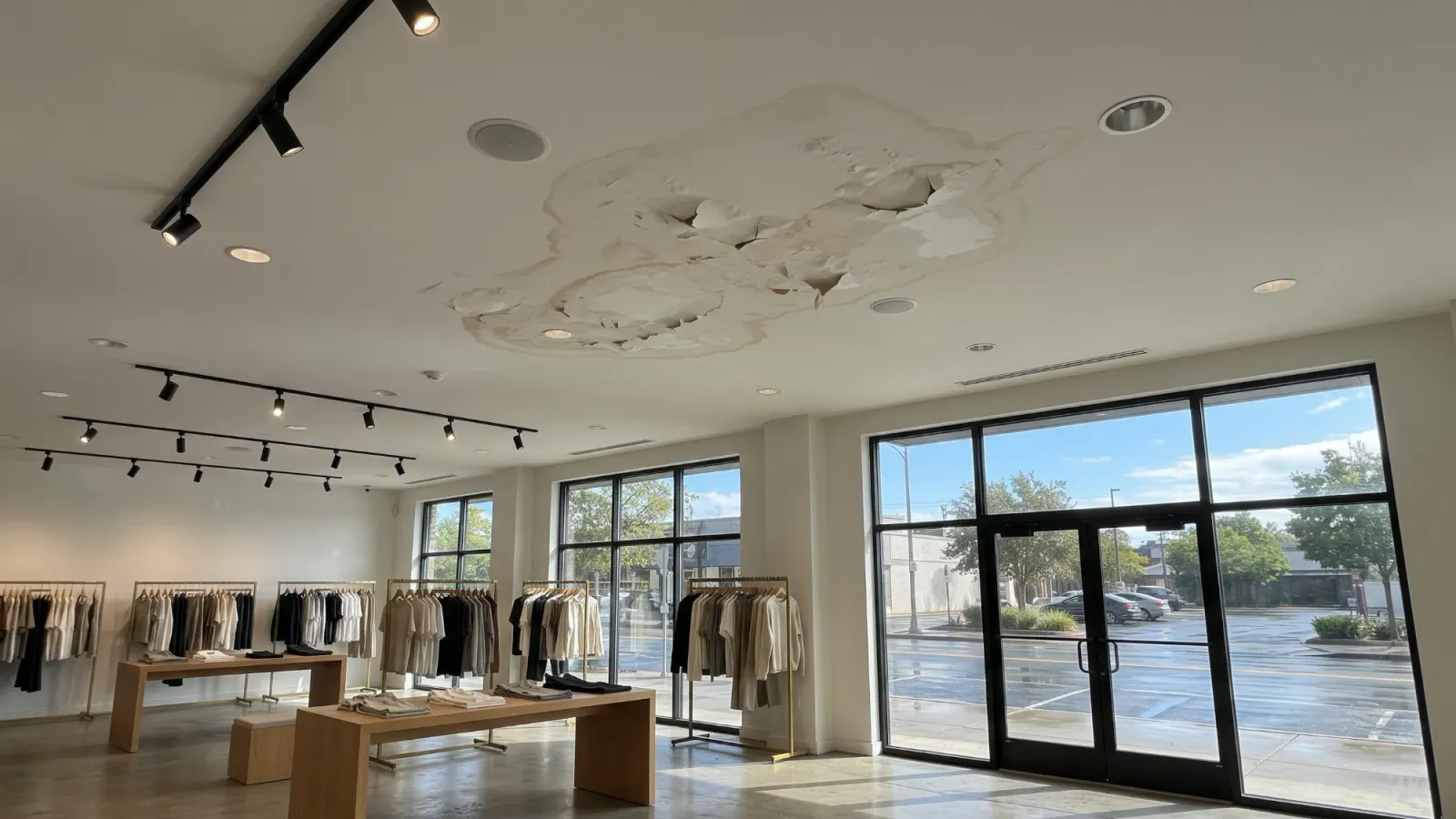
On a commercial building, the cost doesn’t stop at the roof. A leak under a pond means a stained ceiling tile over a sales floor, an office or a stockroom, a tenant on the phone and a space that may have to close while it is dealt with. Check the roof’s warranty paperwork, too: some manufacturer warranties exclude damage from ponding water.
How to Check for Ponding Safely
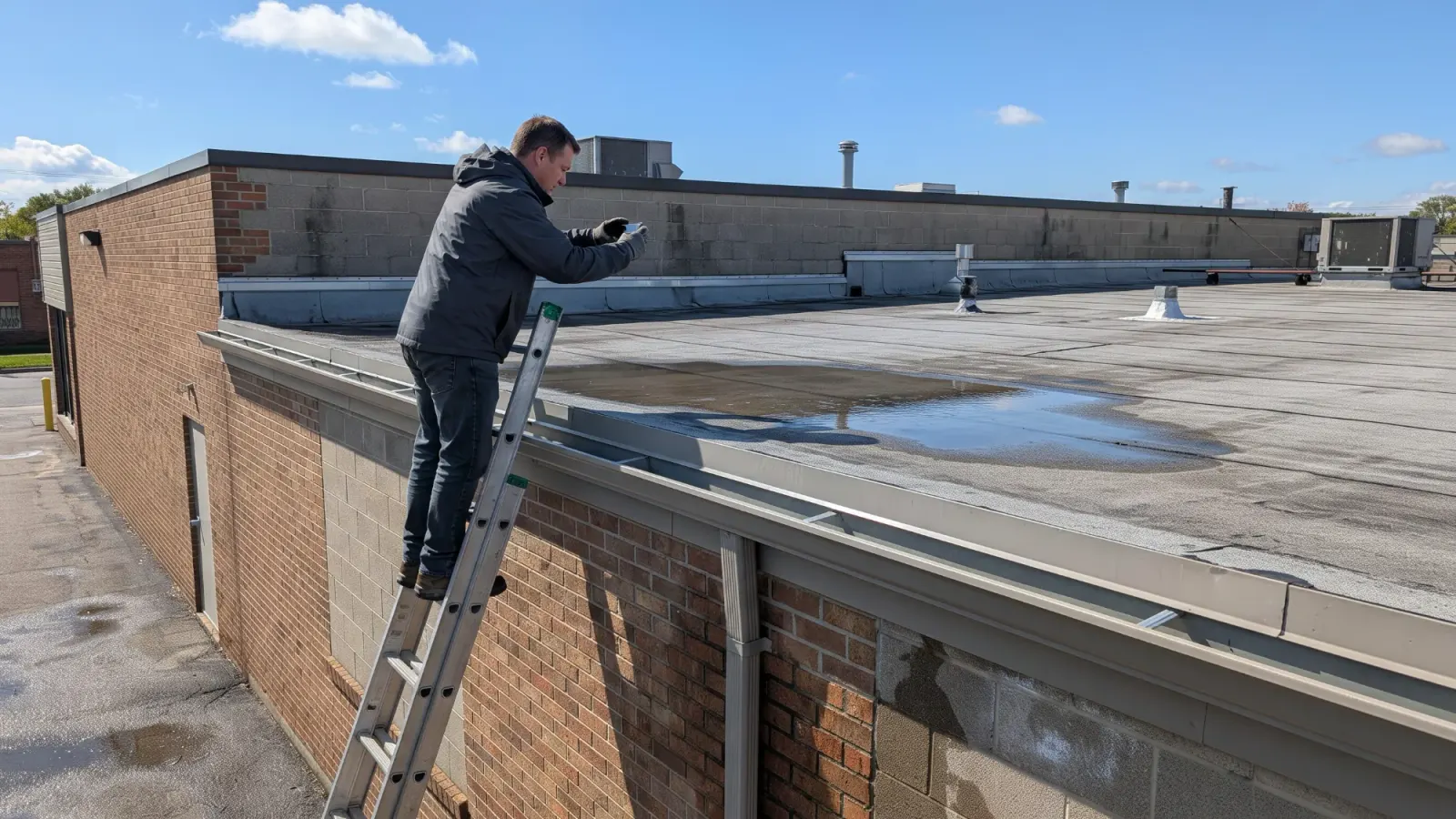
Keep staff and other trades off a wet flat roof. It is slippery, and nobody can see a soft spot under the water.
What to Do, and What Not to Do
Keeping the drains, scuppers and downspouts clear is the one thing a building’s own staff can do between visits, from the hatch or a ladder. Our guide to cleaning gutters without damaging your roof edge covers the ladder setup.
Don’t poke a hole to drain a pond. It makes a leak where there wasn’t one.
- Don’t send someone out to sweep it off
A wet flat roof is slippery, and walking it can damage the surface.
- Don’t paint over it
A coating doesn’t change where water goes, and it can hide the wear underneath.
Don’t add layers to fill a low spot without fixing why it is low.
Don’t wait for a tenant’s ceiling to tell you. By then the water has been getting in for a while.
How We Fix Ponding Water on a Commercial Roof
It starts with a roofer-led roof survey. A roofer walks the roof, follows the water, checks the slope, the low spots and whether the drains, scuppers and downspouts can keep up with a winter storm, and photographs what we find for the owner or the property manager. You get a written scope and price before any work.
- When the roof is sound, the fix is often at the outlets: clearing them, repairing the flashing around the drain bowl or the scupper, or repairing the worn membrane where water has been sitting. If a blockage is deeper in the drain line, we tell you so a plumber can clear it. See commercial roof repair.
- When the slope is the problem, the fix ranges from adding crickets, small raised sections that steer water around curbs toward the outlets, to rebuilding the slope in that area during a replacement. A commercial roof replacement is phased section by section, so the building stays open.
- To keep it from coming back, scheduled commercial roof maintenance clears drains and debris before the rainy season and ends every visit with a photo report you can compare visit to visit.
Large, nearly flat roofs pond the most, which is why we survey warehouses in sections; see warehouse roofing. If you manage several buildings, see property management roofing.
Frequently Asked Questions
Is standing water on a commercial flat roof normal?
For a little while after rain, yes. Water that is still standing about 48 hours after the rain stops, in weather that would dry it, is ponding, and it means the roof isn’t draining the way it should.
How long can water sit on a flat roof?
Roofers generally use about 48 hours after the rain as the line. Puddles that dry within a day or two are normal; water that stays longer is ponding.
Will ponding water cause a leak?
Not right away, but it wears the surface faster where it sits and keeps pressing on any open lap, seam or flashing it reaches, which is how ponding turns into a leak over a tenant’s space.
Can ponding be fixed without replacing the roof?
Often, when the cause is a blocked or poorly flashed drain or scupper, or a small worn area. Crickets can steer water around rooftop equipment. When the whole field lacks slope, rebuilding it is usually part of a phased replacement.
Our roof drain keeps backing up. Is that a roofing problem?
Often, yes: a clogged strainer, failed flashing around the drain bowl or low spots that keep water from reaching the drain. We check all three and repair the roofing side, and if the blockage is deeper in the drain line, we tell you so a plumber can clear it.
Can a coating fix ponding?
A coating doesn’t change where water goes, so the water still sits in the same spots. We don’t apply coatings; we fix the outlets, repair the roof, add crickets or build the drainage into a new roof.
Water Still Sitting on Your Roof?
Request a roof survey. A roofer walks the roof, photographs where the water sits and why, and gives you a plain-English answer and a written scope and price before any work. Or call (310) 340-1643.
For homes, see our guide to flat roofs in Los Angeles.
