

How to Find a Roof Leak: Signs, Causes and What to Do Next
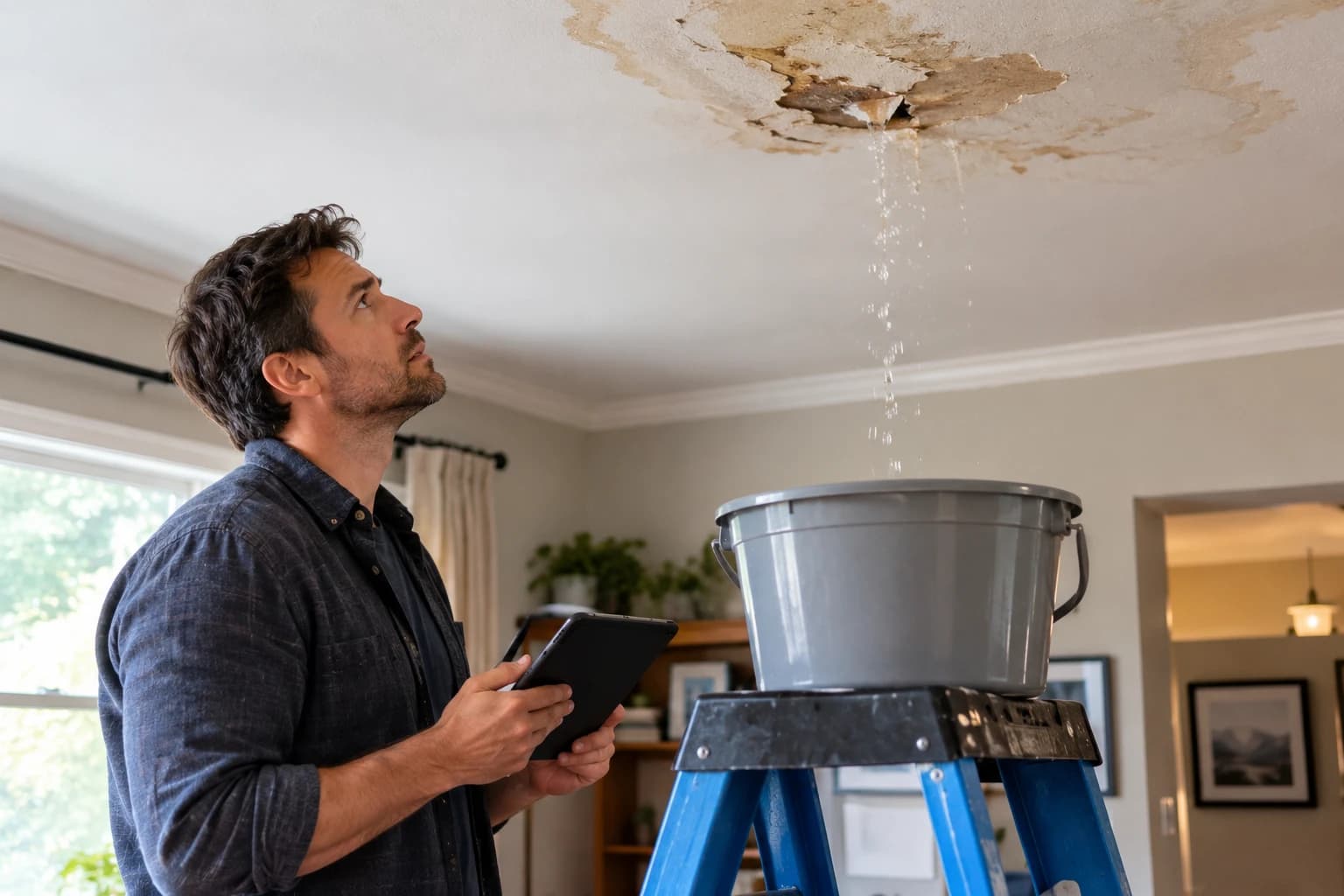
A roof leak is rarely where it seems to be. Water slips past a lifted shingle, a cracked tile or an open seam, runs along the underlayment or a rafter, and shows up somewhere else entirely.
That is why a stain on the ceiling is a clue, not an address. Finding the real source takes a methodical look at the roof, starting above the stain and working across the details where leaks usually begin.
This guide explains the signs of a roof leak, the most common causes on each roof type, what you can safely check yourself and how a roofer finds the source.
Why a Roof Leak Rarely Shows Up Where It Starts
Roofs are built in layers, and water that gets through the top layer does not drop straight down. It follows the slope of the roof, the underlayment, the roof deck and the framing until it finds a place to drip.
A leak can enter in one spot and appear on the ceiling several feet away. A patch placed directly above the stain often fails for exactly this reason.
The rule of thumb: Water runs downhill before it drips, so the source is usually upslope of the stain, at a flashing, vent, valley or roof edge.
Signs of a Roof Leak
Some signs show up inside the house and some on the roof.
Brown or yellow stains on ceilings or walls, often with a ring around them.
Bubbling or peeling paint near the ceiling.
Drips or damp spots during or after rain.
A musty smell or damp insulation in the attic.
Daylight in the attic where the roof boards meet.
Missing, lifted or cracked roofing that you can see from the ground.
- Stained or damp areas around skylights, chimneys and vents
The Most Common Causes of a Roof Leak
Leaks start at weak points far more often than in the middle of a roof. The usual suspects depend on the roof type.
Shingle roofs
Pipe boots and vent collars that crack in the sun, flashing that has pulled loose, lifted or missing shingles, exposed nail heads and valleys clogged with debris. See our guide to shingle roof repair.
Tile roofs
Cracked or slipped tiles, flashing at walls and chimneys and, often, worn underlayment beneath tiles that still look fine. Our article on tile roof underlayment explains why. See also tile roof repair.
Flat roofs
Open seams, blisters, splits in the surface, failed flashing at walls and equipment, and drains that hold water instead of clearing it. See flat roof repair.
Skylights and chimneys
These are openings cut through the roof, so the flashing and sealing around them has to work perfectly. They are among the most common places for a leak on any roof type.
What You Can Check Safely
You do not need to go on the roof to learn useful things. Stay on the ground and inside the house.
Note when it leaks
A leak that appears only in wind-driven rain points to flashing or vents. One that shows up after long rain can point to worn underlayment.
Look at the roof from the ground, with binoculars if you have them, for missing, lifted or cracked pieces.
If the attic is safe to enter, look at the underside of the roof deck near the stain with a flashlight for dark stains, damp insulation or daylight. Work upslope from the stain.
Photograph everything with the date, including the ceiling stain.
Write down where and when you see water, so a roofer can use it.
Stay off the roof. Wet roofs are slippery, and tile breaks underfoot. A fall is a far bigger problem than a leak.
What to Do While You Wait for a Repair
Move belongings away from the leak, catch the water in a bucket and keep clear of water near light fixtures and outlets.
A roofer can put temporary protection such as a tarp in place to limit the damage. See our guide to temporary roof repair options, or our emergency roof repair page if water is coming in now.
How a Roofer Finds the Source of a Roof Leak
A roofer starts upslope of the stain and works across the details where leaks usually begin: flashings, valleys, vents, penetrations and roof edges.
At Quality Roofing Specialists, our roof repair service finds where water is really getting in, shows you photos of the problem and the finished repair, and gives you a written scope and price before any work.
Not every leak means you need a new roof. When the roof is sound overall and the problem is local, a targeted repair is the sensible fix. When wear is spread across the roof, or the same spots keep failing, we will say so and show you the photos. See our guide to roof restoration vs. replacement.
Frequently Asked Questions
Can a roof leak with no visible damage?
Yes. A worn flashing, a cracked pipe boot or failing underlayment can let water in without any obvious damage on the surface. A roofer checks the details up close and photographs what they find.
Why does my roof only leak in heavy rain?
Heavy or wind-driven rain pushes water into gaps that light rain does not reach, such as flashing, vents and the edges of the roof. That pattern is a clue a roofer can use.
Can I fix a roof leak myself?
A small gap can sometimes be closed with sealant, but finding the real source is hard, and working on a sloped or wet roof is dangerous. A patch in the wrong place can hide the problem without solving it.
Will I know the price before the repair starts?
Yes. We give you a written scope and price before any work begins, with photos of the problem.
How do I know whether I need a repair or a new roof?
It depends on how widespread the wear is. A free roof evaluation gives you photos and a plain-English answer, and a free roof evaluation is the best place to start.
Find the Leak Before It Finds Your Ceiling
A roof leak is easiest to fix when it is traced to its real source early.
Quality Roofing Specialists provides roof repair, emergency roof repair and roof inspections for homes across Los Angeles and Orange County, with photos of what we find.
If you have a leak or a stain you cannot explain, schedule a free roof evaluation and a roofer will trace it and explain your next step.
Contact Quality Roofing Specialists to have your leak traced and repaired.