
Temporary Roof Repair: What Works Until a Roofer Arrives
A roof leak does not wait for a convenient time. When water is coming in, temporary roof repair can limit the damage until a roofer can make the permanent fix.
The options below are stop-gaps. They are meant to keep water out for days or a few weeks, not years, and some are best left to a roofer. Your safety comes first: a wet roof is slippery, and a fall from a roof can cause serious injury.
This guide covers what to do inside the house, the five temporary roof repair options that work, the mistakes that make things worse and when to call a roofer.
Start With Safety and the Inside of the House
Before you think about the roof, protect yourself and your home.
- Stay off a wet, steep or storm-damaged roof. Wet surfaces are slippery, tile cracks underfoot and damaged areas may not hold your weight.
- Move belongings away from the leak. Furniture, rugs and electronics first.
- Catch the water. Put a bucket under each drip and lay plastic sheeting or towels around it.
- Keep away from water near light fixtures and outlets. Water and electricity do not mix.
- Take photos. Photograph the damage inside and out, with the date, before you change anything. They help with a roofer’s assessment and with any insurance claim.
Five Temporary Roof Repair Options
These are the options roofers and homeowners reach for most often, with the limits of each.
A roof tarp
A tarp is the most useful temporary fix for storm damage and for larger openings. It covers the damaged area and sheds water down the slope. A good tarp job is fastened securely, with the tarp carried past the damage and over the ridge where needed, so the wind cannot lift it and water cannot run underneath. Weights alone are not enough.
Tarping means working on the roof, so it is usually best left to a roofer. A tarp is a temporary cover that is meant to last until the repair is made.
Roofing sealant for small gaps
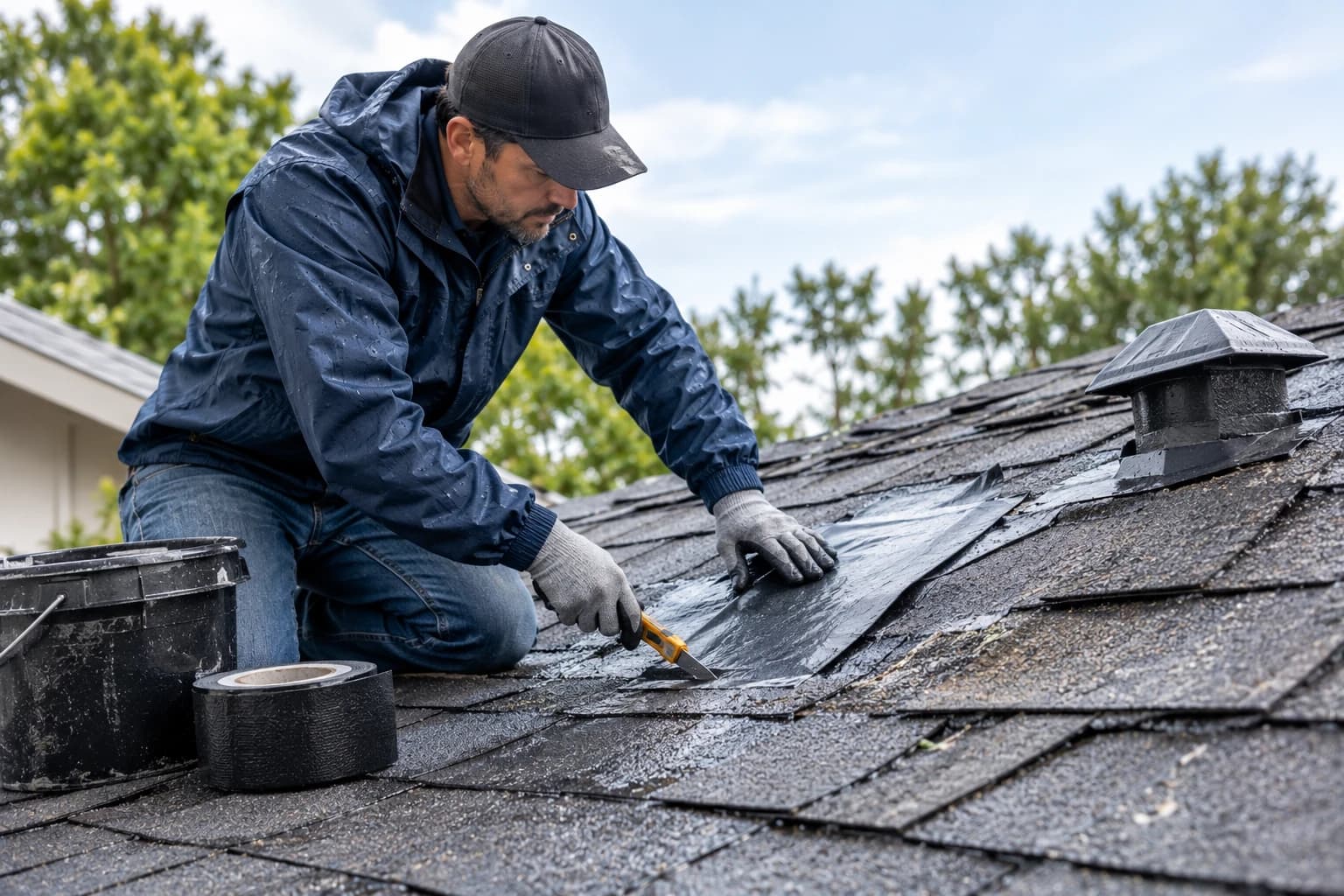
Roofing sealant or cement can close a small crack or cover an exposed nail head on a dry day. It is for small gaps only, and it should be used as the product directions say. It will not fix a missing shingle or a broken tile.
A temporary fix for a lifted or missing shingle
A lifted shingle can sometimes be re-sealed, and a missing one can be replaced with a matching piece. This is quick work for a roofer, and it is much safer than doing it yourself on a sloped roof.
A temporary flashing patch
Leaks around vents, chimneys and skylights usually come from flashing. A roofer can patch the flashing with sealant or a piece of metal until the proper repair can be made. These spots are where roofs leak most often, so a patch here should be checked soon.
Plastic sheeting and buckets inside
Plastic sheeting belongs inside the house, over belongings and in the attic under a drip, along with buckets. It is not a roof cover. On the roof, plastic tears in the wind and can trap water.
Which Temporary Fix Fits Which Problem
Missing shingles or tiles after wind
Temporary option
Roof tarp
What to know
Lasts days to weeks, so book the repair soon
Small crack or exposed nail head
Temporary option
Roofing sealant on a dry day
What to know
Closes small gaps only
Lifted shingle
Temporary option
Re-seal or replace the shingle
What to know
Quick for a roofer, risky to do yourself
Leak at a vent, chimney or skylight
Temporary option
Tarp or flashing patch
What to know
These spots fail often, so have them checked
Ceiling drip inside
Temporary option
Bucket and plastic sheeting
What to know
Protects the room but does not stop the leak
Mistakes That Make a Leak Worse
- Climbing onto a wet or steep roof
This is the most dangerous mistake. Call a roofer instead.
- Walking on tile
Tiles crack, and a broken tile can make the leak worse.
- Holding a tarp down with weights alone
Wind can lift it, and water can run underneath.
- Covering the roof with plastic sheeting
It tears and traps water.
- Piling sealant everywhere
It can hide the real source and make the repair harder.
- Skipping photos
Take them first, before you change anything.
- Waiting
A small leak can become a damaged ceiling, wet insulation and mold.
When to Call a Roofer
Call a roofer when water is coming in, when a storm has damaged the roof, when the leak is in more than one place, when a ceiling is sagging or when you have a tile roof.
At Quality Roofing Specialists, a roofer assesses and photographs the damage, puts temporary protection such as a tarp in place when it is needed, then makes the permanent repair, priced in writing first. You can call even after hours or on a weekend.
See emergency roof repair and storm damage for how it works, or our roof repair page for permanent fixes. To trace where the water is getting in, read how to find a roof leak.
Frequently Asked Questions
How long does a temporary roof repair last?
Usually days to a few weeks. A tarp or sealant is meant to hold until the permanent repair is made, and weather, wind and sun can wear it out sooner.
Is roofing cement a permanent fix?
No. Roofing cement can close a small gap for a while, but it does not repair the damaged material underneath. A roofer can tell you whether a patch will hold or whether the area needs a real repair.
Can I tarp my own roof?
It is risky. Tarping means working on a sloped, possibly wet roof, and a poorly fastened tarp can blow off. A roofer has the equipment and experience to do it safely.
Will a temporary repair affect my insurance claim?
Insurers generally expect you to take reasonable steps to prevent more damage. Keep your photos and receipts and tell your insurer what you did. Your policy has the details, and our guide to roof insurance claims in California covers the basics.
Should I try to walk on my tile roof to find the leak?
No. Tiles crack underfoot and the roof is steep and slippery. Look from the ground and call a roofer.
Protect Your Home Now, Repair It Properly Next
Temporary roof repair buys you time. It does not replace a proper repair, and the sooner a roofer finds the cause, the less damage the leak can do.
Quality Roofing Specialists provides emergency roof repair and roof repair for homes across Los Angeles and Orange County, with photos of the problem and a written scope and price before work begins.
If you are dealing with a leak, schedule a free roof evaluation and a roofer will check the roof and explain your next step.
Contact Quality Roofing Specialists to get a roofer out to your roof.