

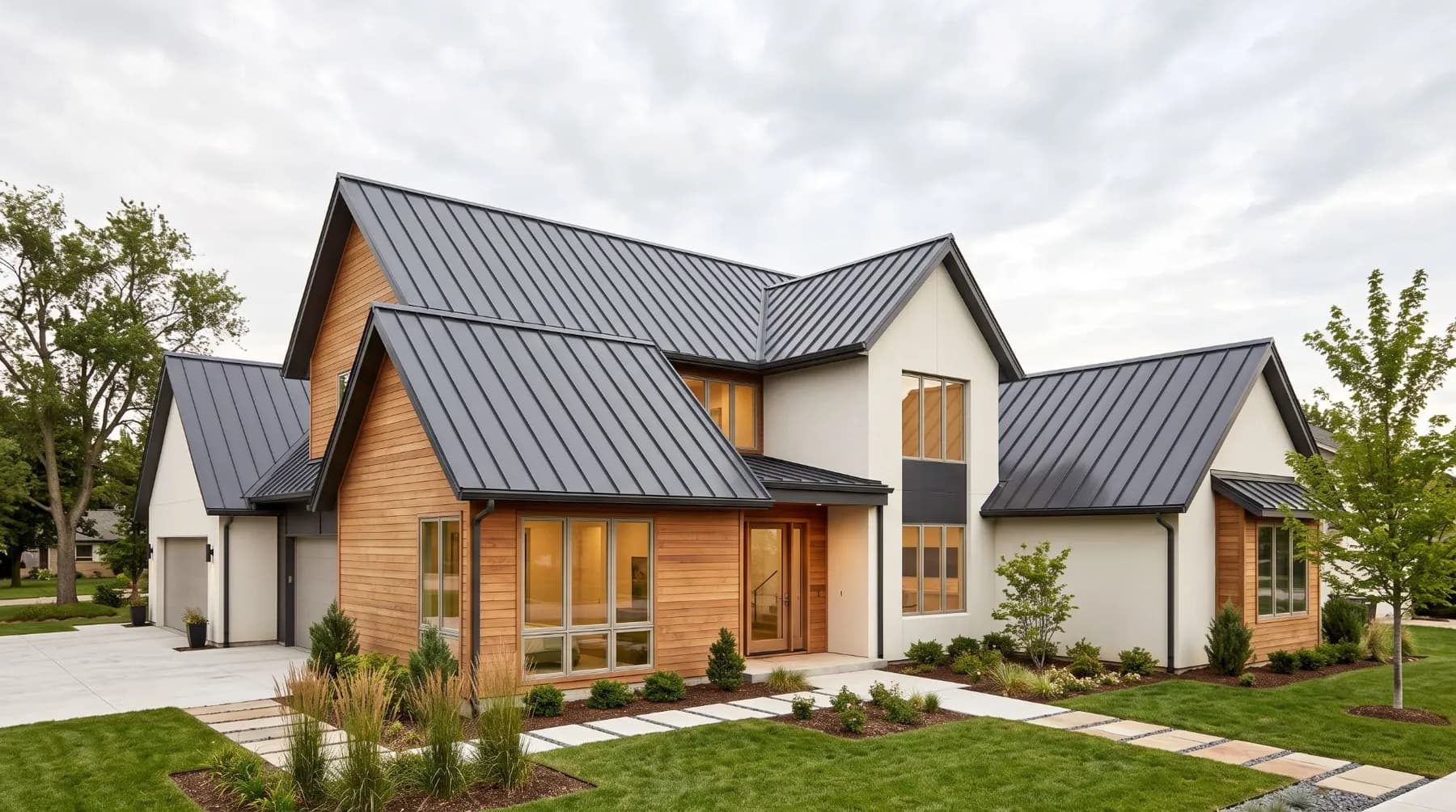
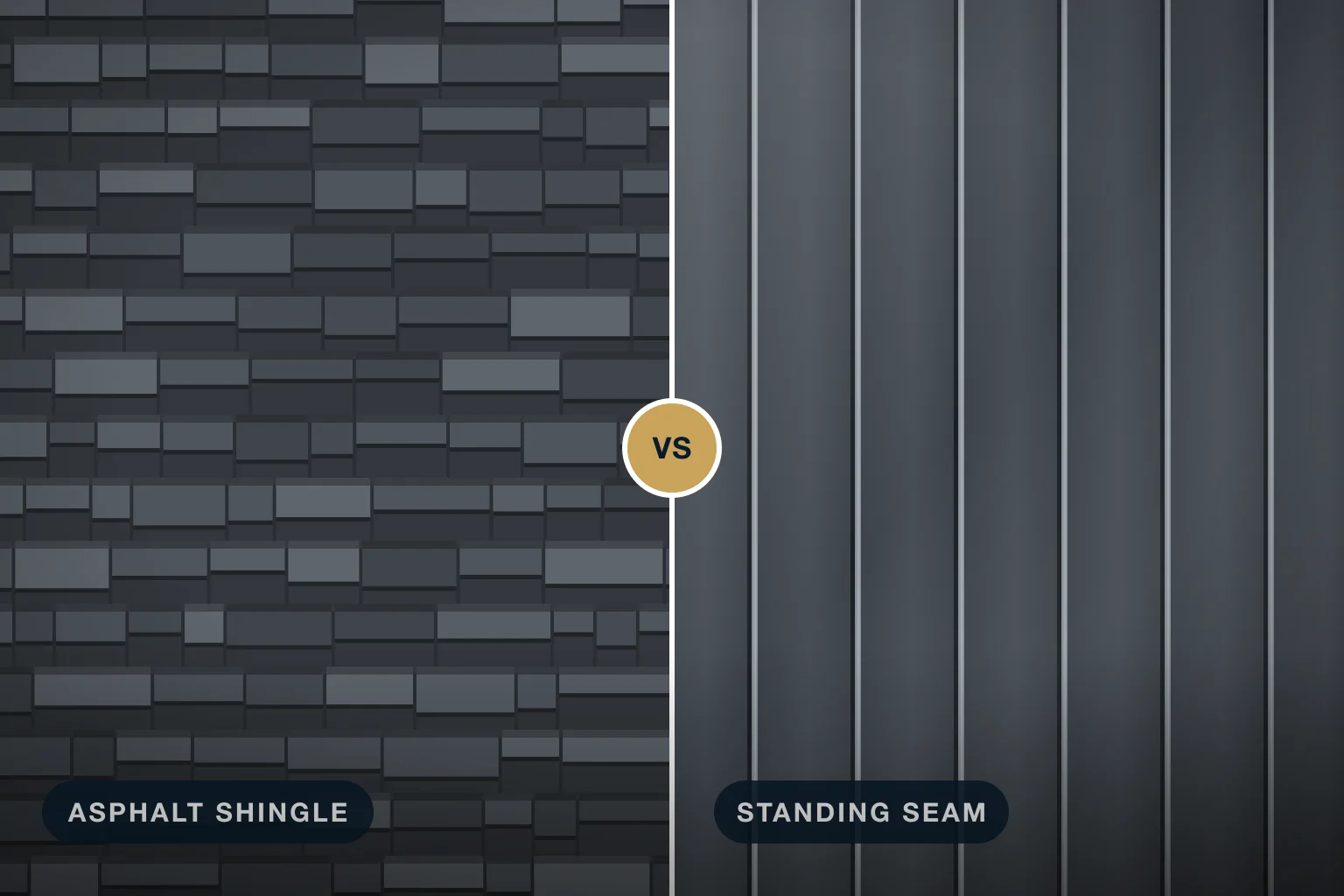
Standing Seam Metal Roofing in Los Angeles & Orange County — Sleek, clean lines and a roof built for the sun.
Standing seam metal roofing from QRS is our LockSeam Metal System, built around the parts you can’t see as well as the panels: the deck and underlayment beneath them, the clips under the seams and the flashings at every wall and vent. We plan and install each with care.
- Free roof evaluation
- Written price before any work
- 10-year workmanship warranty (call for details)
- CSLB #1061942
Standing seam metal roofing
Metal shows the quality of the installation.
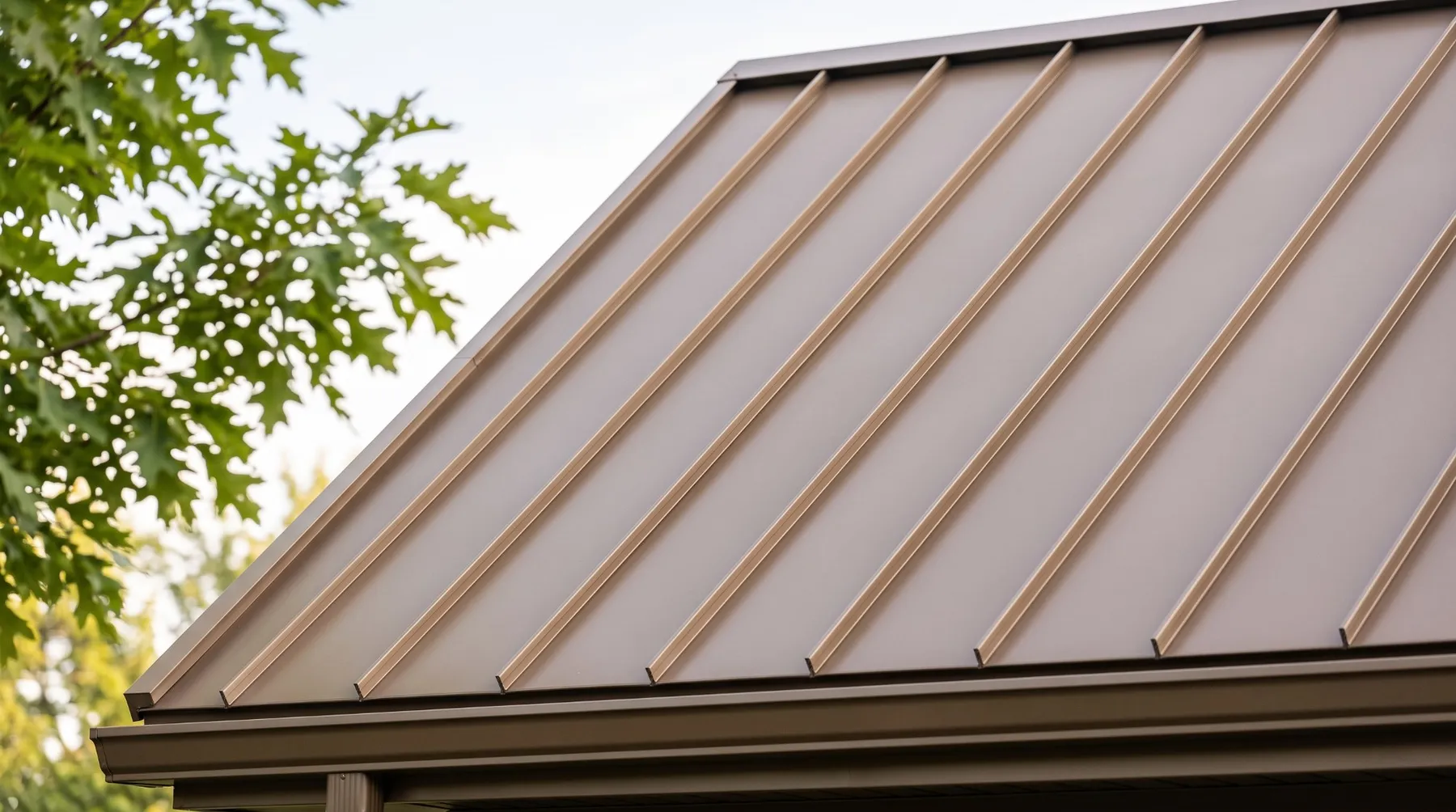
Standing seam panels run from ridge to eave, held by concealed clips under seams that stand above the flat of the panel, so no screws pierce the face of the metal. A wavy deck or a clip fastened too tight shows up as ripples in the finished roof, so we don’t take shortcuts.
How we work
How we install a standing seam roof
A straight answer on fit.
A roofer checks your slope, flashings and exposure and talks through profile, metal and color with you, and tells you plainly if another roof would suit your home better. The written scope lists the panels, underlayment, trims and flashings with the price.
- Slope and roof condition
- Walls, valleys, vents and skylights
- Sun, wind and salt-air exposure
A flat deck under every panel.
On a replacement, the old roof comes off and the deck is checked closely, since metal shows every dip and hump beneath it. Underlayment suited to the heat under metal goes down, and we photograph it before the panels cover it.
Clips that let the metal move.
Each panel is set straight and square and held by concealed clips that grip the seam while leaving the metal room to expand in the afternoon sun and contract at night, which keeps it from buckling or working fasteners loose. The seams are locked together from ridge to eave.
Trims, flashings and closures to finish.
Eaves, rakes, ridge, valleys and walls get matching trims and flashings, and the panel ends get closures that keep out wind-driven rain, pests and debris. We walk the finished roof with you and go over our 10-year workmanship warranty (call for details). For a metal roof that already leaks, see metal roof repair.
- Eave, rake and ridge trims
- Valley, wall and chimney flashings
- Pipe and vent flashings made for metal
Client stories
In their own words
Reviews from the people we roof for, on Google.
I was recommended this roofing company by a friend, and I’m really glad I went with them. I had a problem with water leaking into my attic from the flashing around the chimney, and the team was very helpful from the start. Tony was the roofer working with me, and he was always professional and friendly. He took care of resealing the flashing and chimney, which made the leak much better right away. He kept in touch with me after the work, and now we’re working on sealing the chimney even more to make sure everything is perfect. I feel confident that the team will get everything fixed up right. Based on my experience so far, I’d definitely give them five stars. Thanks to everyone there for their hard work!
Kelsey Breadmont4 months ago · GoogleI was looking to replace my shingles roof in Encino and contacted a few roofing companies in the neighborhood. Out of four roofers, Quality Roofing Specialist was the only one that worked with my budget as well as my schedule. Their work was fantastic, and we love the outcome. They exceeded my expectations. I will definitely recommend to friends.
Jose Linareza month ago · GoogleWe trusted Tony for a full roof replacement. They showed up early each day, worked efficiently, and kept us updated. I appreciated the patience in answering our concerns about materials and warranty. The new roof looks sharp and already makes the home feel more energy-efficient.
Angel4 months ago · GoogleWe had an awesome experience with the crew of Quality Roofing. I called around to get quotes for a roof replacement and they gave me much better quote than the other roofing companies. Definitely within the budget and did a perfect job. No mess, they cleaned everything at the end
Emilee Crowley3 months ago · GoogleTony went above and beyond my expectations!! He was available immediately to inspect the roof and gave a great deal. He definitely worked with our budget. I highly recommend Quality Roofing for any roof repair you may need:)
Cynthia Pina5 months ago · Google
Quality roofing specialist exceeded my expectations from start to finish. The crew showed up on time, explained everything clearly, and the quality of the work was outstanding. They were professional, honest, and left the property spotless when the job was done. It’s hard to find reliable contractor in LA, but these guys definitely earned my trust. I highly recommend them to anyone looking for quality roofing work. Five stars all the way!
Samuel Mcilwee2 months ago · GoogleTony was very responsive when I called. The entire process was faster than I expected. With his continuous supervision the whole project went so smoothly and professionally, the place was cleaned up completely.
I have a beautiful roof now :)Liron Yosef3 weeks ago · GoogleWe had a great experience with Quality Roofing Specialist. Tony, the project manager, was awesome to work with. He kept us updated, answered all our questions, and made sure everything went smoothly. The crew did a great job, and the final result looks amazing. I would definitely recommend Tony and the whole team
Stella Ink LAa month ago · GoogleWe recently had our roof replaced by Quality Roofing Specialists, and the entire experience was excellent. The crew arrived on time every day, kept the property clean, and finished the project exactly as promised. The quality of the workmanship is outstanding, and the new roof looks amazing. If you’re looking for a reliable roofing contractor, I highly recommend this company.
Noam Nahori2 months ago · Google
Frequently Asked Questions
Straight answers about standing seam metal roofing.
How is standing seam different from other metal roofs?
The biggest difference is the fasteners. Exposed-fastener metal panels are screwed through their face and rely on rubber washers that break down in the sun, while standing seam hides its fasteners under the seams. That leaves fewer openings for water and a cleaner look from the street.
Is a standing seam roof noisy when it rains?
Not usually on a home. Over a solid deck with underlayment and an insulated attic, rain on metal sounds much like rain on other roofs. The drumming people remember comes from panels over open framing, like a barn, which is also what you’ll hear under a metal patio cover.
What is oil-canning, and can you prevent it?
Oil-canning is a slight waviness that can appear in the flat part of metal panels, most visible in low, raking light. It’s cosmetic and doesn’t change how the roof sheds water. No installer can rule it out entirely, but a flat deck, careful handling and clips that aren’t fastened too tight keep it to a minimum, and panels with light ribbing in the flats make it harder to see.
Can standing seam go on a low-slope roof?
Often, yes. Some standing seam panels are designed for lower slopes than shingles or tile can handle, but the panel and seam type have to match the pitch. We confirm your slope first, and if metal isn’t the right fit, a flat roofing system may suit it better.
Does standing seam cost more than a shingle roof?
Usually, at least up front. The panels, trims and specialized labor cost more than an asphalt shingle roof, and the final price depends on your roof’s size, shape and details. Your written scope shows the price before any work starts, and if you’d like to compare, we can also scope a shingle roof replacement for the same roof.
Start here
Tell us what you need.
Two minutes. A clear next step. No pressure.
Prefer to answer a few questions instead? Use the step-by-step form
Get a Straight Answer on standing seam metal roofing
Tell us what’s going on with your roof. A roofer, not a salesperson, looks at it and gives you a clear next step on standing seam metal roofing, with a written scope and price.
- CSLB licensed, bonded & insured
- 10-year workmanship warranty (call for details)
- Google customer reviews
