

What to Do in the First Hour of an Active Roof Leak: Step by Step
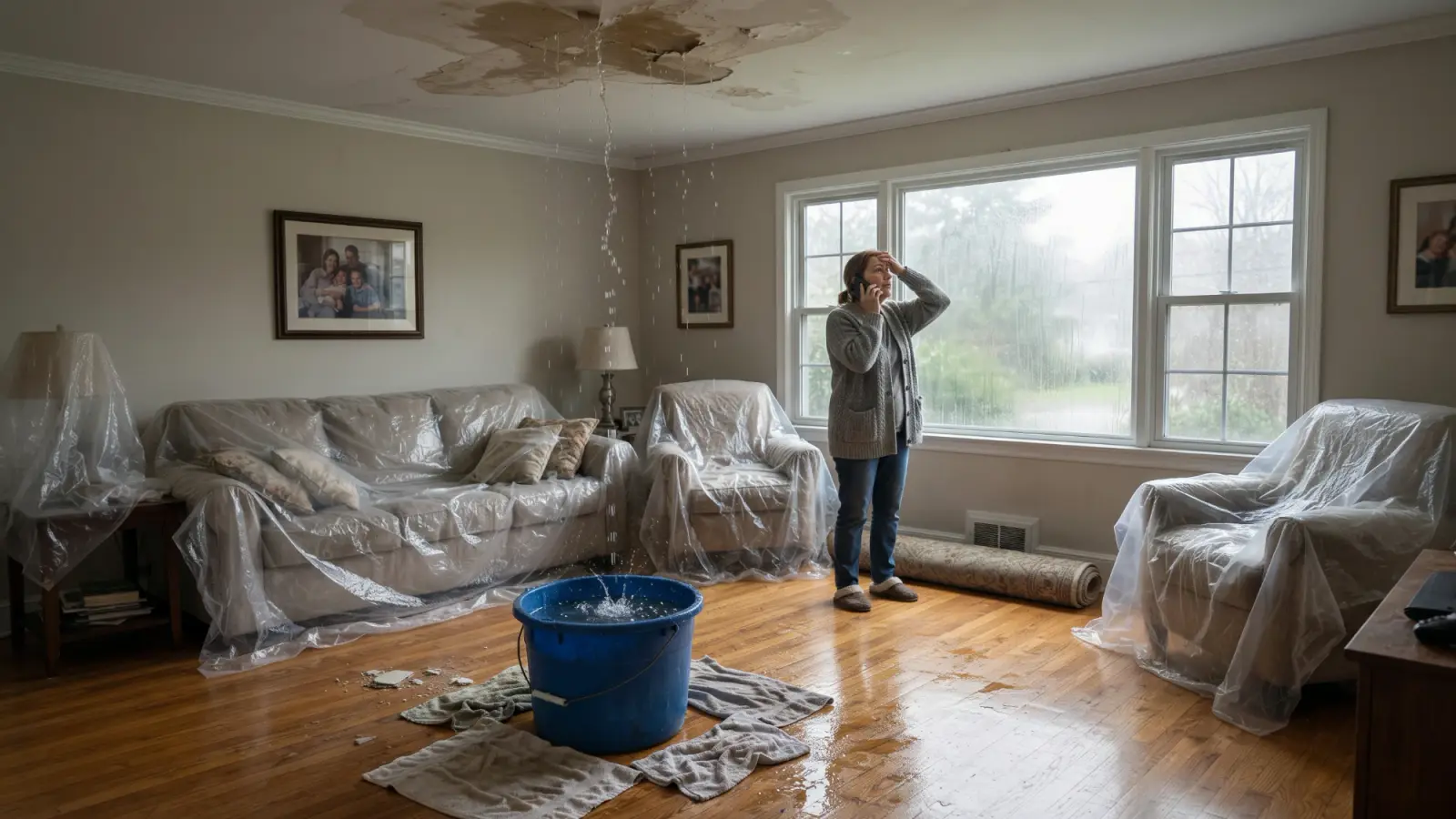
An active roof leak is stressful, and the first hour is when the right moves save the most. You don’t need to fix the roof. You need to keep everyone safe, keep the water off your things, get a roofer on the way and write down what happened.
Here is the hour, step by step. If water is coming in right now, call us at (310) 340-1643 as soon as everyone is safe: we take emergency roof repair calls after hours and on weekends.
Minutes 0 to 5: Make It Safe
Before you think about buckets, think about people.
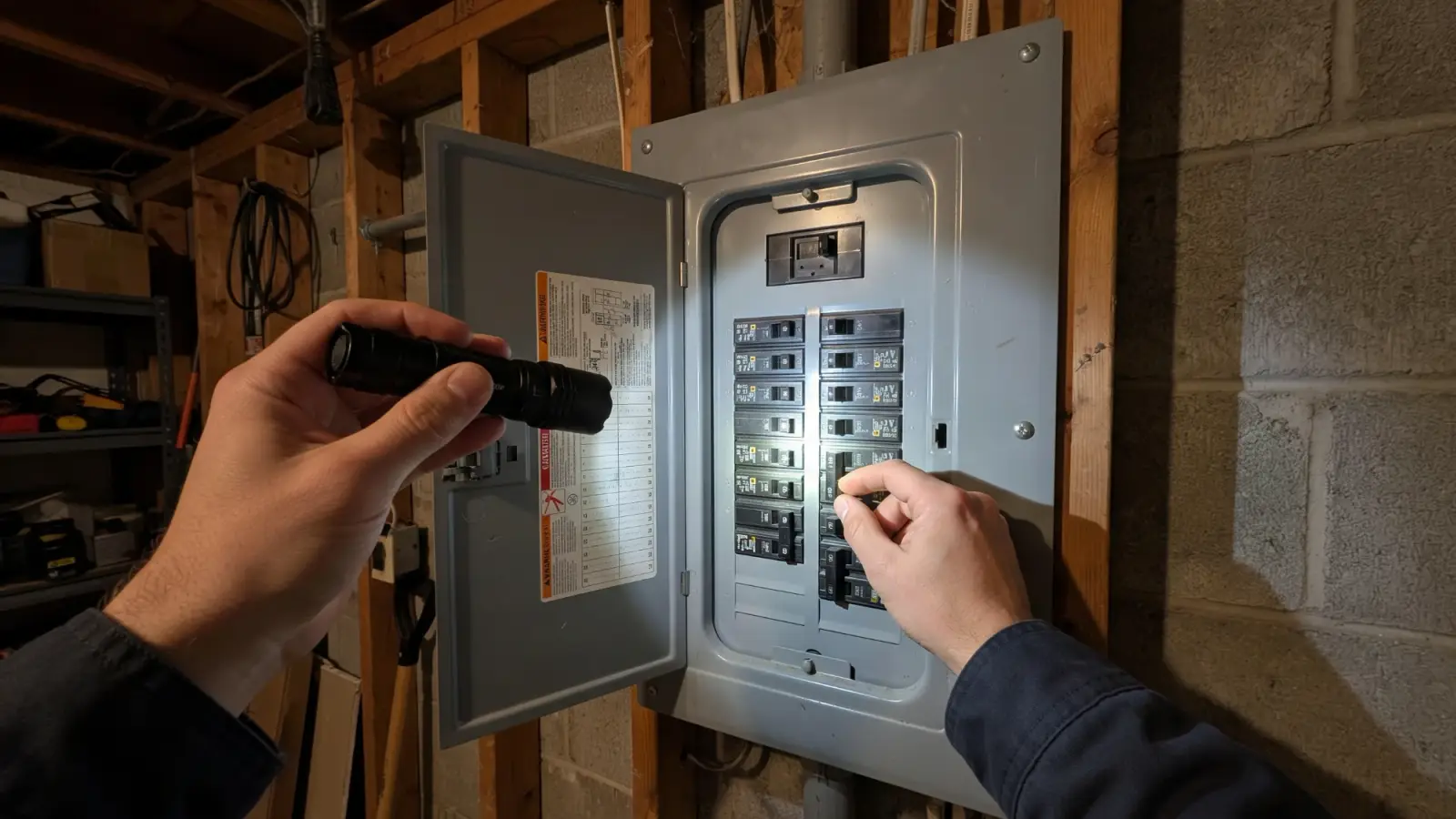
- Keep away from water near lights, fans and outlets. If water is near a fixture or wiring, switch that circuit off at the breaker, but only if you can reach the panel without standing in water.
- Don’t stand under a sagging ceiling. A ceiling that bulges or holds water can come down. Keep everyone, and pets, out of that room.
- Stay off the roof. A wet roof in the rain is no place for anyone, and a roofer will handle what is up there.
- A tree through the roof or a downed power line? Keep everyone clear and call 911 first.
Minutes 5 to 15: Catch the Water
Now limit the damage inside.
- Put a bucket under every drip. A towel in the bottom stops the splash.
- Move what you can. Furniture, rugs, electronics and anything paper go out of the wet area first.
- Cover what you can’t move. Plastic sheeting or a tarp over beds, couches and shelves.
- Soak up standing water. Towels on the floor, wrung out often, so it doesn’t spread under walls and cabinets.
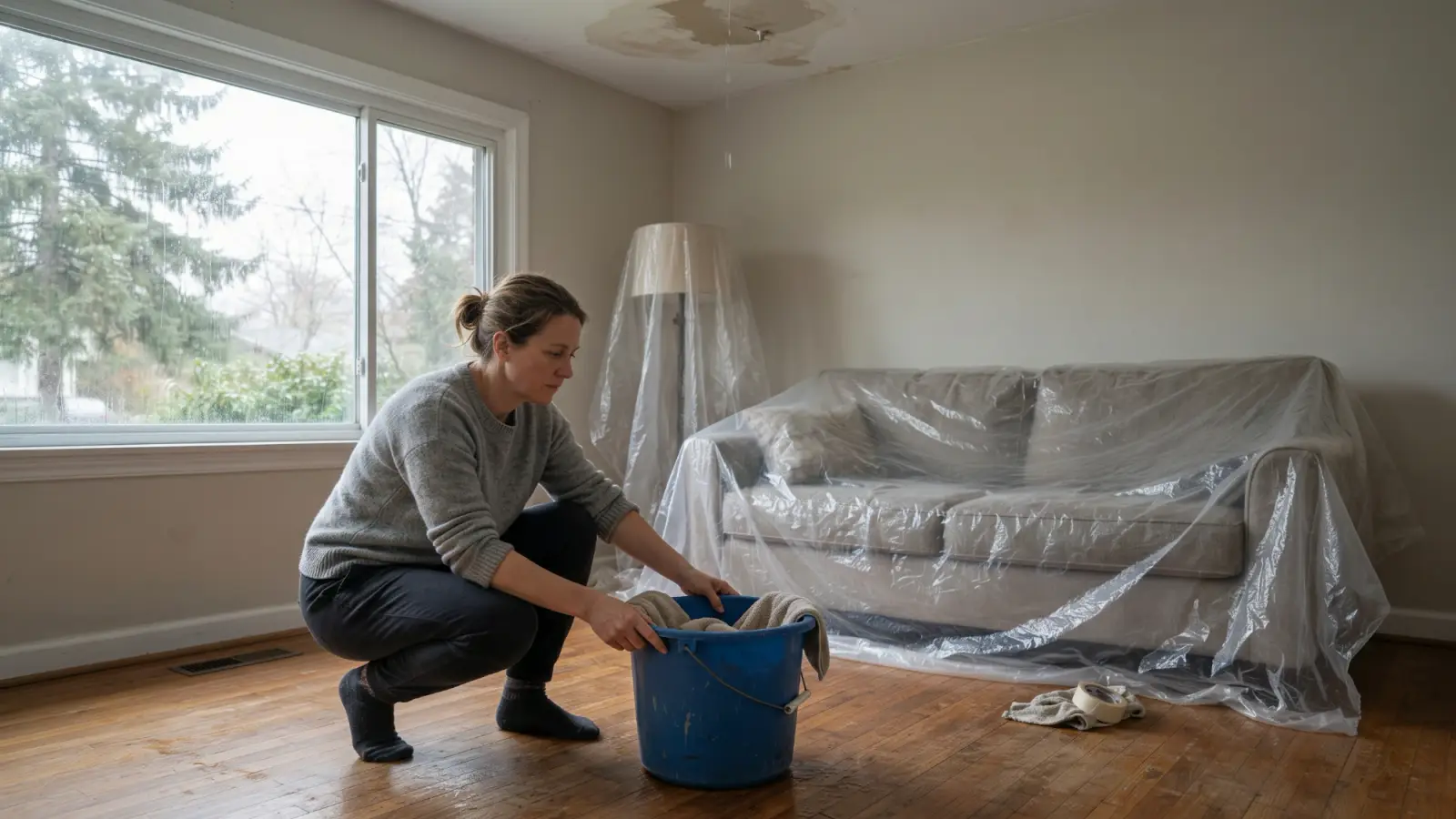
Water rarely drips right below where it gets in, so if a second spot starts, give it a bucket too and note where it is.
Minutes 15 to 20: Call a Roofer
Call as soon as the water is contained. The sooner a roofer knows, the sooner one is on the way. Call (310) 340-1643; our field techs take emergency calls outside regular office hours, on weekdays and weekends, and we will tell you when a roofer can be there.
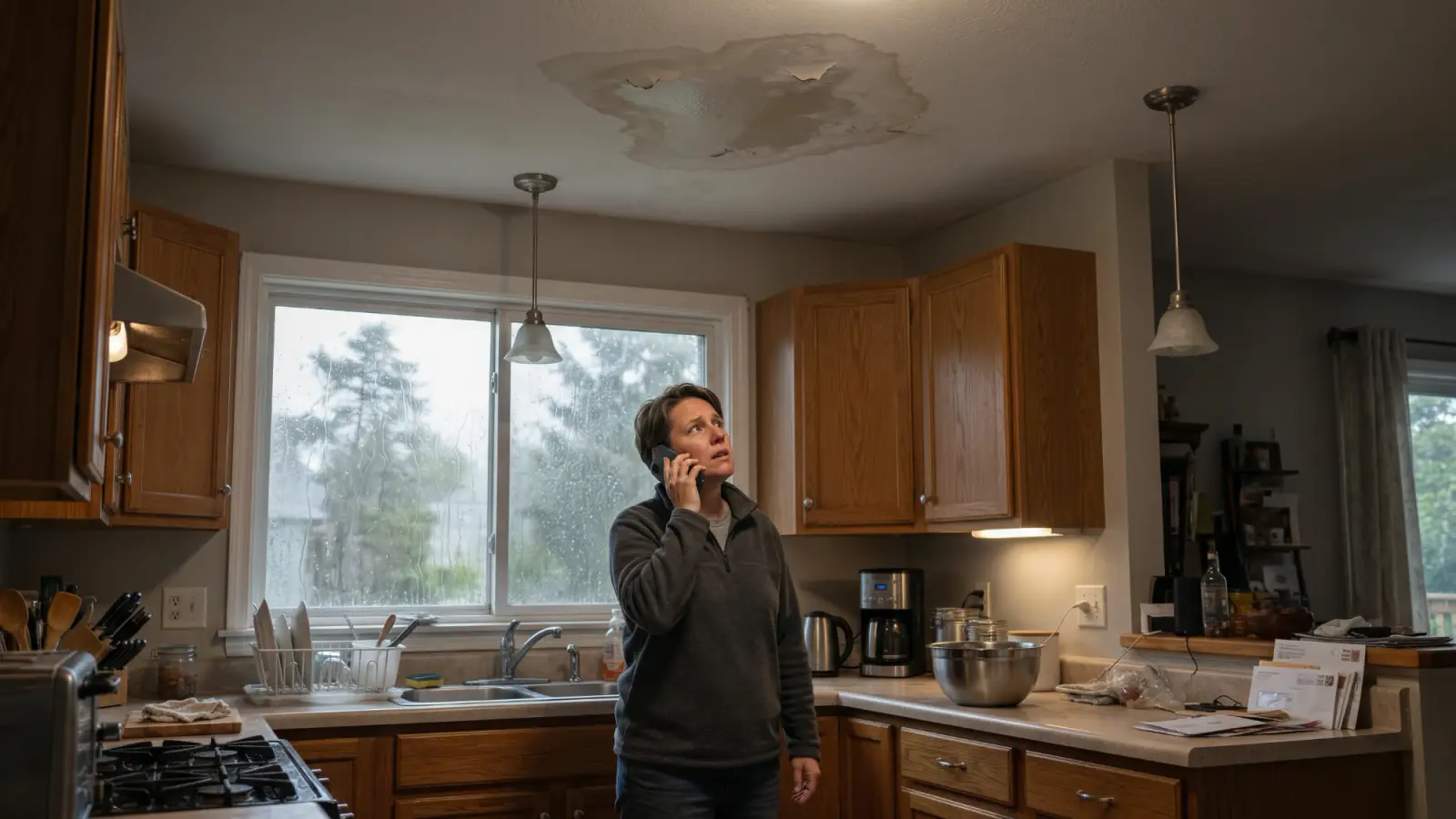
Have these ready when you call:
- Where the water is coming in, and how fast it is dripping
- When it started, and whether it is still raining
- Your roof type, if you know it: shingle, tile or flat
- Whether a ceiling is sagging or anything fell on the roof
- Photos, if you already took some
Minutes 20 to 40: Document Everything
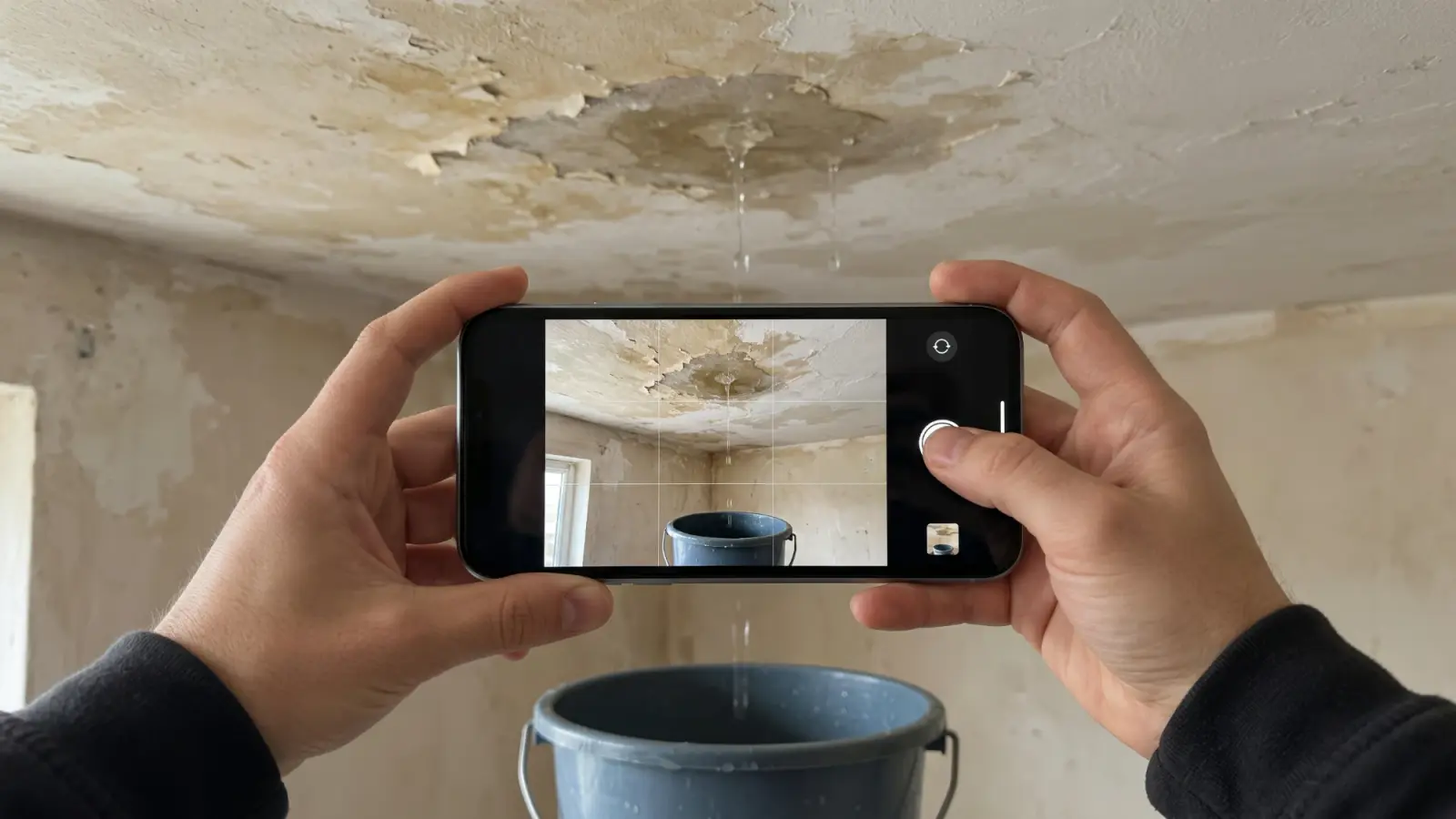
While you wait, take photos and short videos. They help the roofer find the source and help your insurance company if you file a claim.
- The ceiling and walls: the stain, the drip and any sagging, from a safe distance.
- What got wet: furniture, floors, belongings, before you move or throw anything away.
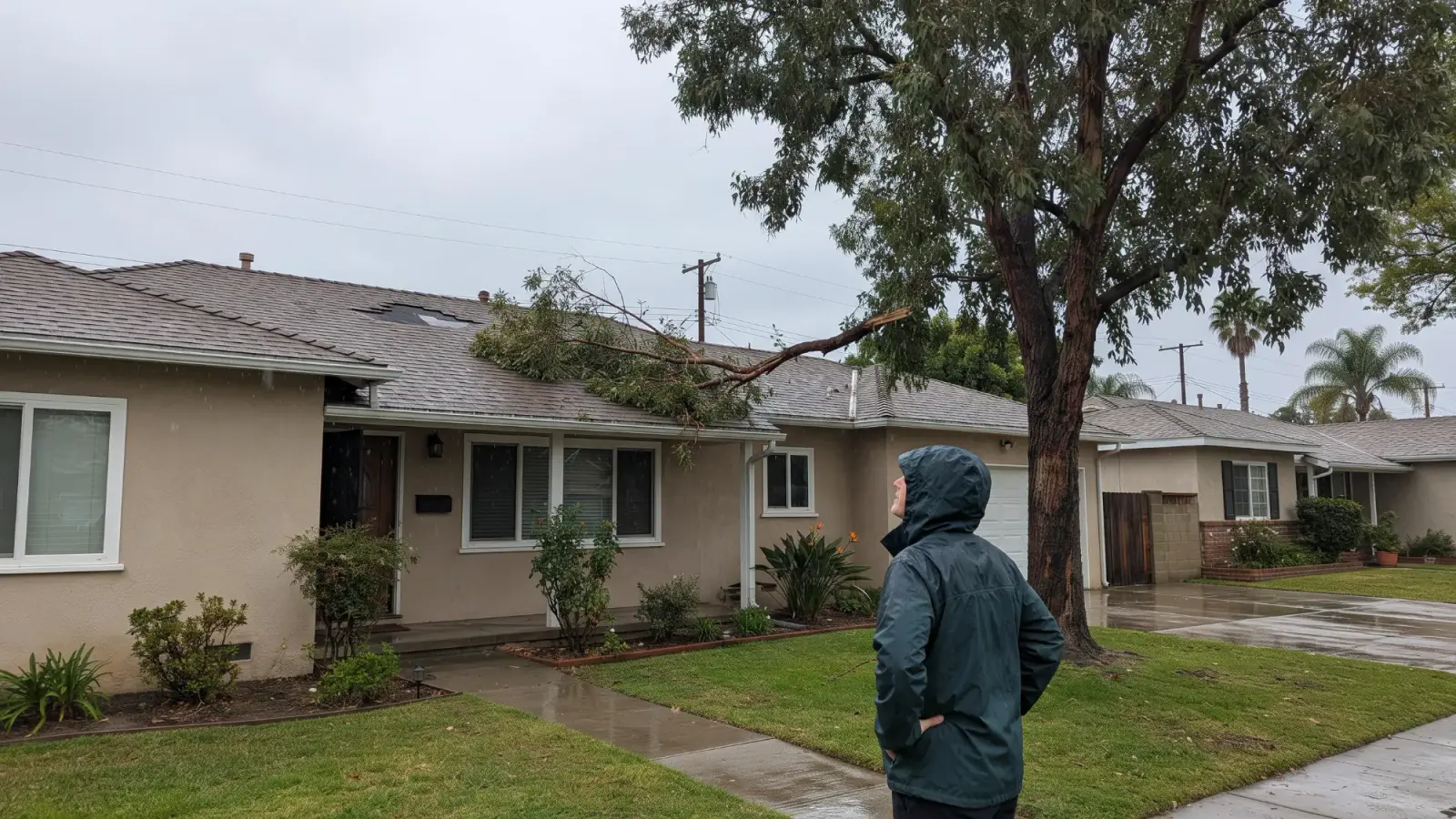
- The outside, from the ground: missing shingles, a fallen branch, overflowing gutters, anything the storm moved.
- The time: your phone stamps every photo, so take them as you go.
Keep receipts for anything you buy to protect the house. Our article on roof insurance claims explains what insurers usually ask for.
Minutes 40 to 60: Look From the Ground
If the rain eases and it is safe to step outside, walk around the house and look up. Don’t climb anything.
- Missing, lifted or broken shingles or tiles above the leak
- A branch or debris on the roof
- Gutters or downspouts overflowing, especially above the wet wall
- Loose metal around a chimney, a skylight or a vent
Our guide to checking your roof from the ground shows what to look for. If you can get into the attic safely, a flashlight on the wet wood above the stain tells the roofer even more; our attic walkthrough shows how.
What Not to Do in the First Hour
- Don’t climb onto the roof
Not to look, not to tarp, not in the rain. Falls from roofs are the worst outcome of any leak.
- Don’t stand under a sagging ceiling
Keep the room clear until a roofer has looked.
- Don’t use electricity near the water
No vacuums, fans or extension cords in a wet area until the circuit is off.
- Don’t caulk or tar from the inside
Water comes from above; sealing the ceiling only moves the drip.
- Don’t wait to see if it stops
A leak that stops when the rain stops will start again with the next storm, and the wet wood keeps getting worse in between.
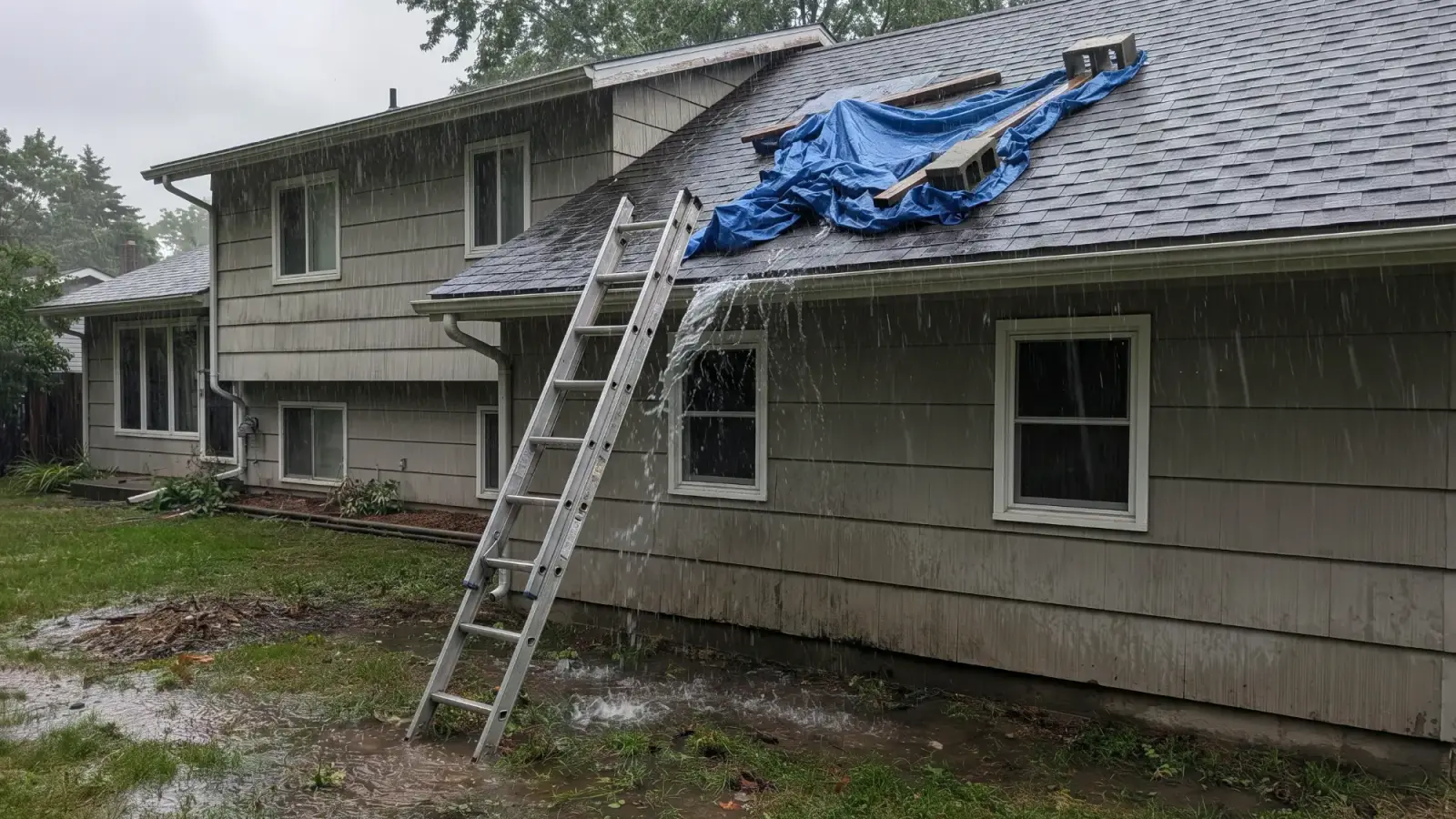
If you want to know what a temporary fix looks like once the rain stops, our articles on how to stop a leaking roof now and how to stop a roof leak cover what is safe and what to leave to a roofer.
What Our Roofer Does When They Arrive
- Assesses and photographs the damage. A storm damage roof inspection covers the damaged area and the roof around it, following the water’s path, including what you can’t see from the ground.
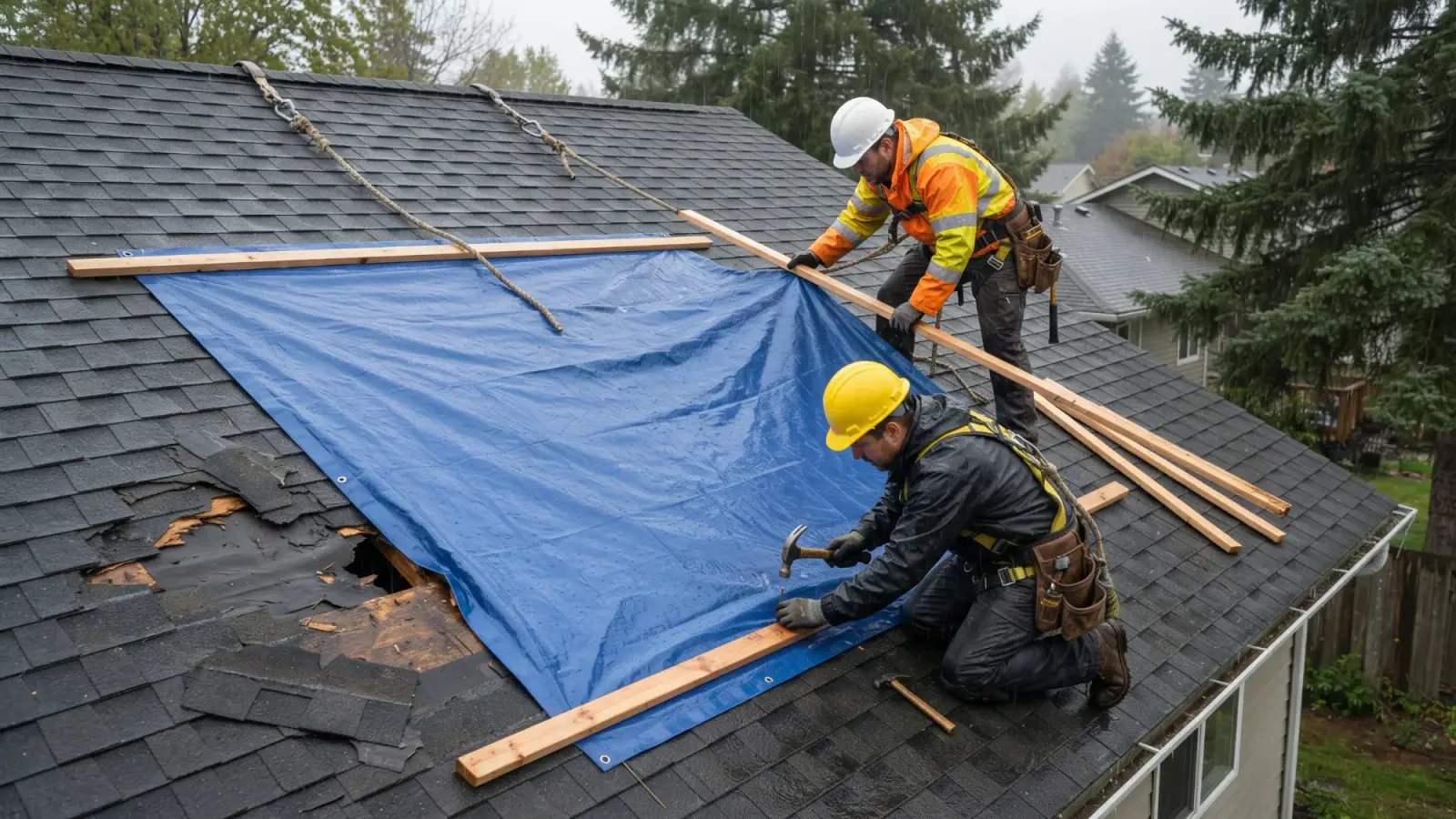
- Stops the water now. When the permanent repair has to wait, we cover the damaged area, for example with a tarp, to limit further water damage.
- Explains what happened. Storm damage is often limited to one part of the roof, and when a repair will fix it, that is what we recommend.
- Puts the price in writing. Before the permanent repair starts, you get a written scope and price with the photos, ready to share with your insurance company.
- Finishes clean. A nail sweep, a tidy clean-up and photos of the completed work.
After the First Hour: Drying Out
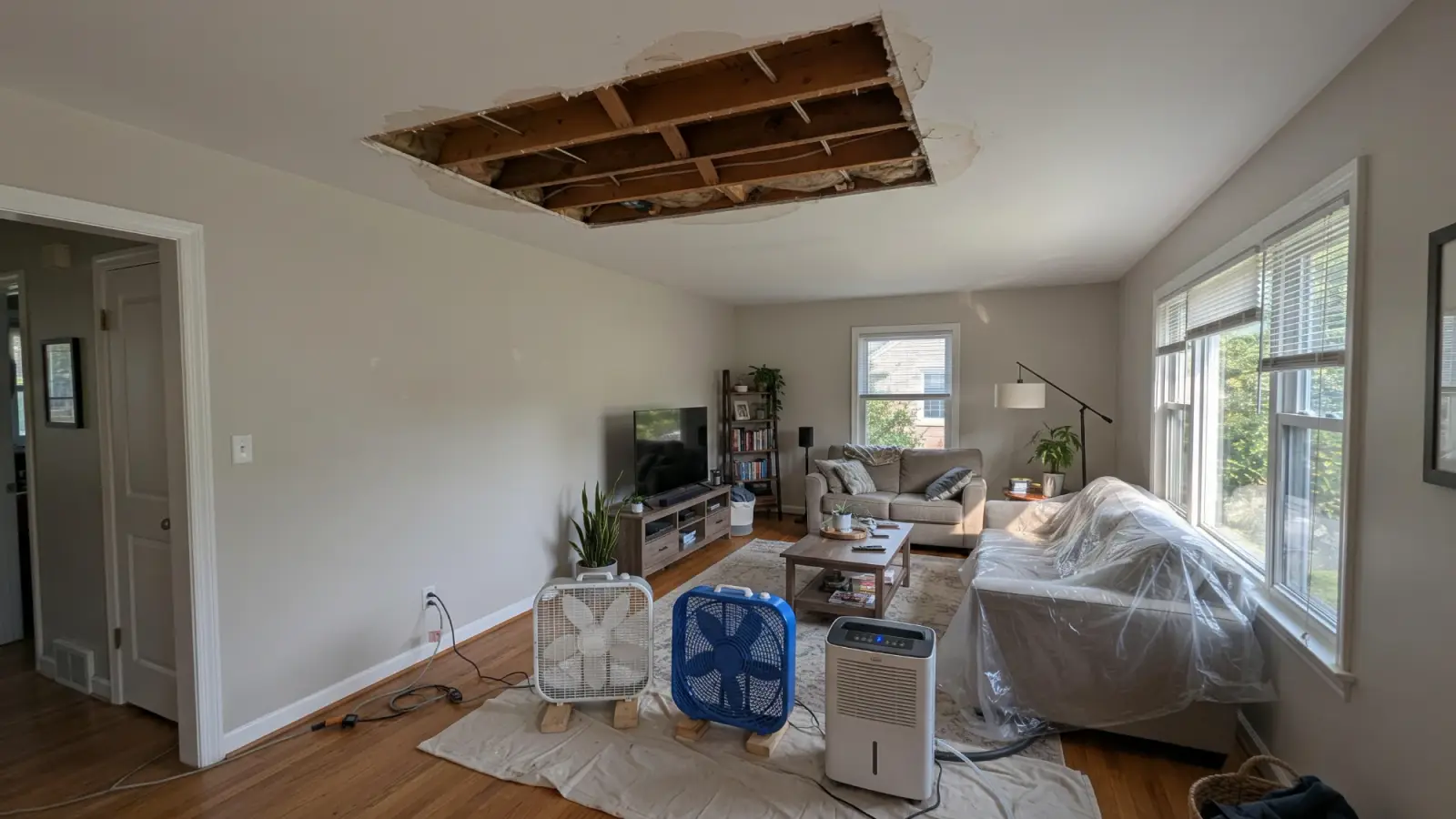
Once the water has stopped, keep the area dry and the air moving. Wet drywall and insulation hold water and can grow mold if they stay wet, so a ceiling that got soaked may need to be opened up and replaced. That interior work is a job for a water damage or restoration company; we fix the roof that let the water in, and our photos help them see where it came from.
Your First-Hour Checklist
Save this for the next storm.
Frequently Asked Questions
Should I go on the roof to stop an active leak?
No. A wet roof is slippery, and a fall is far worse than any leak. Contain the water inside, take photos and call a roofer, who can cover the damaged area safely.
Is an active roof leak an emergency?
If water is coming in now, yes. We take emergency roof repair calls after hours and on weekends, and we will tell you when a roofer can be there.
Can a roofer fix a leak while it is raining?
Usually the permanent repair waits for dry weather. In the meantime, we cover the damaged area, for example with a tarp, to limit further water damage, and you get a written scope and price for the permanent repair.
What should I tell the roofer when I call?
Where the water is coming in and how fast, when it started, whether it is still raining, your roof type if you know it, and whether anything is sagging or fell on the roof. Photos help too.
What if the ceiling is bulging with water?
Keep everyone out from under it, move what you can out of the room, switch off any light or outlet near it at the breaker, and call right away.
Will my insurance cover a roof leak?
Your insurer decides, usually depending on the cause: sudden storm damage is treated differently from wear. Photos from the first hour help, and we give you a written scope and our photos to share with them.
Water Coming In Right Now? Call.
Make it safe, catch the water, then call (310) 340-1643, even after hours or on a weekend. A roofer will find where the water is getting in, cover it if the repair has to wait, and give you a written scope and price for the permanent fix. See our emergency roof repair page, or request a roof evaluation if the water has already stopped.
