

How to Read a Ceiling Stain: Roof Leak, Condensation or Plumbing?
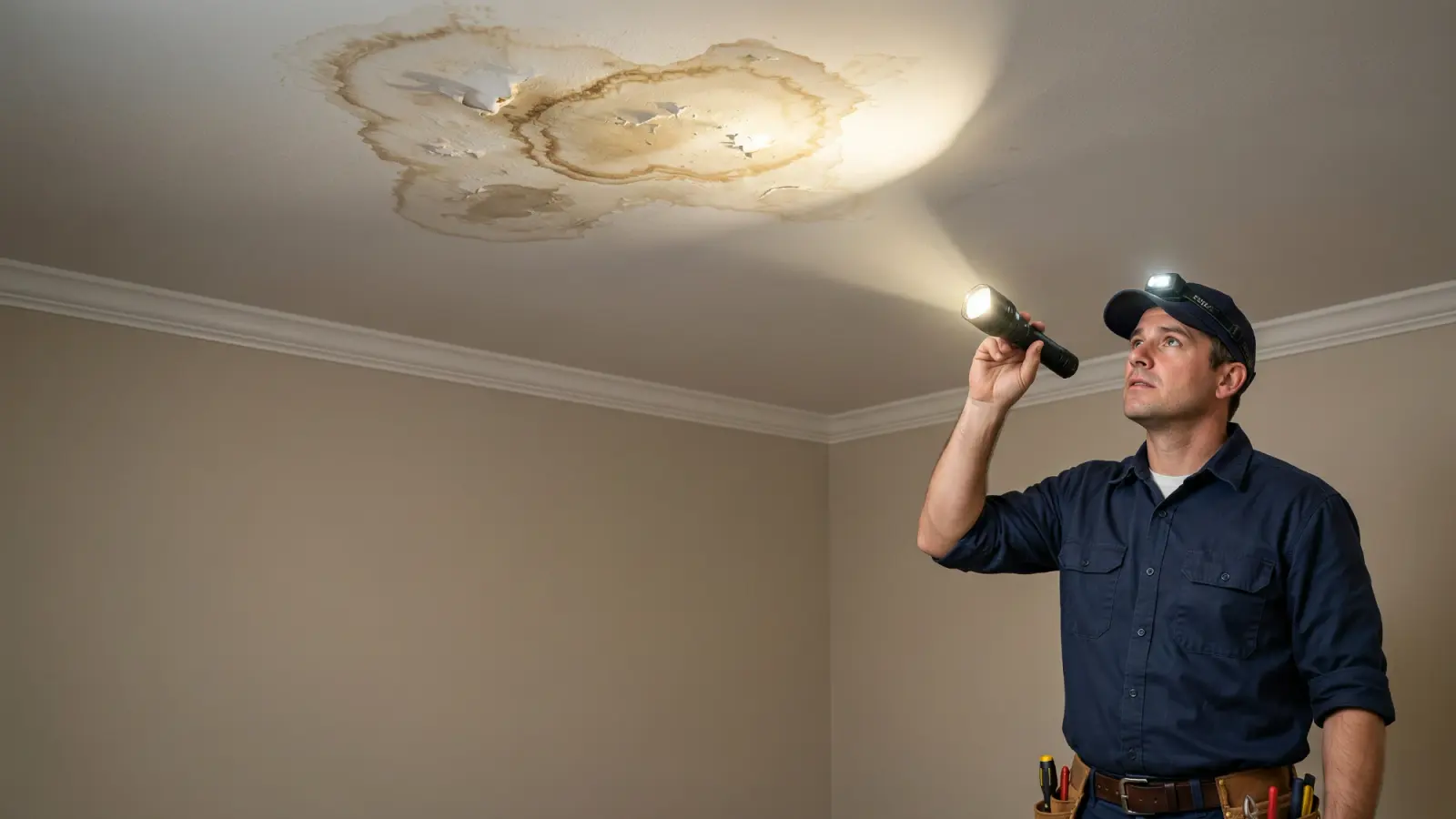
A ceiling stain is water telling you something, but not always where it came from. The three usual sources are a roof leak, condensation in the attic, and plumbing, and each one leaves different clues.
Roof leaks are the ones we fix. Before you call anyone, though, it helps to know which of the three you are looking at, so the right trade comes out first. Here is how we read a stain, side by side, from the four clues we look at on every call.
First, Is It Safe?
Most stains are dry marks from water that has come and gone. Some are not. Before you study it, check that the ceiling itself is not a hazard.
- A sagging or bulging ceiling can be holding water. Keep people and pets out from under it and move what you can out of the way.
- A stain near a light or a ceiling fan: switch that circuit off at the breaker until someone has looked at it.
- Water dripping now: put a bucket under it and protect the floor.
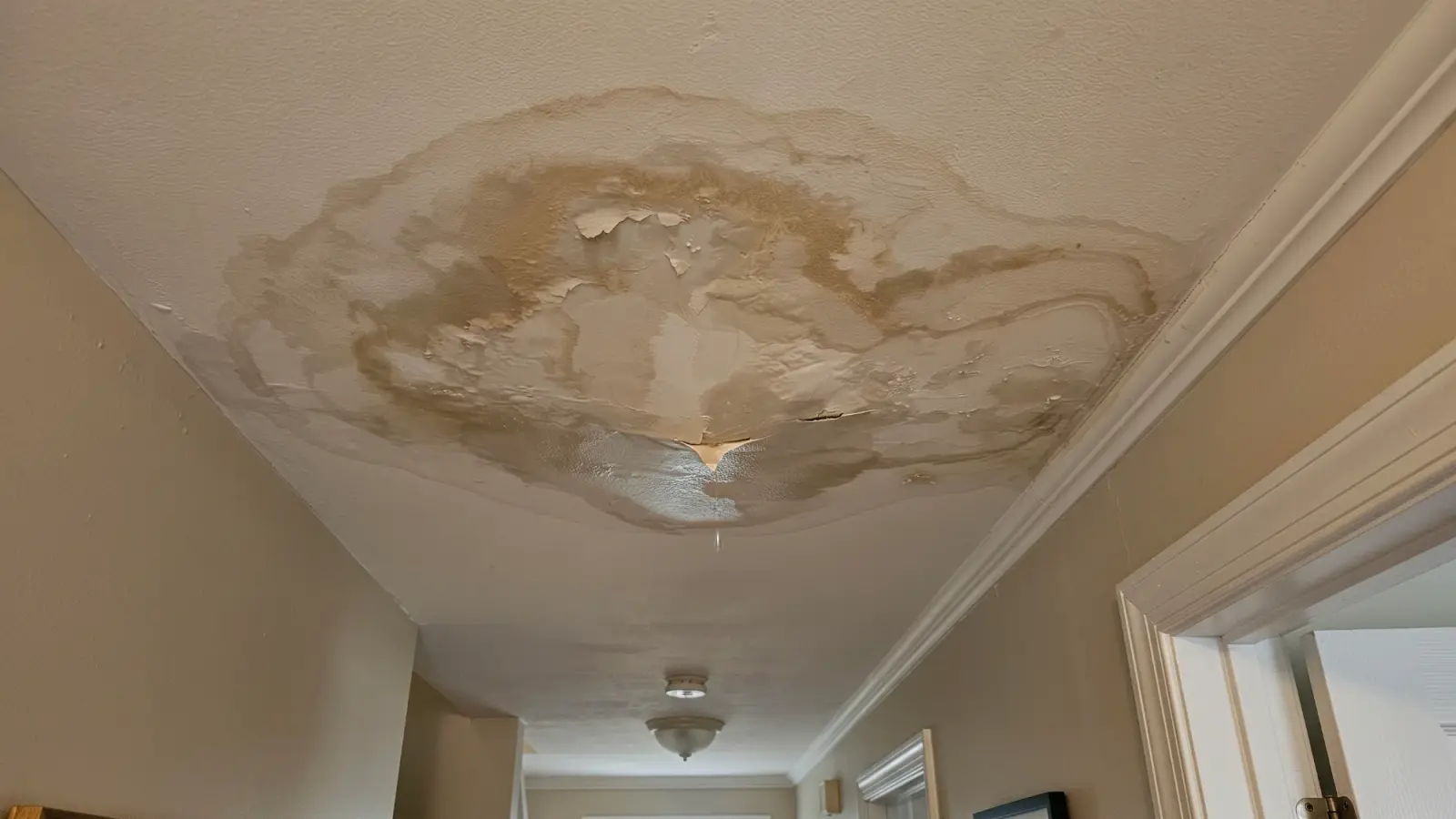
Water coming in during rain? That is an emergency roof repair call. Emergency calls are taken after hours and on weekends, and we tarp the roof when it needs it.
Roof Leak, Condensation or Plumbing: Side by Side
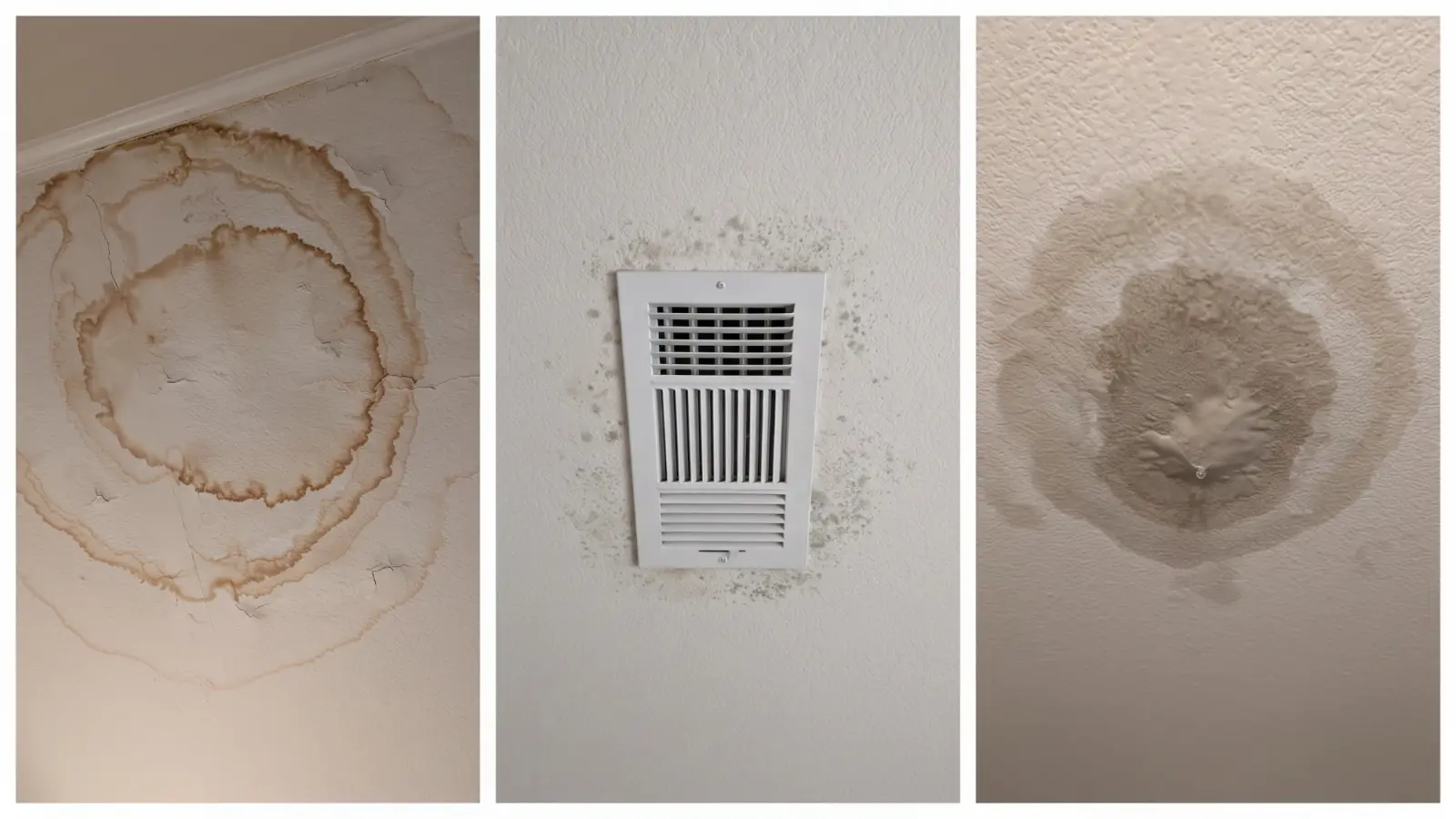
Here are the three usual sources of a ceiling stain next to each other. Most stains match one column far better than the other two.
Roof leak
- When it shows up
- During or after rain, sometimes a day or two later. It stays the same in dry weather and grows with the next storm.
- Where on the ceiling
- Top-floor ceilings, often near an outside wall, a chimney, a skylight or a vent pipe, but it can be feet away from where water gets in
- What it looks like
- Brown or yellow rings with darker edges, a new ring after each storm
- Who to call
- A roofer
Condensation
- When it shows up
- In dry weather: on cool mornings, or when the air conditioning runs hard on a hot day
- Where on the ceiling
- Top-floor ceilings under the attic, around air conditioning vents, ducts, and bathroom or kitchen fan vents
- What it looks like
- Small, faint gray or brown spots, damp drywall around a vent, sometimes mildew
- Who to call
- A roofer for attic ventilation, or an HVAC technician for ducts and drain lines
Plumbing
- When it shows up
- Any time, rain or shine, often after a shower, a flush or an appliance runs
- Where on the ceiling
- Under a bathroom, kitchen, laundry room or water heater, or along the line of a pipe, on any floor
- What it looks like
- A stain that keeps growing or stays damp, sometimes a drip that comes with water use
- Who to call
- A plumber
Clue 1: When Did the Stain Show Up?
Timing is the strongest clue, and it costs nothing to collect.
- Only after rain: the roof is the likely source. Windows and walls can also let wind-driven rain in, but those stains usually sit at the edge of the ceiling next to the window or wall.
- In dry weather: look at condensation, the air conditioning or plumbing first.
- Any time, and it grows: something is still feeding it. Plumbing is the usual suspect.
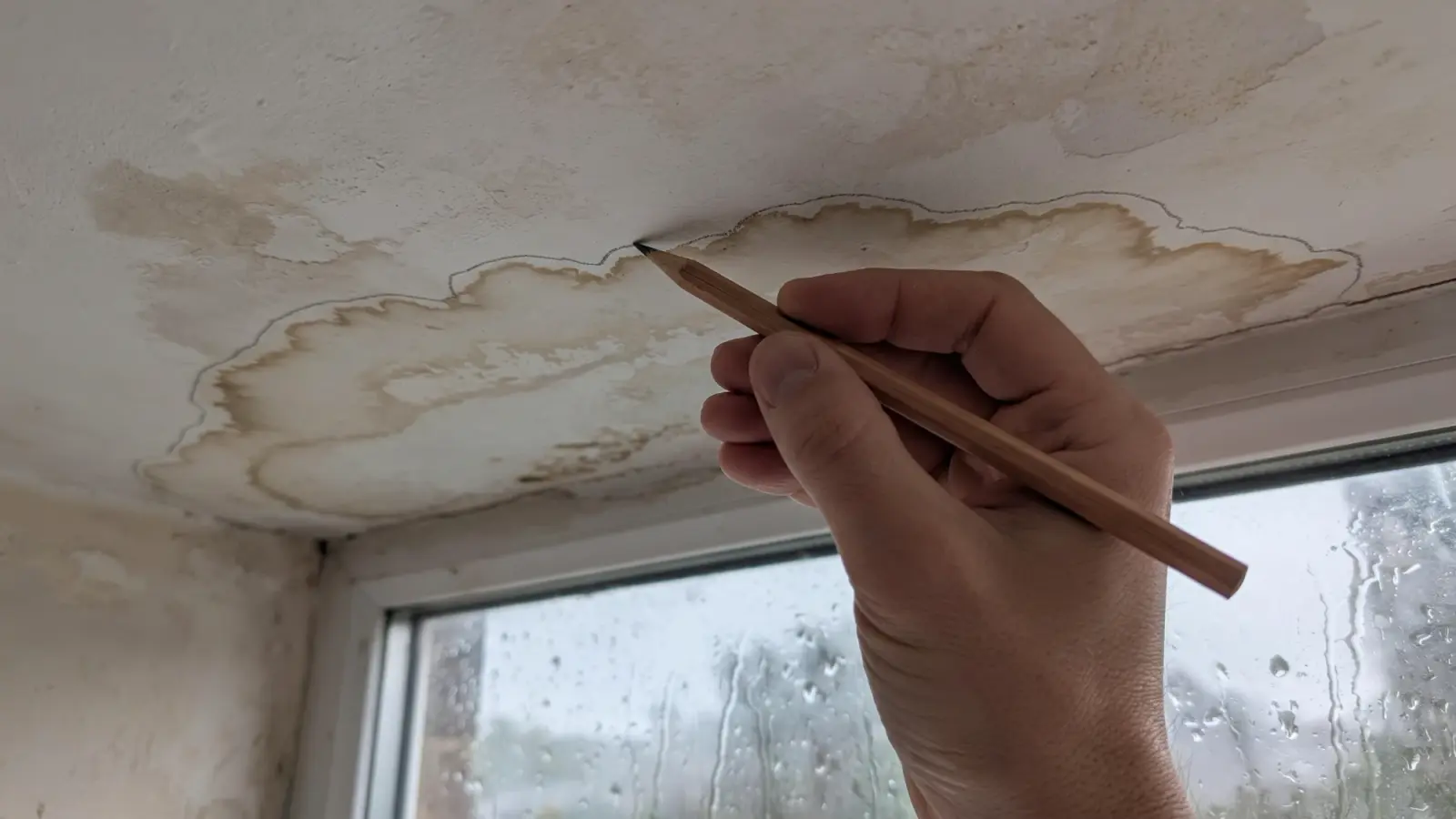
Write down the date you first saw it and the weather that week. Then trace the edge of the stain lightly in pencil and add the date. If it grows past the line after the next rain, you have your answer.
Clue 2: Where Is the Stain?
Think about what is directly above the stain, and one level higher.
- On the top floor, under the attic: it could be any of the three.
- On the ground floor of a two-story home: the roof is far away. A stain here, especially under a bathroom, points to plumbing.
- Near a chimney, skylight or vent pipe, or under a valley in the roof: these are where roof leaks most often start.
- Around an air conditioning vent or a fan vent: condensation or a duct problem is likely.
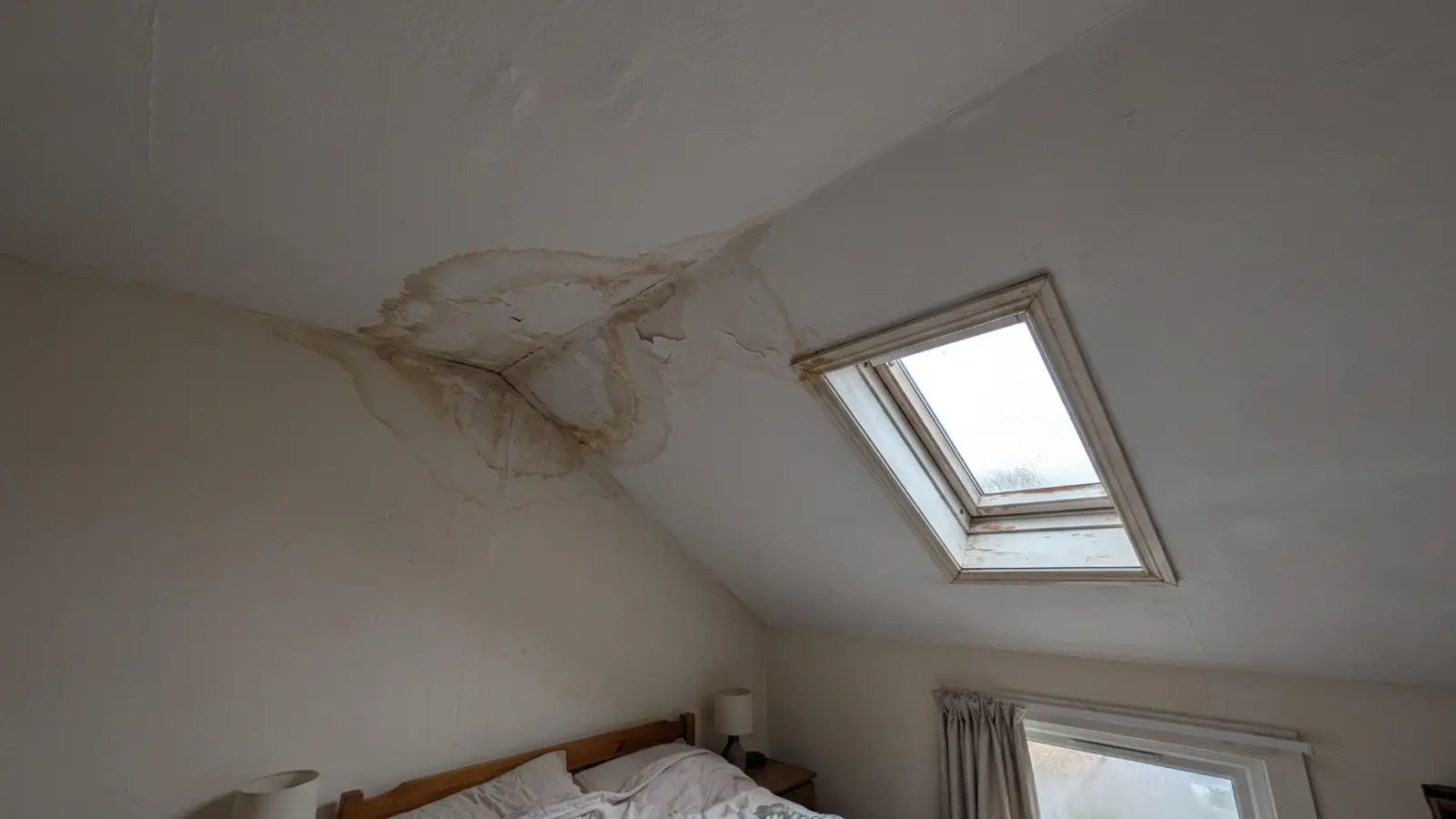
One thing makes roof leaks hard to read: water rarely drips straight down. It gets in, runs along the deck and the framing, and drips where it finds a low point. A roof leak can stain a ceiling several feet from the spot where it gets in. That is why we start upslope of the stain, not right above it. Our guide on how to find a roof leak shows how we trace it.
Clue 3: What Does the Stain Look Like?
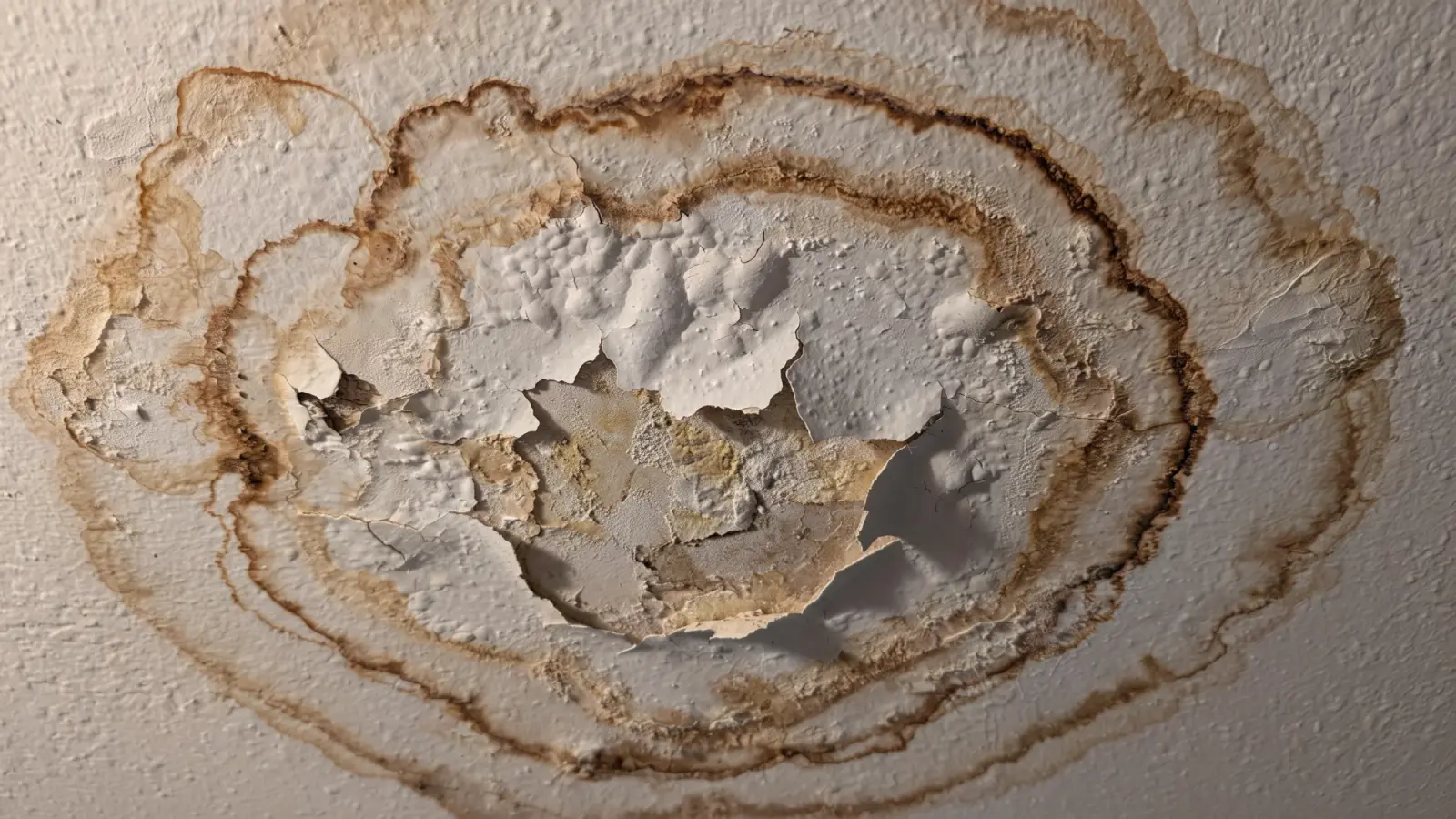
- Rings with darker edges: water that came, dried and came back. Each ring is another wetting. This is the classic roof leak pattern, one ring per storm.
- A spot that stays damp or soft: a steady supply of water, which usually means plumbing, or a roof leak during a wet stretch.
- Many small, faint spots, or gray blotches near vents: condensation, especially if there is mildew.
- Bubbling or peeling paint, or a sag: water is sitting in or above the drywall. Treat it as active.
On a flat or low-slope roof, stains can show up far from the edges of the roof, because water can travel a long way under a flat membrane before it finds a way down. Our flat roofs guide explains where those roofs usually let water in.
Clue 4: What Is Above the Stain?
If your home has an attic with a safe way in, a flashlight answers a lot. Step only on the framing, never on the drywall between it, and skip this if there is no safe footing.
- Stains or wet trails on the underside of the roof deck or down a rafter: a roof leak. Follow the trail uphill.
- Wet or matted insulation right above the stain: water has been landing there. Look straight up and upslope from it.
- Ducts beaded with water, or an air conditioning drain pan that is full or overflowing: condensation or the drain line. That is a job for an HVAC technician.
- A damp pipe, a wet fitting or a fan duct that ends in the attic: plumbing, or a fan venting moist air into the attic instead of outside.
- Dark staining spread across the deck, or a musty smell, with no single trail: moist air trapped in the attic, often a ventilation problem.
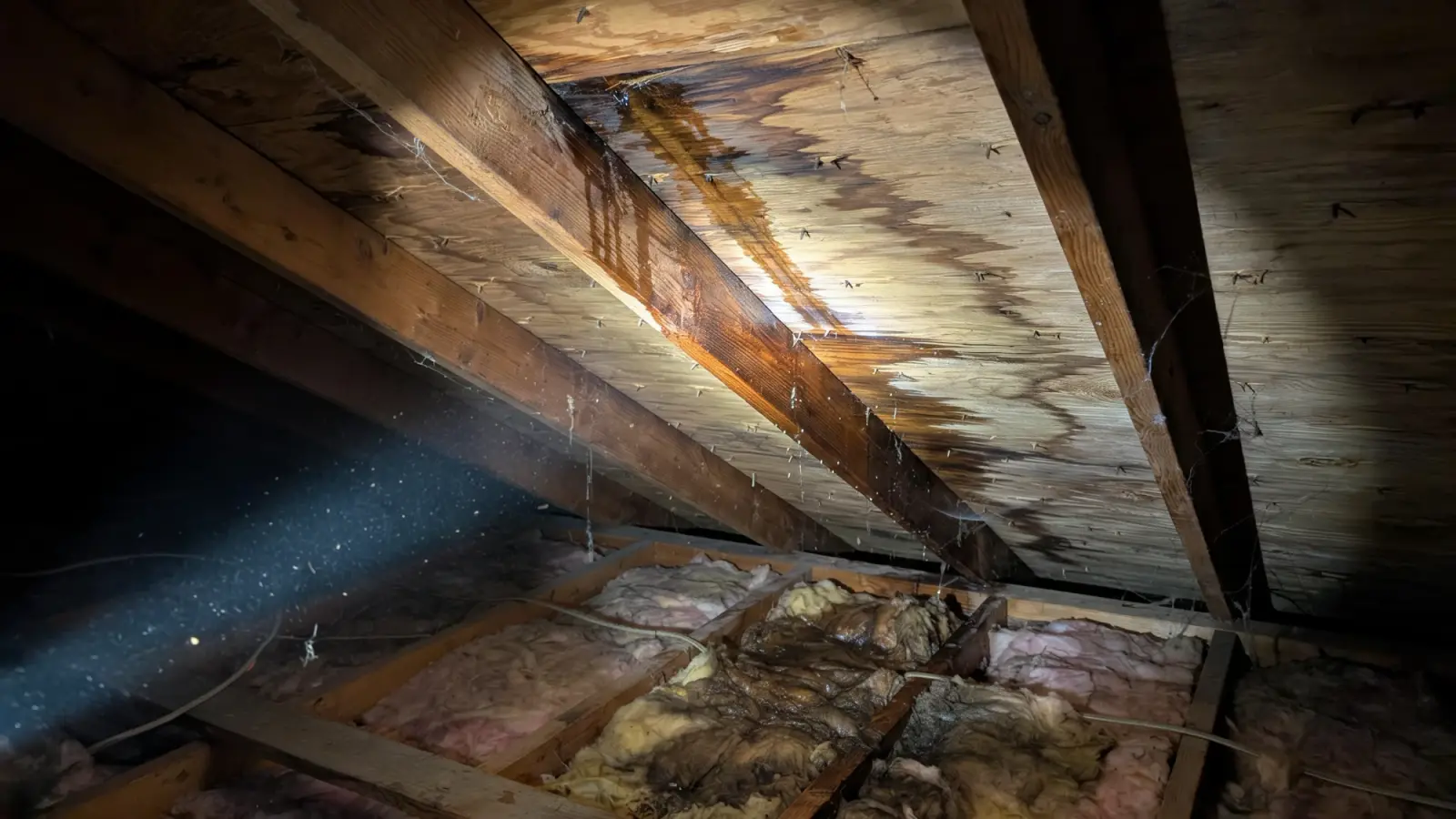
Take photos of what you find. They help whoever comes out next, and they help your insurance claim if you make one. Our article on roof insurance claims covers what to document.
Which Sounds Like Your Stain?
Put the four clues together and pick the closest match.
Which of these sounds most like your roof? Tap a card.
Roof leak
Sounds like yours if…
It showed up after rain, it is on the top floor, it has rings, and there is a wet trail in the attic running uphill
What to do next
Book a roof evaluation. If water is coming in now, call for an emergency repair.
Condensation
Sounds like yours if…
It showed up in dry weather, sits near vents or ducts, and the attic smells musty or the ducts are wet
What to do next
Have the attic ventilation checked, and an HVAC technician look at ducts and drain lines.
Plumbing
Sounds like yours if…
It shows up any time, sits under a bathroom, kitchen or laundry, and grows when water is used
What to do next
Call a plumber. If they find the pipes dry, call us.
Not sure? That is normal. Stains don’t always read cleanly, and sometimes two causes overlap. A roofer on the roof and in the attic can rule the roof in or out.
Roof Leaks Are the Ones We Fix
If the clues point to the roof, don’t wait for the stain to grow. The water you can see is the part that reached the ceiling. The wet deck, framing and insulation above it are the part you can’t.

Our free roof evaluation starts where the water does. A roofer looks at the roof, with drone footage of the areas of concern and photos of what we find, and works from the stain upslope to where the water gets in. Then you get one of four next steps in plain English: repair, monitor, maintain or replace. If work is needed, you get a written scope and price before any work starts.
If what we find points to plumbing or the air conditioning instead, we will tell you, so you can call the right trade.
Frequently Asked Questions
Is a ceiling stain always a roof leak?
No. A ceiling stain can come from a roof leak, from condensation in the attic or around air conditioning ducts, or from plumbing. When it shows up, where it is and what is above it usually tell them apart.
Why does my ceiling stain only appear after it rains?
That points to the roof, or to a window or wall letting wind-driven rain in. A stain in the middle of a top-floor ceiling is more likely the roof; one at the edge next to a window or wall may be the window or wall.
Can condensation cause a ceiling stain?
Yes. Air conditioning ducts and drain lines in the attic can sweat or overflow, and a poorly ventilated attic can trap moist air that condenses on cool surfaces. These stains usually show up in dry weather, near vents.
Why is the stain so far from where the roof leaks?
Water runs along the roof deck and the framing before it drips. A roof leak can stain the ceiling several feet from the spot where it gets in, which is why we trace it from the stain upslope.
Can I just paint over a ceiling stain?
Only after the source is fixed and the drywall is fully dry. Paint over an active leak and the stain comes back, while the damage above it keeps growing.
What should I do if water is dripping from the ceiling right now?
Put a bucket under it, keep people out from under a sagging spot, switch off any light or fan near it at the breaker, and call. If it is raining, it is an emergency roof repair call, and emergency calls are taken after hours and on weekends.
Think It’s the Roof? Have a Roofer Trace It.
Roof leaks are the ones we fix. A free roof evaluation finds where the water gets in, with photos, a plain-English next step, and a written scope and price before any work. Call (310) 340-1643 or request your evaluation.
See also how to stop a leaking roof now, how to check your roof from the ground and our roof repair page.
