

Why You Should Never Pressure Wash Shingles: Myth vs. Fact
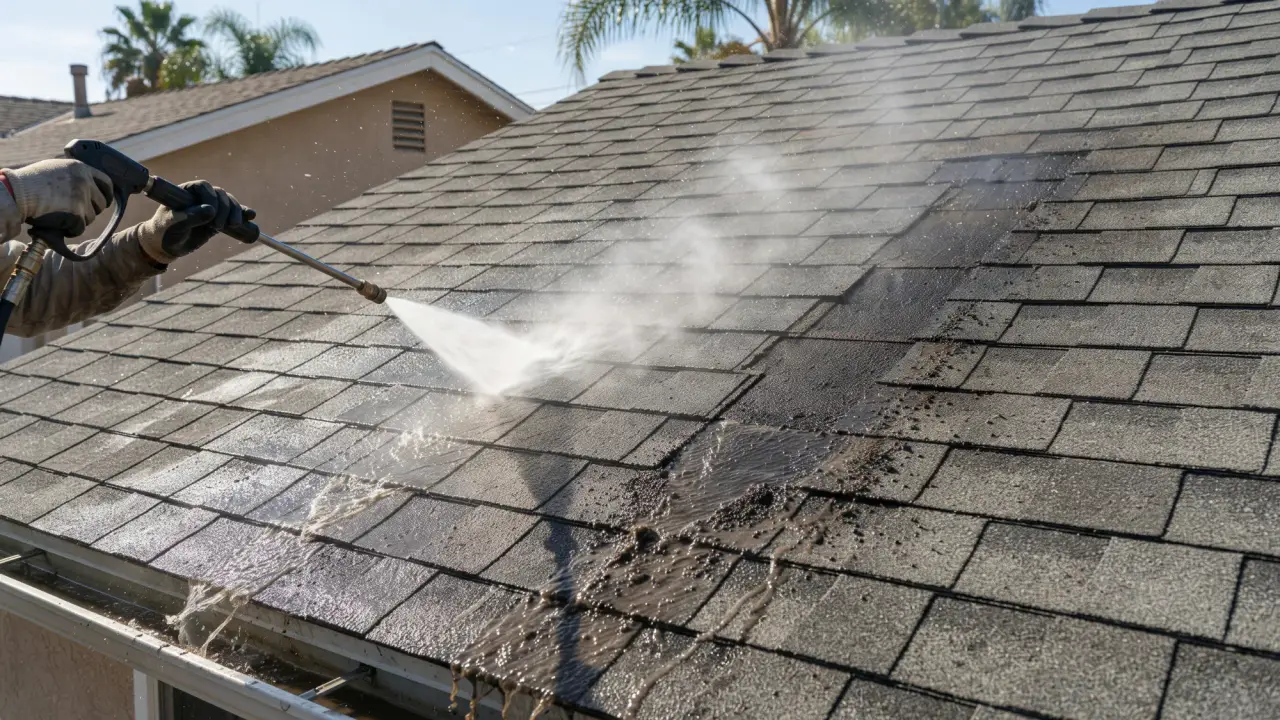
Should you pressure wash shingles to get rid of dark streaks, moss or grime? Our answer is no, never. The granules on the surface of a shingle are what protect it from the sun, and a pressure washer strips them off. Aimed up the slope, the water also gets under the shingles, where a roof isn’t built to keep it out.
Pressure washing is sold as roof cleaning, and it often looks great the day it is done. Below we go through seven common myths and the facts, what the washer does to the roof, how to tell if yours has already been washed and what to do instead.
How a Shingle Is Built, and Why It Matters
An asphalt shingle is a fiberglass mat soaked in asphalt, with a layer of mineral granules pressed into the top. The asphalt keeps the water out. The granules shield the asphalt from the sun, which is what wears a shingle out, and give the roof its color.
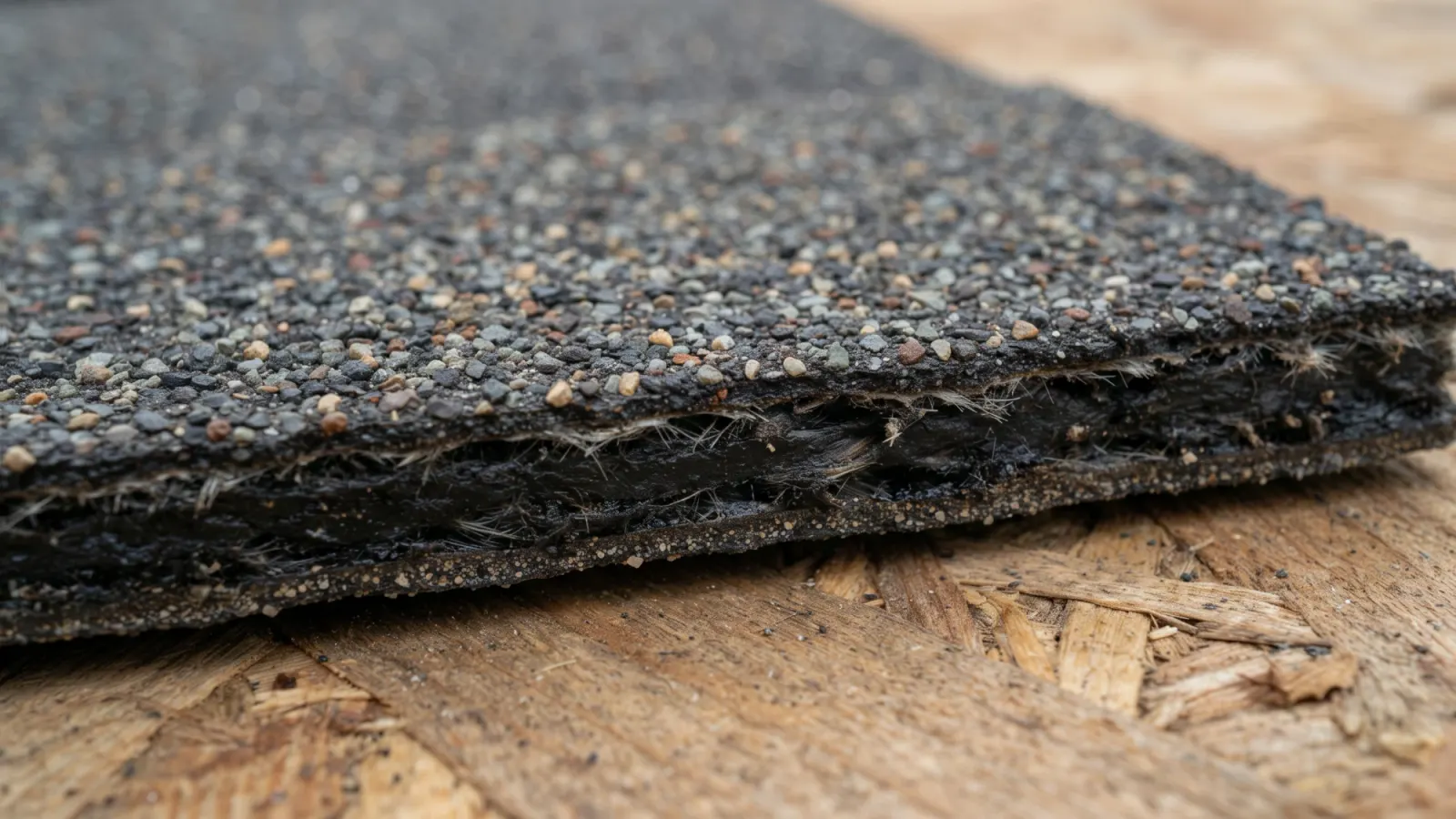
Each course overlaps the one below it, held by nails and a strip of sealant that bonds the shingle above to the one below once the sun warms it. That overlap is built for water running downhill, the way rain falls on a roof, not for water pushed sideways or uphill.
Seven Myths About Pressure Washing a Roof, and the Facts
Myth 1: A low pressure setting is safe
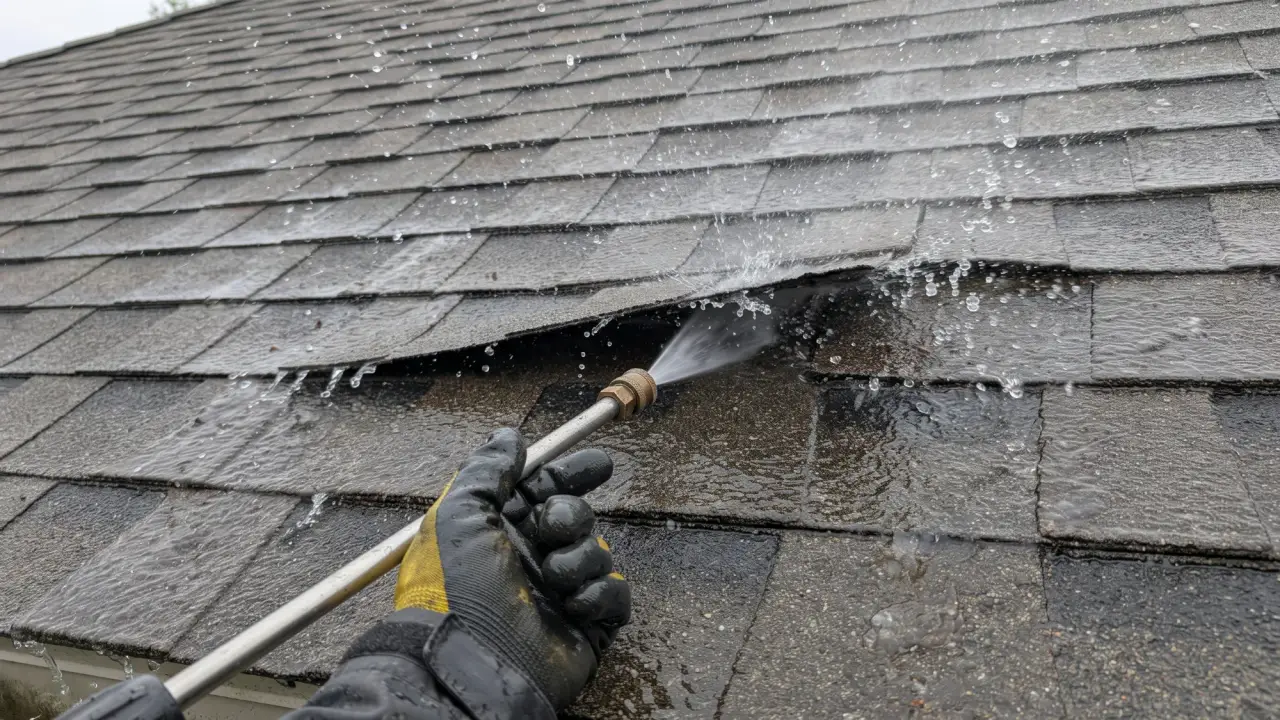
Fact: A jet strong enough to lift moss, algae or grime is strong enough to lift granules, especially on an older roof where they are already loose. And at any pressure, water aimed up the slope runs under the overlap of the shingles.
Myth 2: Pressure washing makes an old roof look new
Fact: It makes it look cleaner for a while. Where the granules come off, the dark asphalt is left facing the sun, and those patches age faster than the rest of the roof.
Myth 3: The dark streaks are rotting the roof
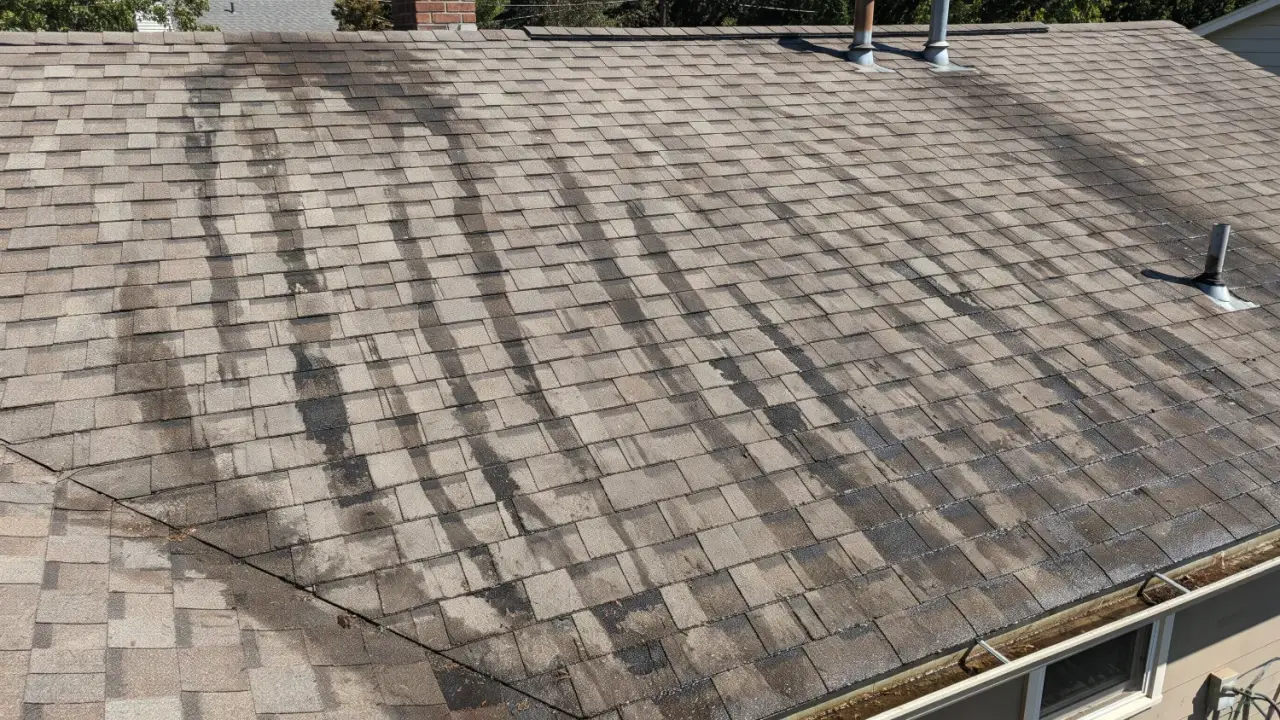
Fact: The black or dark green streaks running down a slope are usually algae, and they are mostly cosmetic. Moss is different: it holds water, and our article on moss on your roof explains why.
Myth 4: A clean roof lasts longer
Fact: A roof lasts longer when it keeps its granules, sheds water and stays clear of debris. Taking the surface off to make it clean does the opposite.
Myth 5: Water can’t get through a shingle roof
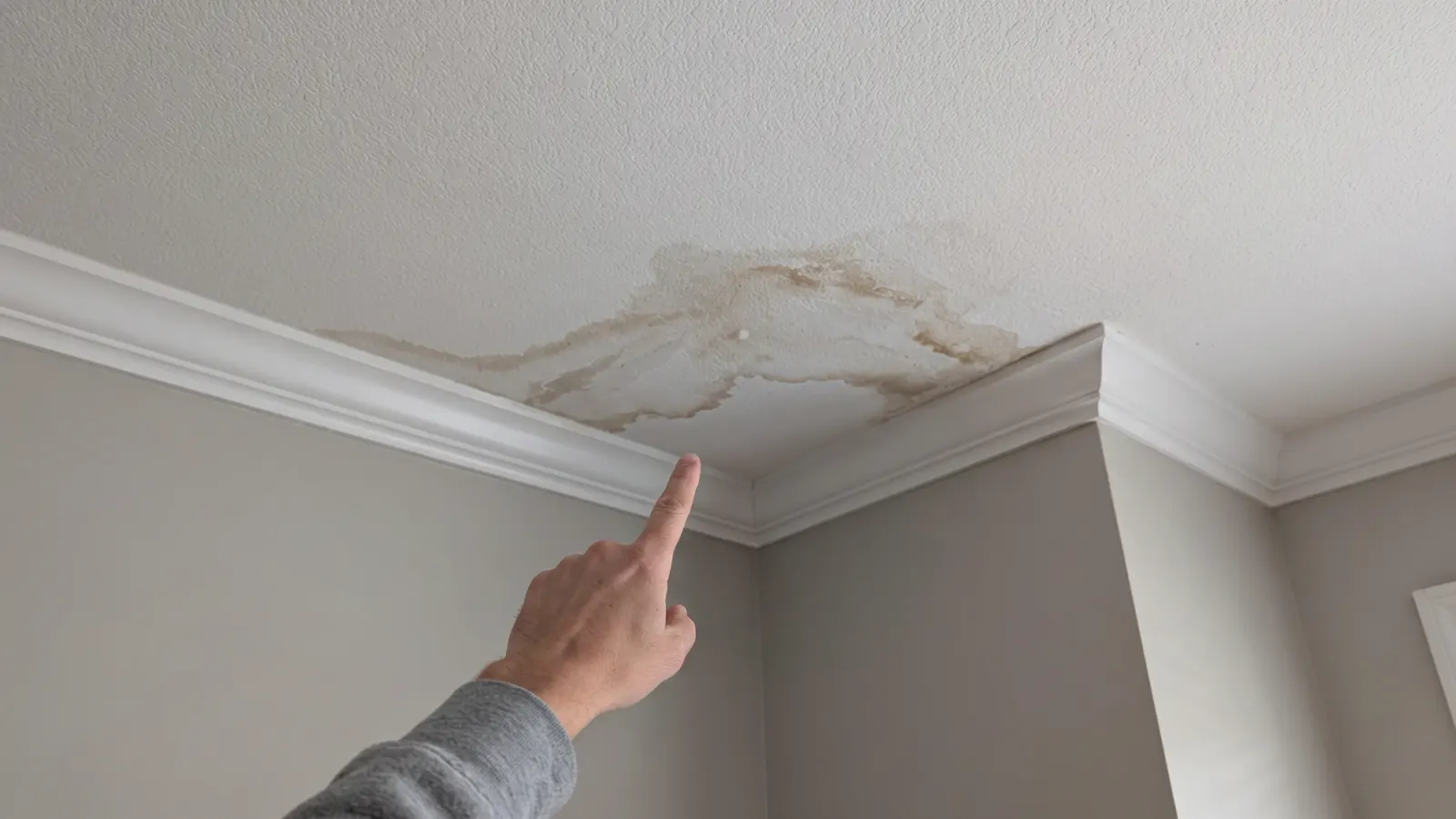
Fact: Rain runs down over the shingles. A pressure washer drives water up under them, past the sealant strip and around the nails, onto the underlayment and the deck, and sometimes into the attic.
Myth 6: A professional cleaning company does it safely
Fact: The problem is the equipment, not who holds it. The asphalt roofing industry advises against pressure washing asphalt shingles, whoever does it.
Myth 7: Walking the roof to clean it is harmless
Fact: Shingles scuff easily, especially when they are warm, and a wet roof is slippery. Every trip across it wears the surface, and a fall from a roof is the most serious risk of all.
What a Pressure Washer Does to Shingles
Stripped granules
- What happens
- The jet blasts the mineral granules off the surface
- What it leads to
- Bare asphalt that ages in the sun, uneven color and granules piled in the gutters
Water under the shingles
- What happens
- Water aimed up the slope runs under the overlap
- What it leads to
- A wet underlayment and deck, ceiling stains and leaks that weren’t there before
Broken sealant strips
- What happens
- The jet lifts the edges of the shingles and breaks the bond
- What it leads to
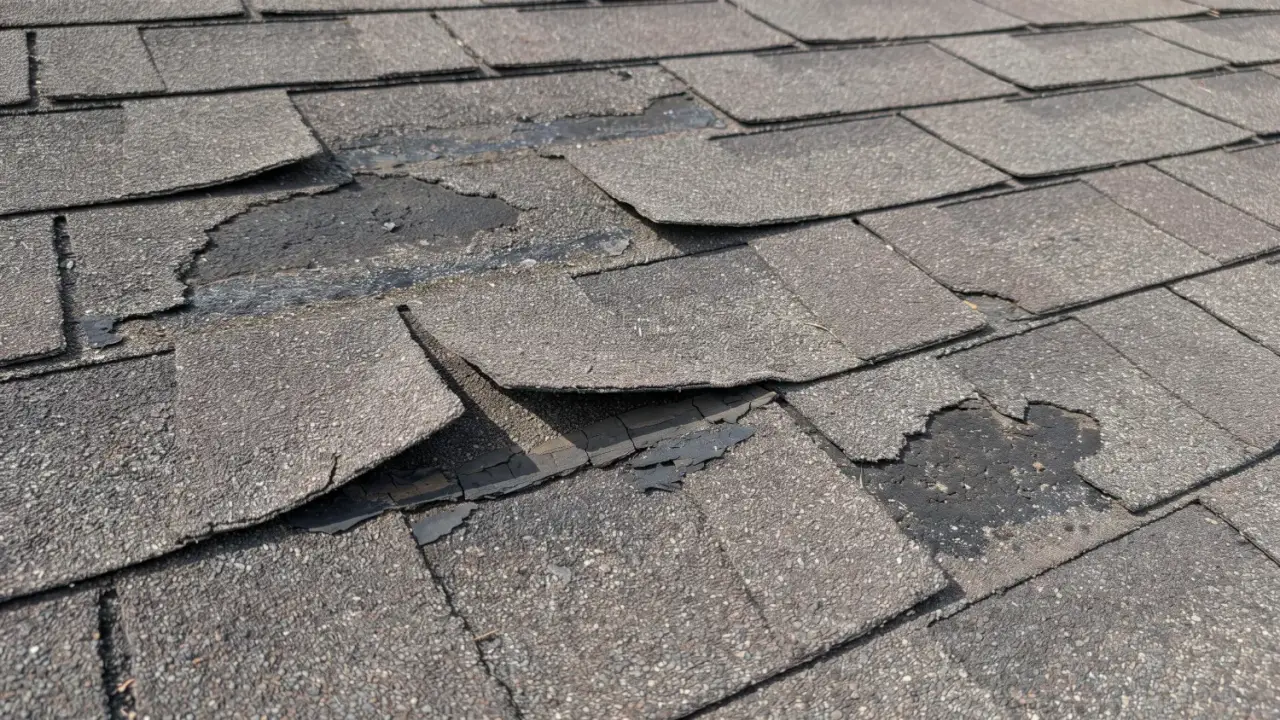
- Shingles that lift, flap and blow off in the next strong wind
Torn or cracked shingles
- What happens
- Brittle older shingles tear under the force of the water
- What it leads to
- Openings that need a repair
Scuffs and footprints
- What happens
- Cleaners walk a wet, warm roof
- What it leads to
- Worn paths and cracked shingles where they stood
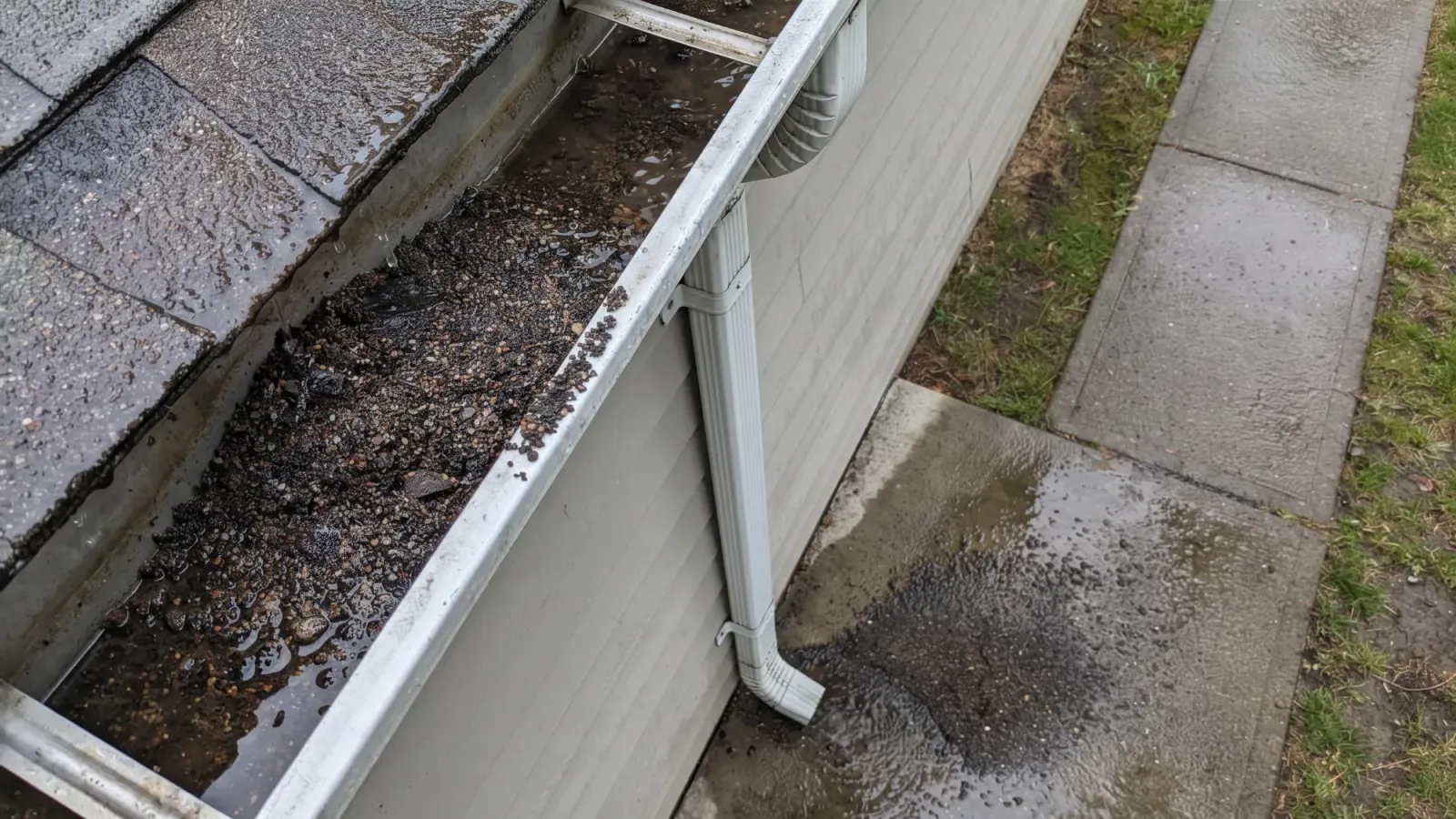
Our guide to shingle granule loss explains why losing granules matters so much.
Signs Your Roof Has Already Been Pressure Washed
Stripes or patches of darker, bare asphalt, often in straight lines where the wand moved.
A lot of granules in the gutters or at the downspouts right after the cleaning.
Lifted or flapping shingle edges that weren’t there before.
A new ceiling stain or leak after the roof was washed, often before any rain.
Uneven color across the roof, lighter where it wasn’t washed and darker where it was.
Torn or missing shingles along the areas that were cleaned hardest.
What to Do Instead
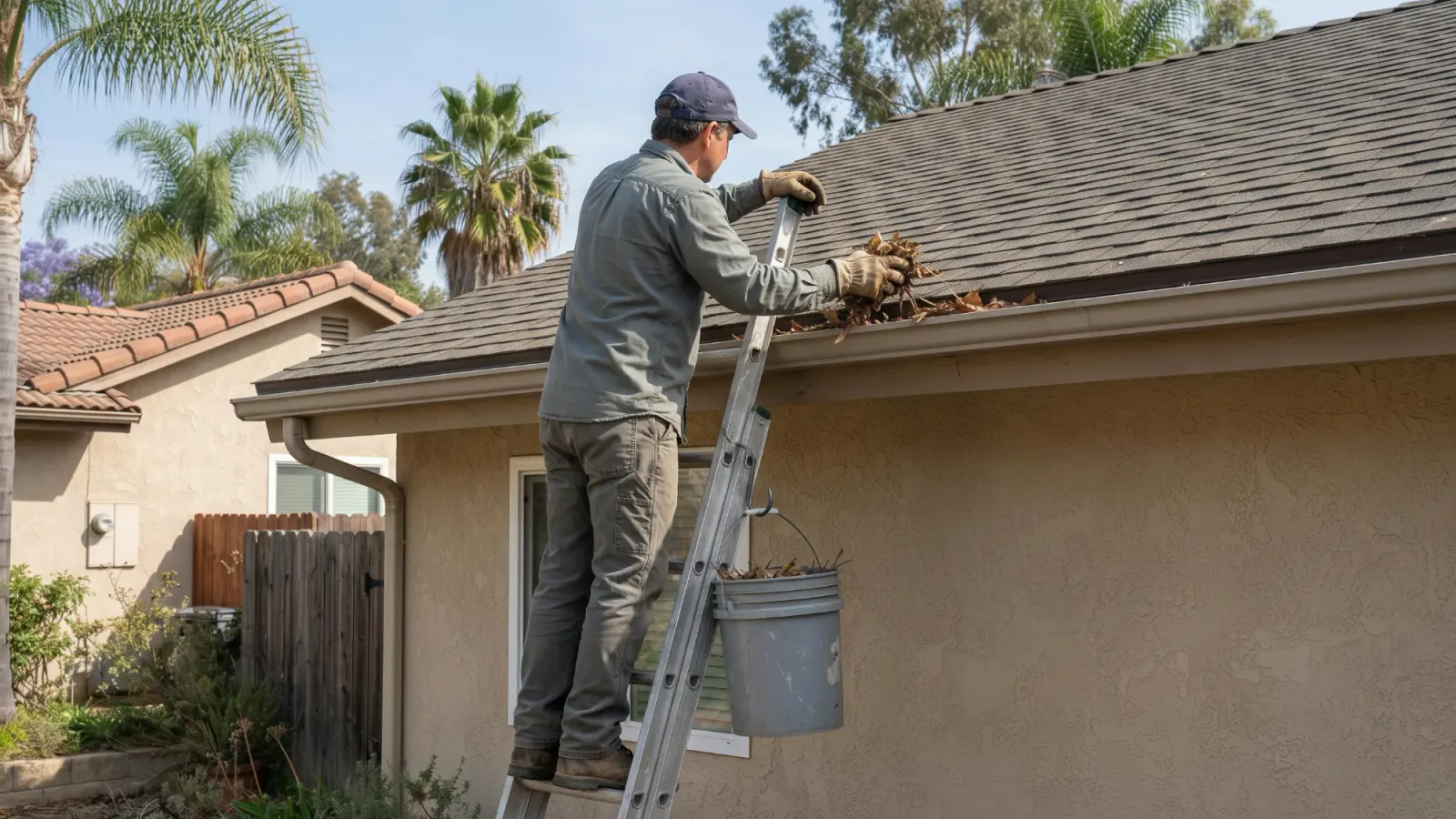
Our guide to cleaning gutters without damaging the roof edge covers the job you can do yourself. Our roof maintenance plans clear debris from the roof, valleys and gutters, keep an eye on moss on shaded slopes and send a photo report every visit.
Tile and Flat Roofs, Too
The same advice holds on other roofs. On a tile roof, a pressure washer can drive water under the tiles onto the underlayment, and walking the tiles to clean them cracks them. On a flat roof with a granulated cap sheet, the jet strips the granules just as it does on shingles. Our tile roof guide explains why the layer under the tiles matters most.
Already Pressure Washed? What We Check
Book a free roof evaluation. A roofer looks at the roof, with RoofScan 360® drone footage and photos.
Look at the granules. Where the surface is bare, how much of the roof is affected and how much is in the gutters.
Check the edges and laps. Lifted shingles, broken seals and torn pieces, especially where the washing was heaviest.
Follow any new stains to the source, working upslope from where the water showed up.
Give you one next step in plain English: repair, monitor, maintain or replace, with a written scope and price before any work.
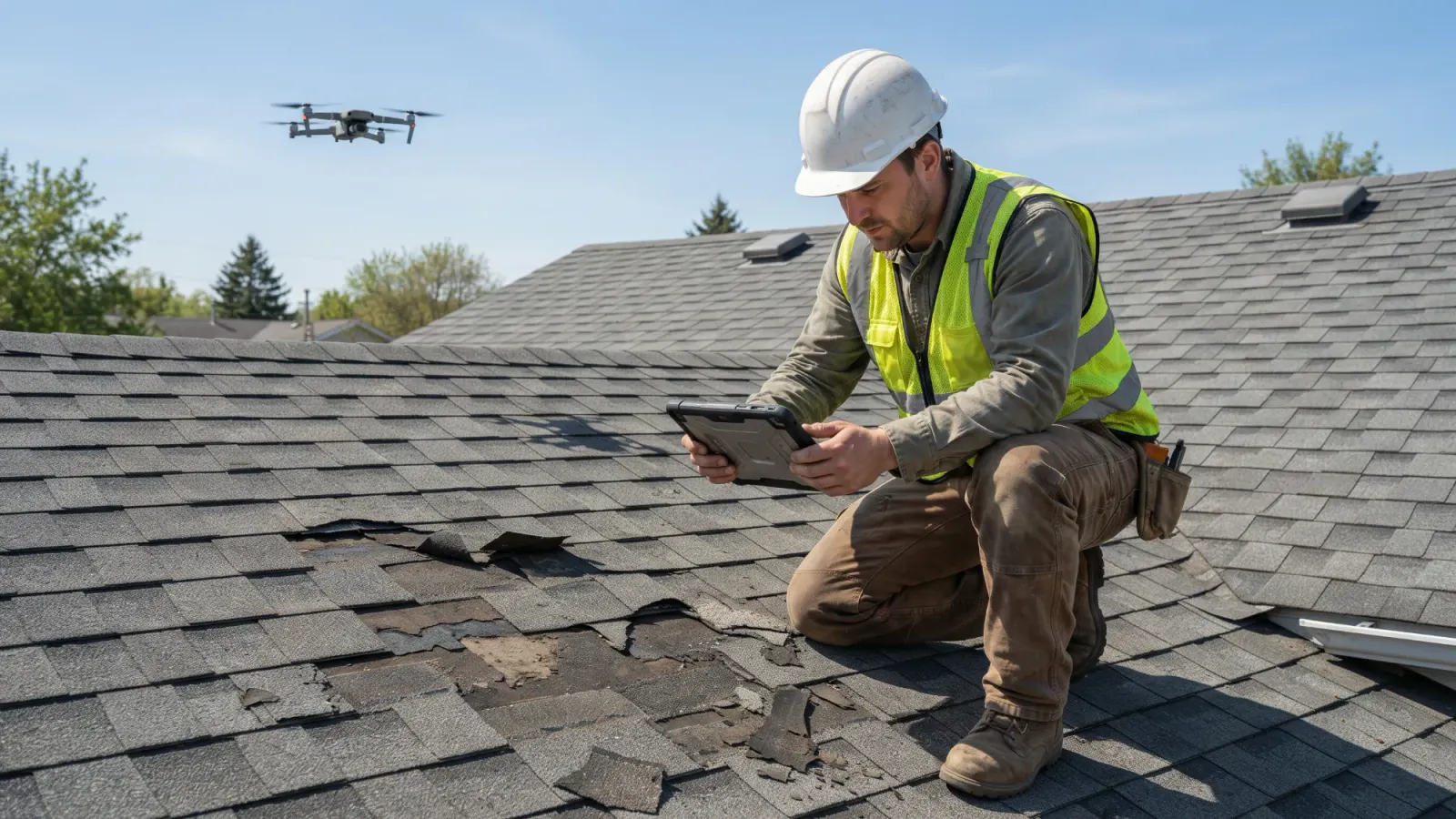
Lifted or torn shingles in a few places are a LeakRescue® repair. A roof that is sound but needs a short list of fixes can be a one-time RoofRevive® tune-up. When the surface is stripped across the roof, a TotalShield® replacement from the deck up may be the honest answer.
Frequently Asked Questions
Can you pressure wash shingles?
We advise against it. A pressure washer strips the granules that protect shingles from the sun, and water aimed up the slope gets under the shingles, past the sealant strip and onto the deck.
Is a low pressure setting safe for a roof?
Not really. A jet strong enough to lift moss or grime can lift granules too, especially on an older roof, and water aimed up the slope gets under the shingles at any pressure.
What are the black streaks on my shingle roof?
Usually algae. It is mostly cosmetic and doesn’t need a pressure washer. Moss, which grows in thick green clumps, holds water and is worth having a roofer look at.
My roof was pressure washed. Is it damaged?
Look for bare stripes, granules in the gutters, lifted shingle edges and new ceiling stains. If you see any of them, a roof evaluation shows how much of the roof was affected and whether it needs a repair.
Does QRS clean roofs?
We don’t offer roof washing. Our maintenance plan visits clear debris from the roof, valleys and gutters and keep an eye on moss, with a photo report every visit.
Can I pressure wash a tile roof?
We advise against that too. It can drive water under the tiles onto the underlayment, and walking the tiles to clean them can crack them.
Worried About Your Roof’s Surface?
Before anyone points a pressure washer at it, book a free roof evaluation. A roofer looks at the roof, tells you in plain English what it needs, and gives you a written scope and price before any work. Or call (310) 340-1643.
Part of our asphalt shingle roof guide.
