
How to Protect Your Home’s Interior During a Roof Leak: A Quick Demo
What you do inside your home during a roof leak decides how much gets ruined. The roof needs a roofer, but the floors, the furniture, the electronics and the papers under the leak are in your hands for the first few minutes, and a bucket, a few towels and a sheet of plastic save most of them.
Here is a quick demo of protecting the room under a leak, what to do room by room, a simple kit to keep ready, what not to do, and when to call for emergency help. If water is coming in right now, make the room safe first, then come back to this list.
First, Make the Room Safe
- Keep away from water near lights, fans and outlets. If water is near a fixture or wiring, switch that circuit off at the breaker, but only if you can reach the panel without standing in water.
- Don’t stand under a sagging ceiling. A ceiling that bulges or holds water can come down. Keep everyone, and pets, out of that room.
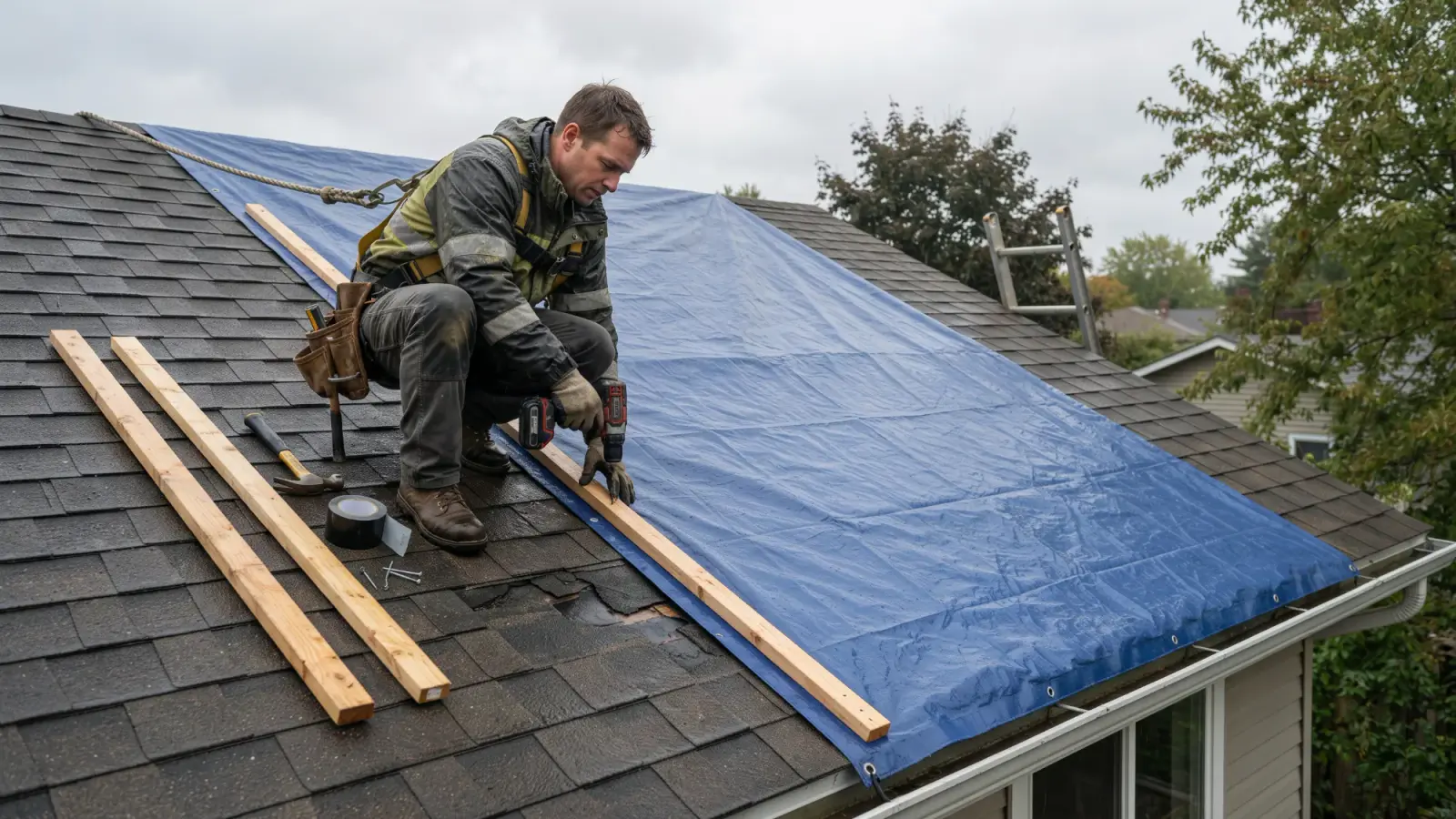
- Stay off the roof. Not to look, not to tarp, not in the rain.
- A tree through the roof or a downed power line? Keep everyone clear and call 911 first.
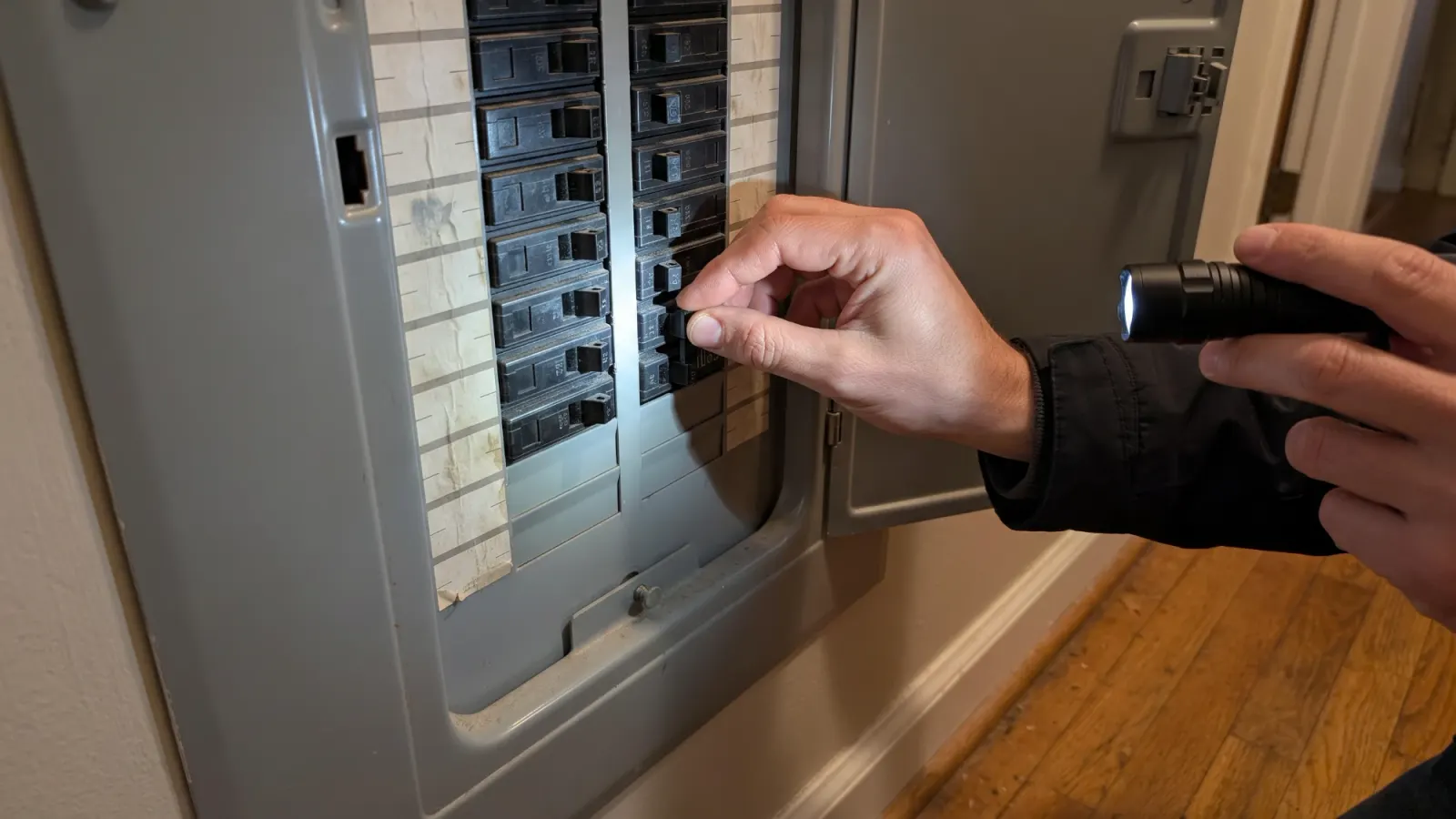
Our guide to the first hour of an active roof leak covers the whole first hour, including the call.
A Quick Demo: Protecting the Room Under the Leak
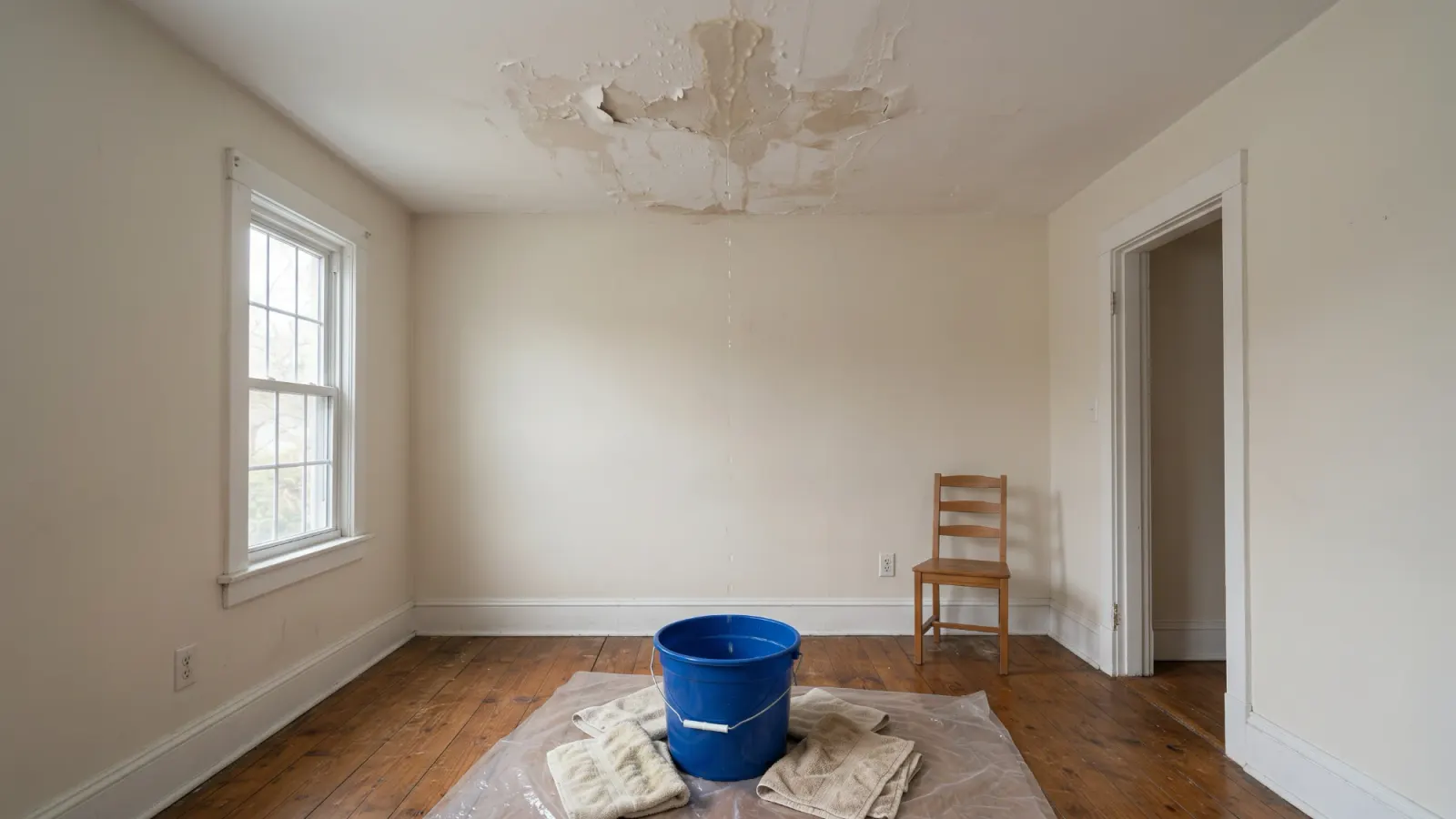
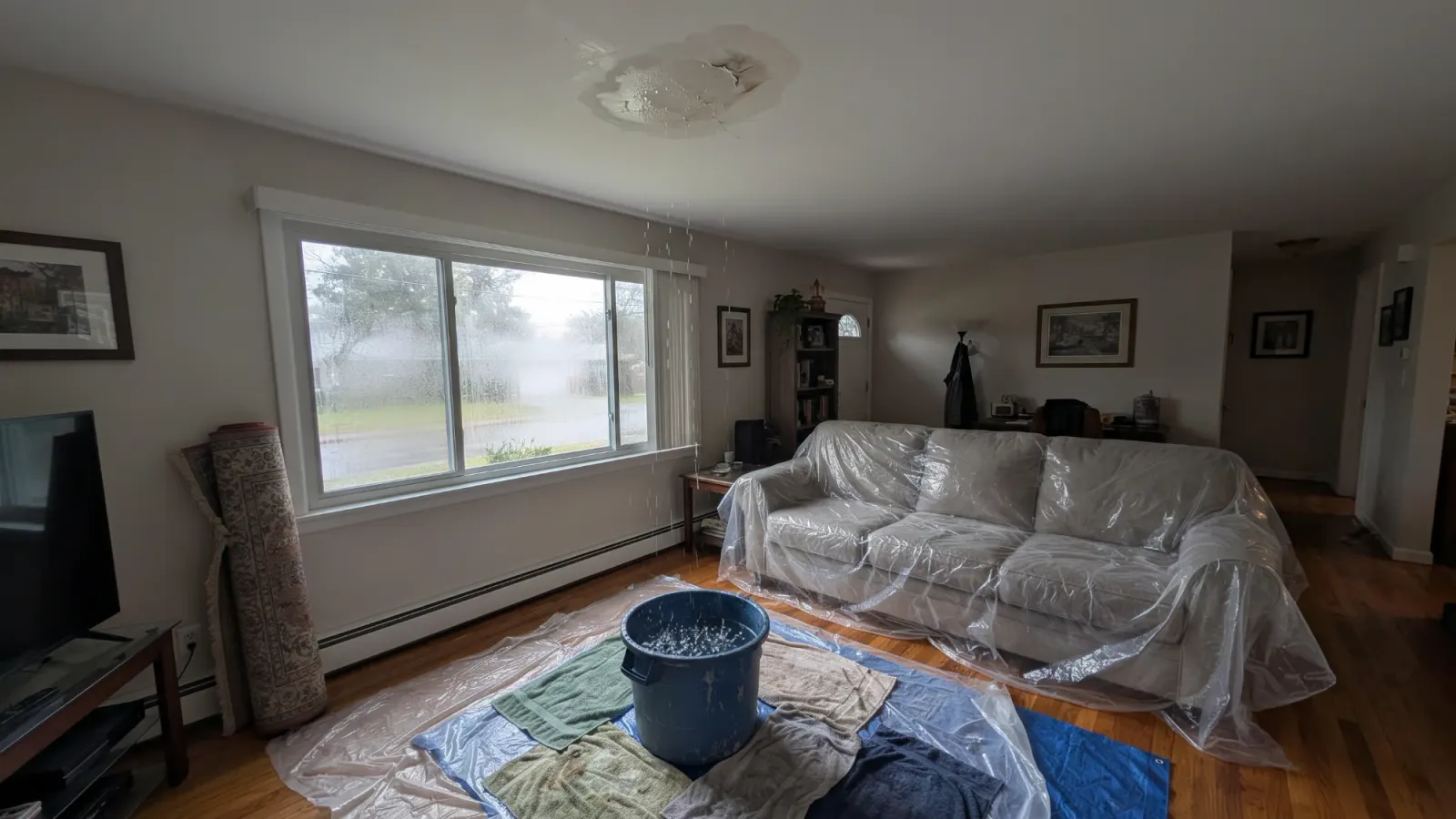
Catch the water. A bucket, a storage tub or a large pot right under the drip
Put a towel or a sponge in the bottom so the splashing doesn’t spread the water.
Protect the floor around it. Plastic sheeting or a shower curtain under the bucket, with towels on top to catch the splash. Empty the bucket before it gets heavy.
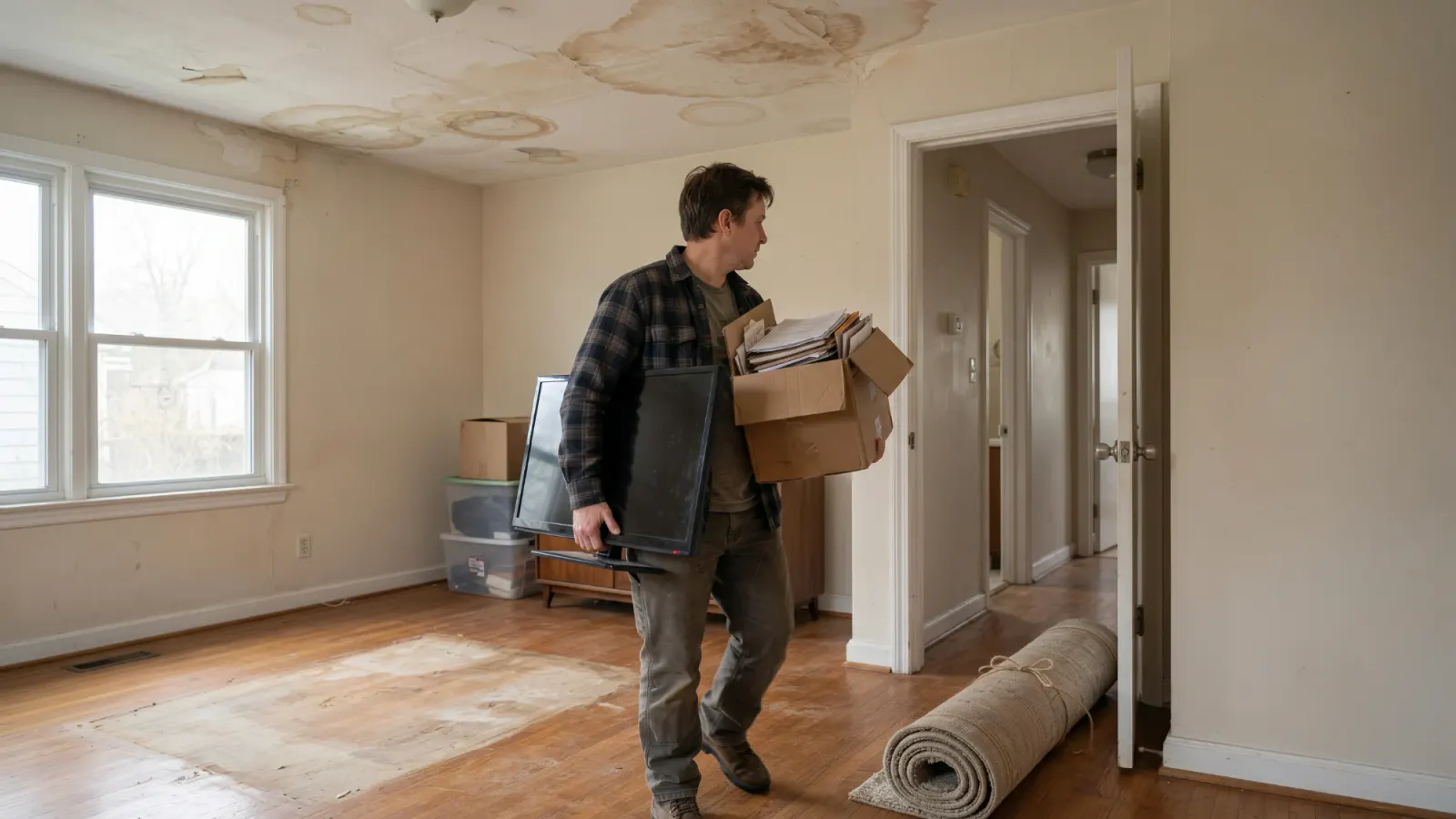
Move what you can. Rugs, electronics, papers, books and anything with a cord go out of the room first, then smaller furniture.
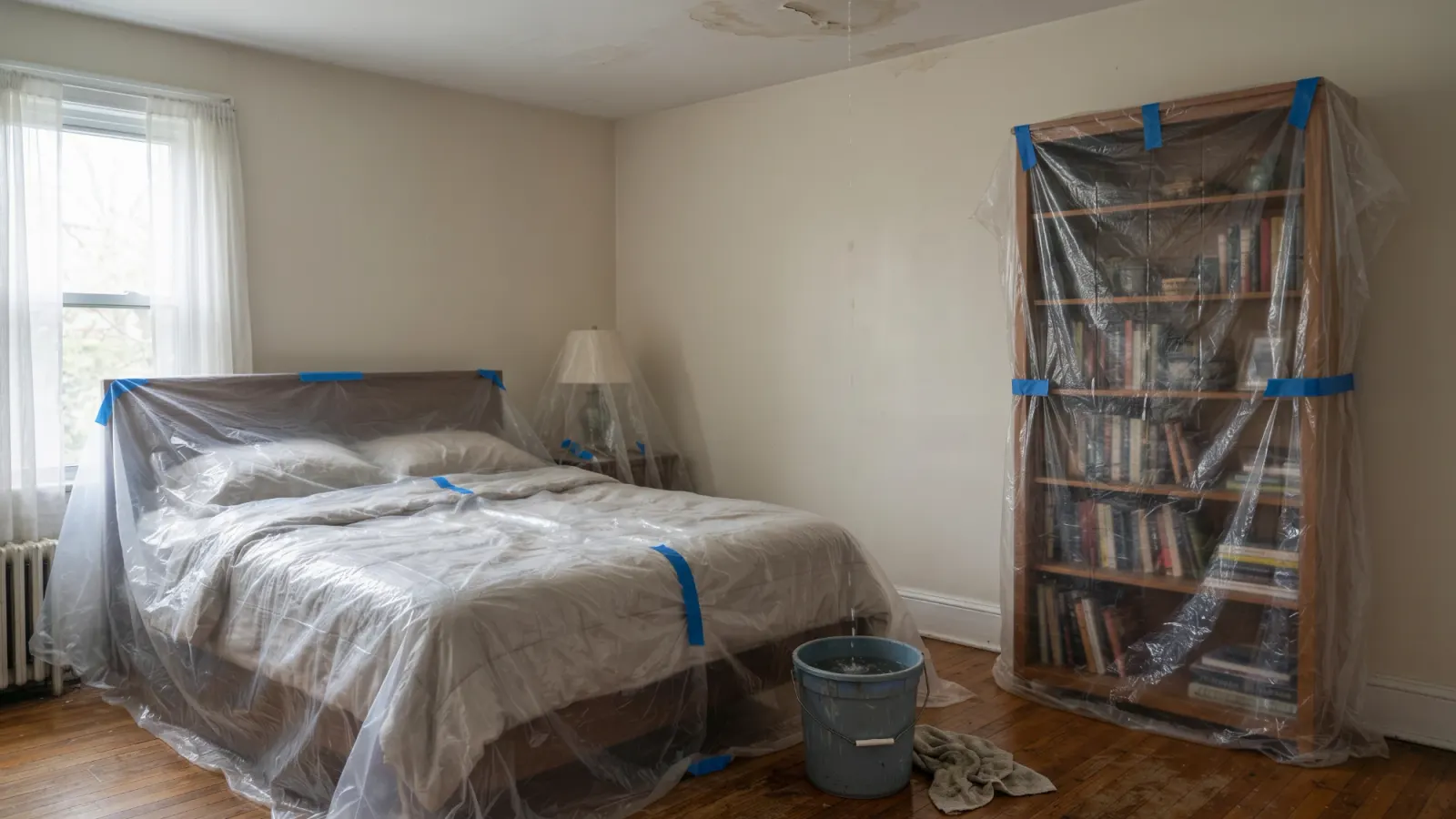
Cover what you can’t move. Plastic sheeting or a tarp over beds, couches, shelves and cabinets, tucked in so water runs off onto the floor protection, not into the furniture.
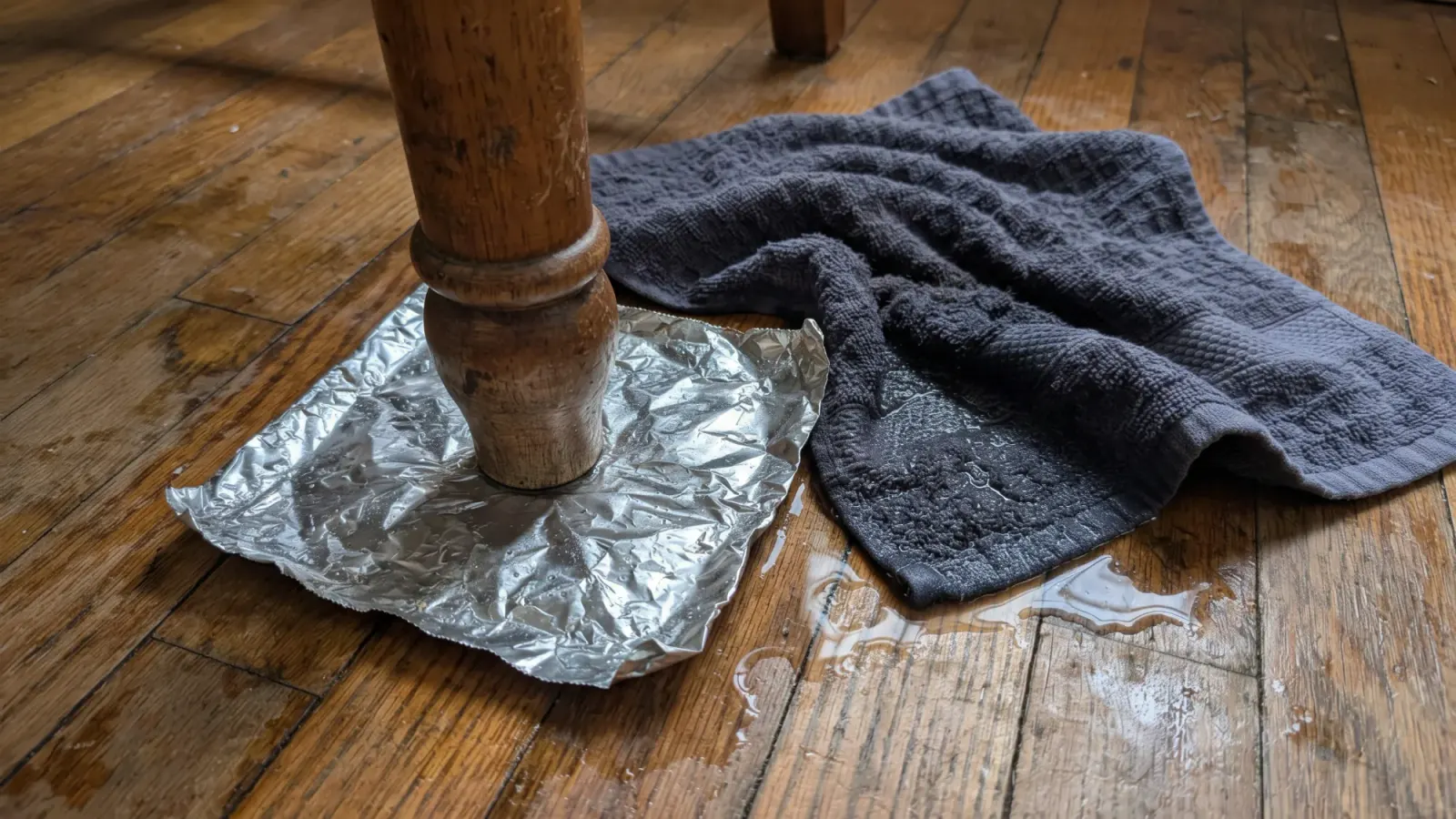
Lift furniture off a wet floor. Foil, plastic lids or wood blocks under the legs keep wood and fabric from wicking up water and staining the floor.
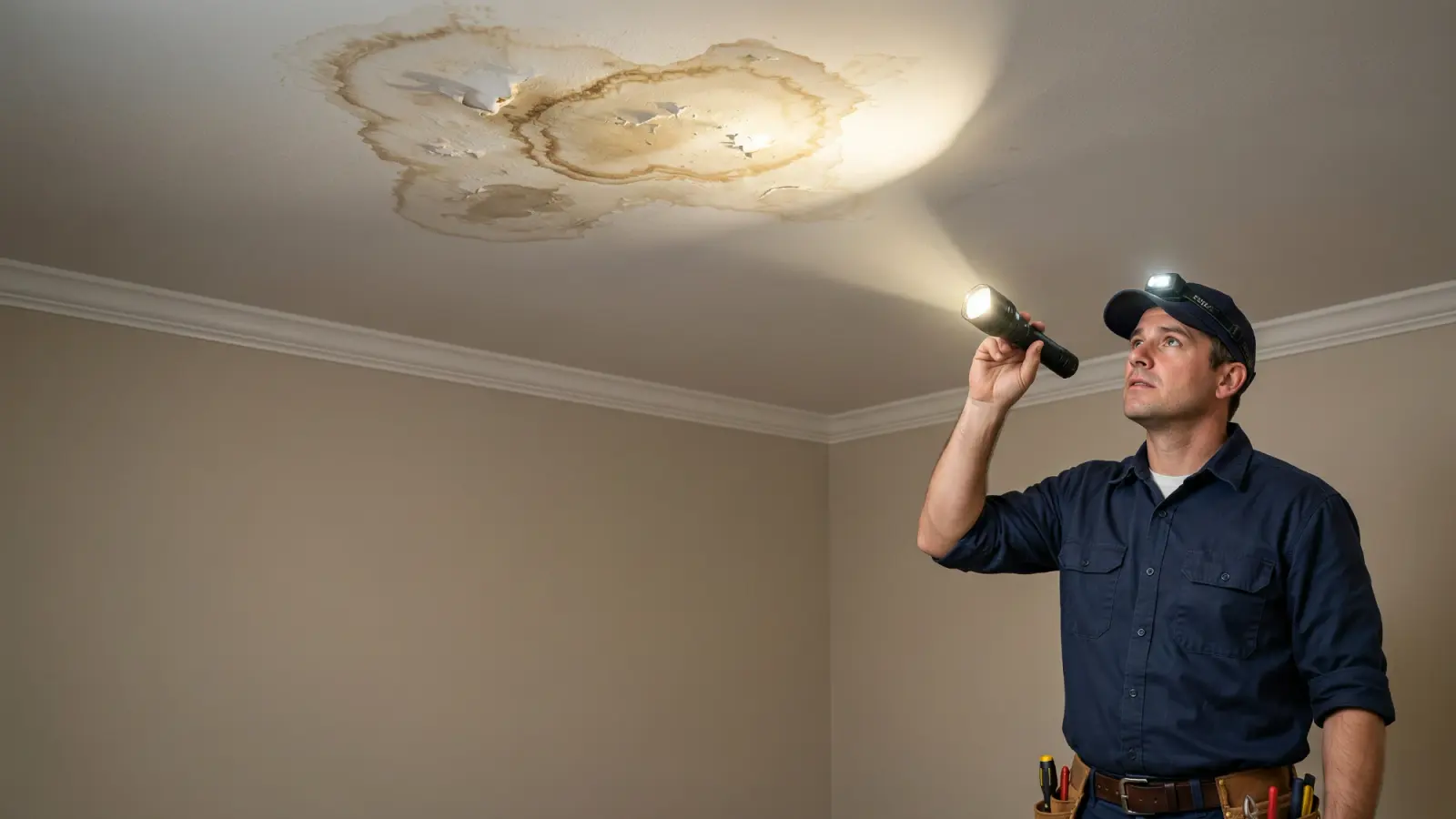
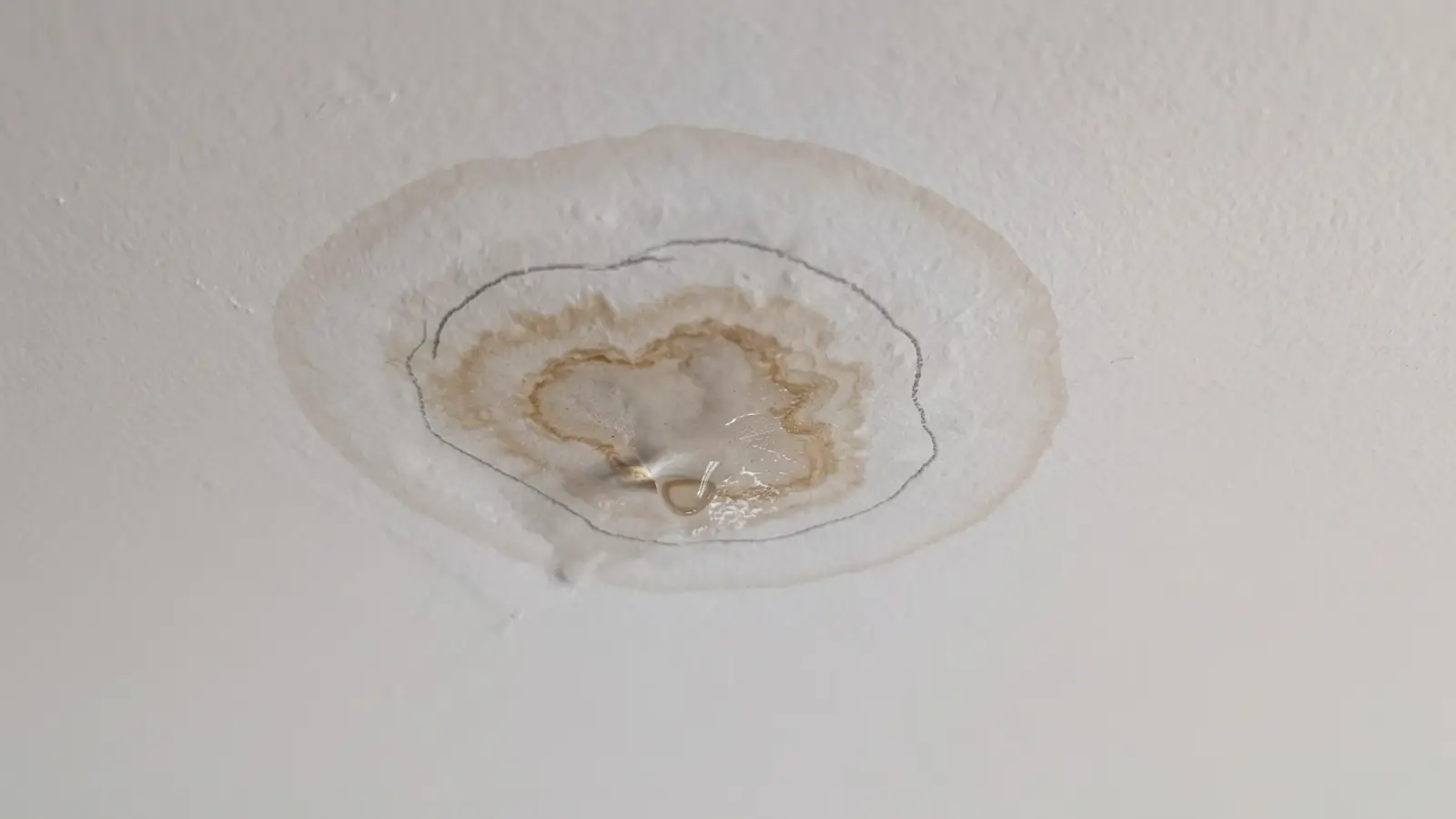
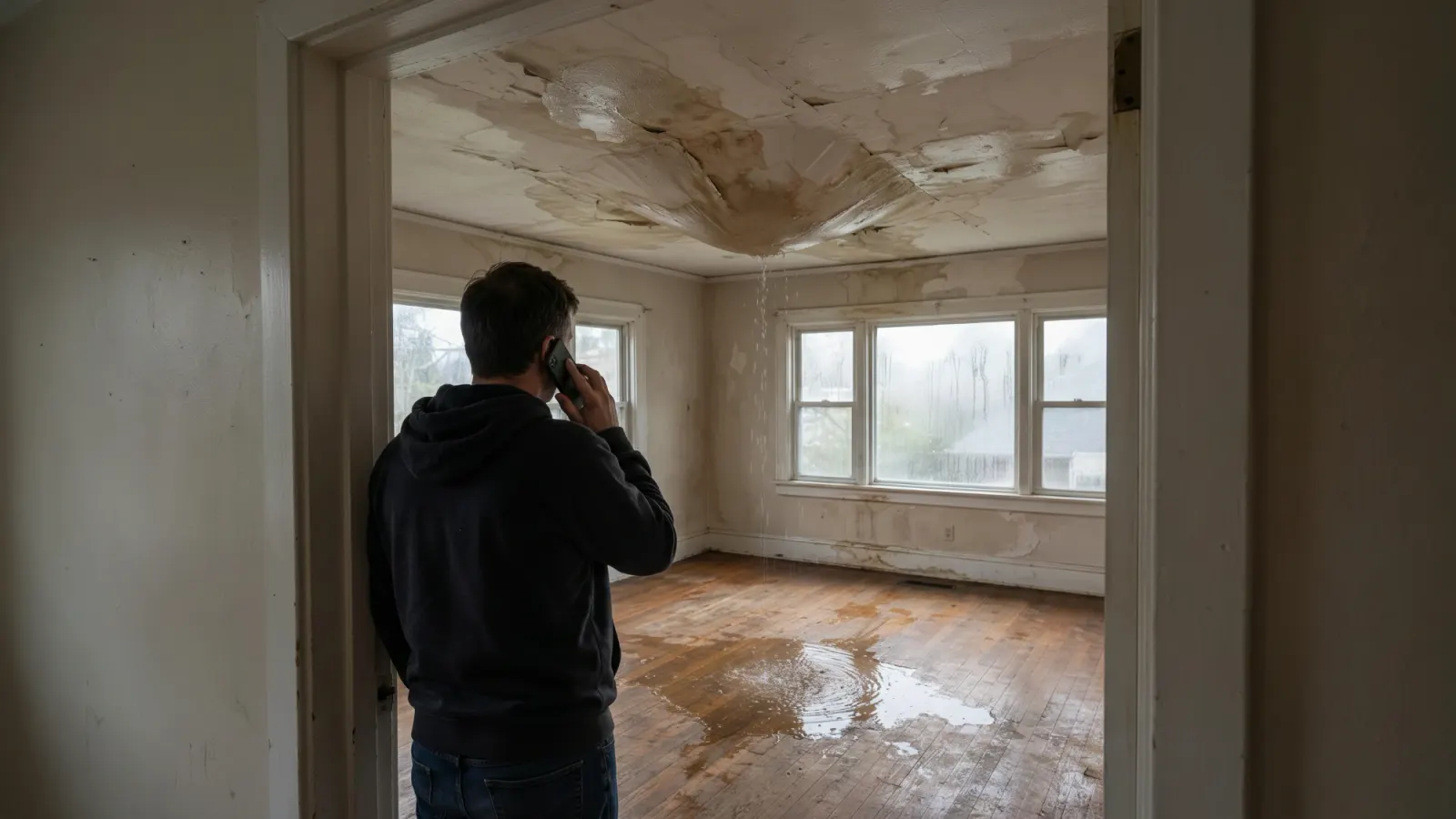
Watch the ceiling and walls. New stains, bubbling paint or a growing bulge mean the water is spreading. Keep people out from under it and call.
Take photos as you go, before you move or throw anything away.
Room by Room
Living room
- What to protect first
- Rugs, the TV and electronics, upholstered furniture
- How
- Roll up and move rugs, unplug and move electronics, cover the couch with plastic
Bedroom
- What to protect first
- The bed, clothes, anything on the floor
- How
- Pull the bed away if you can, cover it, lift things off the floor
Kitchen
- What to protect first
- Outlets and appliances near the counter, open food
- How
- Switch off the circuit if water is near an outlet, move small appliances and food
Closets and storage
- What to protect first
- Boxes on the floor, papers, photos
- How
- Move boxes up and out; paper and photos are the hardest to save
Home office
- What to protect first
- Computers, documents, cords
- How
- Unplug and move electronics and paper first
Attic
- What to protect first
- Stored boxes, holiday decorations
- How
- Only if you can get there safely, standing on the joists; move what is under the wet spot
A Roof Leak Kit to Keep Ready
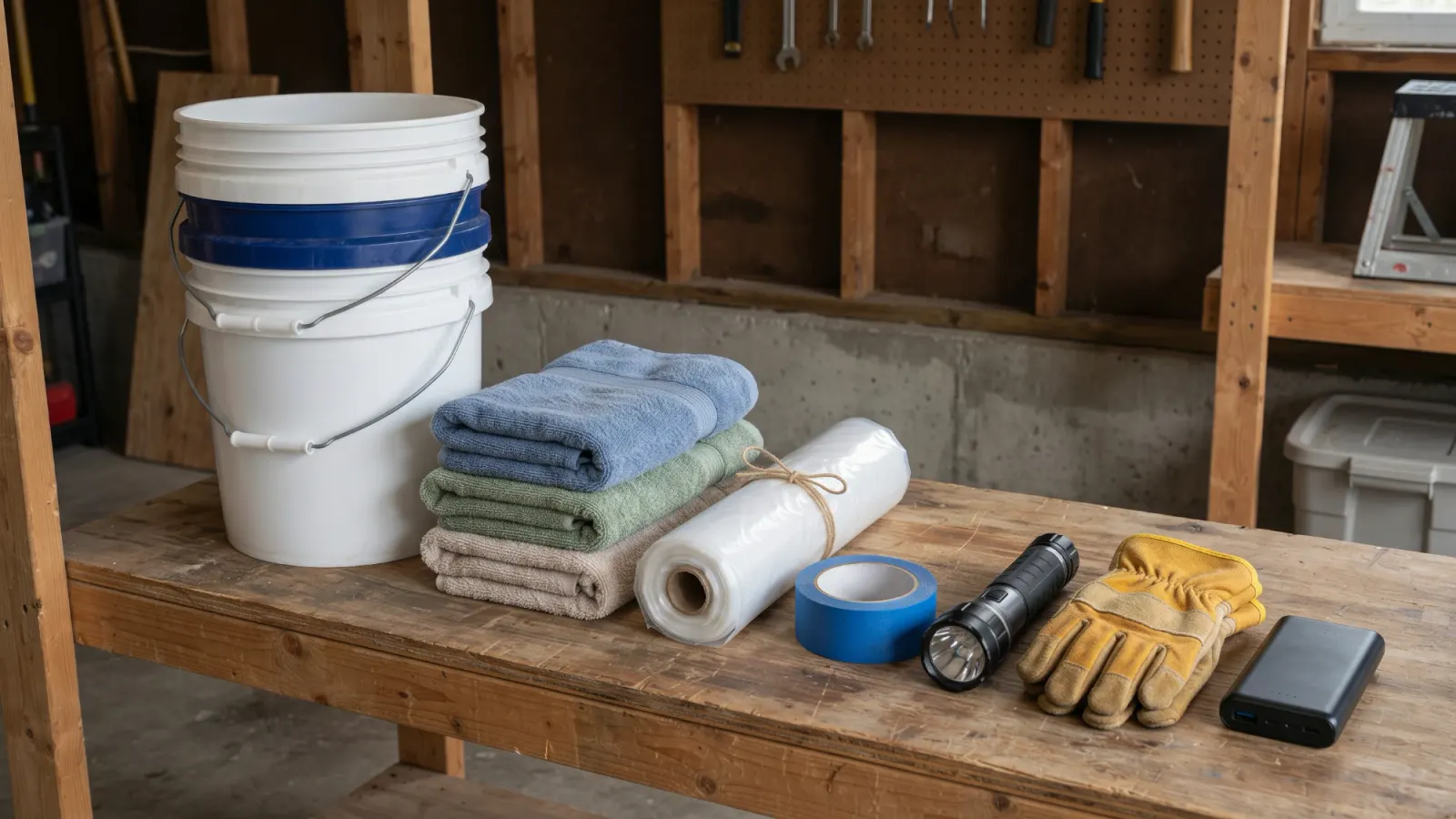
Keep it together in the garage or a hall closet, so nobody has to hunt for a bucket while the ceiling drips.
What Not to Do
Don’t poke a bulging ceiling or stand under it. Keep people out of the room and call.
Don’t use a vacuum, fan or extension cord in a wet area until the circuit is off.
- Don’t leave wet rugs and carpet down
Water keeps wicking into the floor and the pad underneath.
Don’t throw anything away before it is photographed; your insurer may want to see it.
Don’t climb onto the roof to find the leak or put a tarp on it.
- Don’t let a slow drip wait for the weekend
Small leaks grow, and so does what is wet.
Document It for Your Insurance
Photos and short videos of the ceiling, the water, the wet floors and anything damaged, with the date and time, help your insurer if you file a claim. Keep receipts for anything you buy to protect the house, like tarps, buckets or a dehumidifier. Our guide to roof insurance claims explains what insurers usually ask for.
When to Call for Emergency Help
Which of these sounds most like your roof? Tap a card.
Water pouring in, or a ceiling that bulges or sags
How urgent
Call now
What to do
Keep everyone out of the room and call, any hour
Water near lights, outlets or the electrical panel
How urgent
Call now
What to do
Switch off the circuit if you can do it safely, then call
A steady drip that fills a bucket
How urgent
Call today
What to do
Catch it, protect the room and call
A new stain that grows with each rain
How urgent
Call this week
What to do
Photograph it and book a roof evaluation
A dry, old stain that never changes
How urgent
Have it checked
What to do
A roofer can tell you if it is an old leak or a new one
How We Help When It’s Leaking
We take emergency roof repair calls after hours and on weekends, and tell you when a roofer can be there.
A roofer finds where the water is getting in and photographs the damage, inside and out.
- We stop the water now
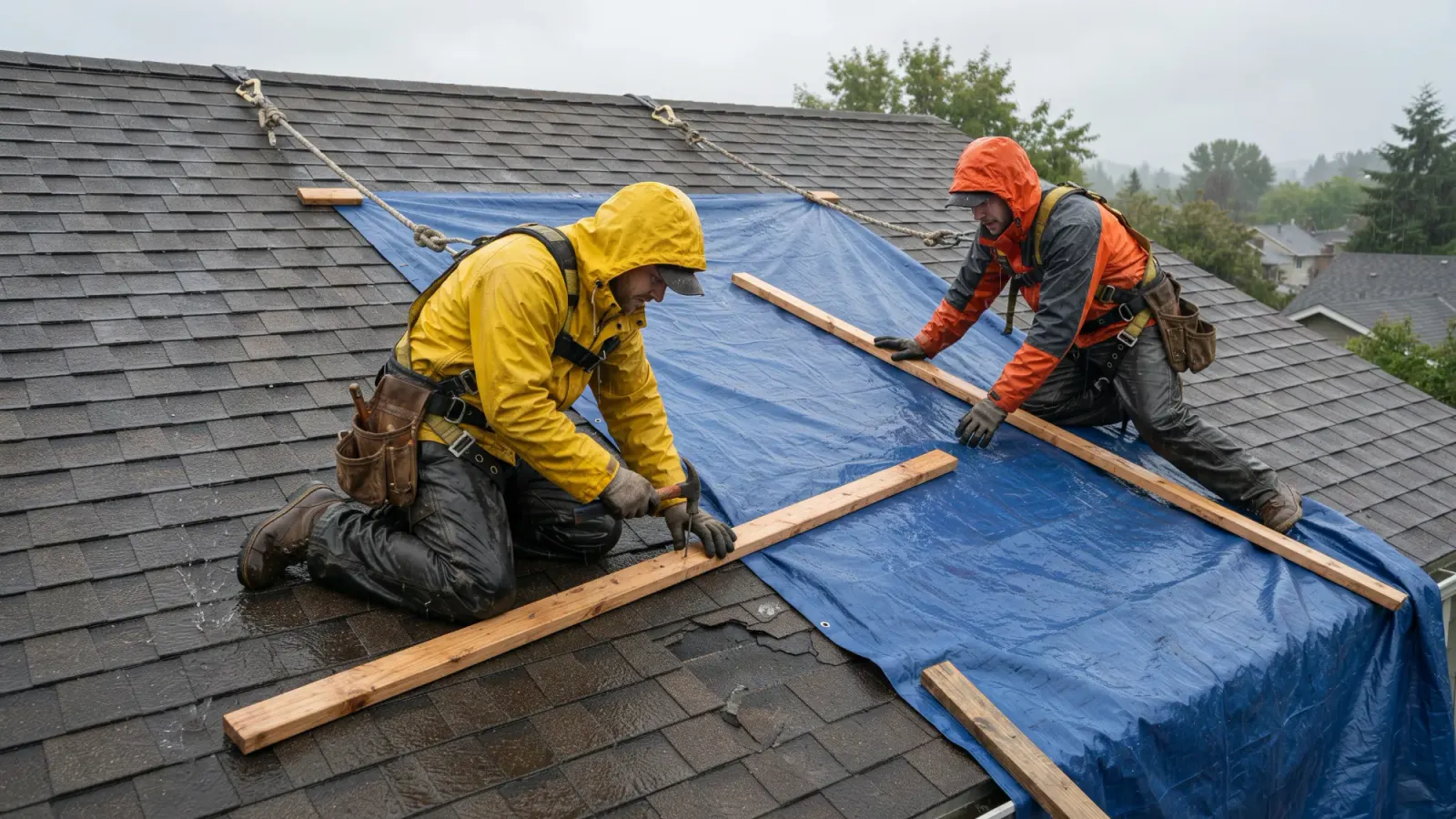
When the permanent repair has to wait, we cover the damaged area, for example with a tarp, to limit further water damage.
You get a written scope and price for the permanent repair, with the photos, ready to share with your insurance company.
See emergency roof repair. Once the water has stopped, a ceiling that got soaked may need to be opened up and dried; that interior work is a job for a water damage or restoration company, and we can point you to the next step.
Frequently Asked Questions
What should I do first when my roof is leaking inside?
Make the room safe: keep away from water near lights and outlets, switch off the circuit at the breaker if you can do it without standing in water, and stay out from under a sagging ceiling. Then catch the water and move what you can.
How do I stop water from damaging my floors?
Catch the drip in a bucket with a towel in the bottom, put plastic and towels under it, roll up rugs and lift furniture legs off the wet floor with foil, plastic lids or wood blocks.
Should I poke a hole in a bulging ceiling?
No. Keep everyone out from under it, move what you can out of the room, switch off any light or outlet near it at the breaker and call right away.
What should I keep in a roof leak kit?
Buckets or tubs, old towels, plastic sheeting, painter’s tape, a flashlight, a phone charger, work gloves and a roofer’s number saved in your phone.
Do you come out at night or on weekends for a roof leak?
Yes. We take emergency roof repair calls after hours and on weekends, and we tell you when a roofer can be there.
Who dries out the inside of the house after a roof leak?
A water damage or restoration company handles drying and interior repairs. We stop the water at the roof and repair the roof itself.
Water Coming In Right Now?
Call (310) 340-1643, even after hours or on a weekend. Not leaking yet but worried? Book a free roof evaluation and find the weak spot before the next storm does.