
HOA Roof Repair: Whose Job Is It, and Who Pays for a Roof Leak?
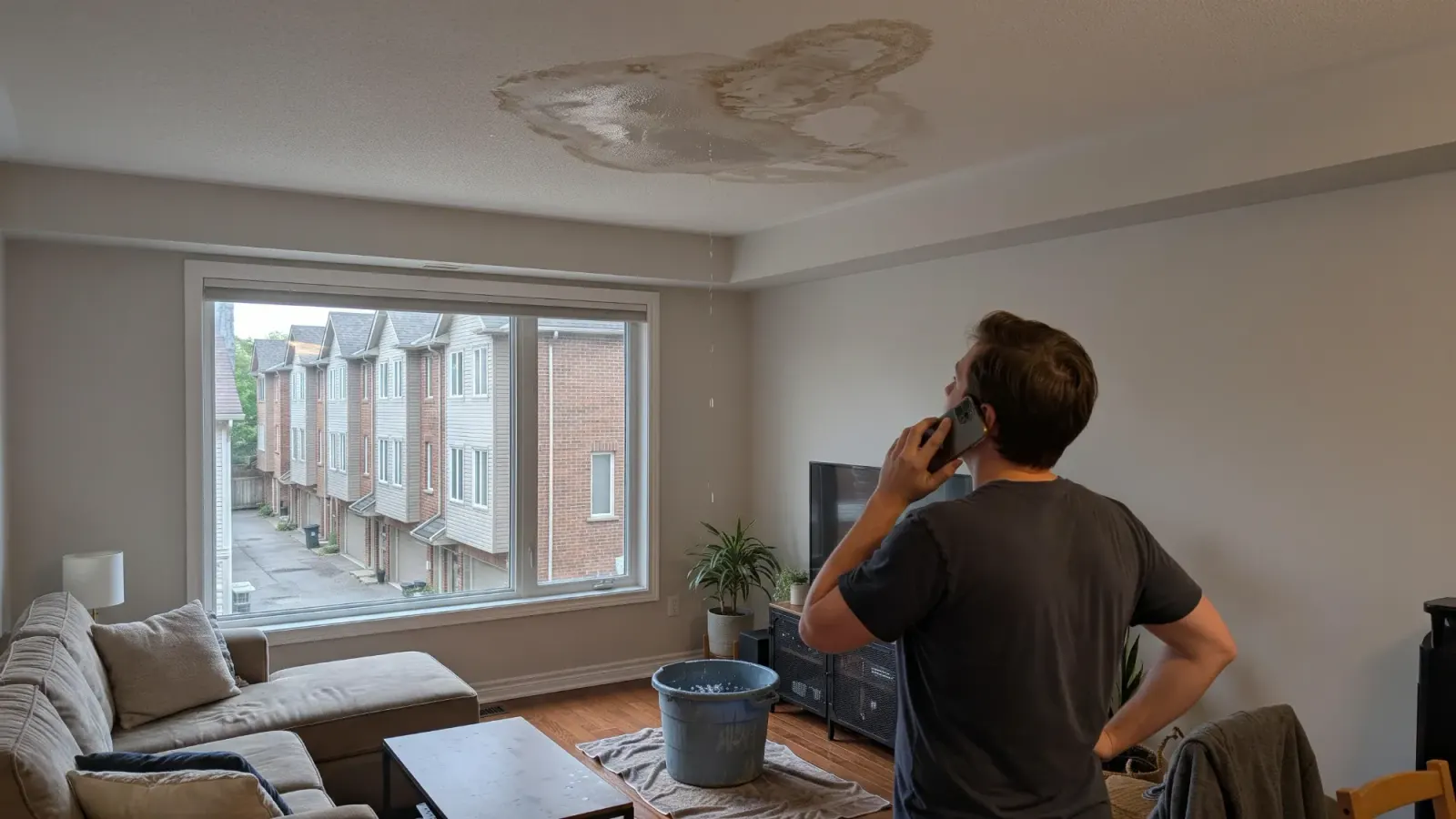
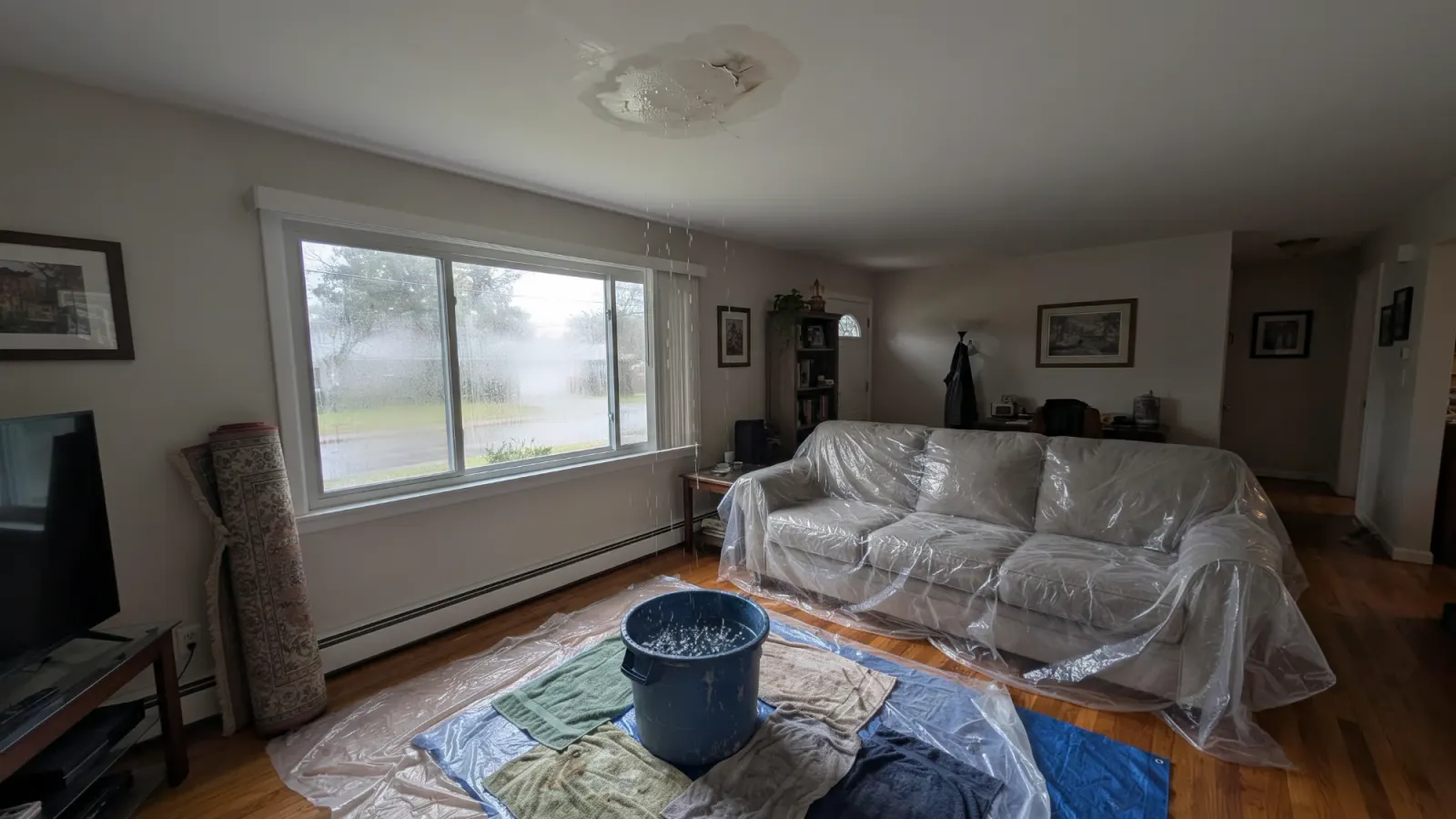
HOA roof repair questions usually start with water on the ceiling. You live in a community with an HOA, and the first thing you want to know is whether the roof is the association’s job or yours, and who pays for the damage inside.
The honest answer is that your community’s documents decide. Here is who usually handles the roof in condos, townhomes and single-family homes in an HOA, where to look in your CC&Rs, what to do the day it leaks, the gray areas, and how insurance fits in. This is general guidance, not legal advice; for a dispute, talk to your HOA’s manager or an attorney.
It Depends on Your CC&Rs
Every HOA has governing documents, usually called the CC&Rs (covenants, conditions and restrictions). They say which parts of the property are common area, maintained by the association, and which parts belong to each owner. In California, the Davis-Stirling Act sets a default split between the two, but a community’s CC&Rs can change it, so your documents are the place to start.

Condo in a shared building
- Who usually handles the roof
- Usually the HOA
- Why
- The roof is typically common area, shared by everyone under it
Townhome or attached home
- Who usually handles the roof
- It varies
- Why
- Some CC&Rs make each roof the owner’s; others keep roofs as common area
Single-family home in an HOA
- Who usually handles the roof
- Usually the homeowner
- Why
- The house and roof are typically the owner’s, with the HOA approving materials and colors
Carports, clubhouses, common buildings
- Who usually handles the roof
- The HOA
- Why
- They are common area
Where to Look in Your Documents
The maintenance responsibility section of the CC&Rs, often with a chart of who repairs what.
The definition of common area, separate interest and exclusive use common area.
Any section on roofs, exteriors or structural elements.
Architectural rules, which cover approvals for roof materials and colors.
Board policies or resolutions that have clarified responsibilities since the CC&Rs were written.
The association’s insurance summary, which says what the master policy covers.

If you can’t find them, ask the HOA’s manager for the governing documents and the maintenance chart.
What to Do the Day It Leaks
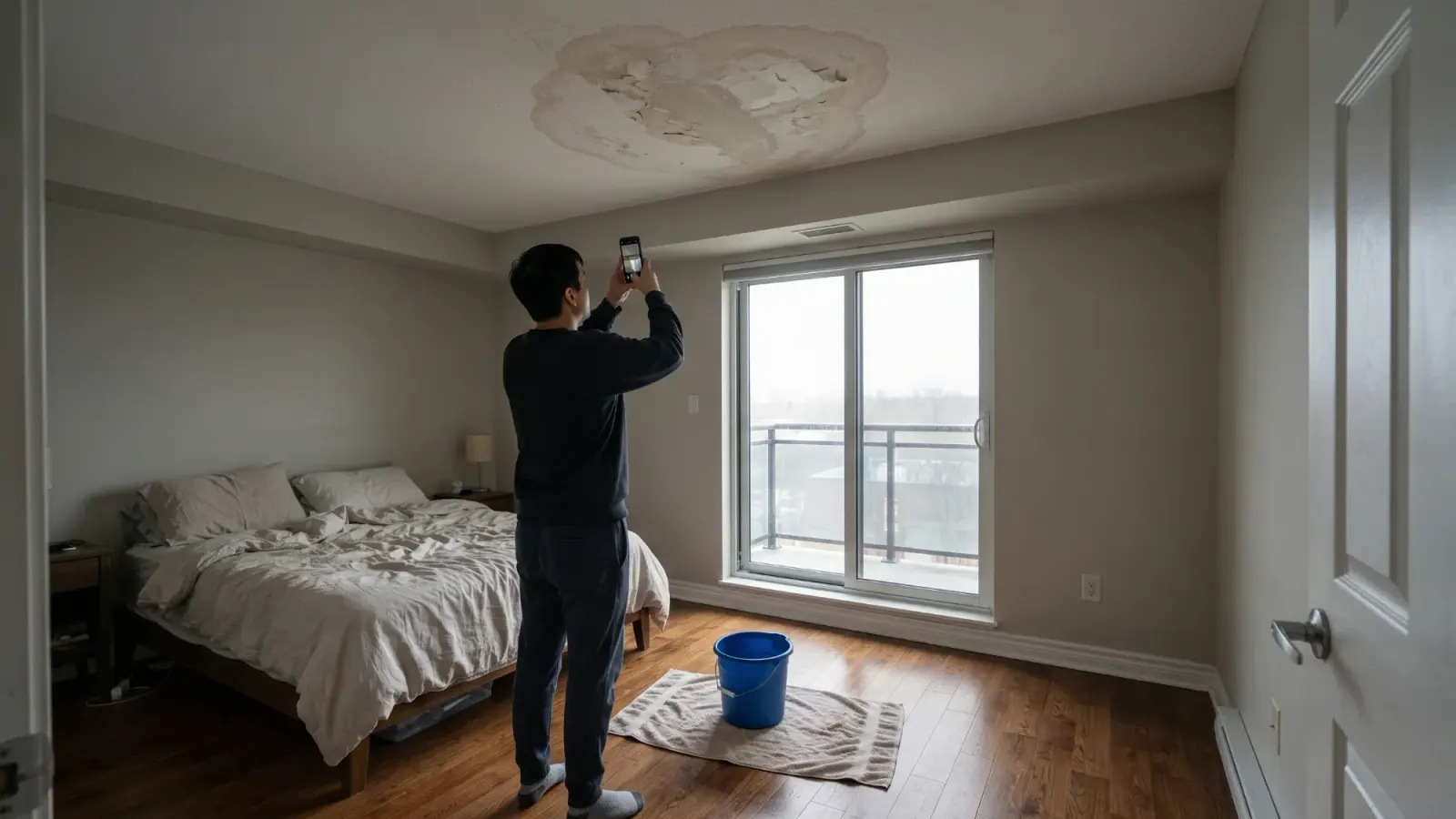
Protect your home first. Catch the water, move what can be damaged and keep people out from under a sagging ceiling.
Document it. Photos and video of the ceiling, the water and anything damaged, with the date and time.
Notify the HOA in writing. Email the manager or the board right away, even if you think the roof is yours, and keep a copy.
Check your CC&Rs for who handles the roof and how repairs are requested.
Call your own insurer if there is damage inside, and ask what your policy covers.
Don’t let anyone open the roof until it is clear who is responsible for it, unless it is an emergency and the HOA agrees.
Our guide to the first hour of an active roof leak covers the first steps in more detail.
The Gray Areas
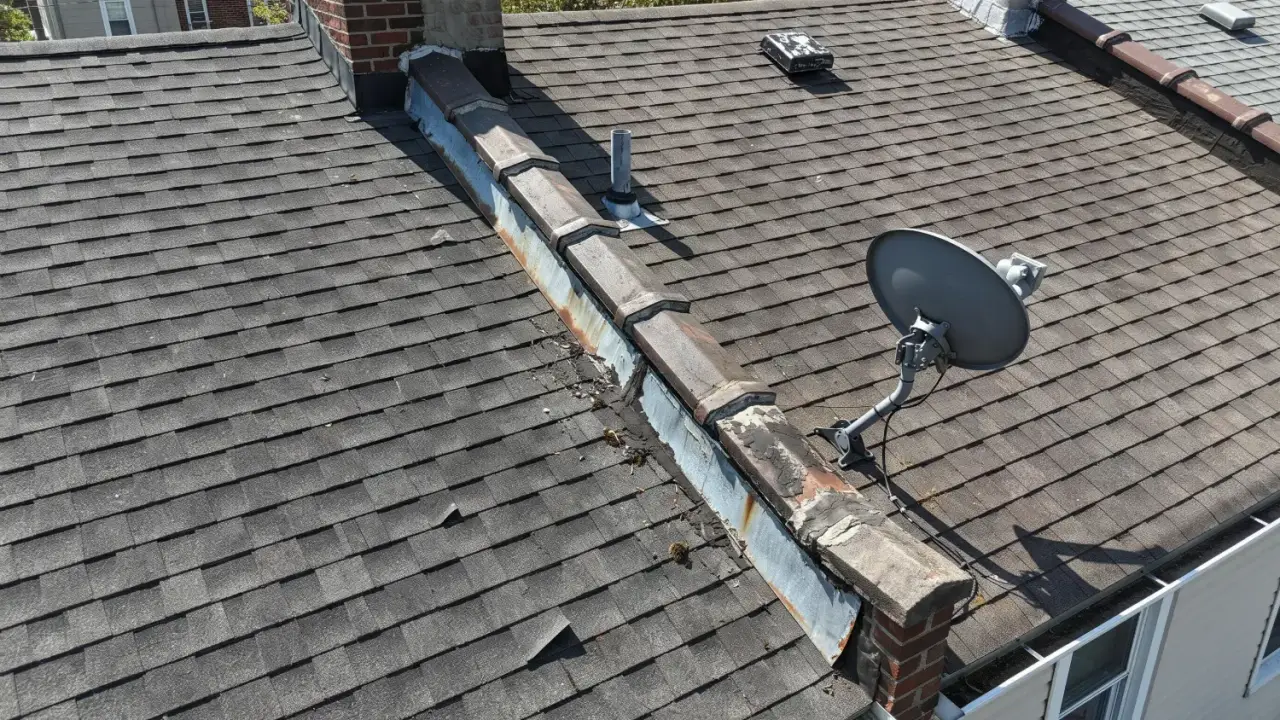
Which of these sounds most like your roof? Tap a card.
The leak comes from a common roof but damages your unit
Who often ends up responsible
The HOA for the roof; the interior can depend on the CC&Rs and insurance
What to check
The maintenance chart and both insurance policies
Something you installed caused it, like a satellite dish or solar mount
Who often ends up responsible
Often the owner
What to check
Who approved and installed it
The leak starts on a neighbor’s roof in an attached row
Who often ends up responsible
Depends on whose roof it is under the CC&Rs
What to check
Where the water actually gets in
The HOA was told about a problem and didn’t act
Who often ends up responsible
Can shift responsibility for later damage
What to check
Your written notices and dates
A skylight, vent or chimney on your unit
Who often ends up responsible
Varies; often listed in the maintenance chart
What to check
The chart, item by item
How Insurance Fits In
In many communities, the HOA carries a master policy for the common areas, and each owner carries their own policy for the inside of their home and their belongings. Which one responds depends on the policies and the CC&Rs, and the insurers decide coverage, not the roofer.
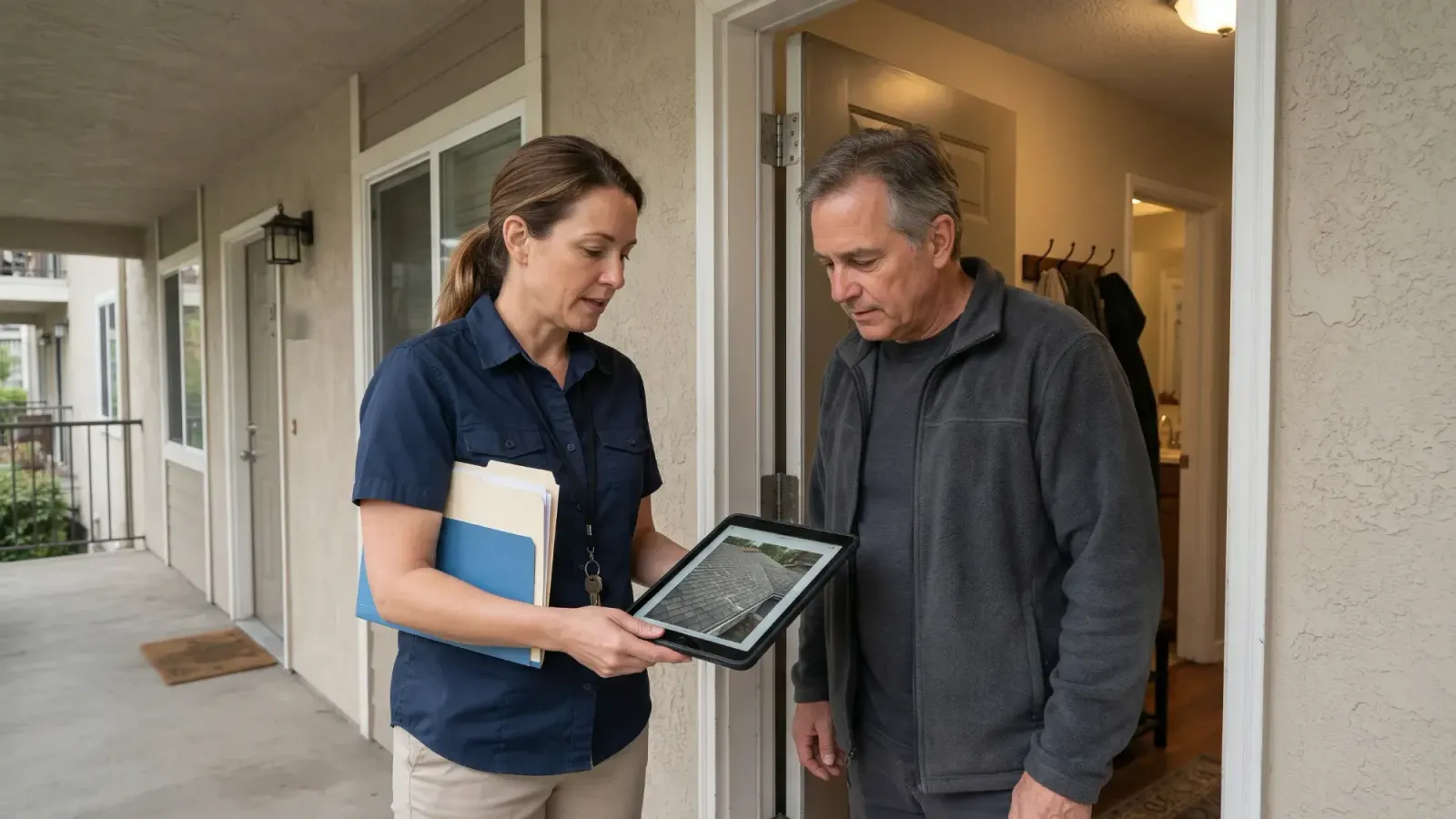
What a roofer can do is document the source and the damage with photos and a written scope, so both the HOA and the insurers are looking at the same facts. Our guide to roof insurance claims explains how claims work.
What Not to Do
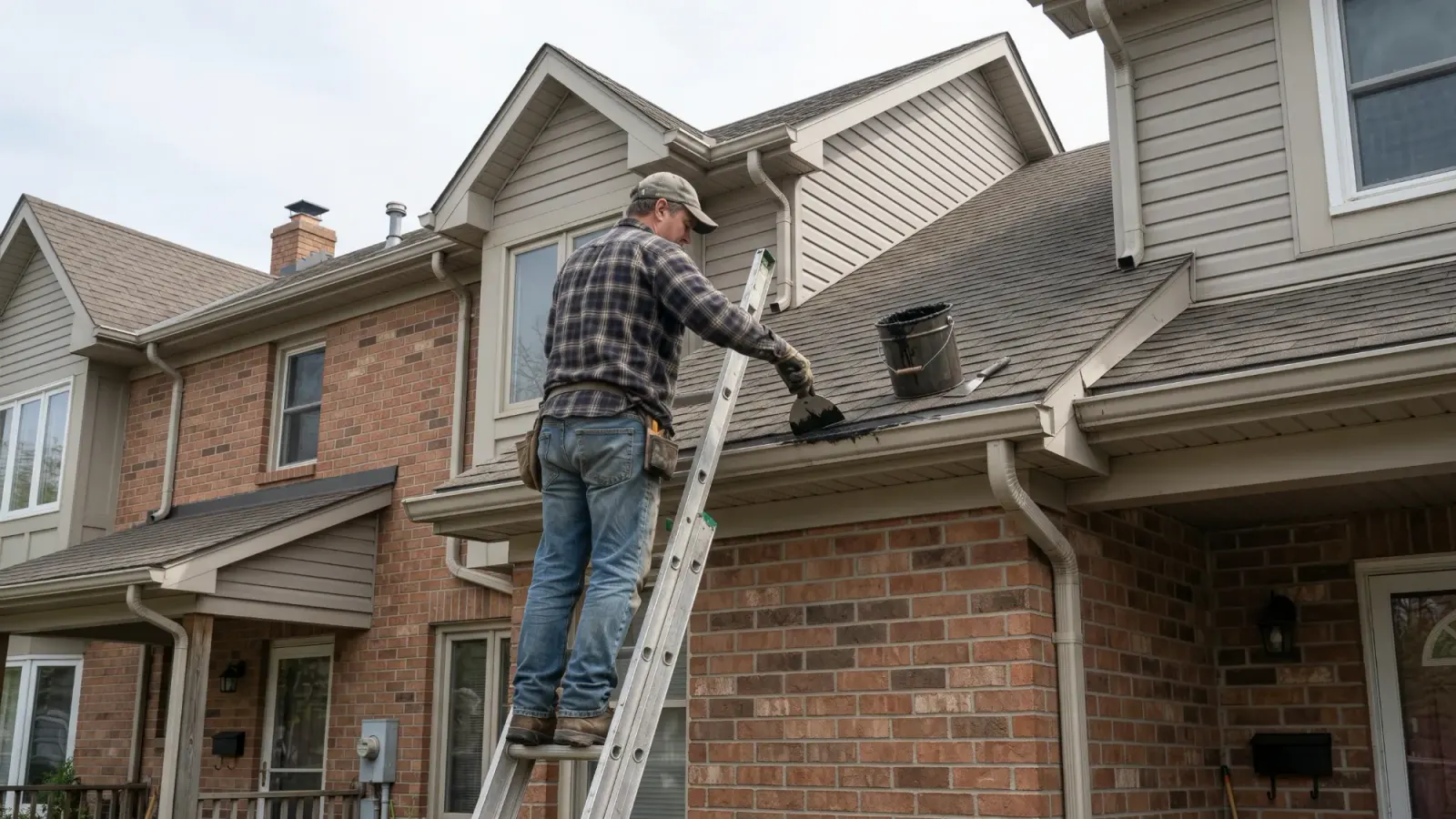
Don’t hire your own roofer for a common-area roof without the HOA’s approval. You may not be reimbursed, and the work may not be accepted.
- Don’t wait for the HOA to notice
Report it in writing, the same day.
Don’t throw away damaged materials before they are photographed.
- Don’t assume the HOA covers the inside of your home
Check your own policy.
- Don’t patch the roof yourself
It can make the source harder to find and the responsibility harder to settle.
Your HOA Roof Leak Checklist

How We Help Homeowners and HOAs
- For boards and managers: a roofer-led roof survey with a photo-documented report on each roof, a written proposal with scope and price, and one point of contact from the first walk to closeout. Our ReserveReady® program adds phased proposals and long-range budget planning.
- For homeowners whose roof is their own: a free roof evaluation, with photos and a written scope and price before any work.
- For both: a report that shows where the water gets in, which is what everyone needs to settle who handles it.

Repairs are made as a roof repair, and larger work is phased building by building so the community stays livable. Our roof maintenance plans can cover the buildings across a community, with photo reports easy to share at board meetings.
Frequently Asked Questions
Is the HOA responsible for roof repairs?
Often for condos in shared buildings, where the roof is usually common area. In townhomes it varies, and in single-family homes it is usually the owner. Your community’s CC&Rs decide.
Who pays for interior damage from a roof leak in an HOA?
It depends on the CC&Rs and the insurance policies involved. The HOA’s master policy and your own policy may each cover different parts. Report it to the HOA in writing and call your own insurer.
Can I hire my own roofer if my HOA is slow to fix the roof?
For a common-area roof, not without the HOA’s approval, or you may not be reimbursed. Report the leak in writing, keep copies and follow up. For a roof that is yours under the CC&Rs, you can hire your own roofer, following any approval rules.
What does California law say about HOA roof repairs?
California’s Davis-Stirling Act sets a default split between what the association maintains and what each owner maintains, but a community’s CC&Rs can change it. For a specific dispute, talk to an attorney.
Do you work with HOA boards and property managers?
Yes. Boards and managers get photo-documented reports on each roof, written proposals with scope and price, and one point of contact from the first walk to closeout.
Do I need HOA approval to replace my own roof?
Often, yes. Many HOAs approve roof materials and colors even when the roof is the owner’s. Check your architectural rules before you order.
Need to Know Where the Water Gets In?
Homeowners: book a free roof evaluation. Boards and managers: ask about a roof survey for the community. Either way, you get photos, a plain-English answer and a written scope and price before any work. Or call (310) 340-1643.