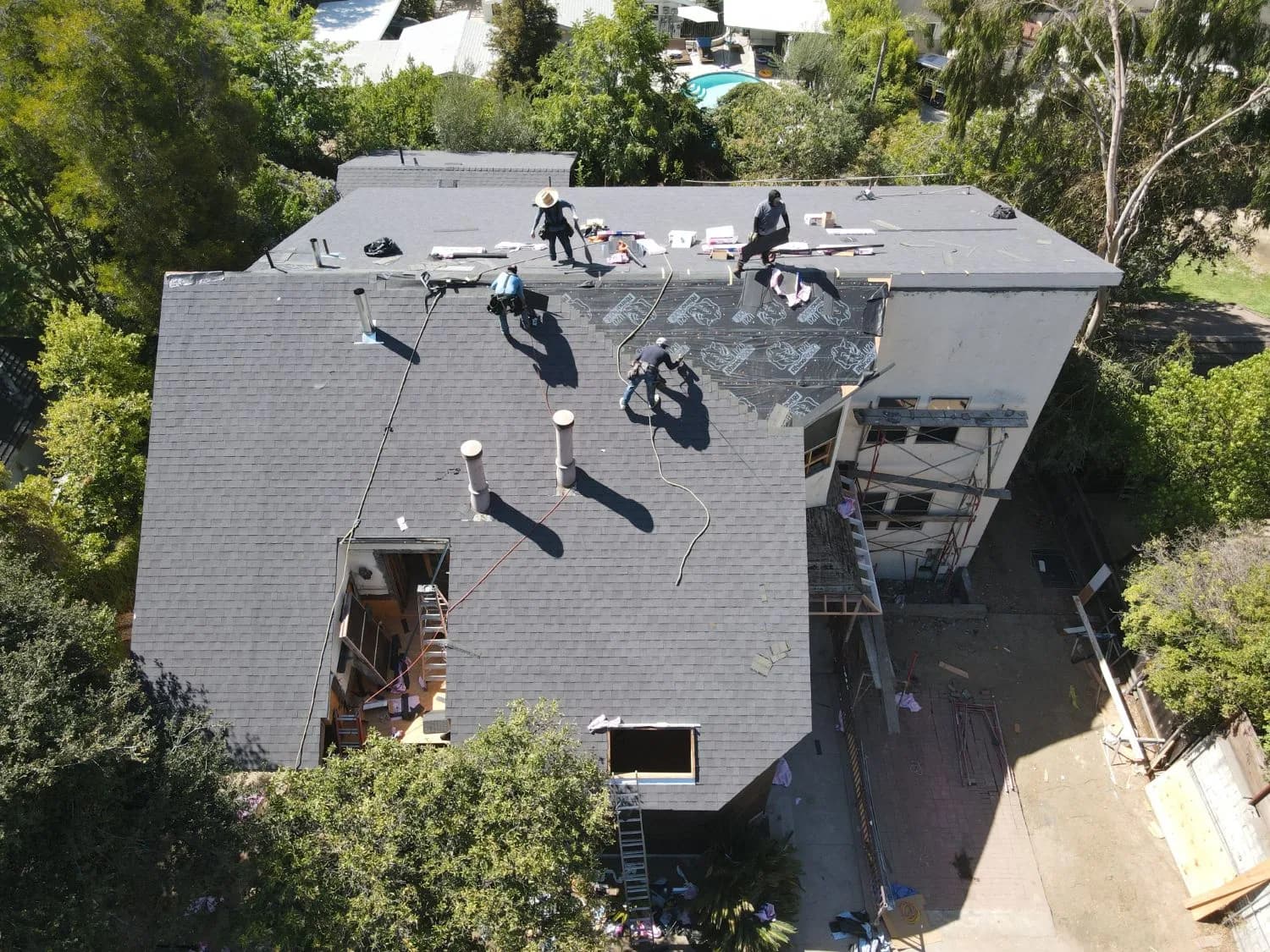

Roof Storm Damage: How to Spot It and What to Do Next
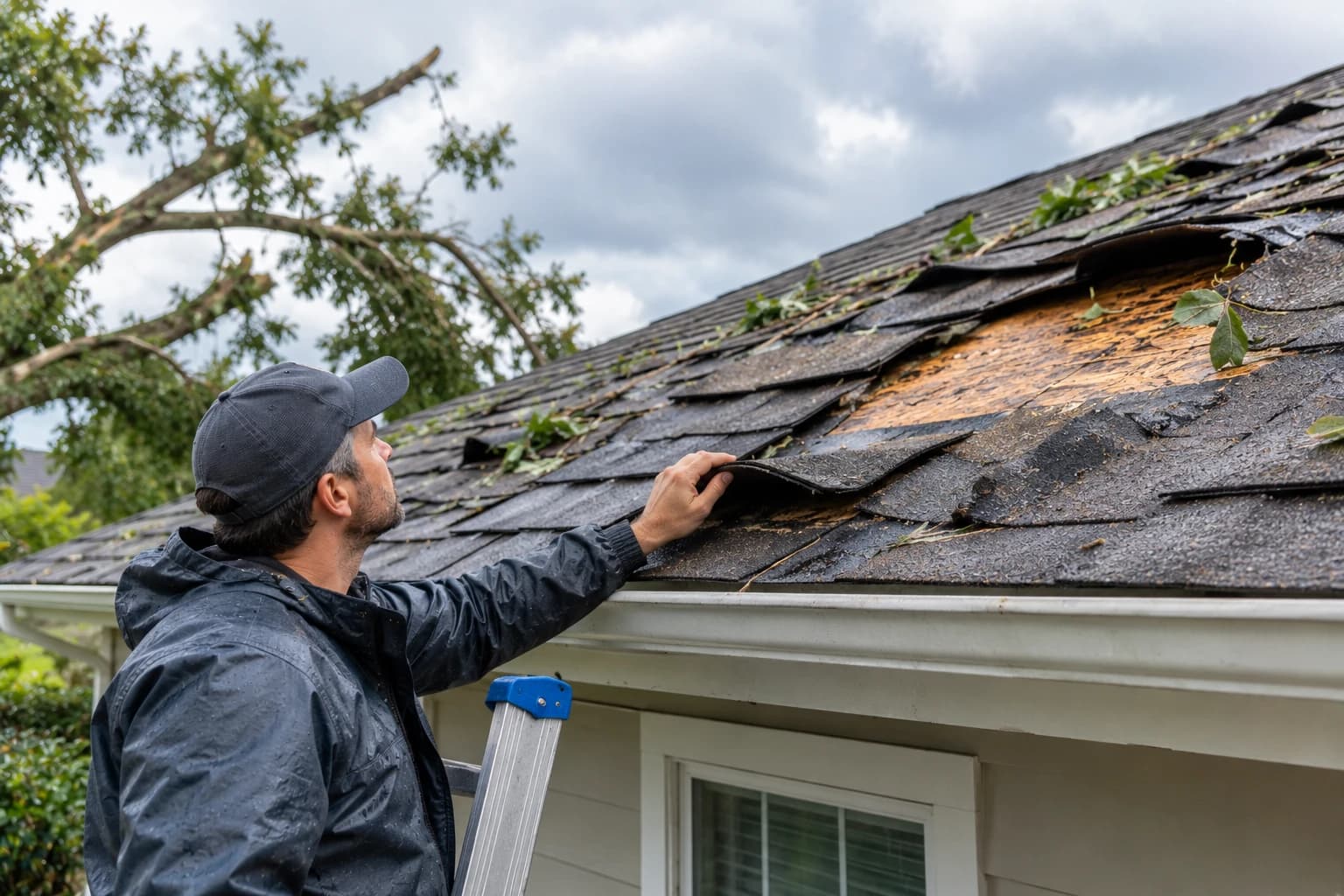
Roof storm damage is not always dramatic. After a windy night or a heavy downpour, a roof can look fine from the street while a lifted shingle, a slipped tile or a loose flashing is quietly letting water in.
Southern California roofs take a particular kind of punishment. Santa Ana winds can lift and crack roofing materials, and winter rain can arrive in heavy bursts after months of dry heat, which finds every weak spot.
This guide explains the signs of roof storm damage, what to do in the first hours, how damage differs by roof type and when a repair is enough.
How Storms Damage Roofs in Southern California
Most storm damage comes from three things: wind, rain and debris.
- Wind
Strong gusts can lift or crease shingles, shift or crack tiles and loosen flashing and vents.
- Heavy rain
After long dry spells, rain tests underlayment, flashing and seams that have aged in the sun. Small weak points can become leaks quickly.
- Debris
Branches and wind-blown objects can crack tiles, puncture a flat roof or clog valleys and drains.
Older roofs are more vulnerable, because years of sun make materials brittle and sealant tired. That is why a storm often reveals a problem that was already developing.
Signs of Roof Storm Damage You Can See From the Ground
You can learn a lot from the ground. Walk around the house, look up at the roof and check the yard, and stay off the roof itself.
- Missing, lifted or creased shingles: Bare patches, tabs that stand up or visible creases across a shingle.
- Cracked, slipped or missing tiles: Gaps in the pattern, tiles out of line or pieces lying in the yard.
- Debris on the roof or in the valleys: Branches, leaves and other material that can trap water.
- Granules in the gutters or at the downspouts: A sign that shingles are losing their surface.
- Bent or loose gutters, flashing and vents: Metal parts that have shifted or pulled away.
- Fallen branches: Any limb that has hit the roof deserves a closer look.
Stay safe: Do not climb onto a roof after a storm. Wet surfaces are slippery, tiles break underfoot, and damaged areas may not hold your weight.
Signs of Storm Damage Inside the House
Water often shows up inside before it shows up outside. Look for these signs:
- Brown or yellow ceiling stains, or paint that bubbles or peels.
- Drips during or after rain.
- Damp insulation or a musty smell in the attic.
- Daylight showing through the roof boards in the attic.
- Wet spots around vents, chimneys or skylights.
A stain can sit far from the actual opening, because water travels along the roof deck and framing before it drips. That is why a roofer starts upslope of the stain and checks the flashing, vents and valleys along the way. Our guide to finding a roof leak explains how.
What to Do First After Roof Storm Damage
Follow these steps in order:
Stay safe
Stay off the roof, keep away from fallen power lines and keep away from water near light fixtures or outlets.
Protect what is inside
Move furniture and belongings away from the leak and catch drips with a bucket.
Take photos
Photograph the damage from the ground and inside the house, with the date, before anything is cleaned up or moved.
Limit further damage
A roofer can put temporary protection such as a tarp in place. See our guide to temporary roof repair options.
Call a roofer
A roofer can find the source, photograph it and explain the repair.
Contact your insurer if the damage may be covered
Our guide to roof insurance claims in California explains what to document.
Storm Damage by Roof Type
Each roof type fails in its own way, so a roofer looks for different things on each one.
Shingle
Common storm damage
- Lifted or missing shingles
- Creased tabs
- Exposed nails
What a roofer checks
- Shingle seals
- Flashing
- Vents and the deck beneath any missing pieces
Tile
Common storm damage
- Cracked
- Slipped or missing tiles
- Loose ridge tiles
What a roofer checks
- Underlayment beneath the broken tiles
- Flashing and valleys
Flat
Common storm damage
- Punctures
- Opened seams
- Ponding water
- Blocked drains
What a roofer checks
- Seams and laps
- Drains and scuppers
- Flashing at walls and equipment
Our repair pages cover each one: shingle roof repair, tile roof repair and flat roof repair.
Repair or Replace After a Storm?
Many storms leave damage that is local, such as a few lifted shingles, a handful of broken tiles or one failed flashing. A targeted repair is often the sensible fix when the rest of the roof is sound.
When damage is widespread, when the same spots keep failing or when the roof was already near the end of its life, replacement can make more sense than patching.
The photos from an inspection show which case you are in, so the decision rests on what the roof actually looks like. See our roof repair and roof replacement pages for how each works.
Frequently Asked Questions
How soon should I have my roof checked after a storm?
As soon as it is safe, and before the next rain. Small damage can turn into an interior leak the next time it rains, so a quick inspection is cheaper than waiting.
Can roof storm damage be invisible from the ground?
Yes. A lifted shingle, a cracked tile or a loose flashing can be hard to see from the street. A roofer checks the roof up close and photographs what they find.
Should I climb up to check the damage myself?
No. Wet roofs are slippery, tiles break underfoot and damaged areas may not hold weight. Look from the ground, take photos and call a roofer.
What should I do if water is coming in right now?
Move belongings away from the leak, catch the water, stay away from wet light fixtures and call us. See emergency roof repair and storm damage for how we handle active leaks.
Will insurance pay for roof storm damage?
It depends on your policy and the cause of the damage. Your insurer decides coverage, and our guide to roof insurance claims in California explains what to document.
Get Your Roof Checked Before the Next Rain
Roof storm damage is easiest and cheapest to fix when it is caught early.
Quality Roofing Specialists provides emergency roof repair, roof repair and roof inspections for homes across Los Angeles and Orange County.
If a storm has hit your area, schedule a free roof evaluation and a roofer will check the roof, photograph what they find and explain your next step.
Contact Quality Roofing Specialists to get your roof checked.