

How to Tell if a Sagging Roofline Is Urgent: A Walkthrough
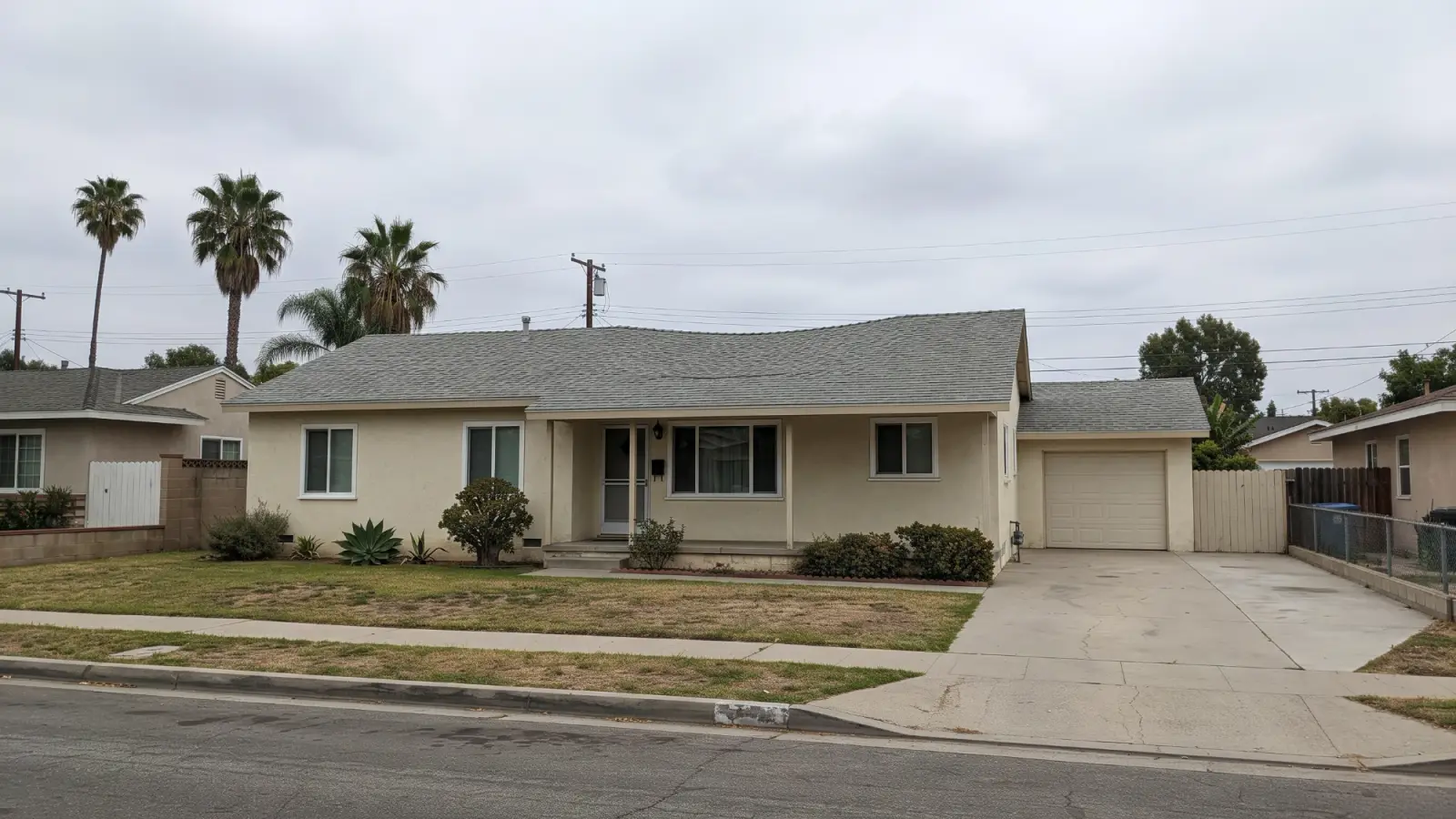
A sagging roofline is a structural problem, not a cosmetic one, and it is one of the few roof problems we tell people not to wait on. Some sags are old and have stopped moving. Others are getting worse with every rain. From the ground, you can’t tell which, so the safe answer is to have a roofer look today.
This walkthrough takes you from the street to the attic: what to look for, what each kind of sag usually means, and how fast to act. If anything inside the house is bulging, cracking or making noise, skip to the first section and get everyone clear.
First: Is Anyone in Danger Right Now?
Before you look at the roof, look at the ceilings. Leave the room and keep everyone out if you see any of these:
- A ceiling that bulges, droops or holds water
- New cracks spreading across a ceiling or down a wall near the sag
- Creaking, popping or cracking sounds from above
- Doors or windows near the sag that suddenly stick or won’t close
- A tree or a large branch resting on the roof
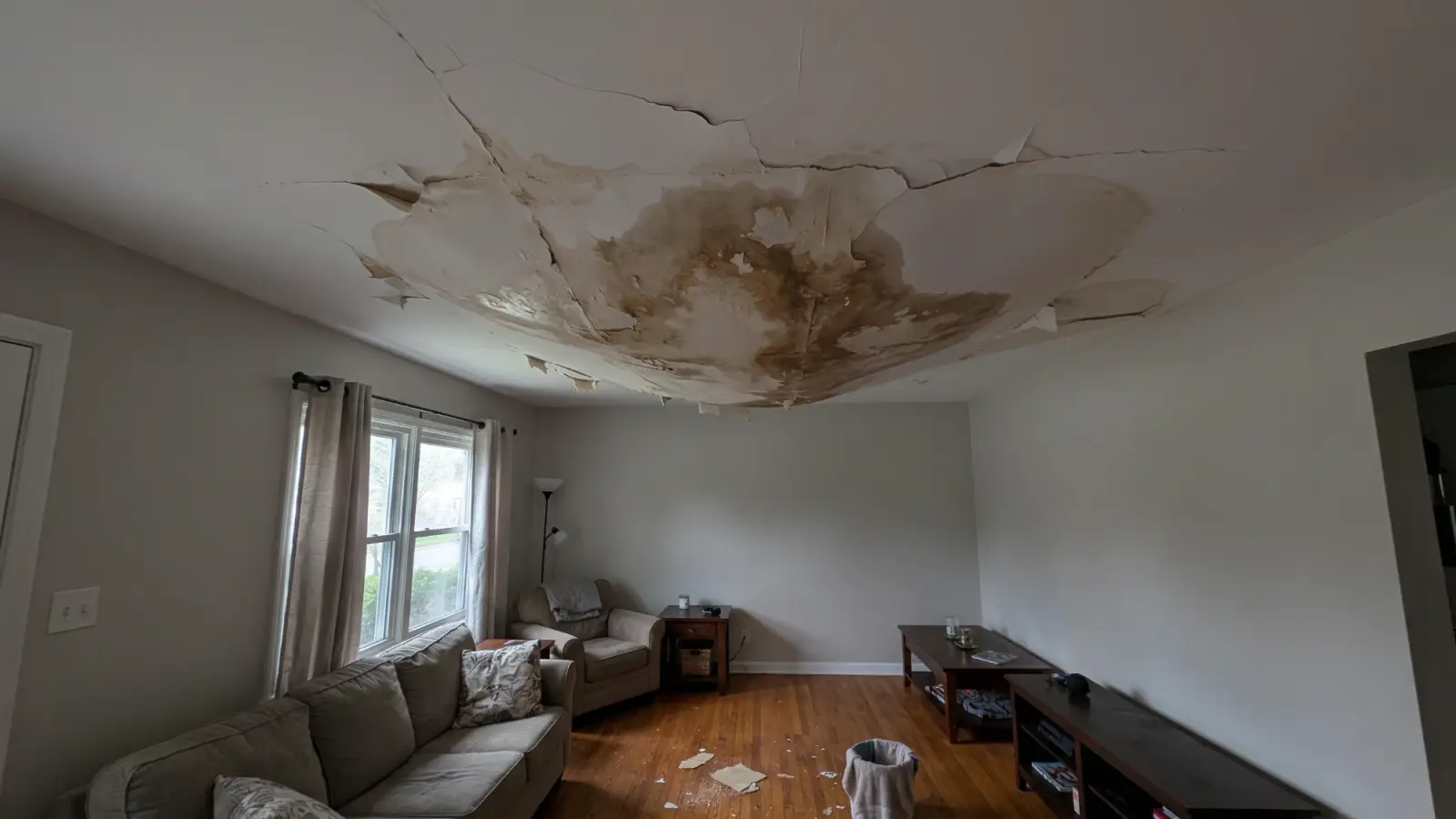
Don’t stand under a sagging ceiling. If a tree has come through the roof or a power line is down, keep everyone clear and call 911. Then call us: we take emergency roof repair calls after hours and on weekends.
Step 1: Look at the Roofline From the Street
Stand across the street, or at the far end of the yard, and look along the roof. A healthy roof has straight lines. Look for:
- The ridge. The peak should run dead straight. A dip in the middle, or a ridge that droops toward one end, is the most serious kind of sag.
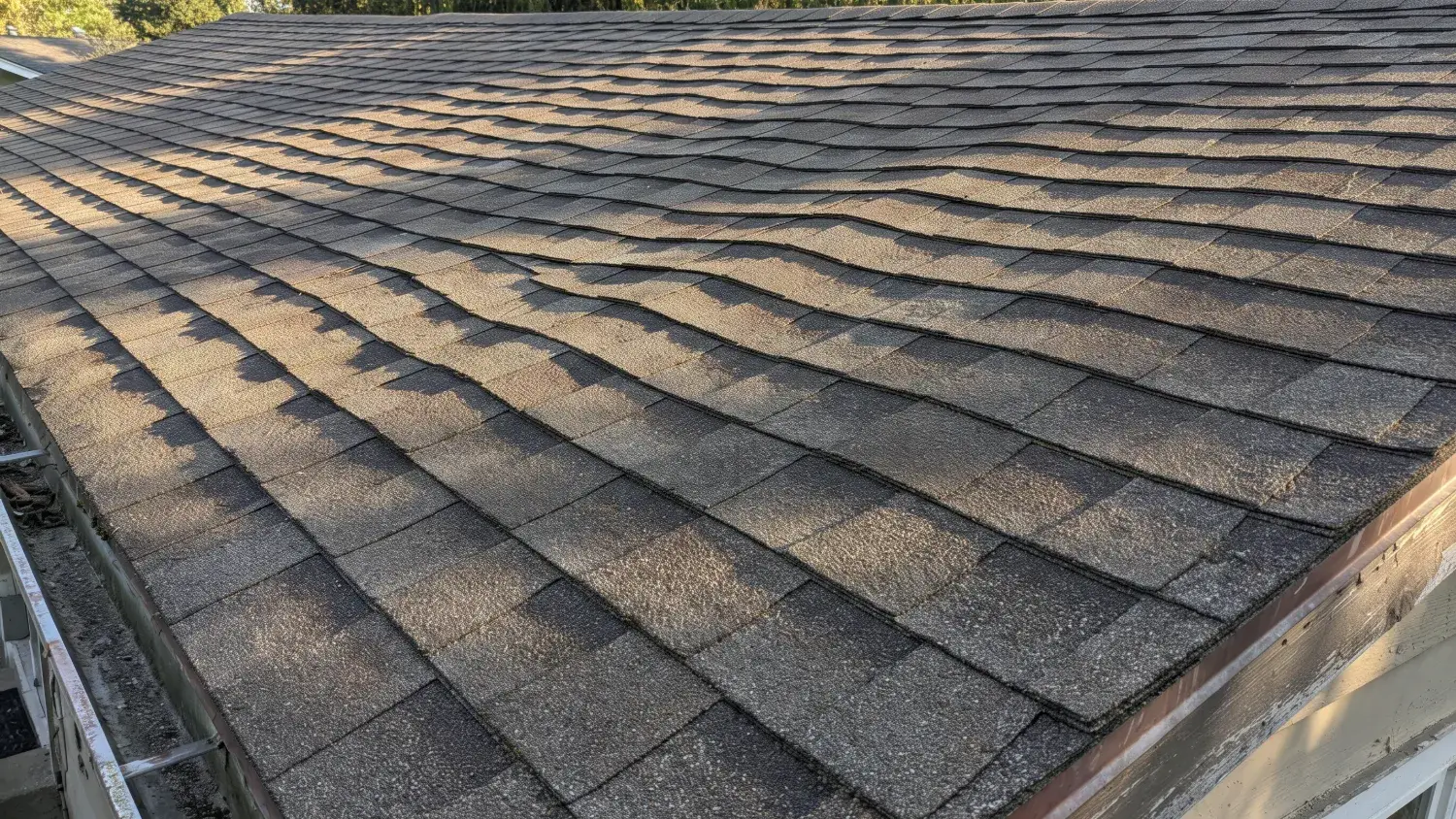
- The slopes. A slope should look flat. Waves or dips between the rafters, like a washboard, mean the roof deck is giving way.
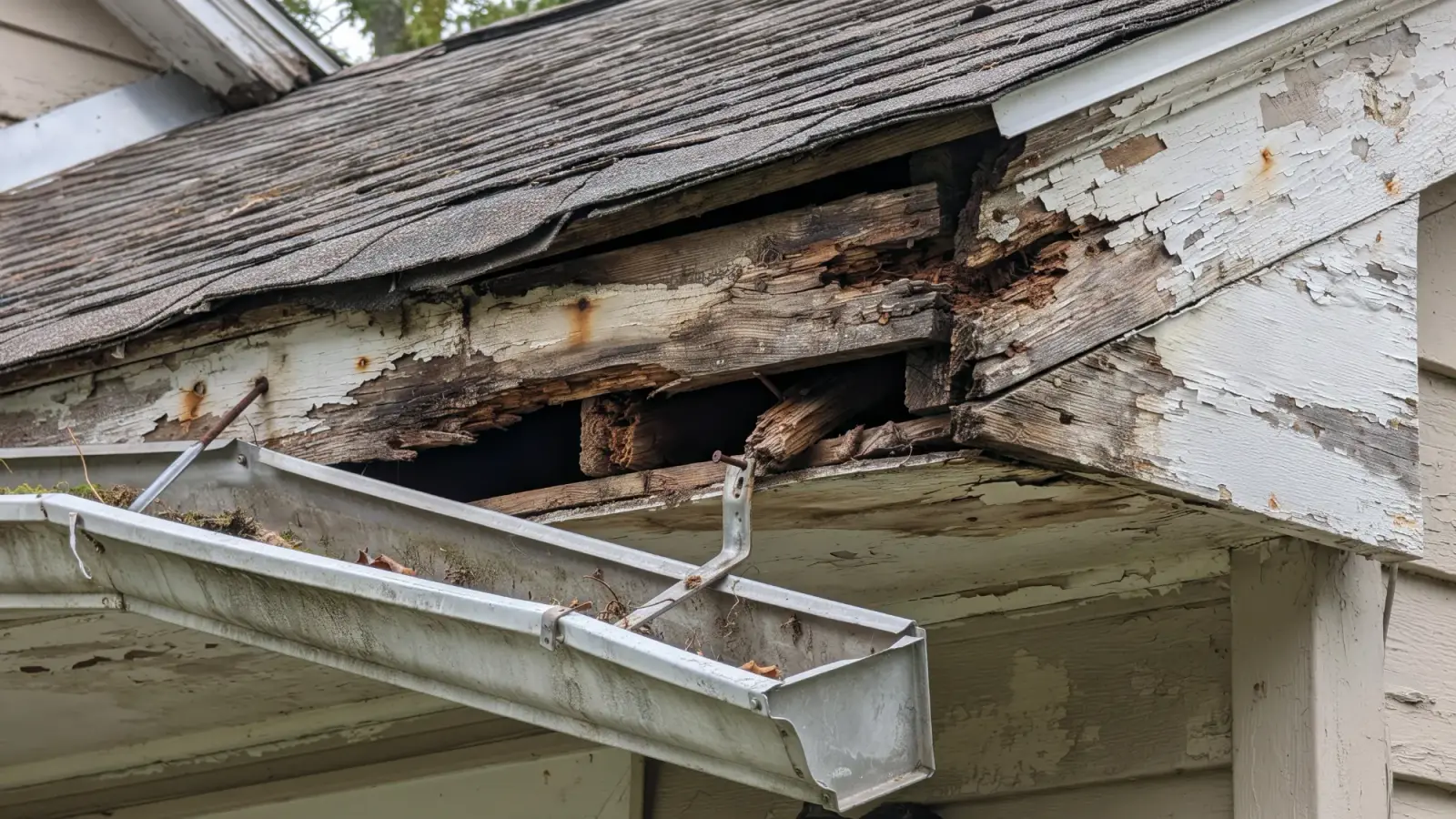
- The eaves. The lower edge should be level. A drooping eave or a wavy fascia often means rot at the edge of the roof.
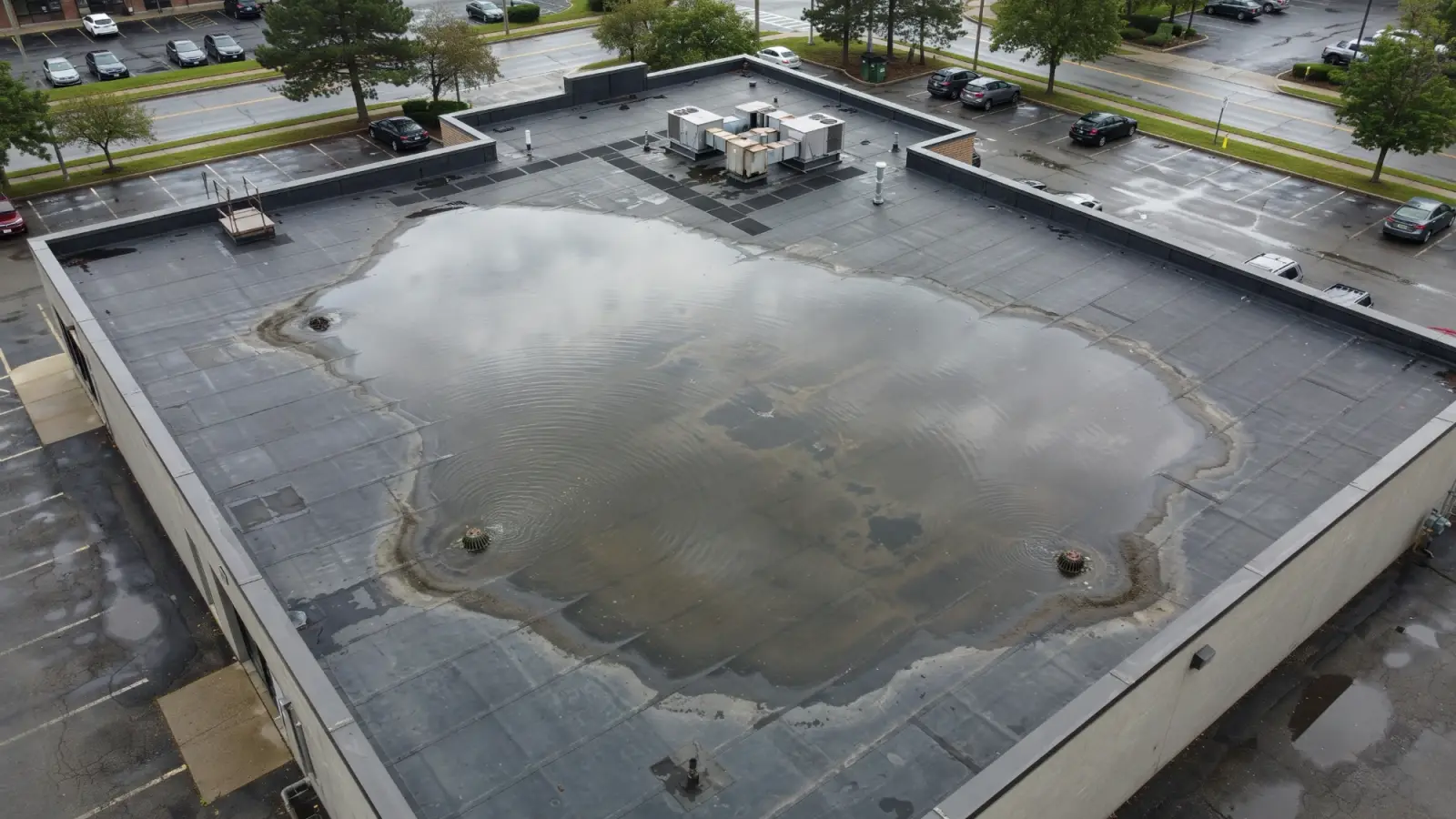
- A flat roof. Look for a low spot that holds water long after the rain stops.
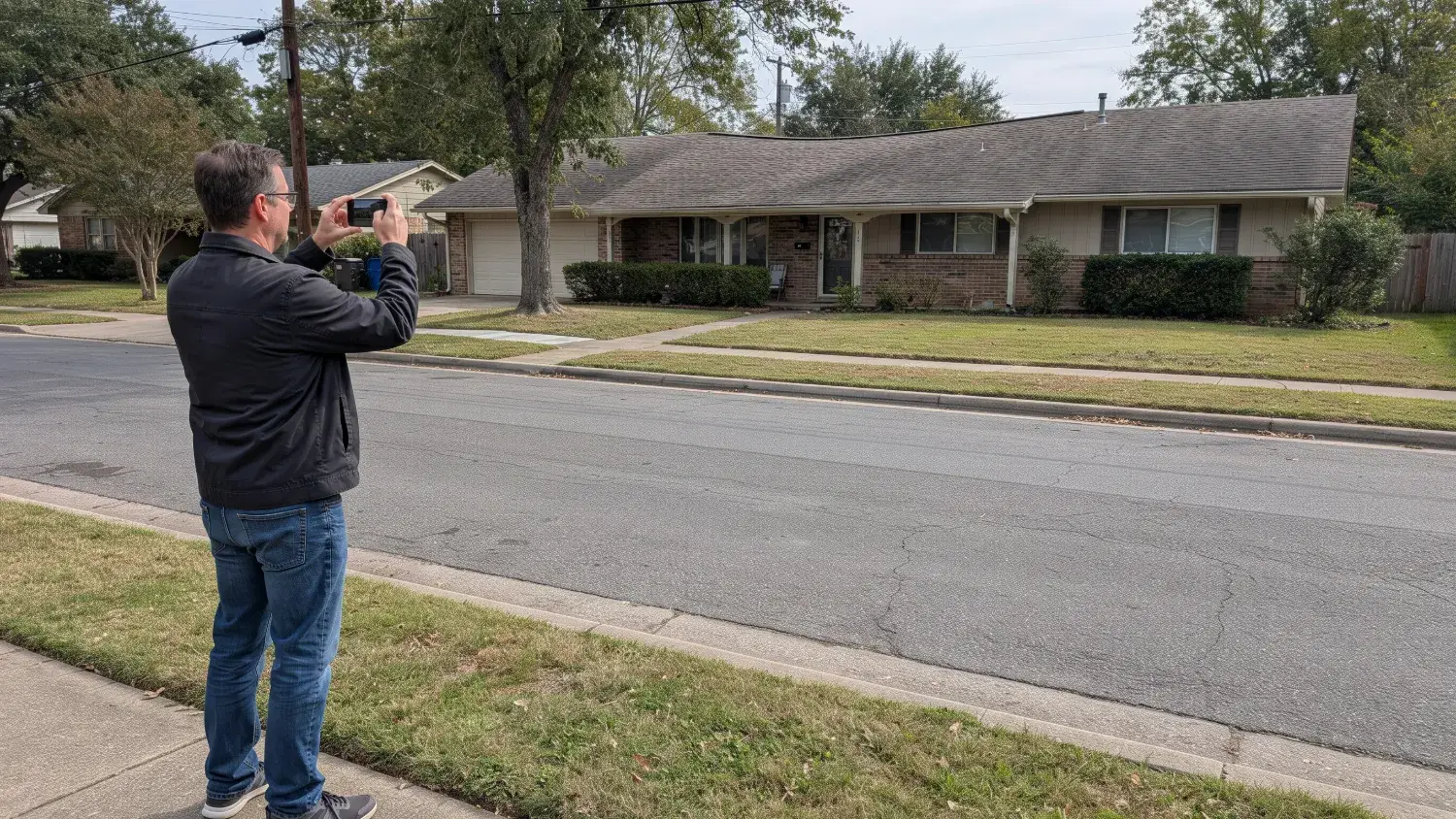
Take a photo from the same spot each time. Older photos of the house, yours or a street-view image, can show whether the sag is new or has been there for years.
Step 2: Read What Kind of Sag It Is
Where the sag is tells you a lot about what is behind it and how urgent it is.
A dip in the ridge
- What it usually means
- The ridge or the rafters are giving way, or the walls below are being pushed apart
- How urgent
- Call today. This is framing, and it can get worse quickly.
Waves between the rafters
- What it usually means
- The roof deck has softened, usually from water over a long time, or it was too thin for the span
- How urgent
- Soon, and today if there is a leak or the attic is wet
A drooping eave
- What it usually means
- Rot at the edge of the roof, often from years of water at a gutter or a failed drip edge
- How urgent
- Soon. Check inside for leaks along that wall.
A low spot on a flat roof
- What it usually means
- The deck or the framing under it has dropped, and ponding water adds weight with every storm
- How urgent
- Call today, especially before rain
A sag under a heavy roof
- What it usually means
- Tile, extra layers of old roofing or equipment on framing that wasn’t built for the weight
- How urgent
- Call today. Weight problems don’t fix themselves.
Step 3: Check Inside the House
Inside, the top-floor ceilings under the sag tell you whether water or movement has reached the house.
- Ceilings. Sagging drywall, new cracks, nail pops in a line, or a water stain under the sag.
- Walls. Cracks running from the corners of doors and windows on the top floor.
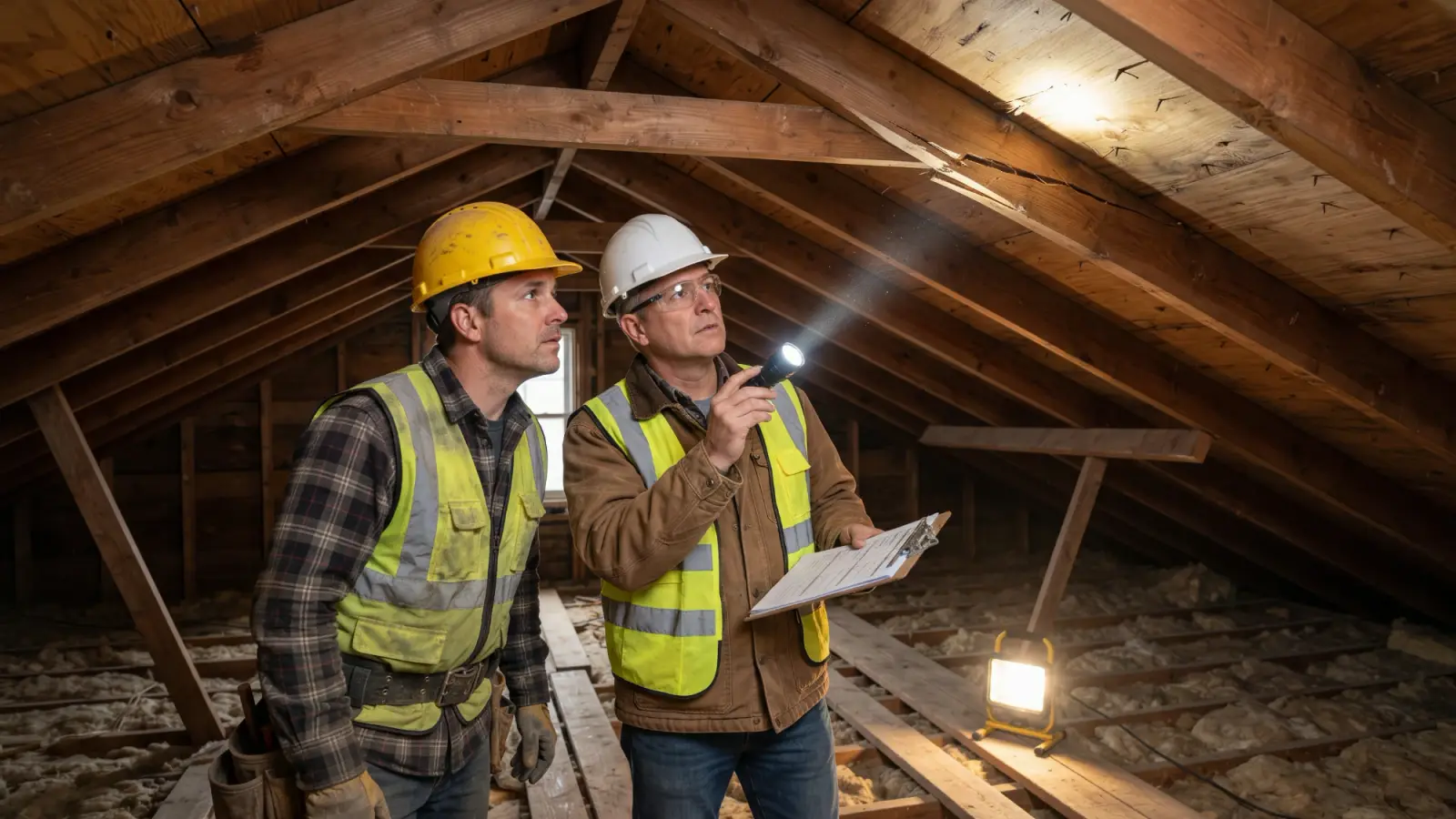
- The attic. If you can get in safely, shine a flashlight on the roof deck and the rafters under the sag: dark, wet or soft-looking wood, a cracked or split rafter, deck boards dipping between the rafters, or daylight where there shouldn’t be any.
In the attic, stay on the framing or a walk board and never step between the joists; the ceiling below won’t hold you. Our attic walkthrough shows how to look safely.
Step 4: Decide How Fast to Call
Put what you found together and pick the closest match.
Which of these sounds most like your roof? Tap a card.
A bulging or cracking ceiling, noises from above, or a tree on the roof
How fast
Right now
What to do
Get everyone out of the area. Call 911 for a tree through the roof or a downed line, then call us.
A new sag, a sag with a leak, a wet attic, or a flat roof holding water before rain
How fast
Today
What to do
Call us today. A roofer will look and, if water is getting in, cover it.
An old sag that hasn’t changed, with a dry attic and no leaks
How fast
This week
What to do
Book a roof evaluation. Keep taking photos from the same spot until a roofer has seen it.
What Causes a Roofline to Sag
- Long-term leaks. Water that gets in for years softens the roof deck and rots rafters, often far from any stain inside.
- Too much weight. A heavy tile roof on framing not designed for it, several layers of old roofing left in place, or water ponding on a flat roof.
- Framing that was cut or removed. Remodels sometimes take out rafters, ties or a wall that was holding the roof up.
- Spreading walls. When the rafters push the tops of the walls outward, the ridge drops in the middle.
- Age and storms. Old framing, a fallen branch or a heavy storm can finish what years of wear started.
Most sags are the end of a long story. That is why the fix starts with finding the cause, not with new shingles over the dip.
Why a Sag Is a Structural Call
A sag is the roof structure telling you it is carrying more than it can, or that part of it has been damaged. New shingles or a coat of anything over a sagging roof only hide the shape. The structure under it has to be fixed.
Who fixes it depends on what is sagging:
- The roof deck. Soft, rotted or damaged deck boards and sheathing are roofing work. On a repair or a replacement, our roofers take the roof down to the deck and replace the sections that are soft or damaged before anything new goes on.
- The framing. Cracked rafters, a dropping ridge or spreading walls are structural. They may need a structural engineer to design the fix and a framing contractor to build it, before the roof goes back on. We will tell you plainly when that is the case.
What Happens When You Call Us
- You call. Tell us what you see from the street and inside. Our field techs take emergency calls after hours and on weekends, and we will tell you when a roofer can be there.
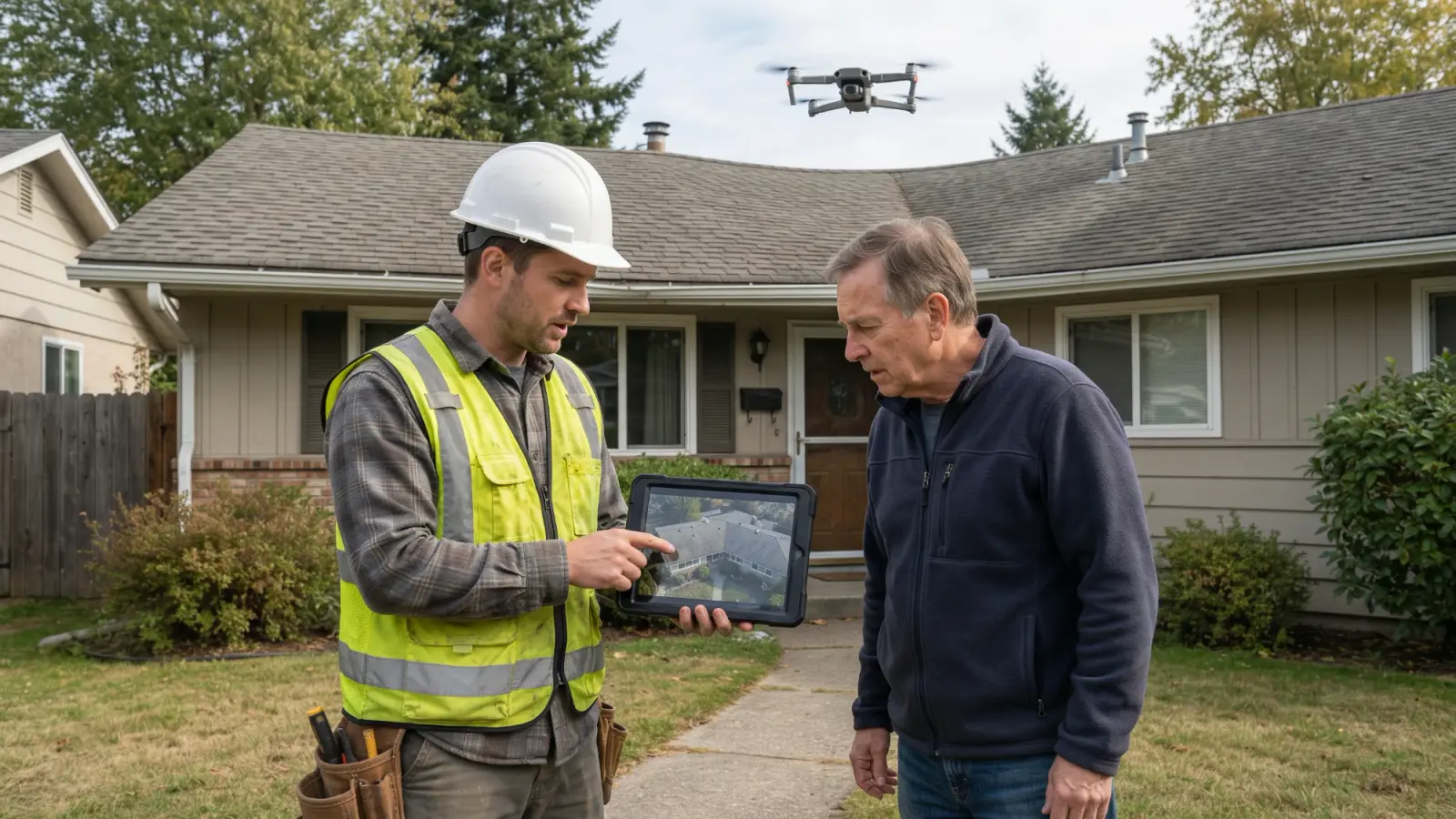
- A roofer looks first. Drone footage and photos of the roofline with RoofScan 360®, a close look at the area around the sag and, where it is safe, the attic underneath.
- Water stopped, if it’s getting in. When the permanent fix has to wait, we cover the damaged area, for example with a tarp.
- One clear next step. Repair, monitor, maintain or replace, in plain English, and whether the framing needs a structural engineer first.
- A written scope and price. Before any work starts, with the photos, ready to share with your insurance company if the sag came from a storm or a fallen tree.
If the roof needs replacing, a full tear-off takes it down to the deck so every soft section can be found and replaced; our roof replacement page explains how it runs. For homes, the roof evaluation is free.
Frequently Asked Questions
Is a sagging roof an emergency?
It can be. A bulging ceiling, cracking sounds, a tree on the roof or a sag with water coming in is an emergency: get everyone clear and call. A sag that is old, unchanged and dry still needs a roofer to look soon, because you can’t tell from the ground whether it is moving.
Can a sagging roof collapse?
In serious cases, yes, which is why the warning signs inside the house matter. Most sags give plenty of warning, but a ceiling that bulges or a noise from above means leave the area and call right away.
Can a sagging roof be fixed without replacing it?
Sometimes. If the cause is a soft section of deck, it can be opened up and replaced. If the framing has failed, it has to be repaired first, and on an old, worn roof that is often the moment to replace the roof as well. A roofer looking at it will tell you which.
Do I call a roofer or a structural engineer?
Start with a roofer. We can tell whether the problem is the roof deck, which is roofing work, or the framing, which may need a structural engineer and a framing contractor. If it is the framing, we will say so before any roofing work.
Will insurance cover a sagging roof?
Your insurer decides that, usually depending on the cause: sudden damage from a storm or a fallen tree is treated differently from years of wear. We give you photos and a written scope to share with them. Our article on roof insurance claims explains the process.
Why is my flat roof sagging in the middle?
Usually the deck or the framing under it has dropped, often after years of small leaks, and the low spot then holds water, which adds weight with every storm. It is worth a call before the next rain.
Seeing a Sag? Call Today.
Don’t wait for the next storm to find out how serious it is. Call (310) 340-1643, even after hours or on a weekend, and a roofer will look at the roofline, find the cause and tell you what it needs, with a written scope and price before any work. Or request your roof evaluation now.
See also our emergency roof repair page and how to check your roof from the ground.
