
Torch-Down Roofing: APP vs. SBS Modified Bitumen for Flat Roofs
Torch-down roofing is one of the most common flat roofs in Los Angeles, on homes and on commercial buildings. It is built from rolls of modified bitumen, an asphalt sheet strengthened with polymers, that are heated with a torch so each layer fuses to the one below.
This guide explains the two main types, APP and SBS, how a torch-down roof is put together, what wears out first and how it compares with TPO.
What Is Torch-Down Roofing?
A torch-down roof is a modified bitumen roof applied with heat. The roofer unrolls the sheet and warms its underside with a torch until the asphalt softens, then presses it into place. The seams where sheets overlap melt together, so the finished roof is one continuous waterproof surface.
Most torch-down roofs have two layers: a base sheet on the deck and a cap sheet on top. The cap sheet is usually covered in mineral granules that shield the asphalt from the sun, often in white or light colors to reflect heat.
APP vs. SBS Modified Bitumen
The letters name the polymer blended into the asphalt, and it changes how the sheet behaves.
| APP (atactic polypropylene) | SBS (styrene-butadiene-styrene) | |
|---|---|---|
| Feel | Stiffer, plastic-like | Flexible, rubber-like |
| How it is applied | Almost always torched | Torched, set in hot asphalt, cold adhesive or self-adhered |
| Strengths | Holds up well to heat and sun | Stretches and recovers, flexible in cold |
| Where it fits | Sunny, warm climates | Roofs that move, colder climates, places where a torch should not be used |
In Southern California’s mild climate both work well. The details matter more than the letters: a sound deck, a good base sheet, a cap sheet that protects the asphalt from the sun and careful flashing at every wall, drain and penetration.
How a Torch-Down Roof Is Built
- Tear the old roof off down to the deck and replace any soft or damaged boards.
- Fasten or bond the base sheet to the deck.
- Torch the cap sheet over the base sheet, overlapping and fusing every seam.
- Flash the edges, walls, parapets, drains and every penetration with matching membrane.
- Check that water drains to the drains and scuppers rather than sitting in low spots.
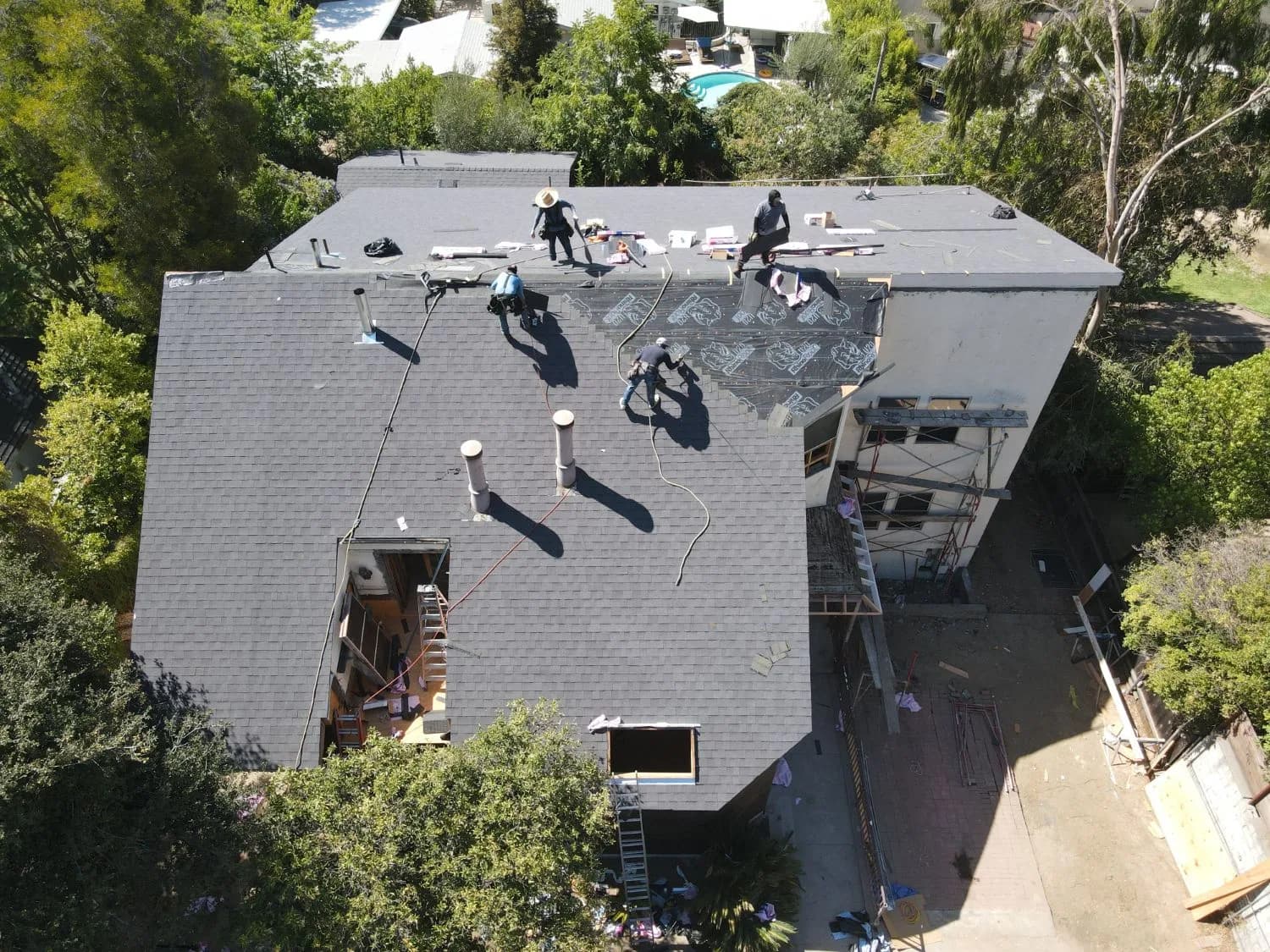
On every flat roof replacement QRS does a full tear-off, so the deck can be checked before the new roof goes on. Our flat roofs, part of our FlatGuard® flat roof system, can be finished with a white reflective cap sheet, as on this round flat roof in Hollywood Hills West.
Is Torch-Down Roofing Safe?
Torch-down uses an open flame, so it needs trained roofers who work carefully around wood, parapet walls, vents and anything that can burn. Where a flame is the wrong tool, such as against wood siding or tight details, a self-adhered SBS sheet can be used instead.
Signs a Torch-Down Roof Needs Work
- Blisters where air or moisture is trapped between layers.
- Open or lifting seams at the overlaps.
- Cracked or pulled flashing at walls, parapets and penetrations.
- Ponding water that sits long after rain.
- Bare patches where the granules have worn off the cap sheet.
- Water stains inside, often far from where water gets in. See how to find a roof leak.
Many of these can be repaired on their own. When the problems are spread across the roof, see flat roof replacement.
Torch-Down vs. TPO
TPO is a single-ply membrane, usually white, whose seams are welded with hot air rather than a torch. It is common on larger commercial roofs. Torch-down is a thicker, multi-layer asphalt system that stands up well to foot traffic and is common on homes and smaller buildings. Our guide to TPO roofing pros and cons covers TPO in detail, and QRS installs TPO roofing on commercial buildings.
Frequently Asked Questions
What is the difference between APP and SBS torch-down?
Both are modified bitumen. APP is blended with a plastic-like polymer, is stiffer and is almost always torched; it holds up well to heat and sun. SBS is blended with a rubber-like polymer, stays flexible in cold and can be torched, set in hot asphalt, glued or self-adhered.
Can a torch-down roof go over an old roof?
It is better to tear the old roof off so the deck can be checked and repaired. QRS does a full tear-off on every flat roof replacement.
Can a torch-down roof be repaired?
Yes. Open seams, blisters and failed flashing can usually be repaired with matching membrane. See flat roof repair.
Is torch-down roofing good for Los Angeles?
Yes. It suits the mild climate and the sun, especially with a granulated or reflective cap sheet, and it is one of the most common flat roofs on Los Angeles homes and small buildings.
Get Your Flat Roof Checked
QRS installs and repairs torch-down flat roofs on homes and commercial buildings across Los Angeles and Orange County. Book a free roof evaluation for a home, and you get a written scope and price before any work.