

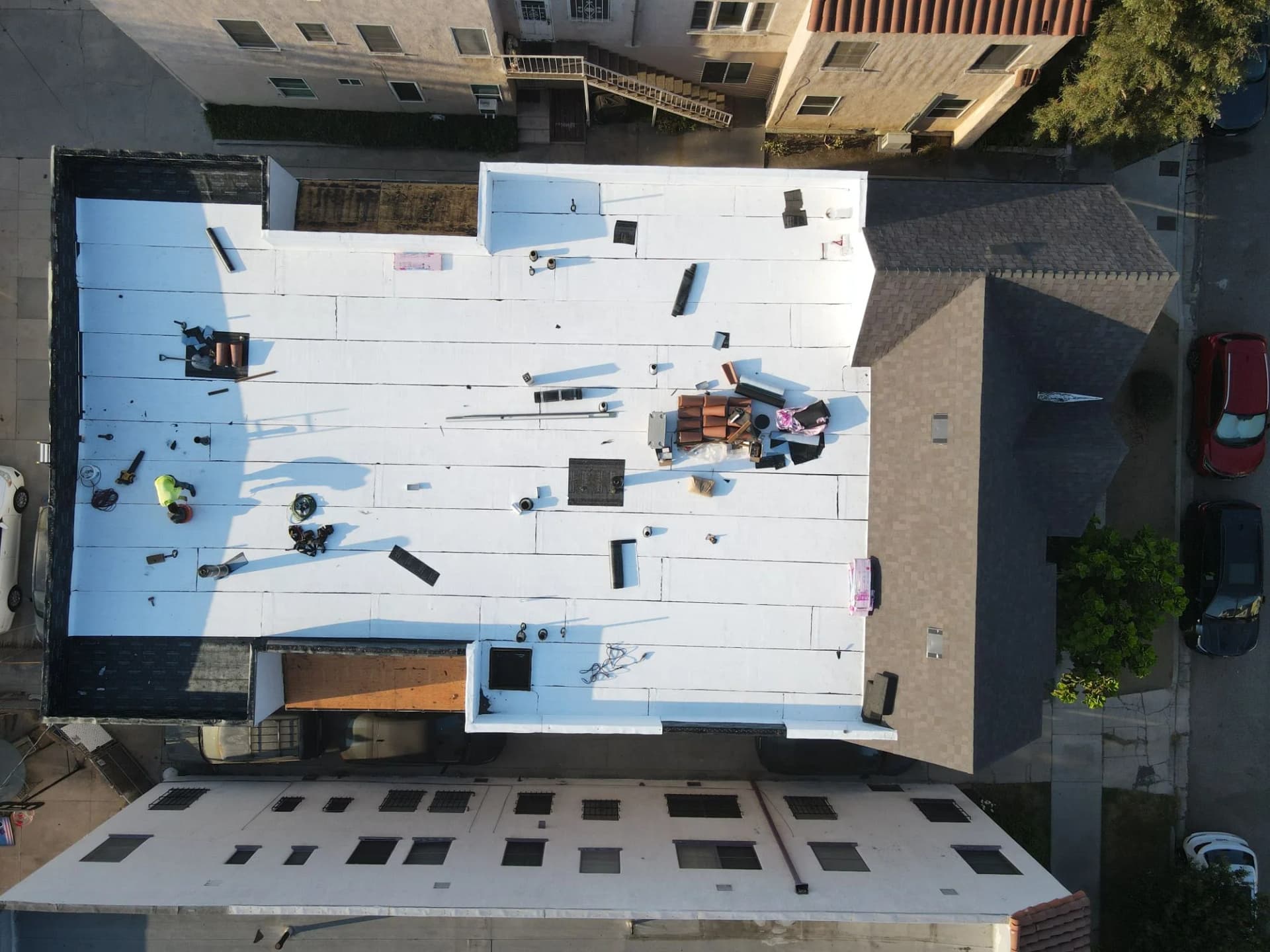
Flat Roof Replacement in Los Angeles & Orange County — A flat roof that drains well and keeps water out.
- Free roof evaluation
- Written price before any work
- 10-year workmanship warranty (call for details)
- CSLB #1061942
Flat roof replacement
Flat roofs rarely fail all at once. They wear out.
The surface dries and cracks under the sun, blisters rise where moisture is trapped, laps open and patches pile up around the same drains and walls. Once the problems are spread across the roof, or water has reached the deck, more patching stops making sense.
How we work
How we replace a flat roof
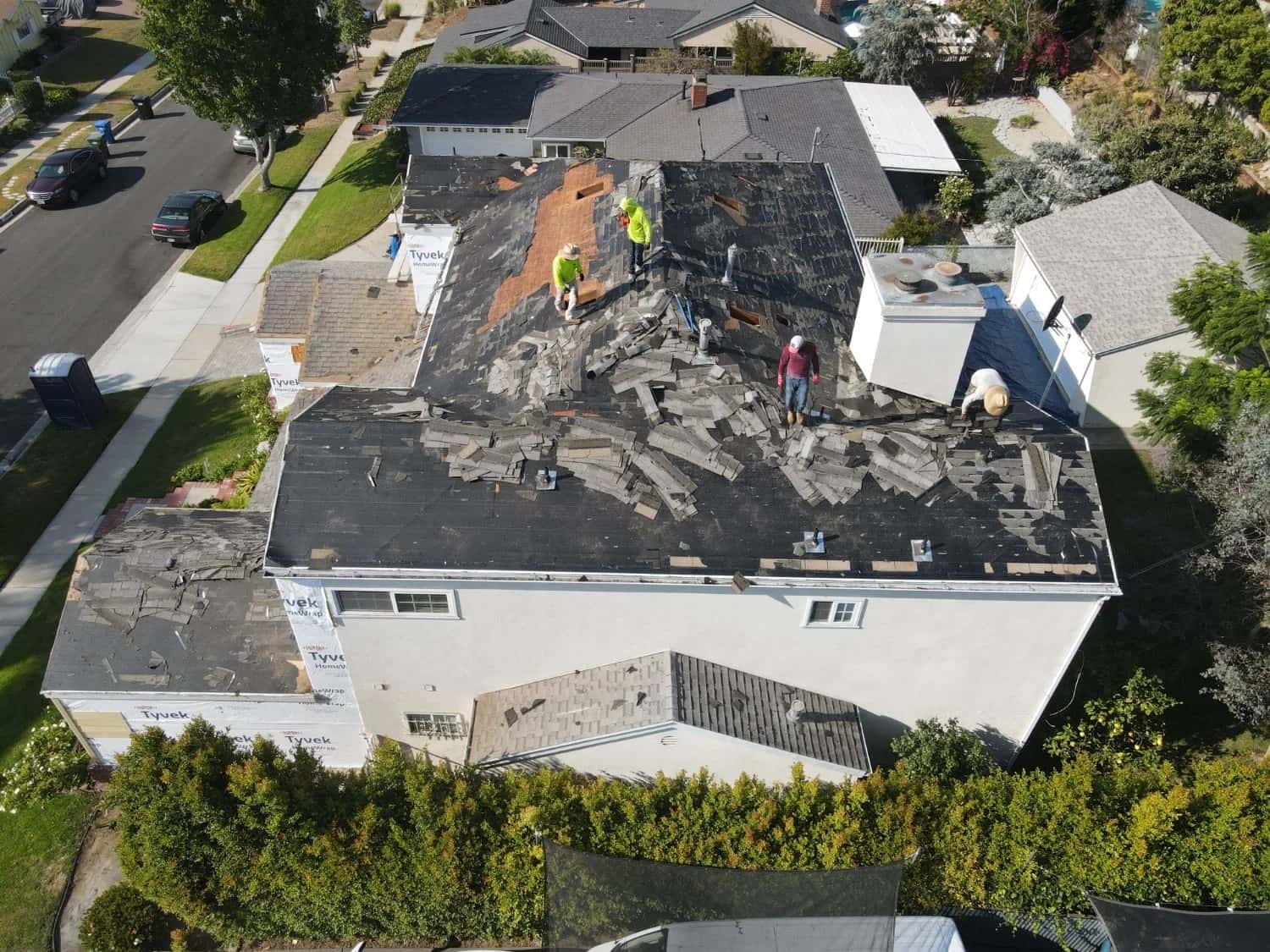
Tear it off. Don’t roof over it.
The old layers come off down to the deck, so anything holding moisture goes with them, and damaged decking is found, photographed and explained instead of buried under new layers.
- Membrane wear, blisters and splits
- Ponding and drainage patterns
- Parapets, curbs and penetrations
Plan the roof around the water.
We study the slope, the low spots where water has been ponding and whether the drains, scuppers and downspouts can keep up with a winter storm. Where it helps, the scope includes crickets, small raised sections that steer water around curbs toward the outlets.
Every lap sealed, every curb flashed.
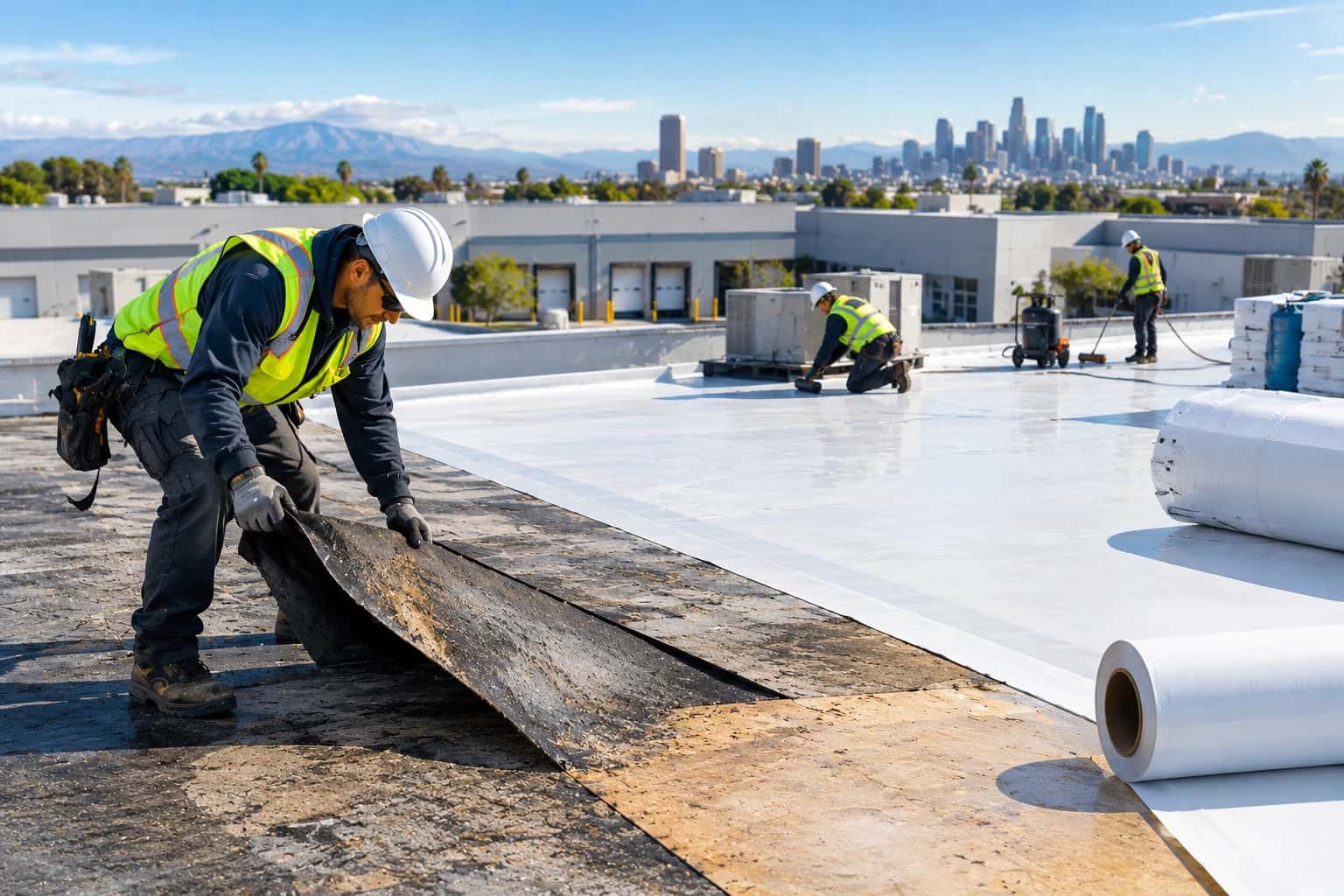
The modified bitumen or other low-slope system named in your scope goes on with every lap sealed and every parapet, curb, vent and skylight flashed.
- Laps and seams sealed
- Parapet and wall flashings
- HVAC curbs, vents and skylights
In writing first, in photos after.
You know the system, the drainage work and the price before the tear-off begins. When the roof is done, we walk through the photos from tear-off to finish and explain our 10-year workmanship warranty (call for details). Not sure it’s time? A flat roof inspection shows whether a flat roof repair would still do.
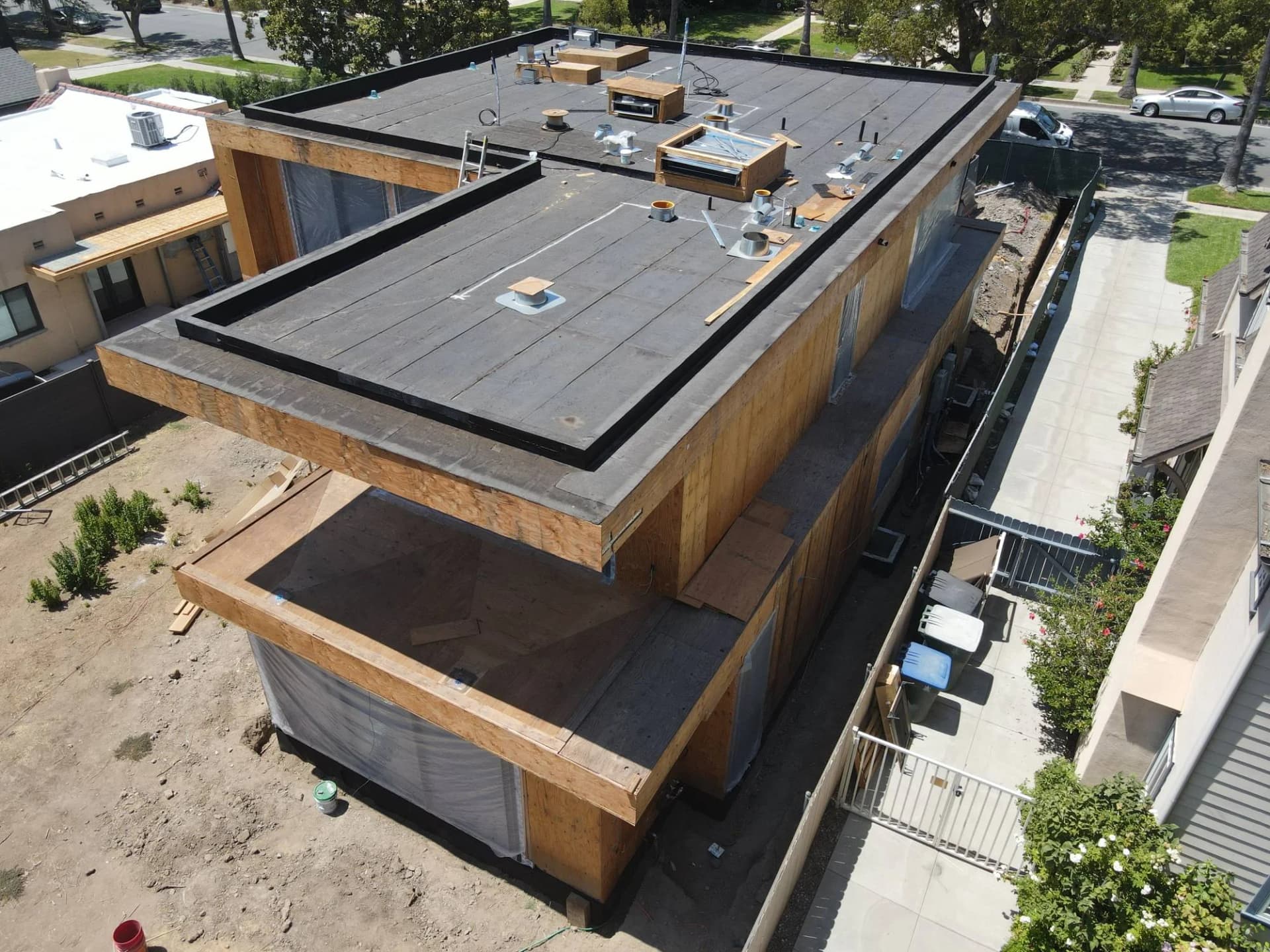
This work, on real roofs
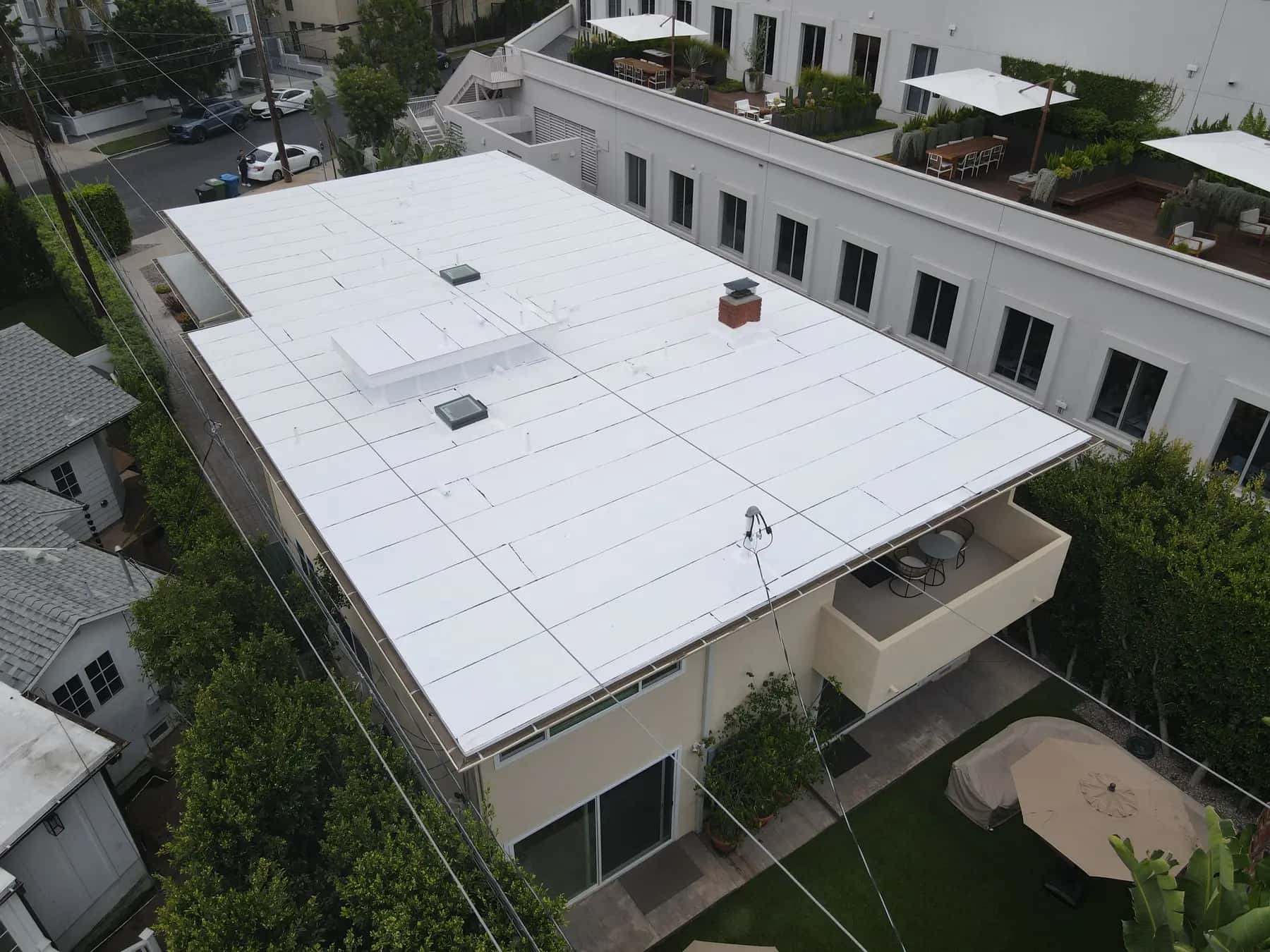
Brentwood, Los Angeles 90049
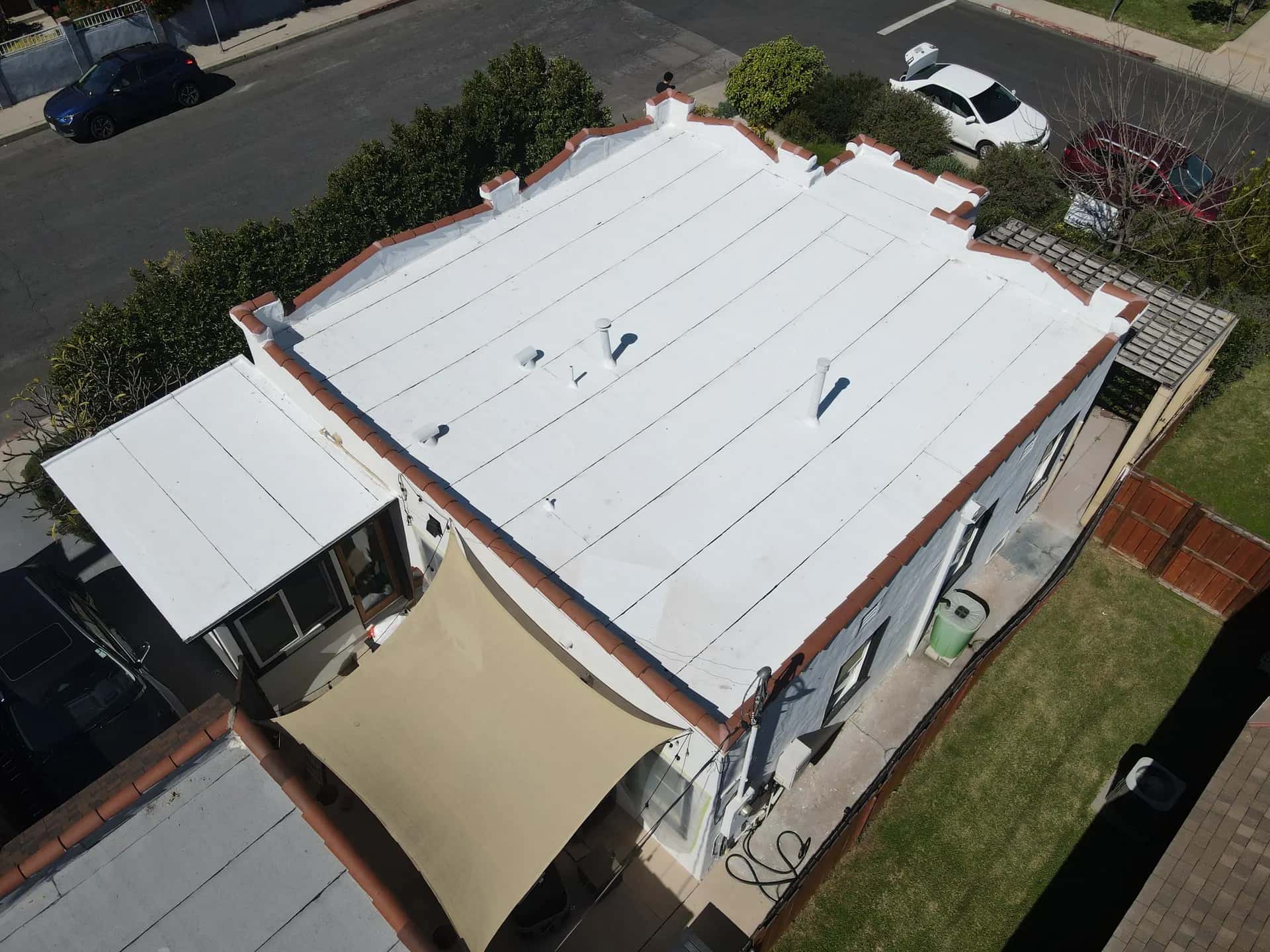
White Flat Roof
White flat roof in Los Angeles 90049: a bright, reflective flat roof on a mid-century home, with every skylight, vent and the chimney detailed.
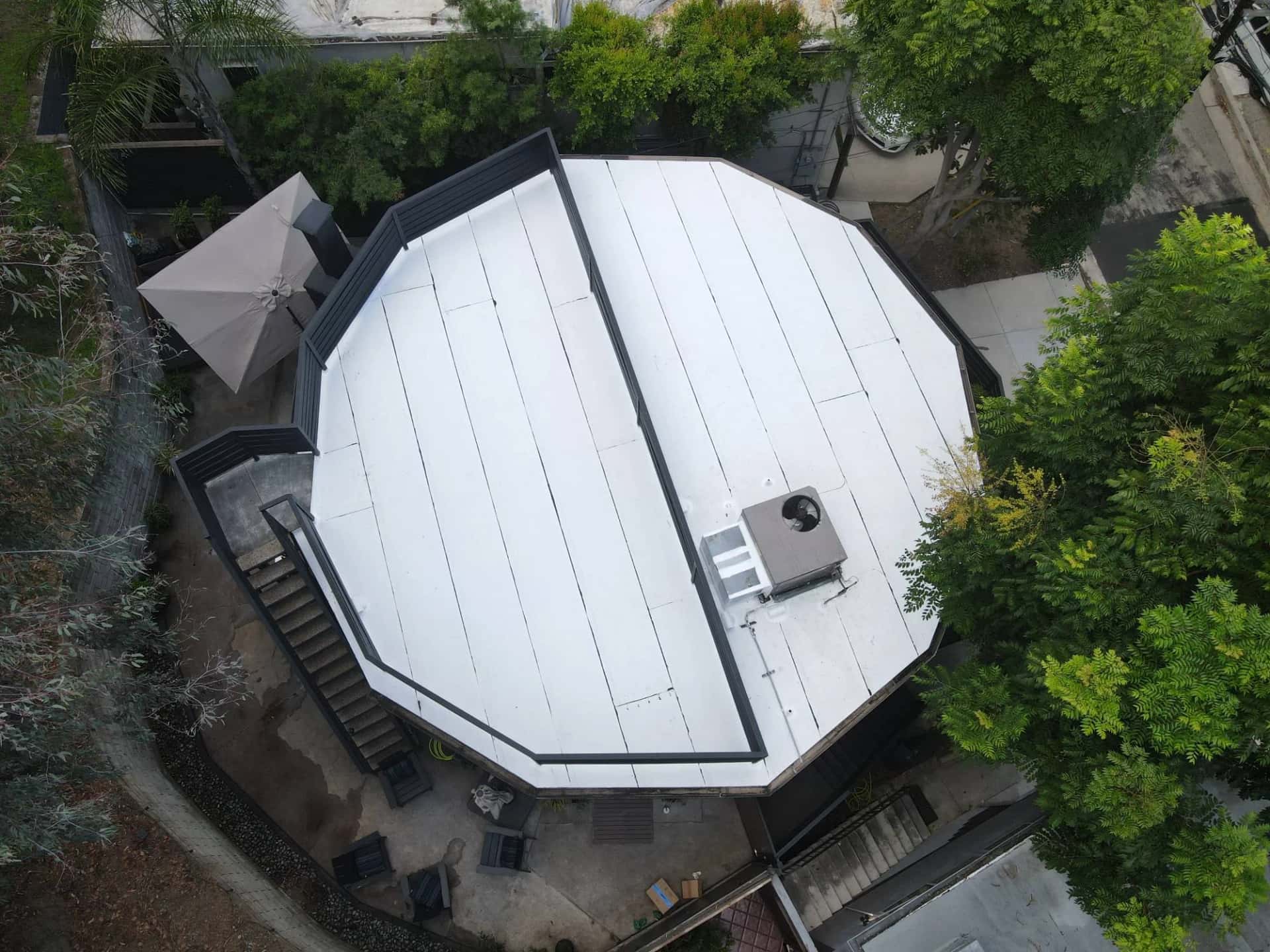
Hollywood Hills West, Los Angeles 90046
Round Flat Roof Replacement
Flat roof replacement in Hollywood Hills West 90046: a torch-down roof with a white reflective cap sheet, custom-cut for a round, 12-sided home.
Mid-Wilshire, Los Angeles 90019
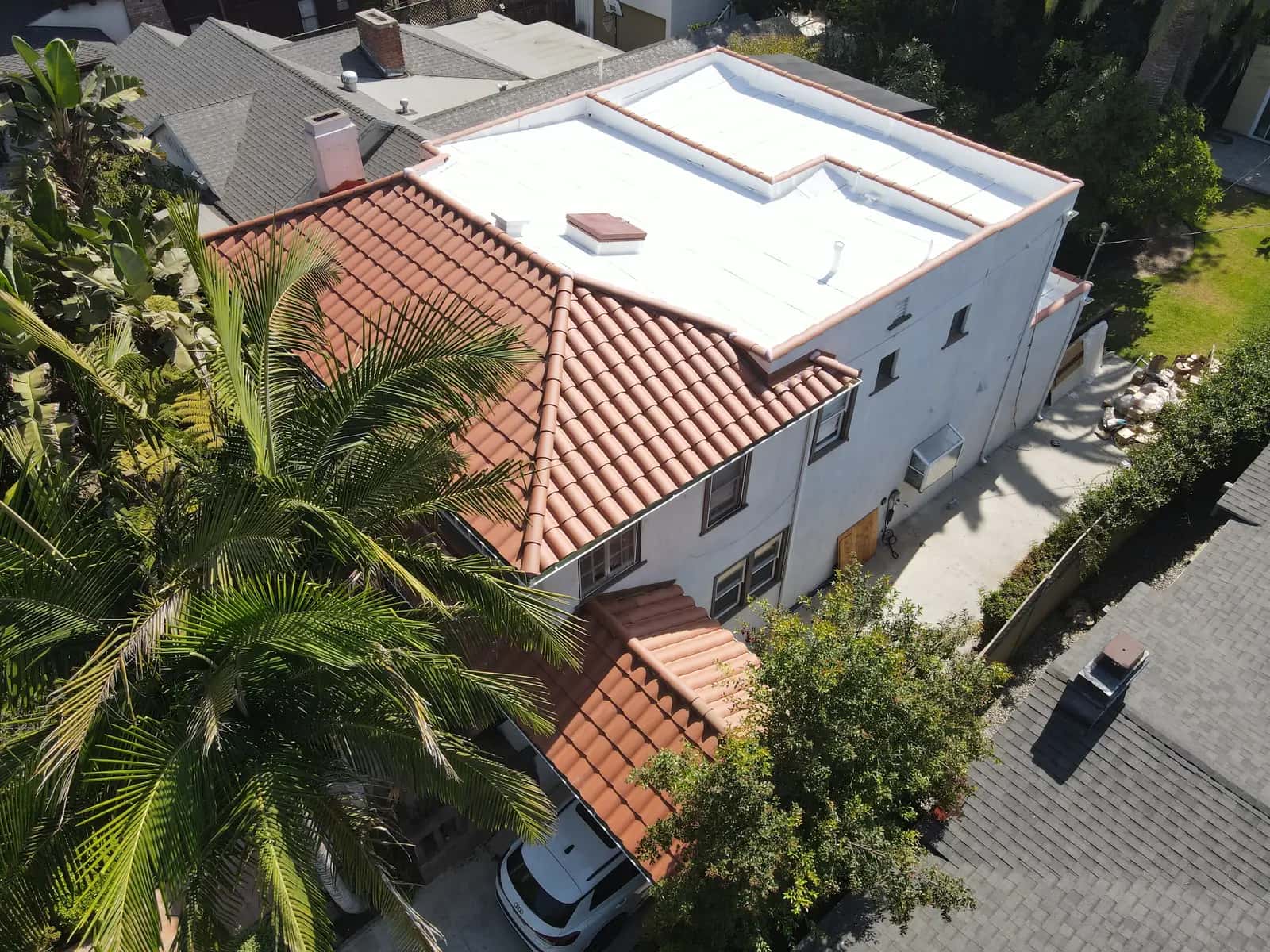
Tile & Flat Roofing at a Multi-Family Building
A multi-family building in Mid-Wilshire with new clay tile on its pitched roof and a reflective flat roof system over the rooftop terrace.
What people say after the job
269 reviews from the people we roof for, on Google.
Jose Linarez
Read it on Google · a month ago“I was looking to replace my shingles roof in Encino and contacted a few roofing companies in the neighborhood. Out of four roofers, Quality Roofing Specialist was the only one that worked with my budget as well as my schedule. Their work was fantastic, and we love the outcome. They exceeded my expectations. I will definitely recommend to friends.”
Angel
Read it on Google · 4 months ago“We trusted Tony for a full roof replacement. They showed up early each day, worked efficiently, and kept us updated. I appreciated the patience in answering our concerns about materials and warranty. The new roof looks sharp and already makes the home feel more energy-efficient.”
Emilee Crowley
Read it on Google · 3 months ago“We had an awesome experience with the crew of Quality Roofing. I called around to get quotes for a roof replacement and they gave me much better quote than the other roofing companies. Definitely within the budget and did a perfect job. No mess, they cleaned everything at the end”
Frequently Asked Questions
Straight answers about flat roof replacement.
How much does a flat roof replacement cost?
It depends on the roof’s size, how many old layers come off, the condition of the deck and the details: drains, scuppers, parapets and rooftop equipment that need flashing. Our Instant Quote gives a quick estimated range, and your written scope and price come after a free roof evaluation, before work begins.
Do you pull the permits?
Yes. When your roofing project needs a building permit, we pull it for you.
What are the signs a flat roof is past repairing?
Common signs include leaks in more than one spot, blisters and splits across much of the surface, soft areas in the deck and patches that keep failing. A free roof evaluation documents what we find with photos, so you can see the reasons behind our recommendation.
Can you put a new flat roof over the old one?
A full tear-off is the standard for a lasting result: taking the old layers off lets us check the deck, get rid of trapped moisture and give the new system a sound surface to start from, rather than hiding problems underneath it. On some commercial buildings, repairing an existing system that’s still sound can be the right call instead — your roof evaluation will tell you which situation you’re in.
Show 3 more questions
Will a new roof stop water from ponding?
Replacement is the natural time to improve drainage, whether that means adding crickets, building up low spots or changing how water reaches the drains and scuppers. How much can change depends on the roof’s structure, and your written scope spells out the drainage work before anything starts.
Should the gutters and downspouts be replaced at the same time?
Not always, but we check them as part of the scope, because a new roof can only drain as fast as its outlets.
Can a new flat roof have a lighter, reflective surface?
Usually, yes. Light-colored, reflective surfaces bounce back more of the sun’s heat than dark ones, which is worth considering on a roof that sits in full sun most of the year. We’ll go over the surface options that fit your system.
Tell us what you need.
Two minutes. A clear next step. No pressure.
Prefer to answer a few questions instead? Use the step-by-step form
