
TPO Roofing for Commercial Buildings: Pros, Cons and Questions to Ask
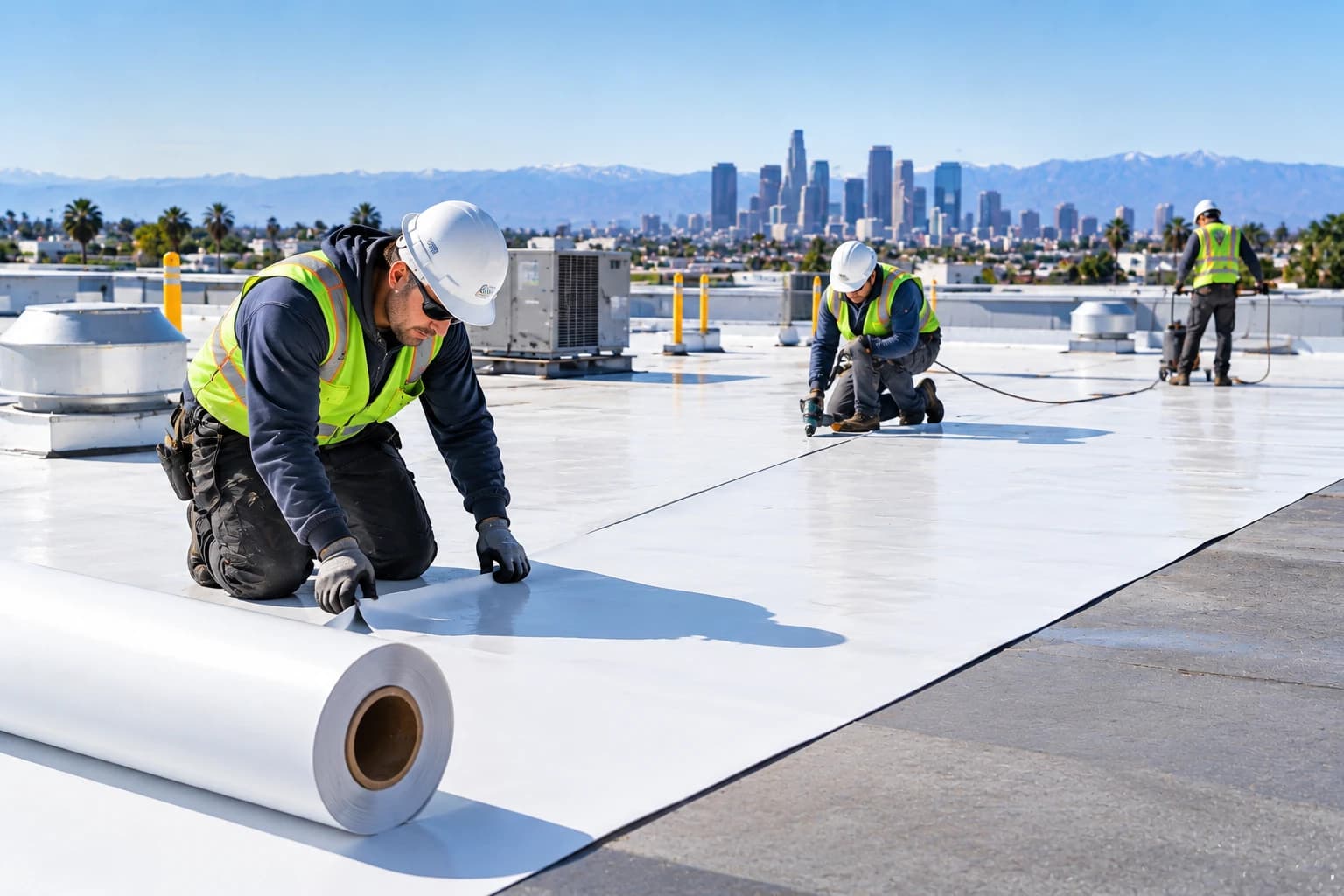
TPO roofing is one of the most common choices for flat and low-slope commercial roofs. It is a white, single-ply membrane that is welded at the seams, and it is popular in sunny places like Southern California.
It is a good fit for many buildings, but not all of them, and a TPO roof is only as good as the installation behind it.
This guide explains what TPO is, its pros and cons, how it compares with modified bitumen and what to ask before you choose it.
What Is TPO Roofing?
TPO stands for thermoplastic polyolefin. It is a single-ply roofing membrane that comes in wide rolls, usually white, and is laid over the roof and joined at the seams with hot air so the seams fuse together.
The membrane can be attached in different ways, including mechanically fastened, fully adhered or held down with ballast. The right method depends on the roof and the building.
The Pros of TPO Roofing
It reflects sunlight
A white membrane reflects much of the sun’s energy instead of absorbing it, which can keep the roof surface cooler in Southern California’s heat.
Welded seams
Heat-welded seams form a continuous surface when they are done well, and wide rolls mean fewer seams across the roof.
Fits many flat roofs
TPO is made for flat and low-slope roofs, and it can be installed with different attachment methods to suit the deck.
It can help meet cool roof rules
California’s Title 24 energy code includes cool roof requirements for many low-slope commercial roofs, and a reflective membrane is one way to meet them. The exact requirement depends on the building and the product.
The Cons of TPO Roofing
Quality varies by product
TPO membranes are made by many manufacturers, and they are not all the same. Ask which membrane is being proposed and what its manufacturer warranty covers.
Workmanship matters a lot
The seams, flashing and details decide how a TPO roof performs. A good membrane installed badly can still leak.
It can be punctured
Like other single-ply membranes, TPO can be punctured by dropped tools or heavy foot traffic. Walkway pads help in busy areas.
Check what is on the roof
Some rooftop exhaust, such as from kitchens, can deposit grease or oils on a roof. Tell your roofer what the building vents, since some membranes handle exposure better than others.
TPO vs. Modified Bitumen
Both are used on flat commercial roofs, and they work differently.
Other single-ply membranes, such as PVC and EPDM, are also used on flat roofs. The right choice depends on your roof, so a roofer should compare them with you from the survey.
Questions to Ask Before Choosing TPO
Is TPO the right system for this roof, and why?
Which membrane and manufacturer are you proposing?
How will it be attached?
How will walls, curbs, penetrations and drains be flashed?
What does the warranty on the work cover, and what does the manufacturer’s cover?
What does the building vent onto the roof?
How will the work be phased so the building can stay open?
At Quality Roofing Specialists, we survey the roof first and recommend TPO only when it suits the building. See our TPO roofing page, or our guide to commercial roof replacement planning.
Frequently Asked Questions
What does TPO stand for?
Thermoplastic polyolefin. It is a type of single-ply roofing membrane widely used on flat commercial roofs.
How long does a TPO roof last?
It depends on the membrane, the installation, the details at walls and penetrations and how the roof is maintained. We do not promise a number of years. We focus on the installation, which is backed by our 10-year workmanship warranty.
Is TPO good for Southern California?
Often, because a white membrane reflects sunlight and can keep the roof surface cooler. Whether it fits your building depends on the roof, so a roofer should survey it first.
Can you repair a TPO roof?
Yes. Leaks on a TPO roof usually come from a seam, a flashing or a penetration. See our commercial roof leak repair guide and our commercial roof repair page.
Can TPO go over an existing roof?
Sometimes, if the existing roof is dry and sound and the code allows it. Often a tear-off is the better route. The survey tells us which applies to your building.
Choose the System for the Building
TPO is a strong choice for many flat commercial roofs, and the installation matters as much as the membrane.
Quality Roofing Specialists provides TPO roofing, commercial roof replacement and commercial roof repair across Los Angeles and Orange County.
To find out whether TPO suits your building, request a roofer-led roof survey and get photos, a written scope and a price before any work begins.
Contact Quality Roofing Specialists to talk about TPO for your roof.