
Commercial Roof Replacement: How to Plan It and Keep Your Doors Open
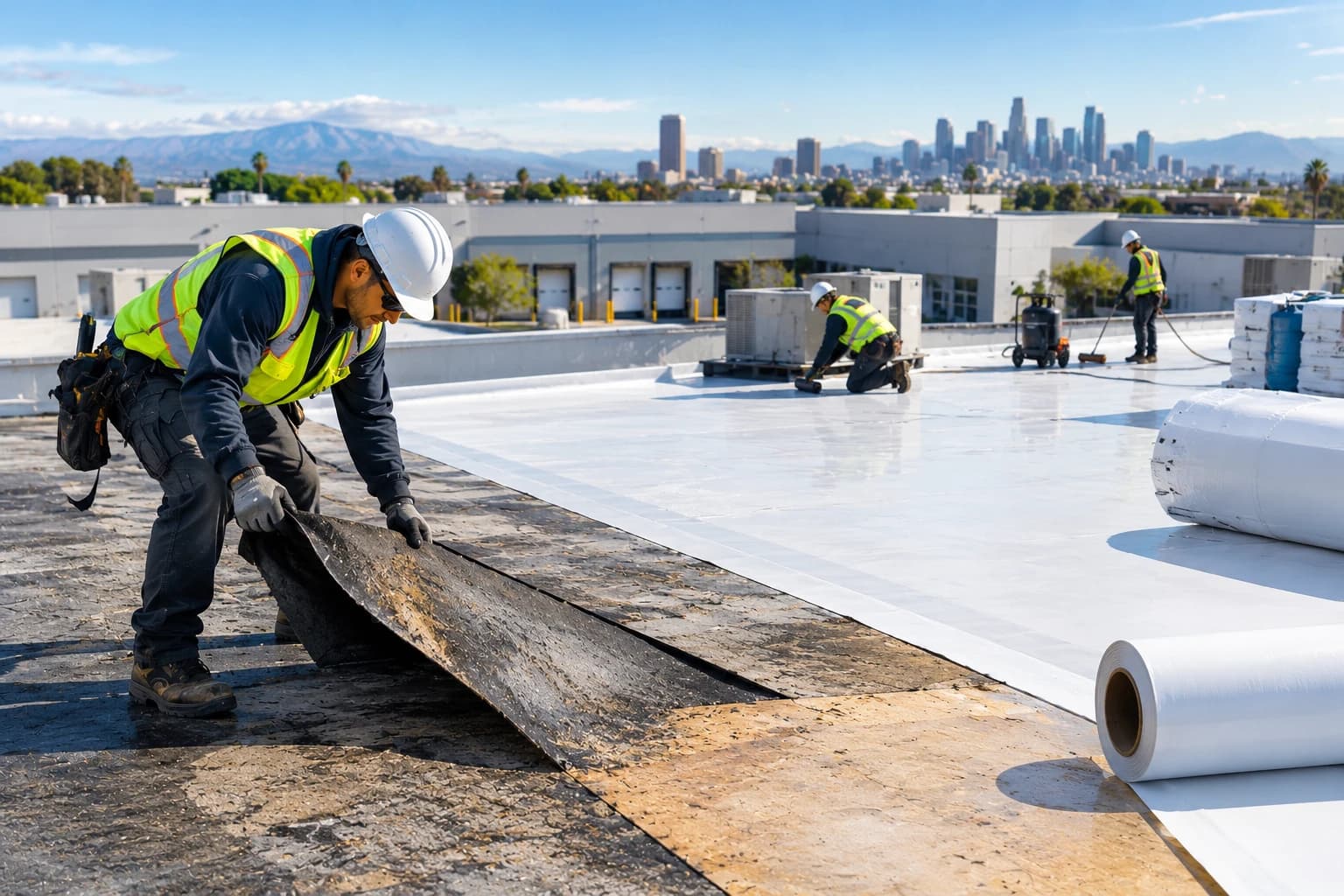
A commercial roof replacement is a big project, but it does not have to stop your business. Planned well, the roof comes off and goes back on in sections, and your doors stay open.
The work goes best when the decision rests on facts: the condition of the roof, a clear plan for the phases and a written scope that says exactly what will be done.
This guide covers the signs it is time to replace, how a phased replacement works, what to plan around and what a good written scope includes.
Signs It Is Time to Replace a Commercial Roof
One leak does not mean a new roof. These signs together do:
- Leaks in more than one place, or the same leaks returning after repairs.
- Blisters, splits or open seams across much of the surface.
- Ponding water that stays after the rain stops.
- Wet or compressed insulation under the membrane.
- A membrane that is worn, cracked or brittle across large areas.
- Flashing at walls and equipment failing in many spots.
A roofer-led roof survey with photos shows how widespread the problems are, which is the question that decides between repair and replacement.
Repair, Restore or Replace?
Which of these sounds most like your roof? Tap a card.
Repair
Best when
The roof is sound overall and the problem is local, such as a failed flashing or an open seam
Maintenance
Best when
The roof is in good shape and you want to keep it that way
Replacement
Best when
The roof is worn out or failing in many places
Restoration sits between repair and replacement, and only works on a sound roof. See our guide to roof restoration vs. replacement, or our commercial roof repair page.
How a Phased Commercial Roof Replacement Works
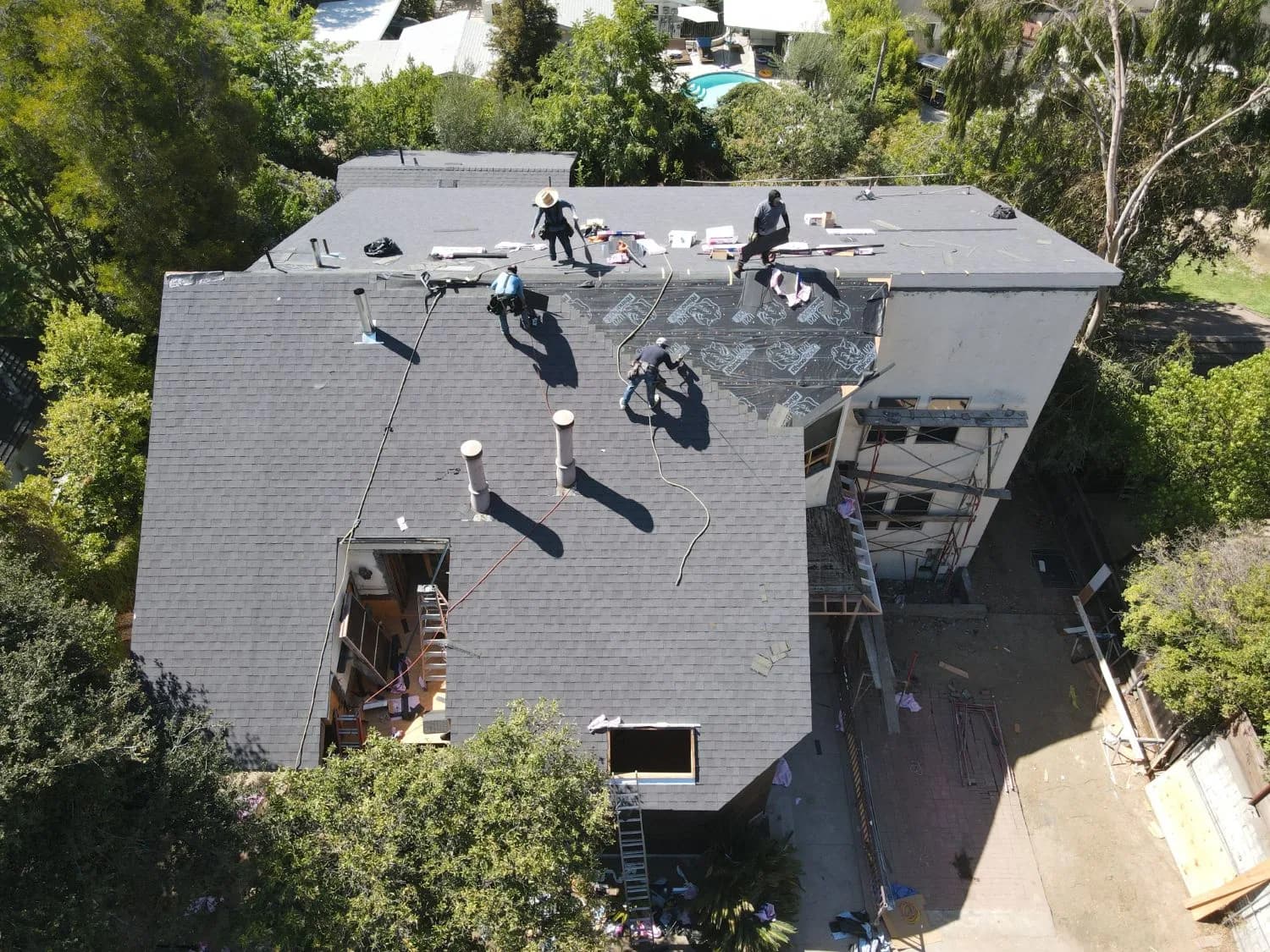
Phasing is what keeps the building open. The roof is replaced one section at a time, and each section is dried in before the crew stops for the day.
Roofer-led survey
A roofer inspects and photographs the roof and decides what the new system must tie into.
Written scope and price
You get the system, the attachment method, the insulation, the flashings, the phases and the price in writing.
Permits
We pull the building permits.
Phase plan
The sections, the order and the access routes are agreed with you before work begins.
Tear-off and deck repair
The old roofing comes off in sections, and the deck is repaired where needed.
New roof system
The new system goes on, with walls, curbs, penetrations and drains flashed and detailed.
Closeout
We walk the roof with you and hand over photos for your records.
Our commercial roof replacement follows this process, and our installs are backed by a 10-year workmanship warranty. The materials carry the manufacturer’s warranty, which depends on the product.
What to Plan Around
Tell your roofer how the building runs. The more they know, the better the phases fit.
Choosing a Roof System
Flat and low-slope commercial roofs use systems built for them, such as single-ply membranes and layered asphalt-based systems. The right one depends on the building, the roof’s condition and what is on it.
TPO is one of the most common single-ply choices. See our guide to TPO roofing for commercial buildings, or our TPO roofing page.
What a Written Scope Should Say
- What will be removed, repaired and installed, section by section.
- The roof system and how it is attached.
- Insulation, cover board and flashing details.
- The phases and how the building stays open.
- Permits, and who pulls them.
- The warranty on the work and on the materials.
- What is excluded, such as concealed deck damage, and how it will be priced if found.
- The price and payment terms.
See also our guide to choosing a commercial roofing contractor.
Frequently Asked Questions
Can the building stay open during a commercial roof replacement?
Yes. We phase the work section by section and keep your building open during the work.
How long does a commercial roof replacement take?
It depends on the size of the roof, the system, the weather and how many phases are needed. Your written scope includes the schedule.
Do I need a permit to replace a commercial roof?
Commercial roof replacements typically need building permits. We pull the building permits for our projects.
Can a new commercial roof go over the old one?
Sometimes, if the existing roof is dry and sound and the code allows it. Often a tear-off is the better route, so you start from a clean, solid deck. The survey tells us which applies.
What if you find hidden damage once the old roof is off?
Concealed damage to the deck or insulation is possible on any tear-off. Your scope should say how it will be handled and priced, and we show you photos of anything we find.
Plan the Roof Around the Business
A good commercial roof replacement is one your tenants and customers barely notice.
Quality Roofing Specialists provides commercial roof replacement, commercial roof repair and commercial roof maintenance across Los Angeles and Orange County.
To start, request a roofer-led roof survey and get photos, a written scope and a price before any work begins.
Contact Quality Roofing Specialists to plan your commercial roof replacement.