

How to Find Out How Old Your Roof Is: 7 Quick Ways
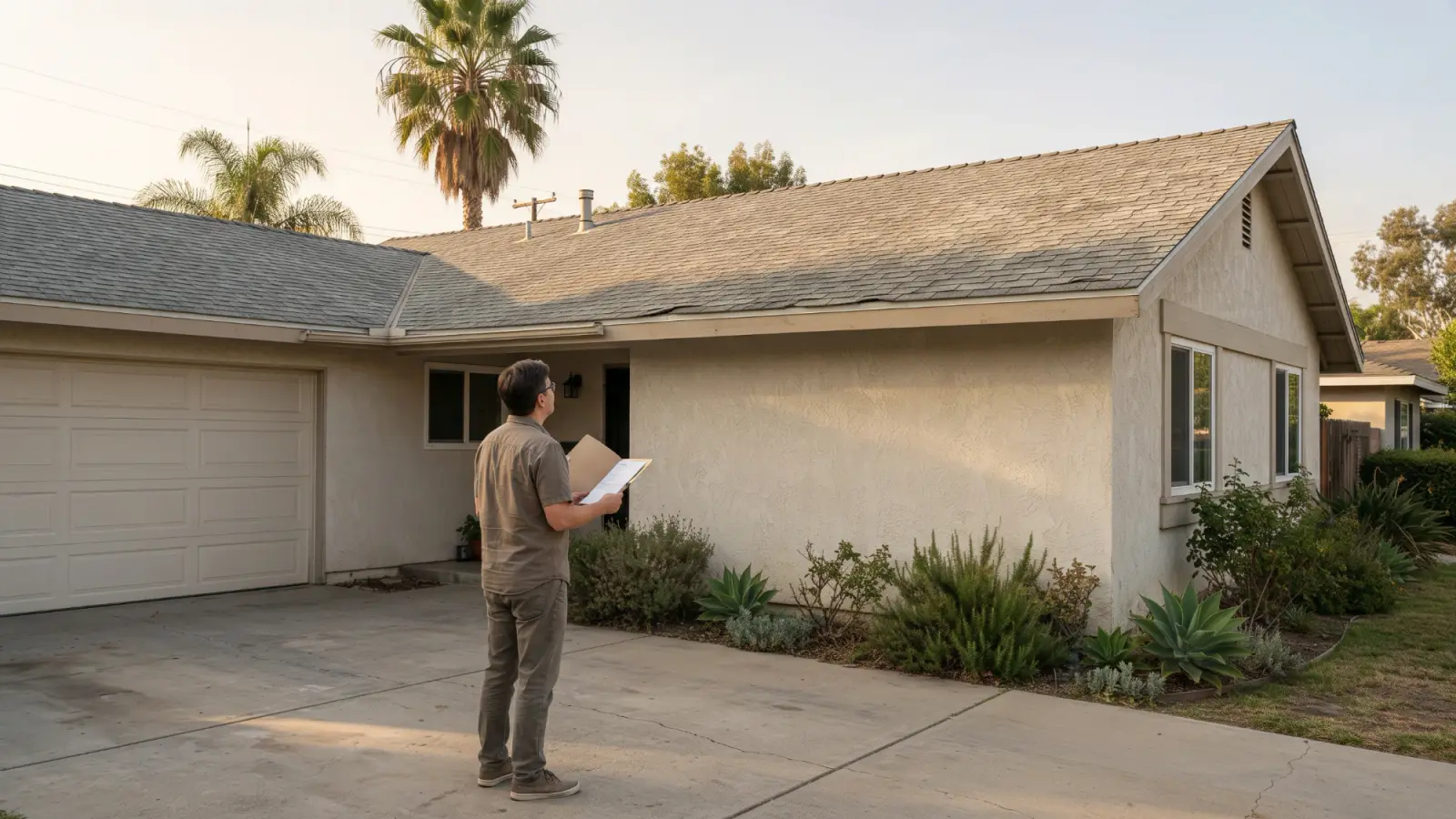
Knowing how old your roof is changes the whole conversation about it. A leak on a roof put on a few years ago is usually a repair. The same leak on a roof nobody can date is a question: is this one spot, or the first sign the roof is wearing out?
Plenty of homeowners don’t know. The roof came with the house, the paperwork is long gone, and the seller wasn’t sure. Here are seven quick ways to find out, what to look for on each roof type, and why age starts the replacement conversation but doesn’t finish it.
Why Your Roof’s Age Matters
- Planning. A roof that is getting on in years is one to budget for, so a replacement doesn’t arrive as a surprise after the first big storm.
- Repair or replace. Age tells a roofer what to expect, and helps decide whether a repair is buying real time or just patching a roof near its end.
- Buying or selling. Buyers, inspectors and agents ask. An answer with paperwork behind it is worth more than a guess.
- Insurance. Some insurers now ask about roof age and condition when you buy or renew a policy.
- Warranties. The installation date decides what a manufacturer’s warranty or a workmanship warranty still covers.
Seven Quick Ways to Find Out How Old Your Roof Is
- Check the papers from when you bought the house
the seller’s disclosure and the home inspection report often mention the roof, and sometimes when it was replaced.
- Look up the roofing permit
a roof replacement normally needs a permit, and your city or county building department keeps permit records by address. Many let you search online; otherwise call or visit the counter.
- Find the installer’s paperwork
an invoice, a contract or a warranty certificate carries the date. Check the house file, the garage and the drawer where the appliance manuals live.
- Ask the people who would know
the previous owner, the real estate agent who sold you the house, or a neighbor who has lived on the street a long time and remembers the roofers.
- Look at historical aerial photos
free map tools with a history slider, such as Google Earth on a computer, show older aerial pictures of your street. When the roof’s color changes between two pictures, it was likely replaced in between.
- Look in the attic
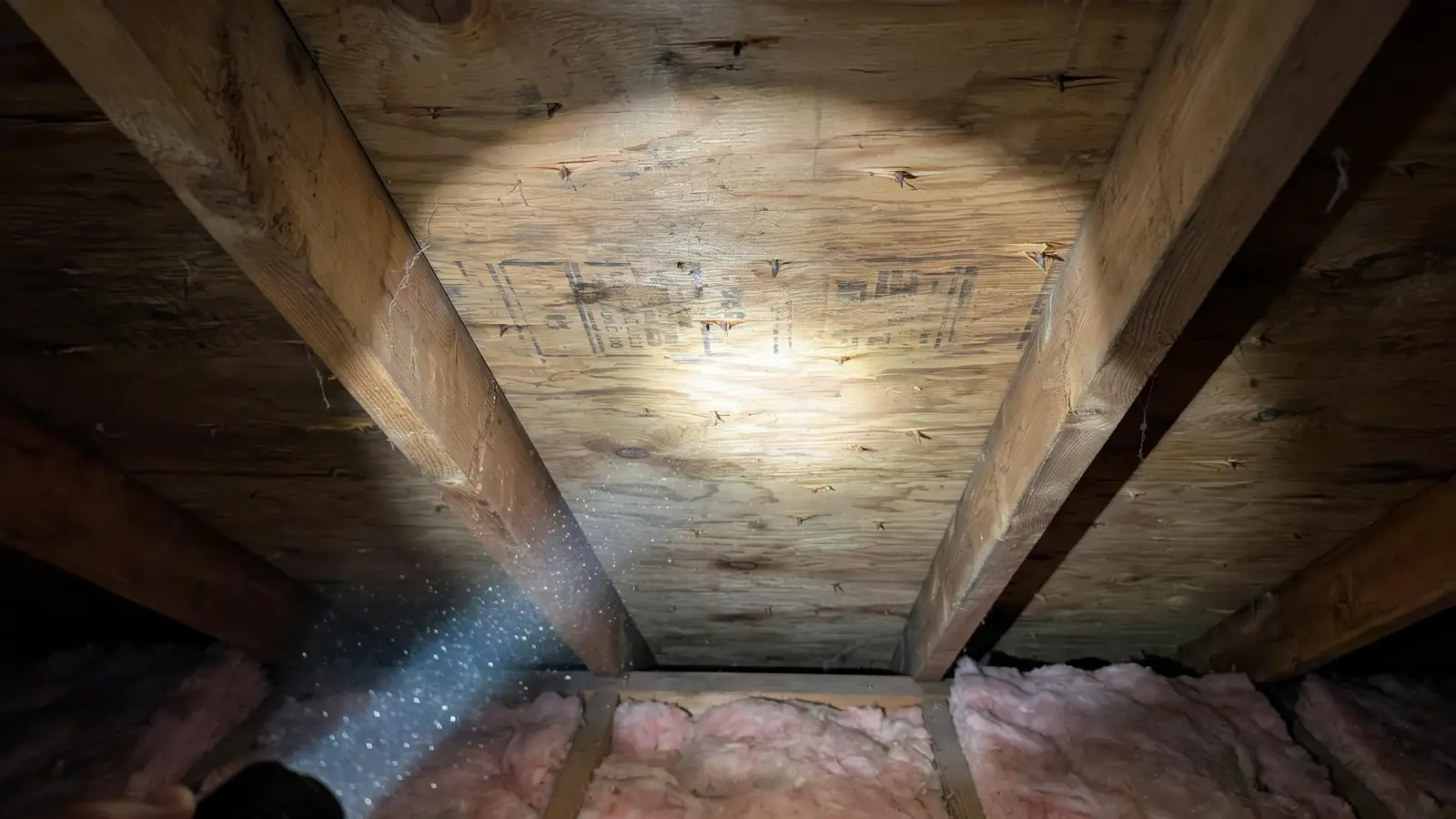
sheets of roof deck often carry a printed stamp, and some stamps include a date. New, clean deck next to old, dark boards can also show where a past repair or replacement went.
- Look at the roof edge from the ground
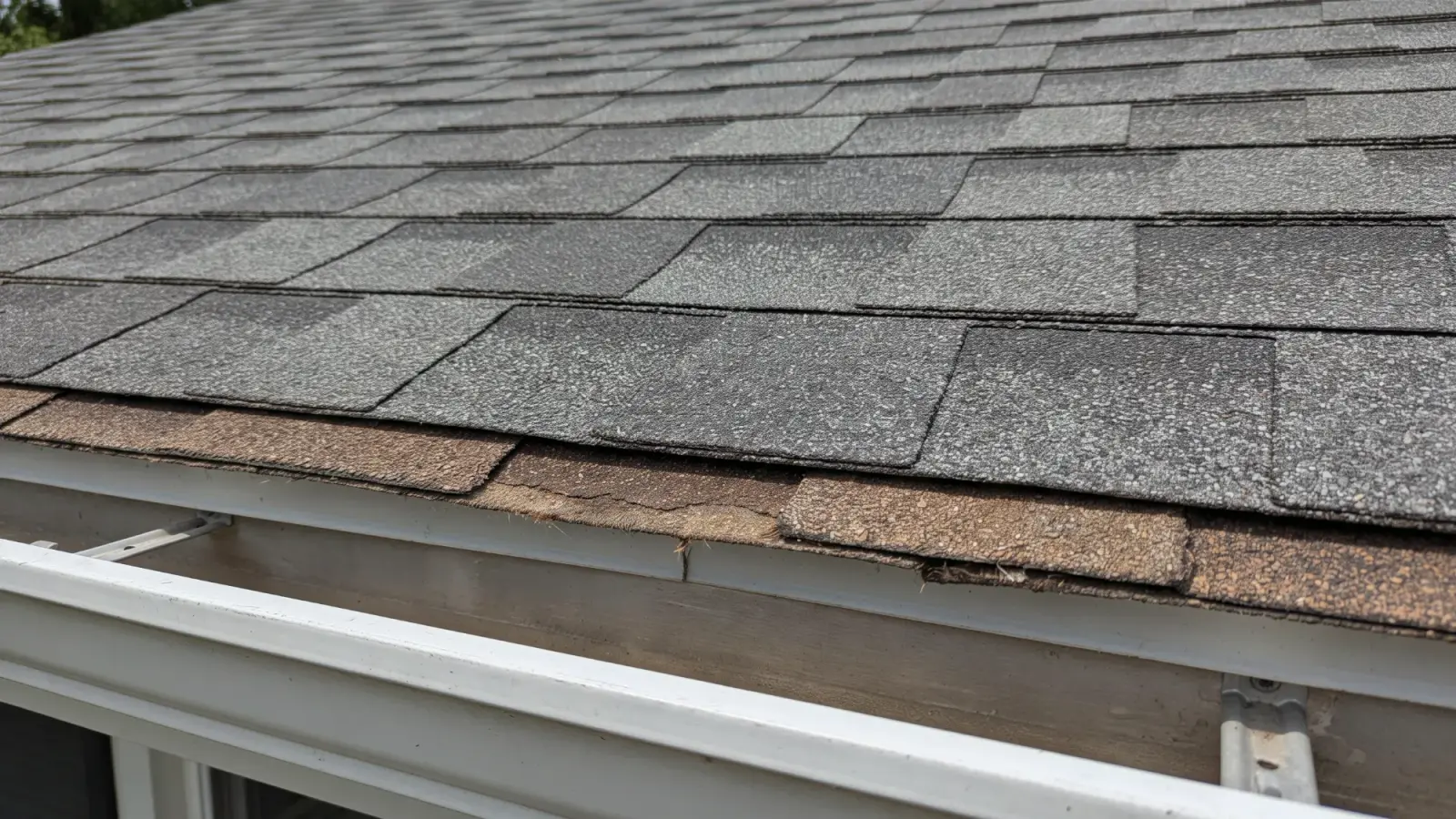
two layers of shingles stacked at the eave mean the roof was put on over an older one, and the older layer is older still.

The permit is usually the most reliable, because it carries a date and an address. Our guide to roofing permits explains how permits work in the cities around us.
Signs of Age You Can See, by Roof Type
If the paperwork comes up empty, the roof itself gives clues. Each roof type ages in its own way:
Asphalt shingle
- Signs of age you can see
- Granules thinning across the slope, especially the sunny sides; edges curling; fine cracks; faded color; granules in the gutters
- What can hide the age
- Sun-facing slopes age faster than shady ones, so one side can look much older than the other
Clay or concrete tile
- Signs of age you can see
- Faded, weathered tiles, slipped or cracked tiles, old patches, leaks around chimneys and valleys
- What can hide the age
- The tiles often outlast the underlayment beneath them, so tiles that look fine can sit on worn-out layers
Flat roof
- Signs of age you can see
- Cracks across the surface, blisters, seams lifting at the edges, dirt rings where water sits after rain
- What can hide the age
- A coat of paint or a patch on top can make an old flat roof look newer than it is
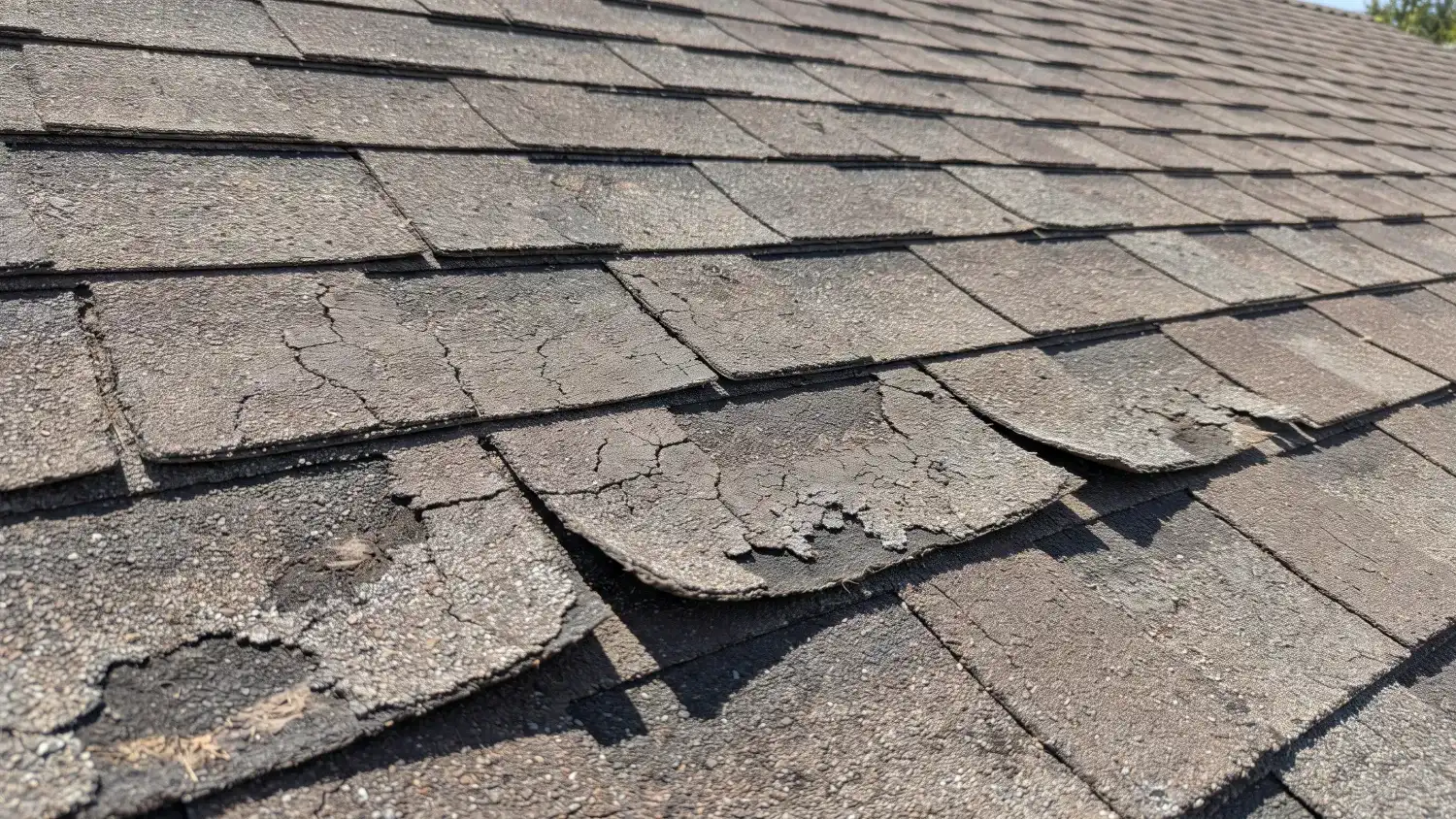
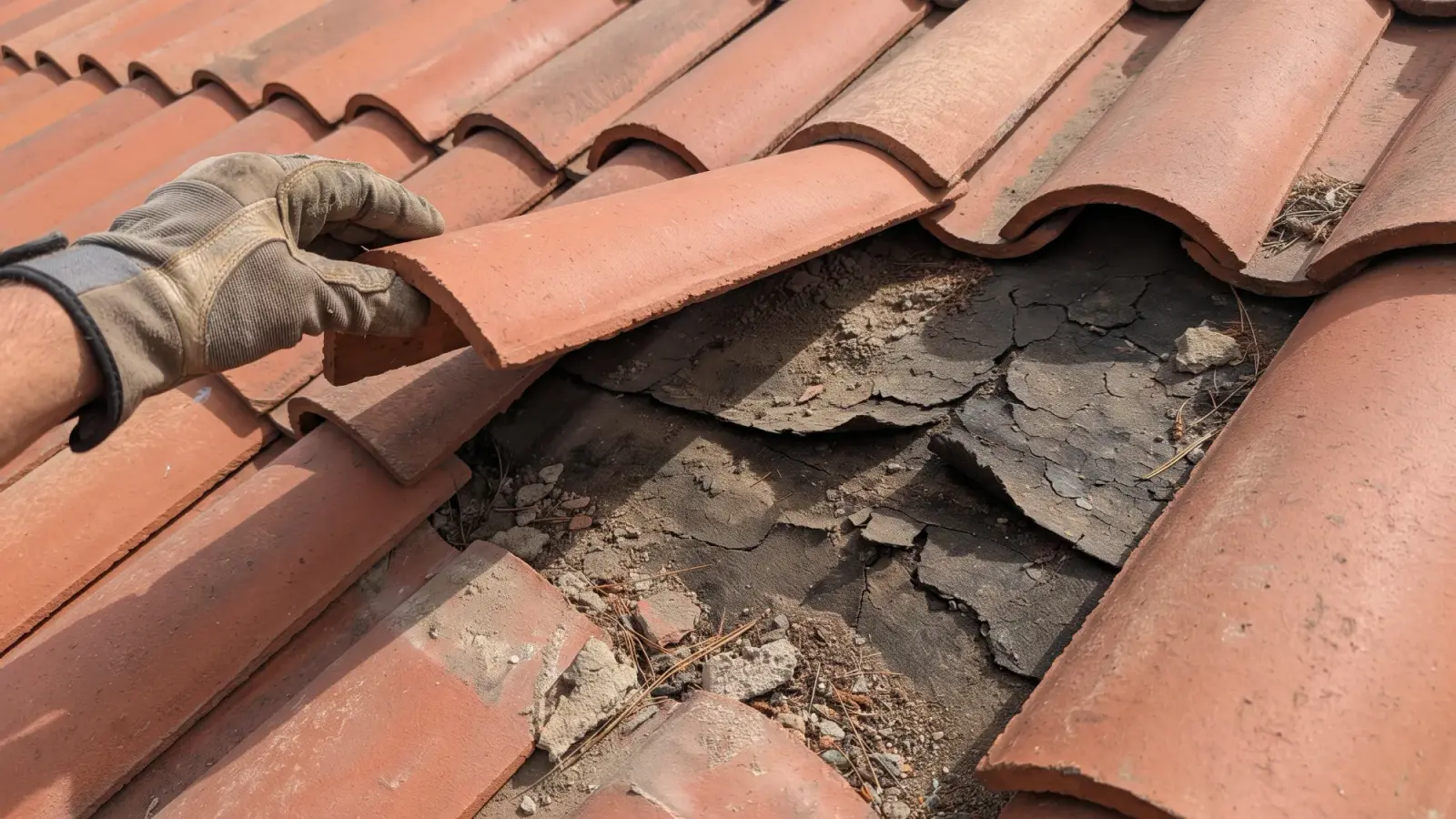
Our articles on shingle granule loss, the tile roof guide and flat roofs show each kind of aging up close.
Age vs. Condition: Which Decides?
Age tells you when to start looking closely. Condition tells you what to do. How long a roof lasts depends on the material, the sun it takes, the attic ventilation, how well it was installed and how well it has been kept, so two roofs of the same age can be in very different shape.
Which of these sounds most like your roof? Tap a card.
Older, but sound and dry
What it usually means
Well installed and well kept. Time to plan, not panic.
What to do next
A roof evaluation to see where it stands, and regular upkeep to keep it that way.
Younger, but already worn or leaking
What it usually means
Often an installation, flashing or ventilation problem, not age
What to do next
Have a roofer find the cause before it spreads.
Older and worn across the board
What it usually means
The roof is near the end of its life
What to do next
Start the replacement conversation: a written scope and price, and time to plan.
Nobody knows how old it is
What it usually means
The roof has to speak for itself
What to do next
A roof evaluation reads the age and the condition off the roof.
What to Gather Before You Call a Roofer
Whatever you find, write the date on it and keep it in one place. The next person who asks, a buyer, an insurer or a roofer, will ask for the same things.
How We Read a Roof’s Age
At QRS, a roofer looks at your roof before anyone tries to sell you one. When the paperwork is missing, our free roof evaluation reads the age off the roof itself:
- Drone footage and photos of every slope with RoofScan 360®, including the ones you can’t see from the street.
- A close look at the materials: granules and edges on shingles, tiles and underlayment on tile, the surface and seams on a flat roof.
- The edges, the flashings and the number of layers, where they show.
- One clear next step: repair, monitor, maintain or replace, explained in plain English.
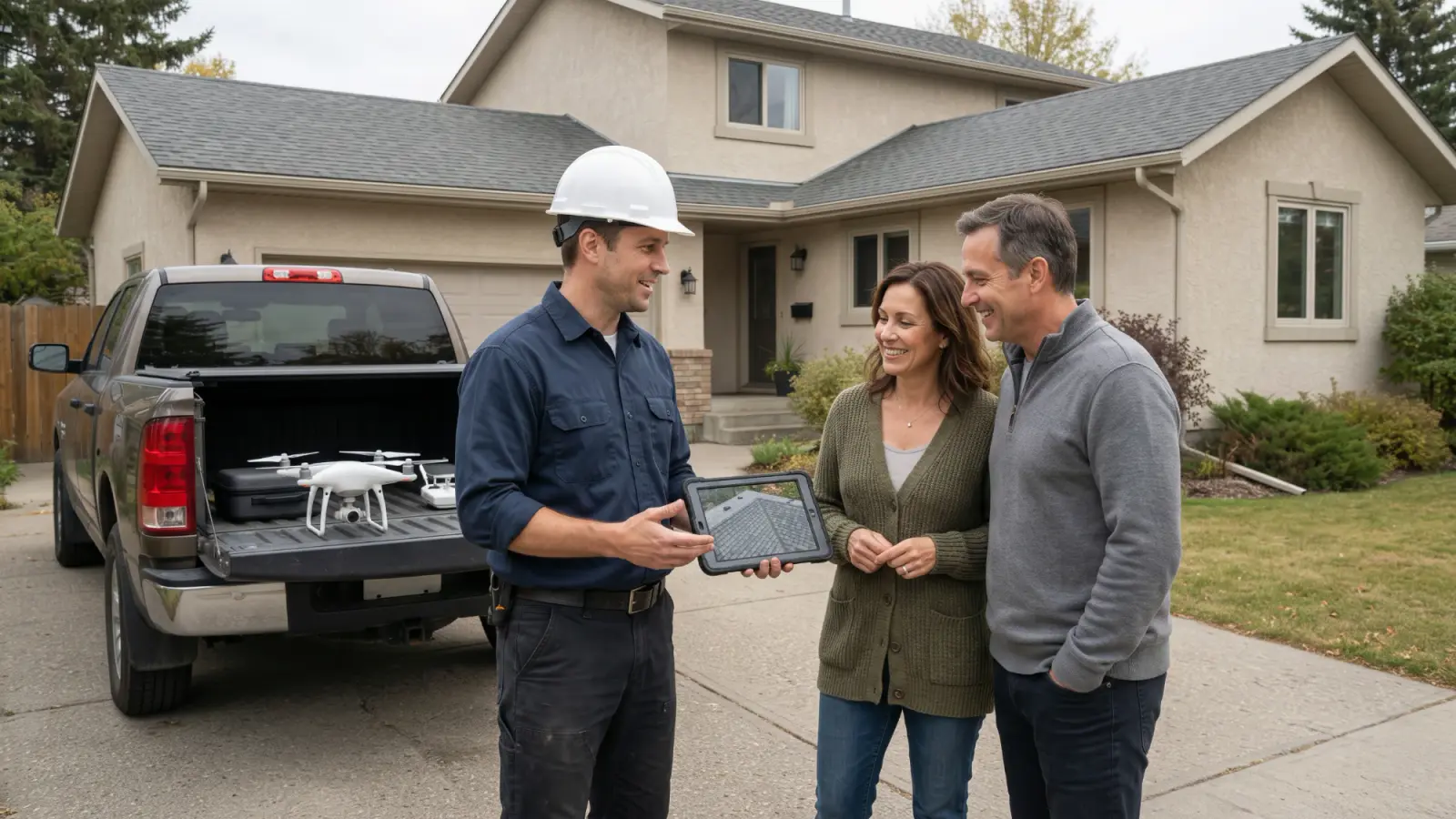
If the roof has years left, we will tell you, and our roof maintenance plans help keep it that way. If it is near the end, we will show you the photos and explain your roof replacement options: TotalShield® for shingle roofs from the deck up, or SecondLife® lift and relay when tile is sound and only the underlayment is worn. Either way, you get a written scope and price before any work starts, and roof financing is available for home replacements, subject to credit approval.
Frequently Asked Questions
How can I find out how old my roof is?
Start with the papers from when you bought the house, then look up the roofing permit with your city or county building department, which keeps records by address. The installer’s invoice or warranty, the previous owner, historical aerial photos, the attic and the roof edge are the other clues. A roofer can read the rest off the roof.
Is a roof replacement on public record?
Usually, through the permit. A roof replacement normally needs a permit, and the building department keeps permit records by address. Work done without a permit won’t show up, which is one more reason to check the house papers too.
How long does a roof last?
There’s no single answer. The material, how much sun the roof takes, attic ventilation, installation quality and upkeep all play a part, so two roofs of the same age can be in very different shape. A roof evaluation looks at the actual condition instead of guessing from the age.
Should I replace my roof just because it’s old?
Not on age alone. An older roof that is sound and dry may only need upkeep. Age is the reason to have it looked at; what the roofer finds is the reason to repair, maintain or replace.
Can you tell how old a tile roof is?
The tiles can be much older than the underlayment beneath them, or the other way round. A roofer looks at the tiles and, where it helps, at the underlayment under a lifted tile. When the tiles are sound and only the underlayment is worn, a lift and relay can reuse them.
Do insurance companies care how old my roof is?
Some insurers now ask about roof age and condition when you buy or renew a policy. Having the date and current photos makes that conversation easier. Your insurer decides how the age affects your policy.
Not Sure How Old Your Roof Is?
Let a roofer read it for you. Book a free roof evaluation and you get drone footage and photos of every slope, a plain-English answer on where your roof stands, and a written scope and price before any work. Or call (310) 340-1643.
