

How to Keep Critters Out of Your Roofline: A Quick Demo
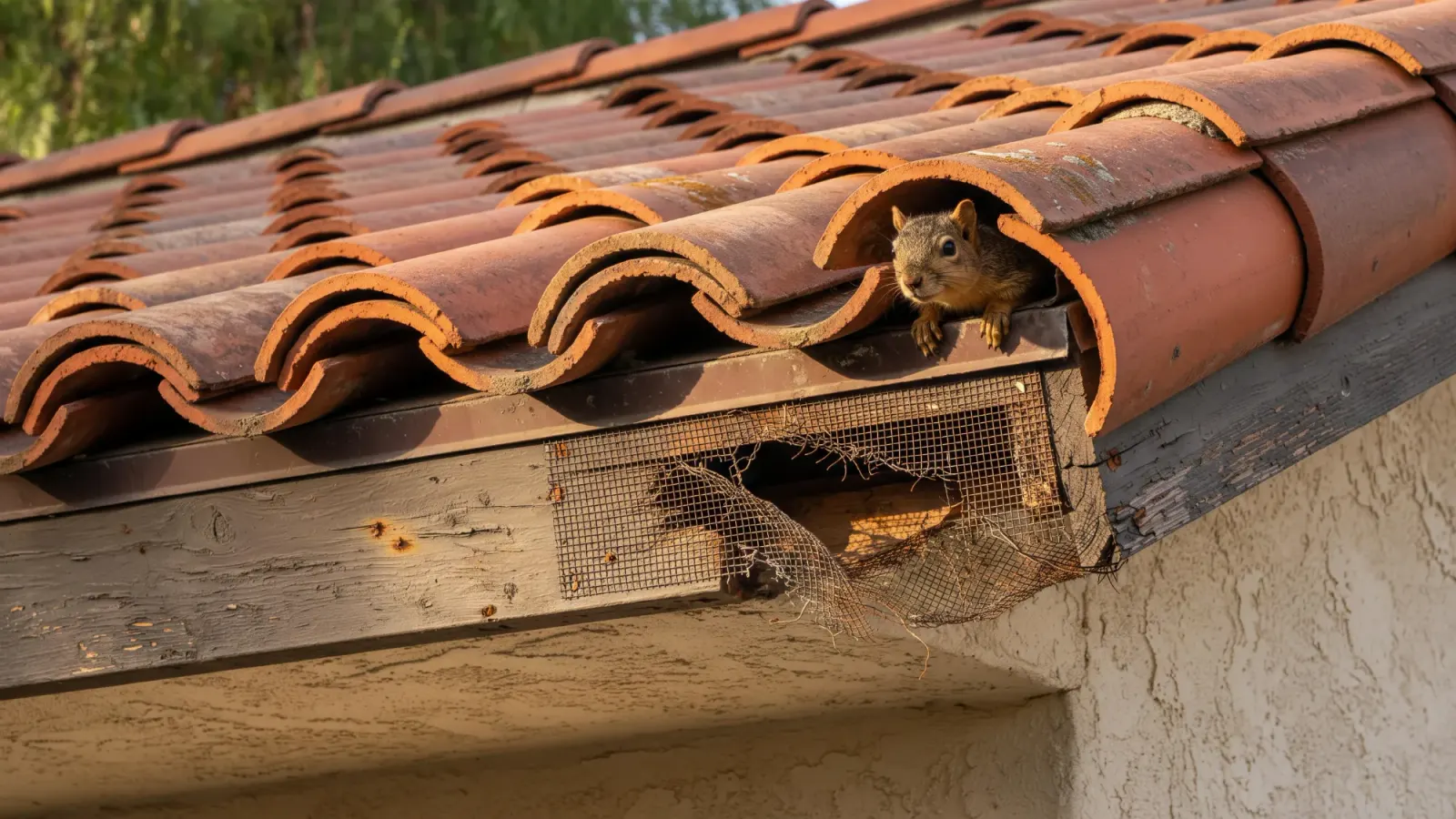
The best way to keep critters out of your roofline is to close the gaps before they find them. Rats, squirrels and birds rarely make a new hole in a roof. They find one that is already there: an open tile end at the eave, a torn vent screen, a gap where the roof edge meets the fascia, a soffit board that has rotted loose.
Here is where they usually get in, who is likely getting in, a quick check you can do from the ground in about ten minutes, the signs you already have guests, and what fixes each kind of opening, including which ones are a roofer’s job and which aren’t.
Where Critters Get Into a Roofline
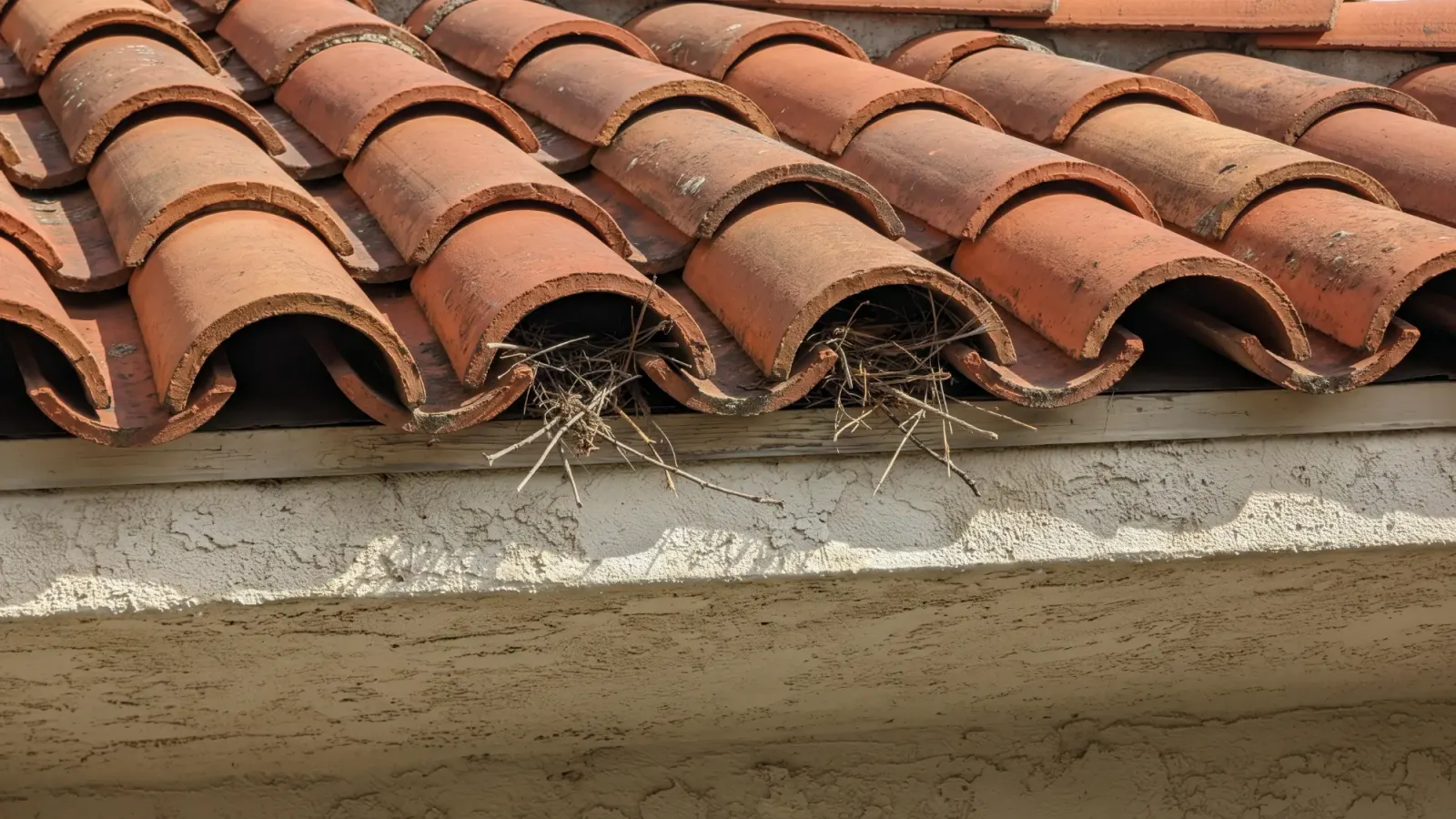
- Open tile ends at the eaves
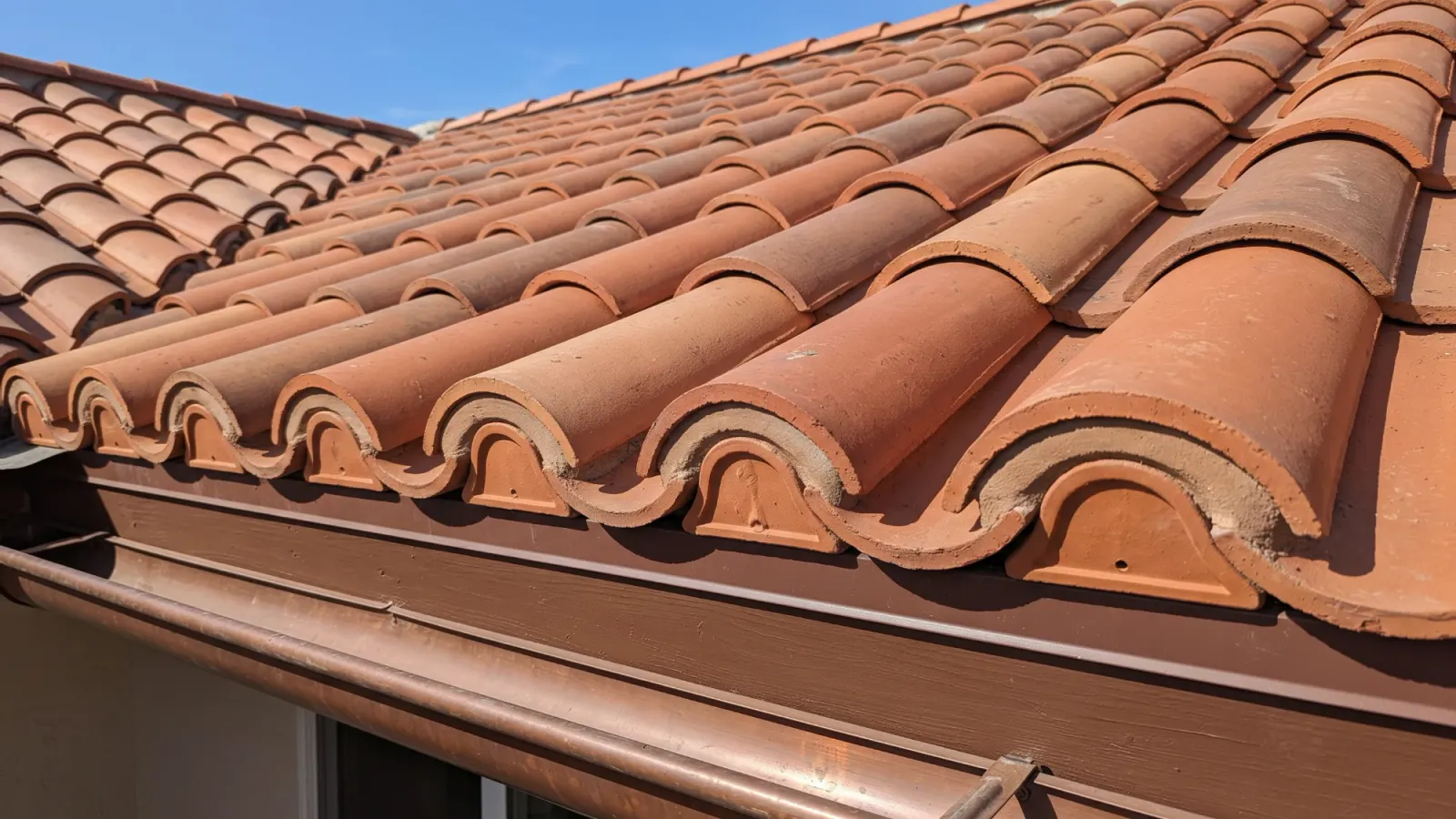
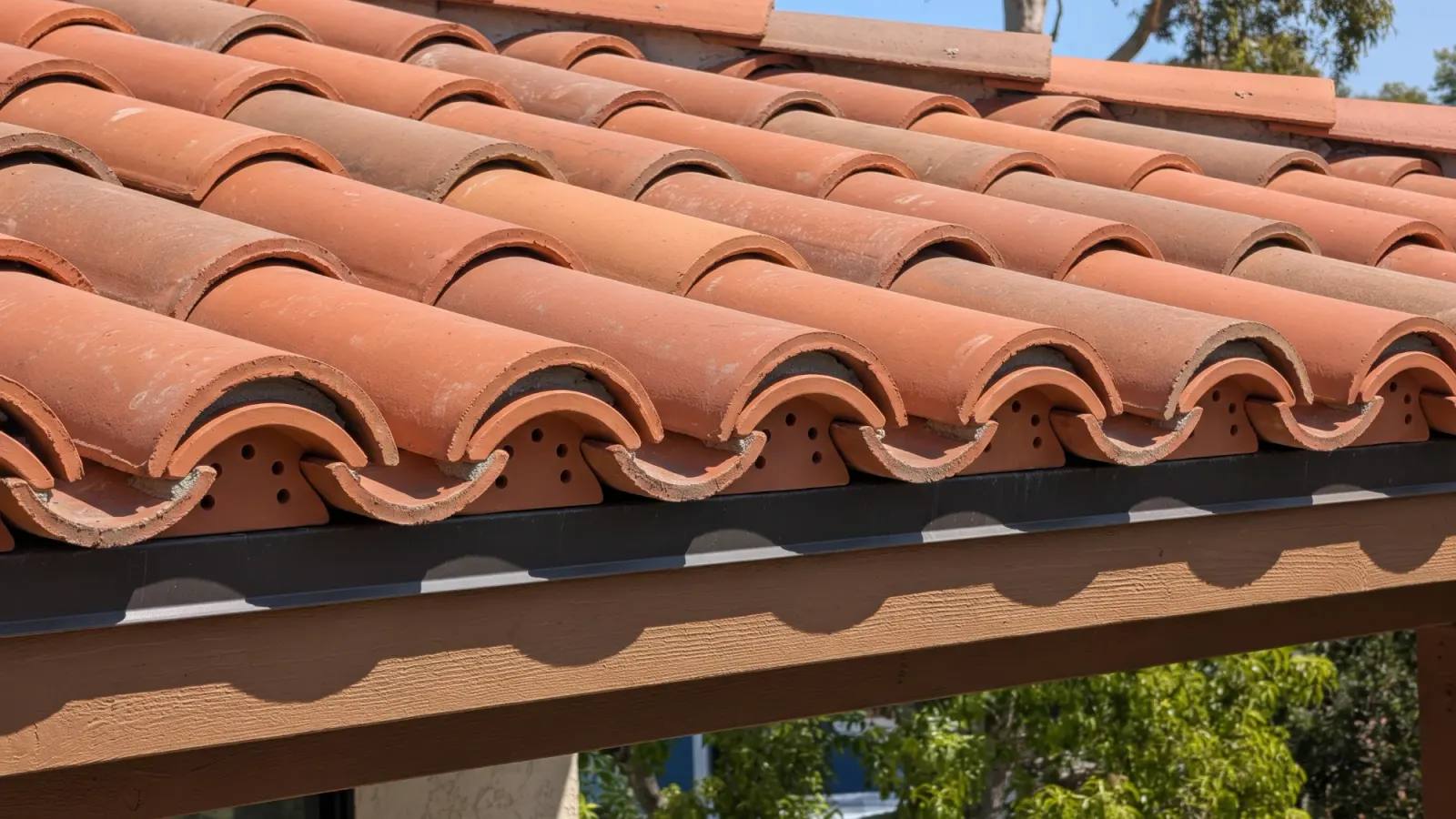
On a tile roof, the curved ends of the bottom row leave openings unless they are closed off with bird stops or eave closures.
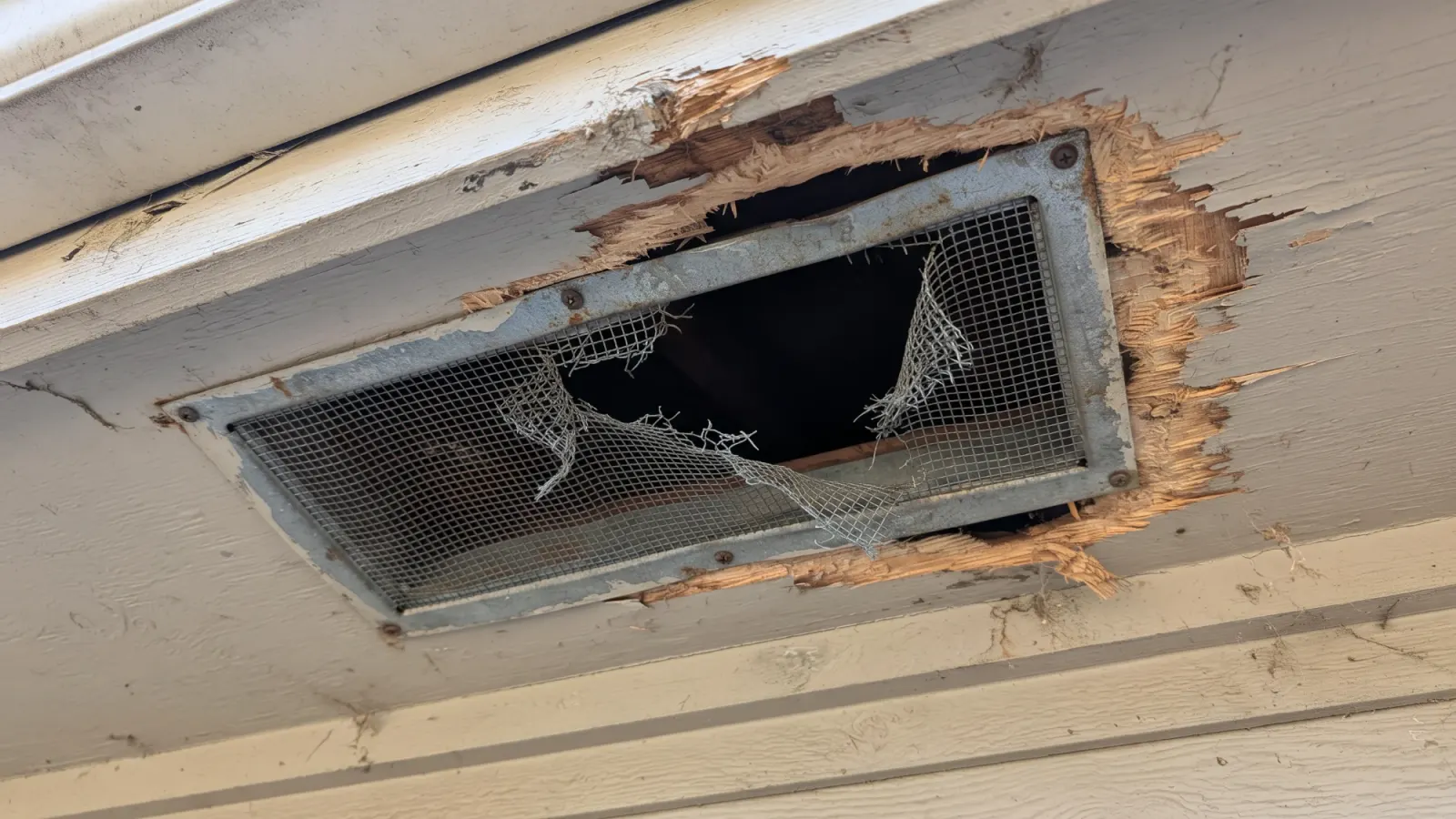
- Torn or loose vent screens
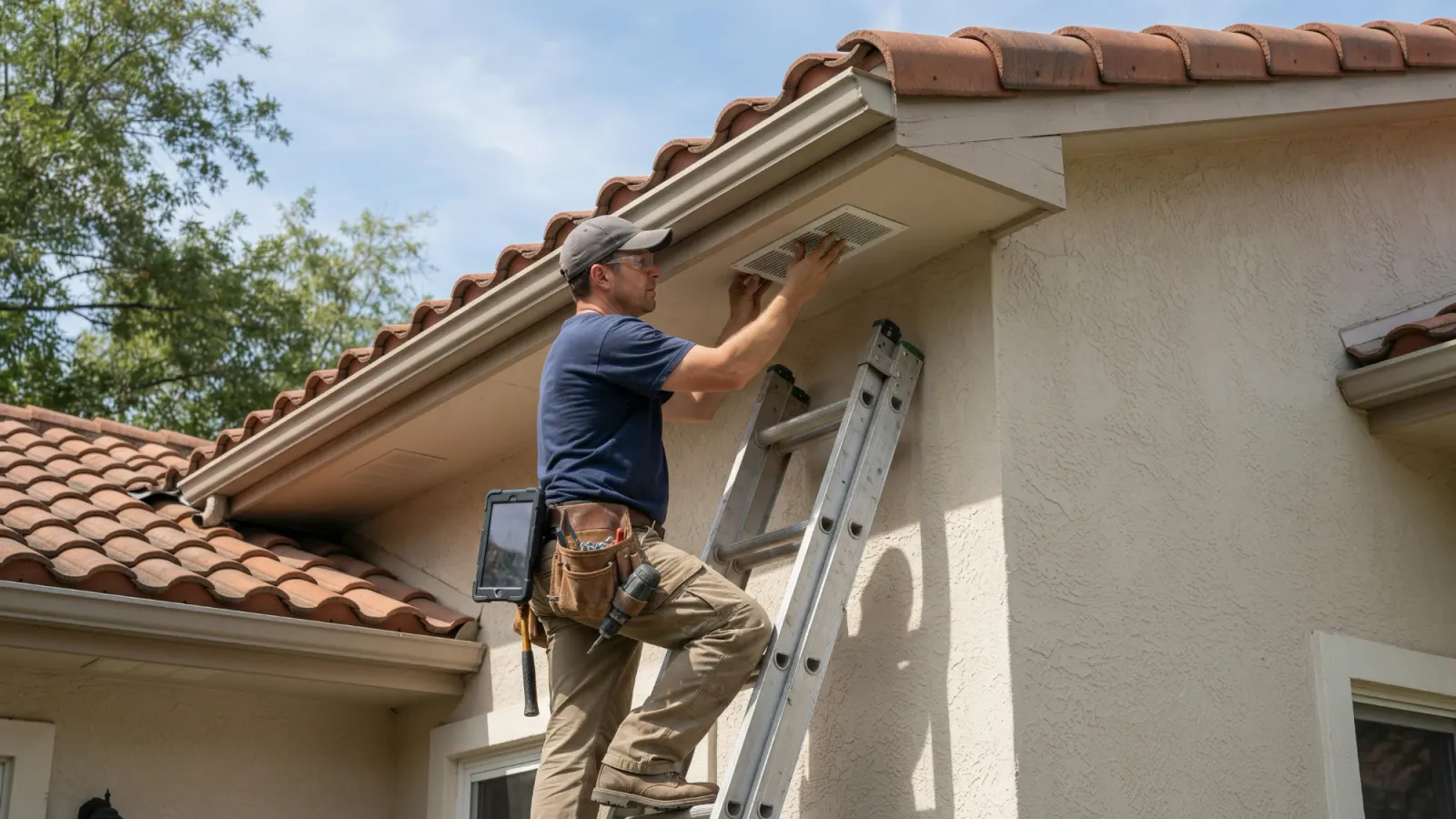
Soffit, eave and gable vents are covered with screen to let air in and keep animals out. Once a screen tears or pulls loose, it is an open door to the attic.
- Damaged roof vents
A cracked vent hood or a missing screen on a roof vent lets animals in from above.
- Gaps at the roof edge
Where the roofing, the drip edge and the fascia board don’t meet tightly, small animals can squeeze in behind them.
- Rotted or loose soffit and fascia boards
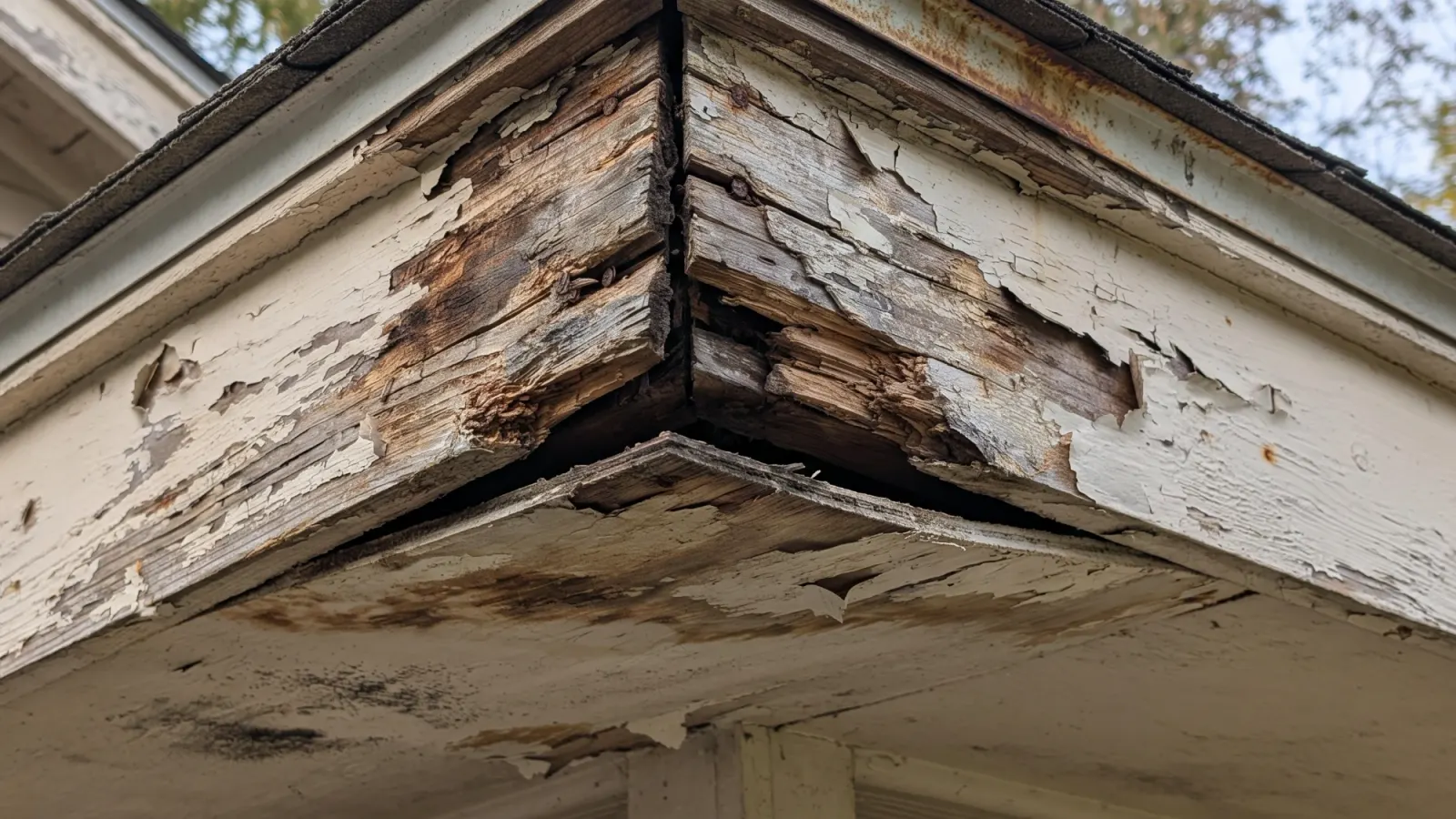
Wood that has been wet for years softens, splits or pulls away, leaving a gap at the corner.
- Where the roof meets a wall
At dormers, second stories and chimneys, gaps behind the flashing or at the eave corners.
- A path from a tree
Branches that reach the roof give squirrels and rats an easy way up. Our guide to tree branches over your roof covers which ones to trim.
Who Is Getting In?
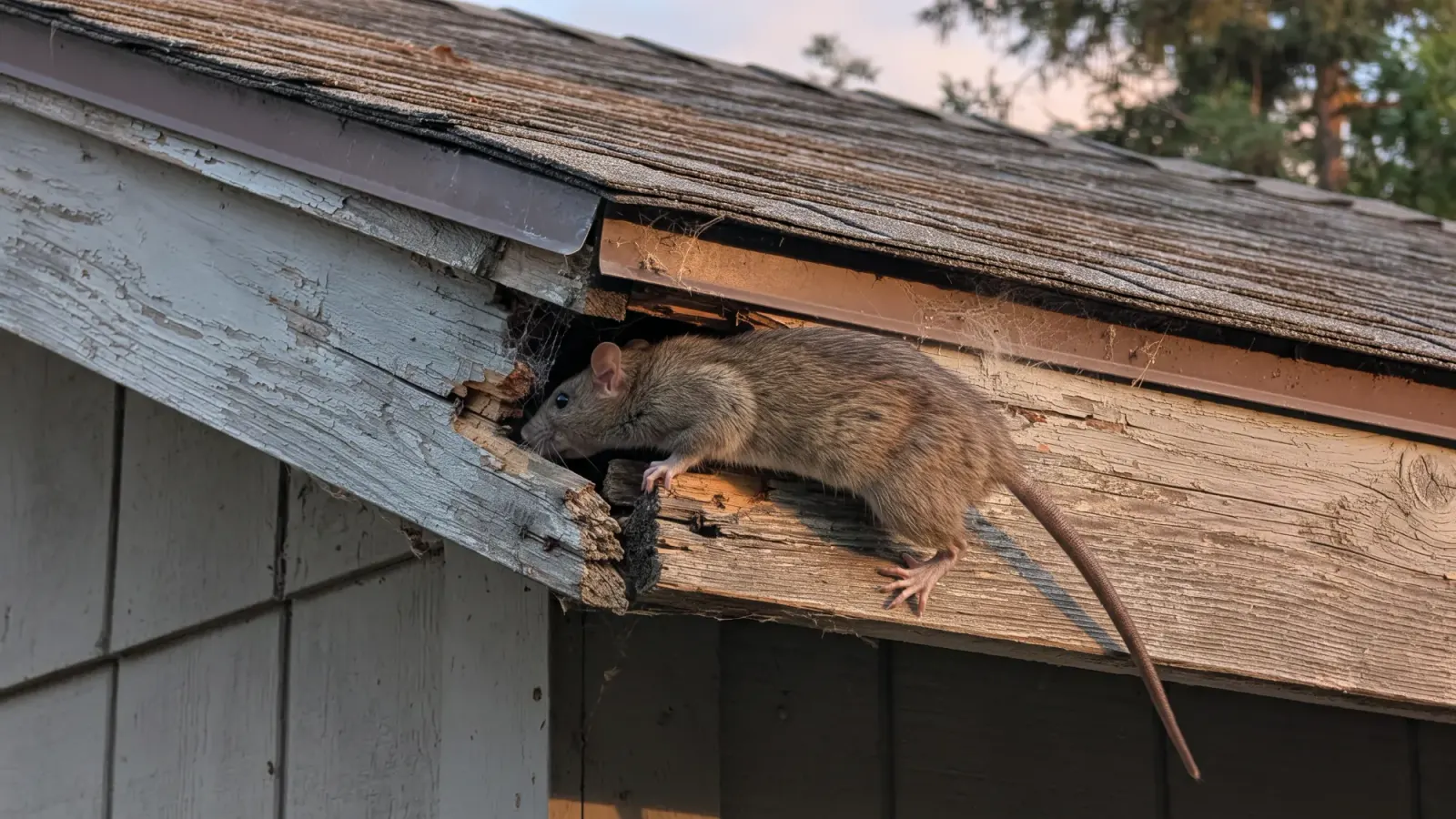
Rats and mice
- Signs
- Scratching in the walls or ceiling at night, droppings in the attic, chewed insulation
- Where they usually get in
- Small gaps at the eaves, torn vent screens, open tile ends
Squirrels
- Signs
- Noise in the attic early in the morning and late afternoon, chewed edges at the roofline
- Where they usually get in
- Gaps at the roof edge and corners, often reached from a tree
Birds
- Signs
- Nesting material poking out of tile ends or vents, chirping at the eaves in spring
- Where they usually get in
- Open tile ends, vent openings, gaps behind the gutters
Raccoons
- Signs
- Heavy thumping, torn vent covers, displaced roofing at an edge
- Where they usually get in
- Weak vents, loose soffit panels and roof edges they can pull open
A Quick Demo: Check Your Roofline in Ten Minutes
Stay on the ground. Binoculars or your phone’s zoom will show you most of what matters.
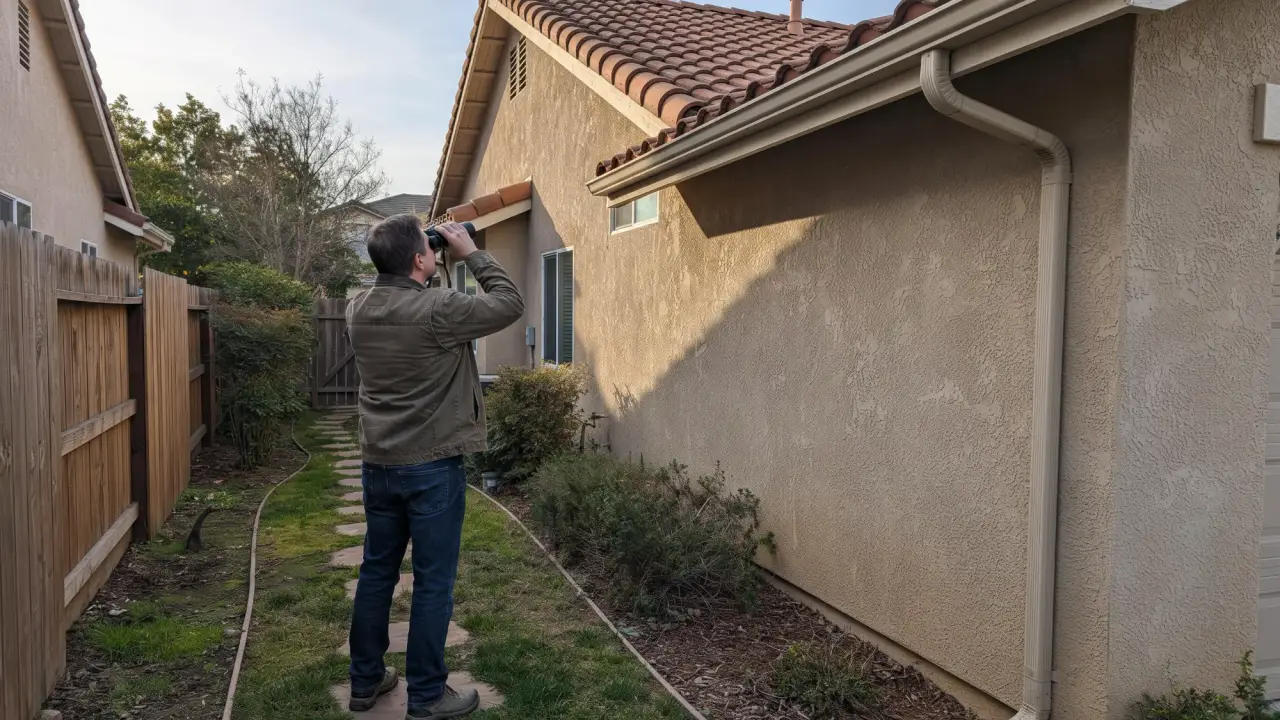
Walk the eaves. Go slowly around the house and look up at the line where the roof meets the wall, all the way around.
Look at the tile ends. On a tile roof, check the bottom row: is each curved end closed off, or can you see into it?
Look at every vent. Soffit and eave vents under the overhang, gable vents at the peaks, and the vents on the roof. Look for torn, bent or missing screens.
Check the corners. The corners of the eaves and where the roof meets a wall are where boards split and gaps open first.
Look at the boards. Peeling paint, dark stains, sagging or soft-looking soffit and fascia boards point to wood that has been wet.
Look for the path up. Branches touching the roof, vines on the walls, a fence or patio cover next to the eaves.
Listen and look at dusk. Animals that live in the attic often come and go around sunrise and sunset; watching an eave corner for a few minutes can show you exactly where.
Signs You Already Have Guests
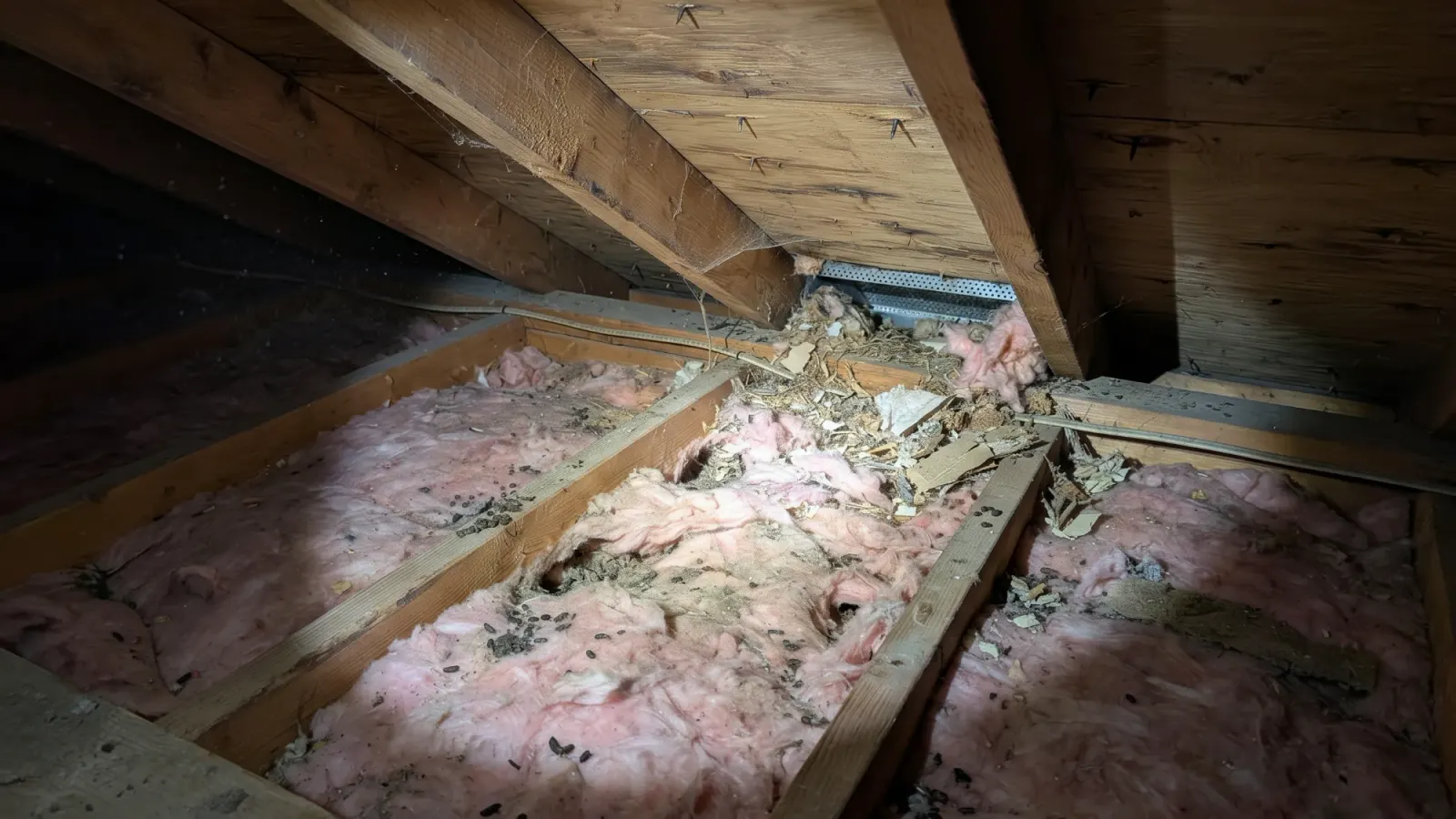
Scratching or scurrying in the ceiling or walls, especially at night or early morning.
Droppings or nesting material in the attic, at the eaves or below a vent.
Chewed wood or vent screens at the roofline.
Grease or rub marks along an edge where an animal squeezes through again and again.
Flattened or tunneled insulation in the attic.
A smell in a room under the attic.
Get Them Out Before You Close It Up
Never seal an opening with an animal still inside. A trapped animal will chew a new way out, often through the inside of the house, or die in the attic.
Call a licensed pest control or wildlife removal company first. They can make sure the animals are out before the openings are closed, and they know the rules for active bird nests, many of which are protected.
What Fixes Which Opening
Which of these sounds most like your roof? Tap a card.
Open tile ends at the eaves
The fix
Bird stops or eave closures fitted to the bottom row
Who to call
A roofer
A torn or missing soffit or eave vent screen
The fix
The vent repaired or replaced
Who to call
A roofer
A damaged roof vent
The fix
The vent replaced and flashed into the roofing
Who to call
A roofer
A gap at the roof edge
The fix
The roof edge and drip edge repaired
Who to call
A roofer
Rotted or broken soffit or fascia boards
The fix
The wood repaired or replaced
Who to call
A carpenter or general contractor
Branches that reach the roof
The fix
Trimmed back from the roof
Who to call
A tree service
Animals still inside
The fix
Removed before anything is sealed
Who to call
Pest control or wildlife removal
Steel wool and expanding foam stuffed into a gap may slow an animal down, but they aren’t a lasting fix for an opening in the roof itself.
Your Roofline Checklist
How We Help Close Up the Roofline
Book a free roof evaluation. A roofer looks at the roof and the roofline, with RoofScan 360® drone footage and photos of the eaves, the vents and the edges.
Find every opening. Open tile ends, torn vent screens, damaged roof vents and gaps at the roof edge, each one photographed.
Tell you who fixes what. The roof openings are our work
If soffit or fascia boards are rotted, we show you in the photos so a carpenter can repair them.
Give you a written scope and price before any work.
On a tile roof, missing bird stops and eave closures are replaced as part of a tile roof repair, and put back in place during a tile lift and relay. Torn intake vents at the eaves and soffits are repaired or replaced as part of our attic ventilation work. Our roof maintenance plans check and photograph the vent screens and eave closures on every visit.
Frequently Asked Questions
How do critters get into the roofline?
Usually through an opening that is already there: open tile ends at the eaves, torn soffit or gable vent screens, damaged roof vents, gaps where the roof edge meets the fascia, or rotted soffit and fascia boards.
What are bird stops?
Bird stops, or eave closures, close off the open curved ends of the bottom row of tiles on a tile roof. Without them, birds, rodents, debris and embers can get in under the tiles.
Should I seal the gaps myself?
Not until you know nothing is living inside. Sealing an animal in forces it to chew a new way out. Have pest control or wildlife removal check first, then have the openings closed properly.
Do you remove animals from the attic?
No. That is a job for a licensed pest control or wildlife removal company. We repair the roof openings they get in through, once the animals are out.
Do you repair soffit and fascia?
We repair the roofing side of the roofline: tile bird stops and eave closures, eave and soffit vents, roof vents and the roof edge. If the soffit or fascia boards themselves are rotted, we show you in the photos so a carpenter can repair the wood.
Can animals damage the roof itself?
They can. Squirrels and rats chew at edges and vent screens, raccoons can pull roofing and vents loose, and nesting material in tile ends and vents holds water and debris. Closing the openings protects the roof too.
Hearing Something in the Attic?
Once the animals are out, find out where they got in. Book a free roof evaluation: a roofer photographs the roofline, shows you every opening and gives you a written scope and price before any work. Or call (310) 340-1643.
