

Which Tree Branches Over Your Roof Are a Threat? A Yard Walkthrough
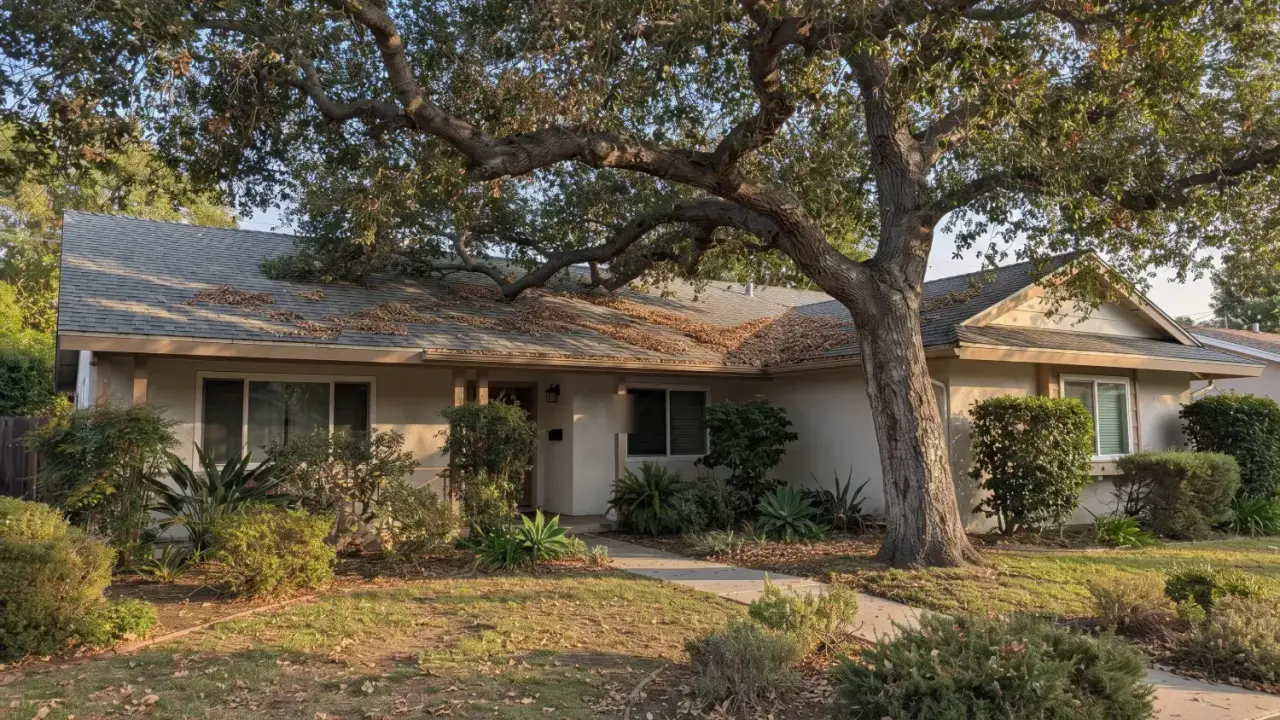
Tree branches over your roof are easy to stop noticing. They have been there for years, and the roof hasn’t leaked. But a branch can scrape the roof every time the wind blows, fill the valleys and gutters with leaves, keep a shaded slope damp, give animals a way up and, in a strong wind, come down on the house.
You don’t need to climb anything to see which branches matter. Walk the yard with us: why branches matter to a roof, a step-by-step walkthrough from the ground, which branches are a threat and which aren’t, who to call about them and what to check on the roof underneath.
Why Branches Matter to a Roof
- Scraping
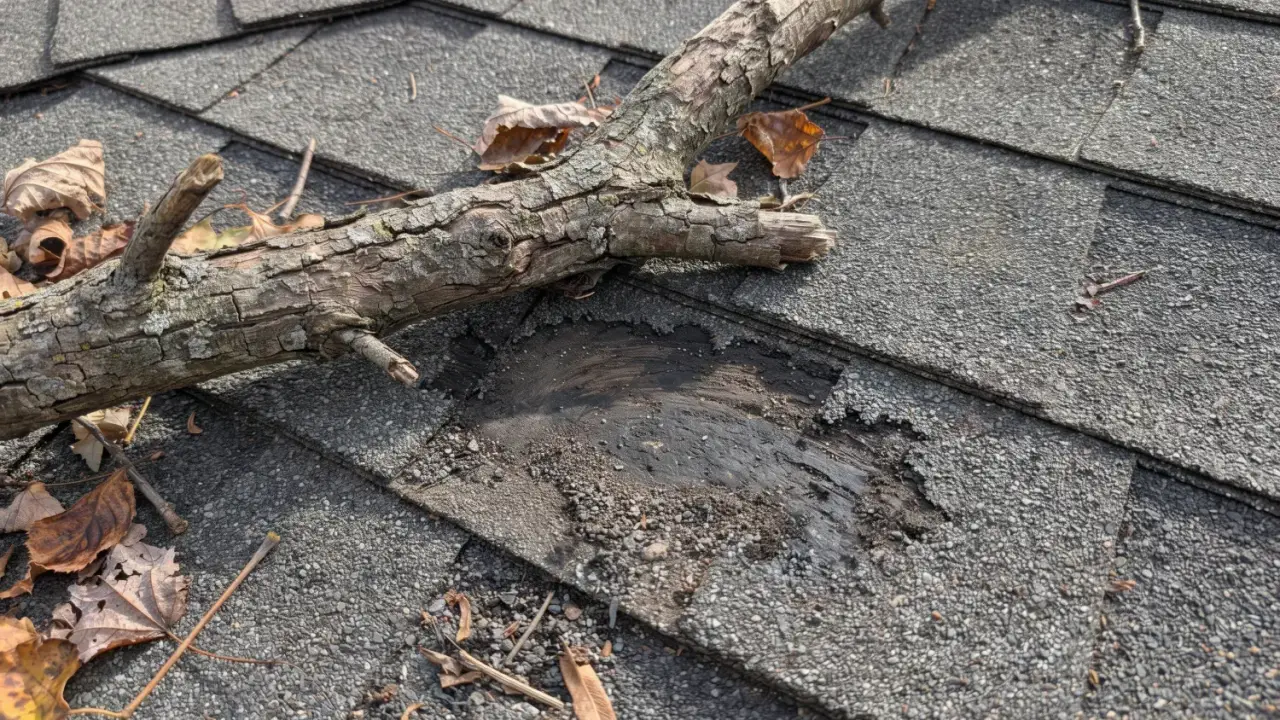
a branch resting on or brushing the roof wears through the surface every time it moves, scuffing granules off shingles and knocking tiles.
- Debris
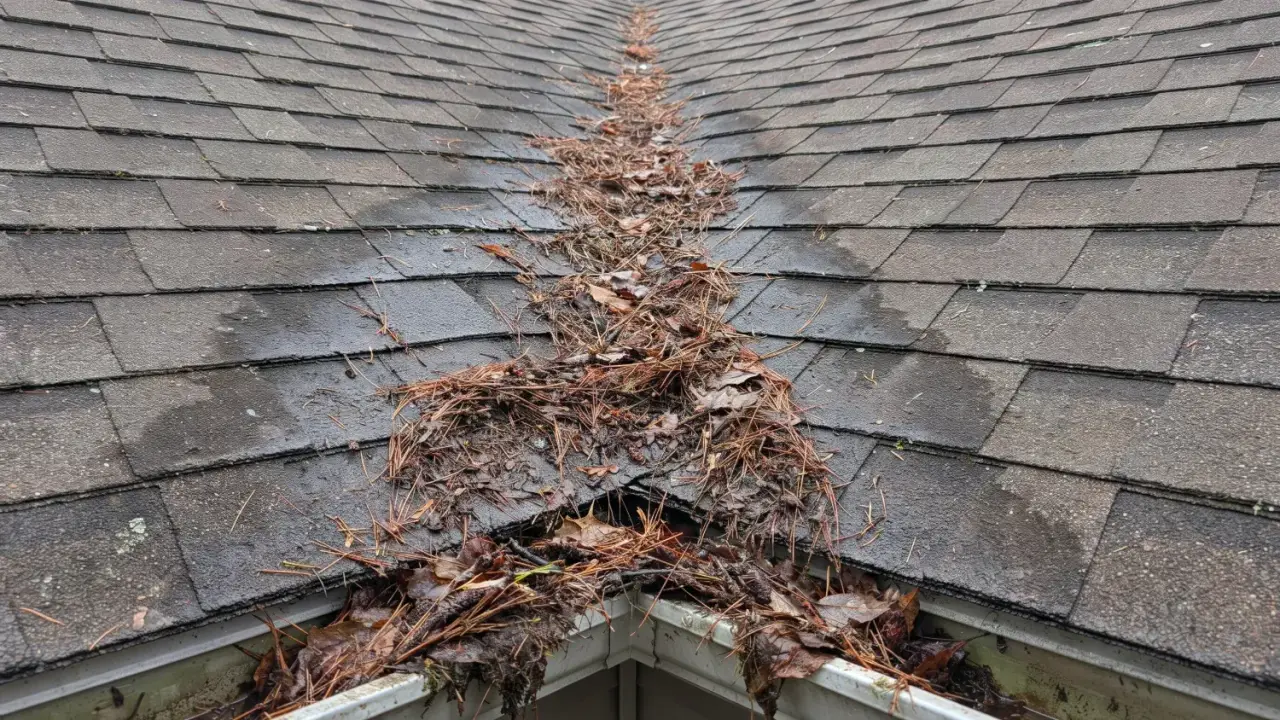
leaves, needles, bark and seed pods pile up in valleys, behind chimneys and in gutters, where they hold water and block its path off the roof.
- Shade
a slope that rarely sees the sun stays damp longer, which is where moss grows.
- Falling limbs
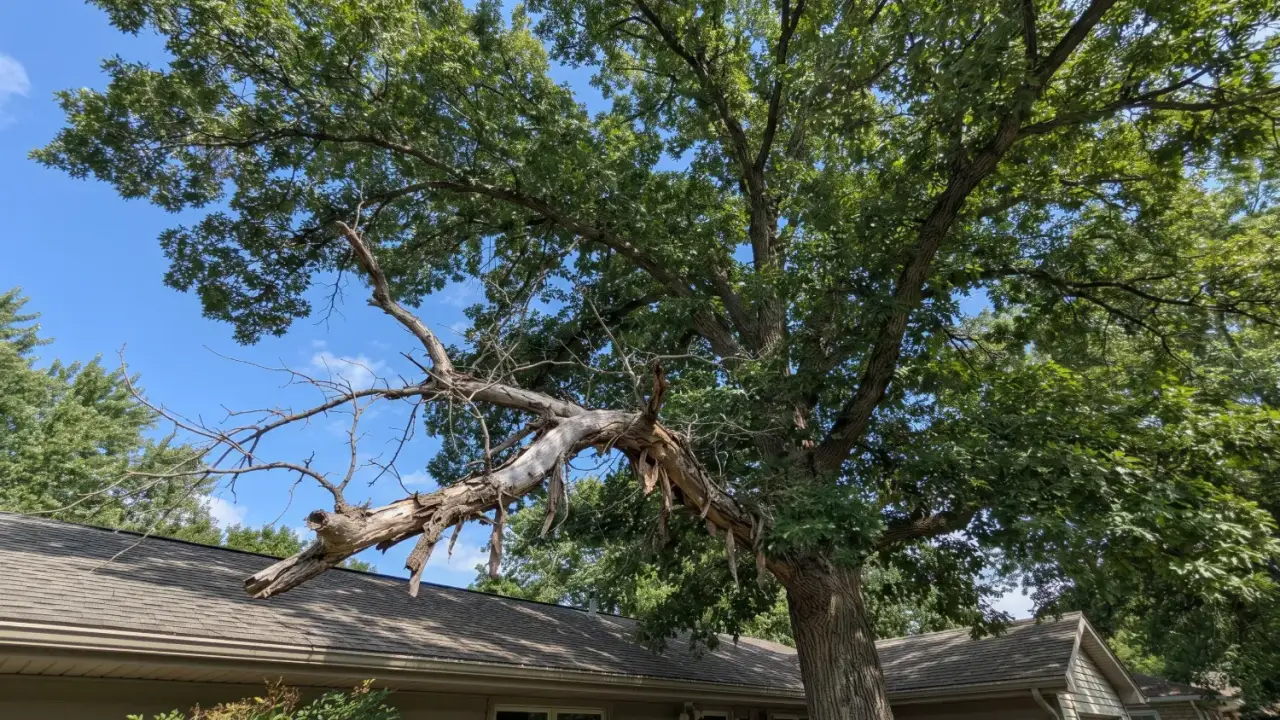
dead or heavy limbs can break off in wind, landing on the roof with enough force to crack tiles, tear shingles or break the deck.
- A path for animals
branches that reach the roof give squirrels and rats an easy way up to the vents and eaves.
- Embers
dry debris in valleys and gutters can catch embers in a wildfire.
The Yard Walkthrough
Stay on the ground for all of this. Binoculars or your phone’s zoom will show you more than you think.
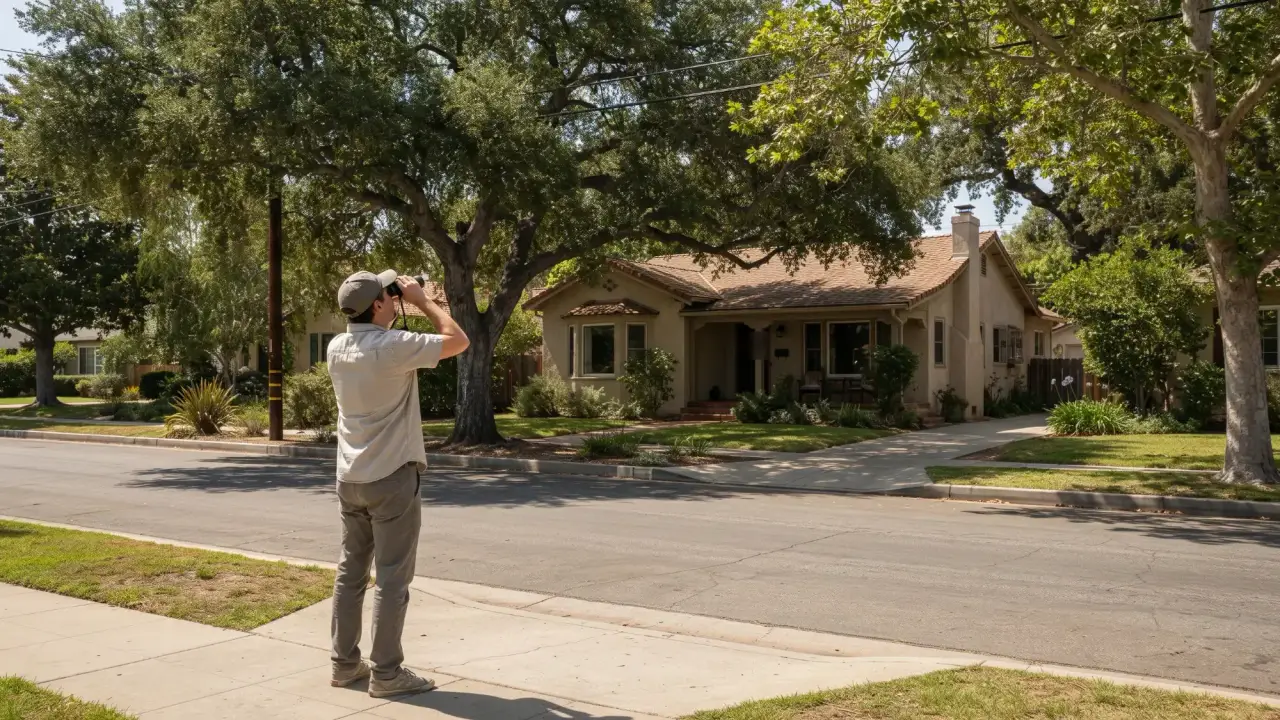
Start across the street. Look at the whole roofline
Which trees reach over the roof, and where? Note any limbs that hang over the house rather than beside it.
Walk each side of the house. Look up from under the eaves
Is any branch touching the roof, the gutters or the walls? Look for rub marks on the roof right below a branch.
Look for dead wood. Branches with no leaves when the rest of the tree has them, peeling or missing bark, cracks where a limb meets the trunk, or limbs already broken and hanging.
Look at the tree itself. A trunk that leans toward the house, mushrooms or soft wood at the base, or roots lifting the soil are reasons to have the tree looked at.
Check the valleys and gutters. Leaves, needles and seed pods piled where two roof slopes meet, behind the chimney or along the gutters show which trees drop the most.
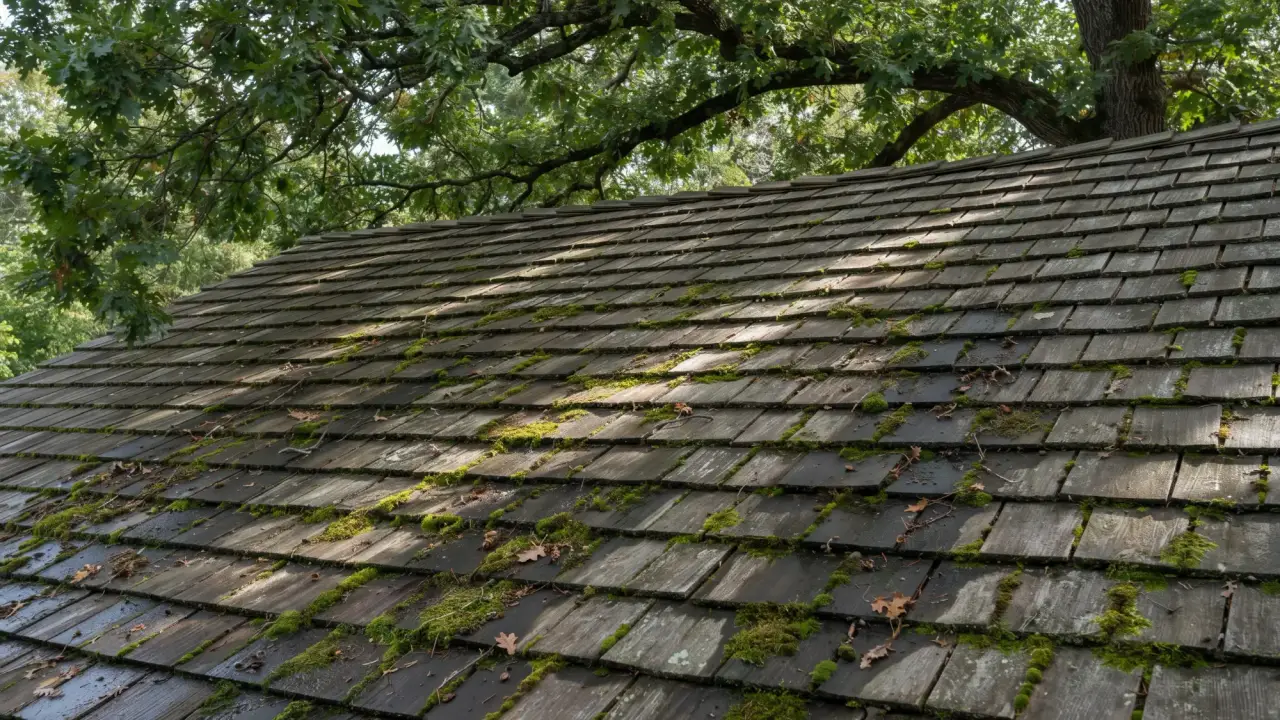
Look at the shaded slopes. Green or dark patches, moss, or shingles that stay damp long after the rest of the roof has dried.
Note the wires. Any branch near the power line coming into the house is a job for the utility, not for you.
Walk it again after a strong wind. New debris, a broken branch on the roof or fresh scrape marks tell you which branches move the most.
Which Branches Are a Threat?
Which of these sounds most like your roof? Tap a card.
A dead or broken limb hanging over the roof
How serious
Urgent
What to do
Call a certified arborist or tree service now; keep people out from under it
A branch resting on or rubbing the roof
How serious
Fix soon
What to do
Have it trimmed back, then have a roofer check the spot it rubbed
A large, healthy limb hanging over the house
How serious
Plan for it
What to do
Ask an arborist whether it should be trimmed or reduced
Branches near the power line to the house
How serious
Not yours to touch
What to do
Call the utility
A tree that fills the valleys and gutters every season
How serious
Ongoing
What to do
Keep the roof clear on a schedule, and consider trimming back the overhang
Branches beside the house, clear of the roof
How serious
Low
What to do
Keep an eye on them after strong winds
Trees That Drop the Most on Roofs
Palms
- What it drops
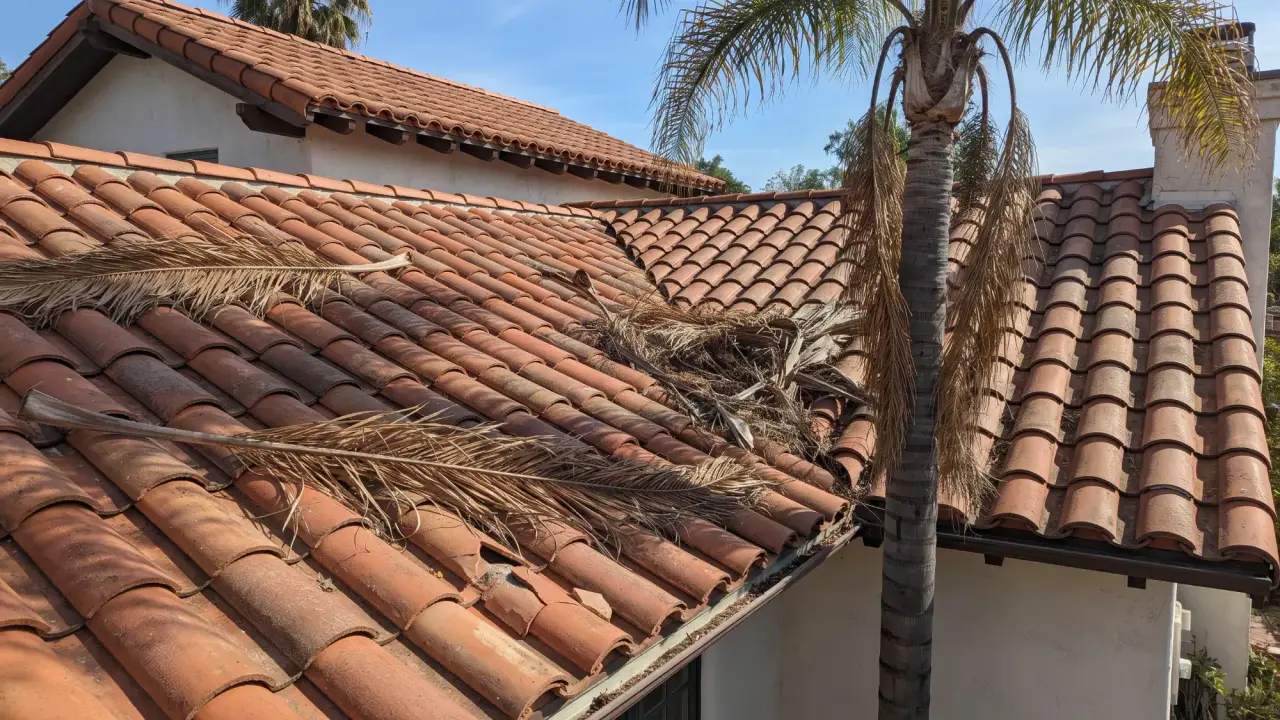
- Heavy dead fronds and seed stalks
- What to watch on the roof
- Fronds caught in valleys and gutters; falling fronds can crack tiles
Pines
- What it drops
- Needles and cones
- What to watch on the roof
- Needles packed into valleys, behind chimneys and in gutters
Eucalyptus
- What it drops
- Bark, leaves and limbs
- What to watch on the roof
- Strips of bark in valleys and gutters; falling limbs in wind
Oaks and other leafy trees
- What it drops
- Leaves, acorns and seed pods
- What to watch on the roof
- Leaves piling up in valleys and gutters; shade on the slopes below
Whatever the tree, the roof’s low points collect the most. Our guide to cleaning gutters without damaging the roof edge covers the part you can do from a ladder.
Signs a Branch Has Already Done Damage
Scuffed or bare patches on shingles right under a branch.
Cracked, broken or shifted tiles below an overhanging limb.
Debris packed into valleys and dark, damp patches beside it.
Moss on a shaded slope, or shingles that stay wet long after rain. See our article on moss on your roof.
A ceiling stain in a room under a tree.
Chewed vents, eave gaps or droppings where animals have been using the branches to reach the roof.
A dent, crack or hole where a limb landed.
Who to Call About Which Problem
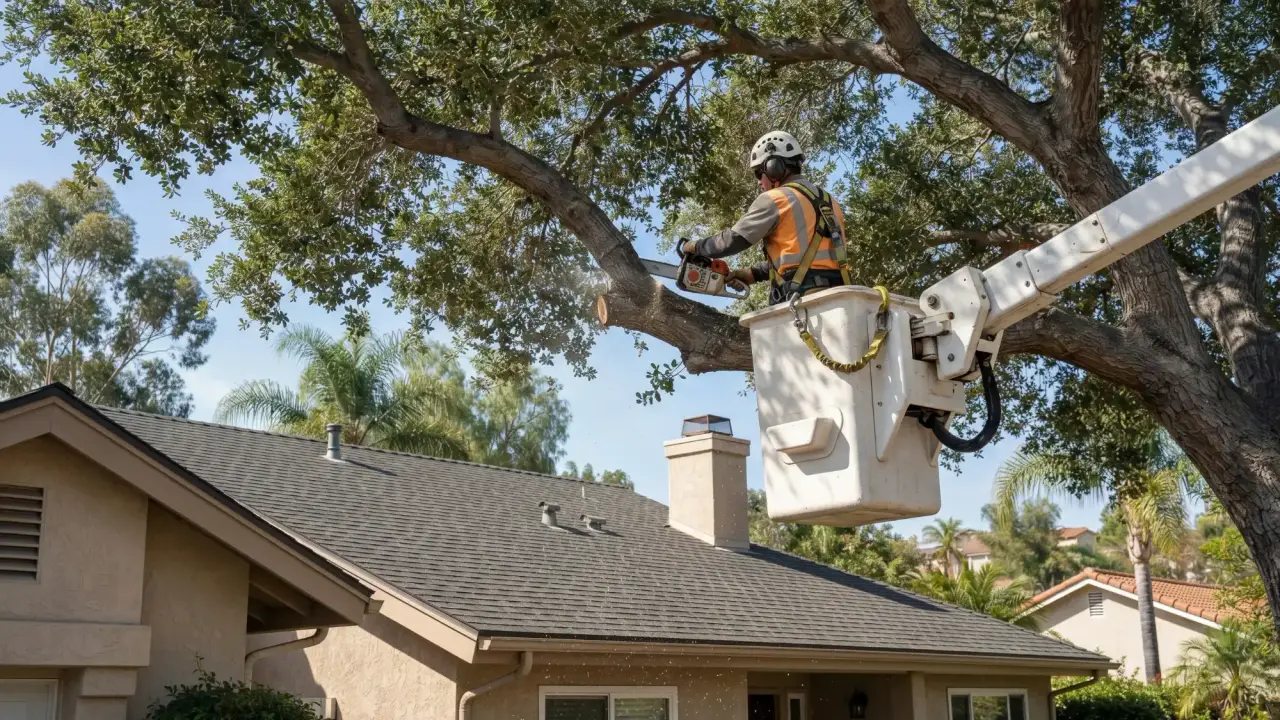
- A certified arborist or a licensed tree service for trimming, dead limbs and trees that may be failing. We don’t trim trees, and limbs over a house are a job for a tree professional.
- The utility for any branch near a power line.
- A roofer for what the branches have done to the roof: scrape marks, broken shingles or tiles, debris-packed valleys, leaks.
If you live in a fire hazard area, your local fire department has rules and guidance on clearing vegetation near the house; our guide to fire-resistant roofs explains where embers get into a roof.
Your Walkthrough Checklist
How We Check a Roof Under Trees
Book a free roof evaluation. A roofer looks at the roof, with RoofScan 360® drone footage and photos, including the slopes you can’t see from the yard.
Check where the branches touch. Scrape marks, scuffed granules and cracked or shifted tiles under each overhanging limb.
Look at the valleys, flashings and gutters, where debris piles up and holds water.
Look at the shaded slopes for moss and damp patches.
Give you one next step in plain English: repair, monitor, maintain or replace, with a written scope and price before any work.
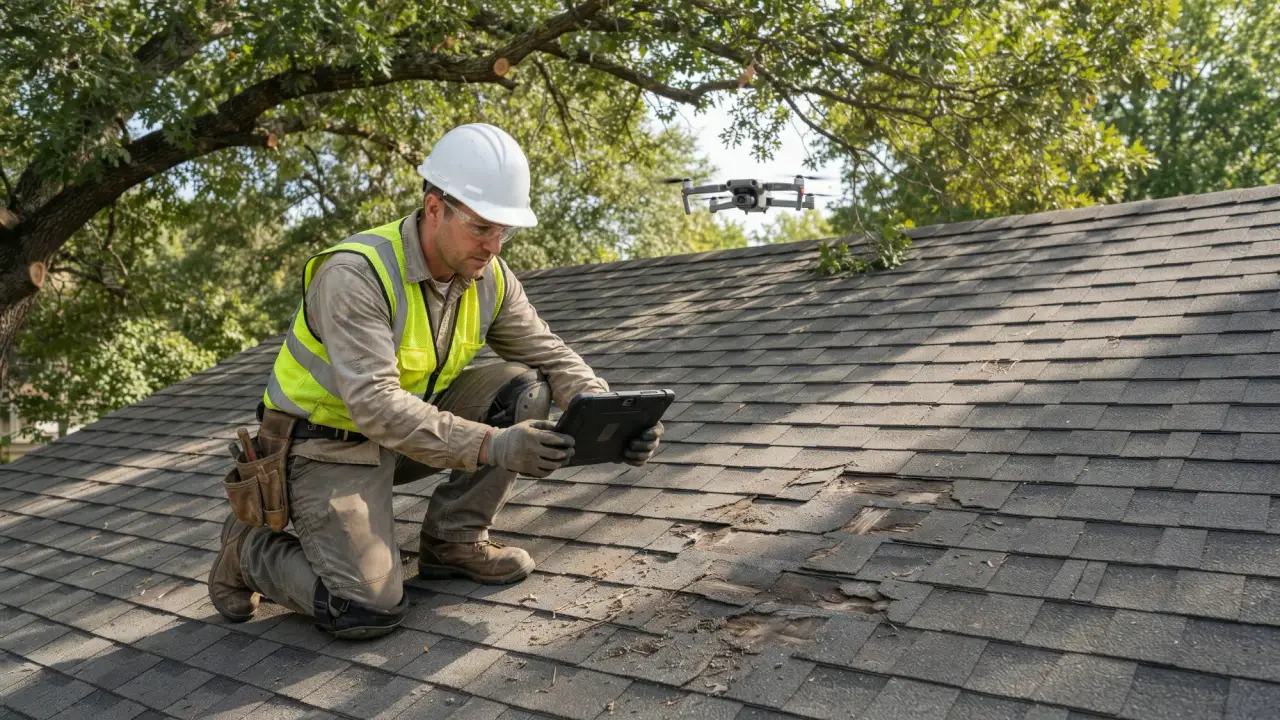
A few damaged shingles or tiles under a branch are a LeakRescue® repair, or a tile roof repair on a tile roof. For a house under trees, our roof maintenance plans clear debris from the roof, valleys and gutters, keep an eye on moss on shaded slopes and send a photo report every visit. If a limb has already come down on the roof, our emergency roof repair team takes calls after hours and weekends and puts tarps on when needed.
Frequently Asked Questions
Are tree branches over my roof a problem?
They can be. Branches that touch the roof scrape it, overhanging trees fill the valleys and gutters with debris, shade keeps slopes damp, and dead or heavy limbs can fall in wind. Branches beside the house that stay clear of the roof are usually less of a concern.
Which branches should be trimmed first?
Dead, cracked or hanging limbs over the house first, then branches resting on or rubbing the roof, then large limbs that hang over the roof. A certified arborist can tell you which to remove and how.
Do you trim trees?
No. Tree trimming is a job for a certified arborist or a licensed tree service. We check and repair what the branches have done to the roof, and our maintenance plan visits clear debris from the roof, valleys and gutters.
Can I trim branches over my roof myself?
Small, low branches you can reach safely from the ground, perhaps. Anything that needs a ladder against the house, a climb onto the roof or work near a power line is a job for a professional.
Can a branch rubbing the roof cause a leak?
Yes. It wears the same spot over and over, scuffing granules off shingles or cracking tiles, and that worn spot can let water in. Have the branch trimmed back, then have the spot checked.
A limb fell on my roof. What should I do?
Stay out of the rooms under the damage and keep away from any downed wires. Call the utility for wires and a tree service to remove the limb, then call a roofer. Our emergency roof repair team takes calls after hours and weekends and puts tarps on when needed.
Trees Over Your Roof?
See what the branches have done to it. Book a free roof evaluation: a roofer checks the roof under the trees with drone footage and photos, tells you in plain English what it needs, and gives you a written scope and price before any work. Or call (310) 340-1643.
