

Leaking Skylight: Reseal or Replace? A Close-Up Look at Where the Water Gets In
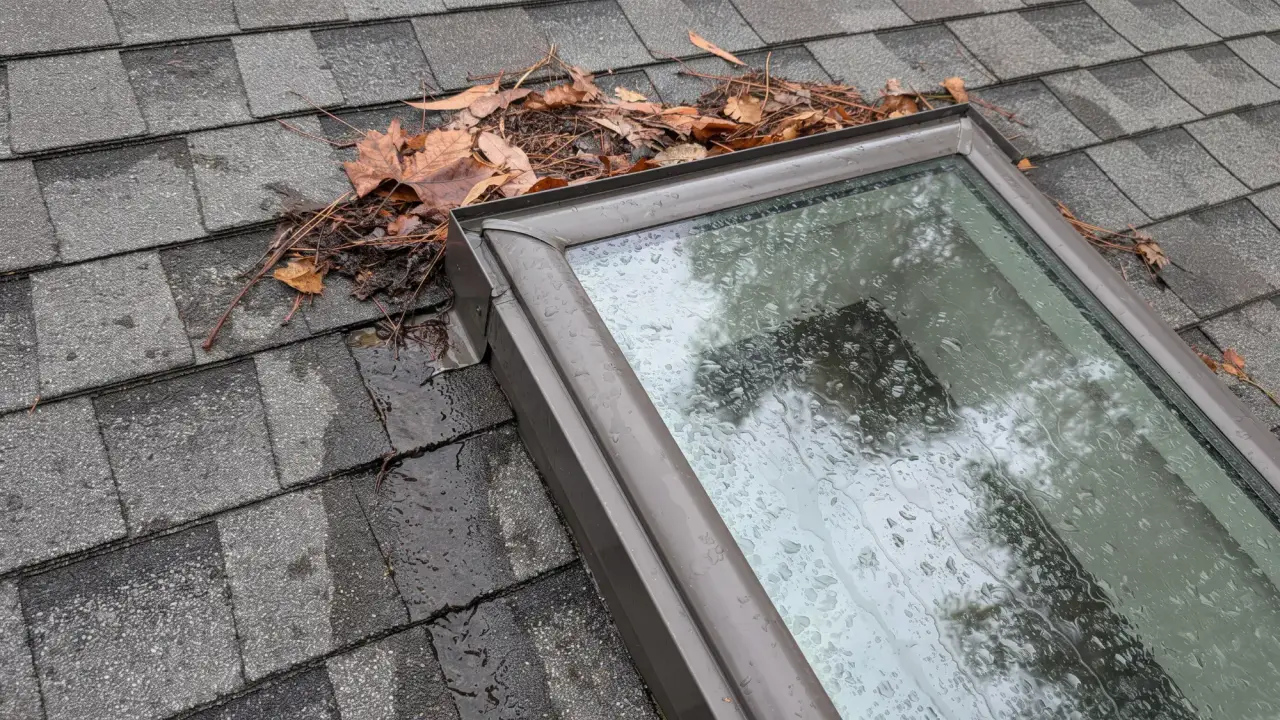
A leaking skylight usually isn’t leaking through the glass. Most of the time, water is getting in at the flashing around the skylight, or through the roofing just above it, and running down into the shaft. That is why a bead of caulk around the frame so often stops the drip for a season and then doesn’t.
Below, we take a close look at the parts of a skylight, how to tell a leak from condensation, where the water usually gets in, and how resealing, reflashing and replacing the skylight compare, so you know which one your skylight actually needs.
Is It a Leak or Condensation?
Before anyone reaches for a caulk gun, check that it is really a leak. Warm, humid air inside the house can condense on a cold skylight and drip, and that looks a lot like a leak.
When it drips
- A roof leak
- During or after rain, sometimes a day later
- Condensation
- On cool mornings, or after showers and cooking, even in dry weather
Where the water shows
- A roof leak
- Stains in the corners of the shaft, on its framing or on the ceiling beside it
- Condensation
- Droplets across the inside of the glass, running down to the frame
How it looks over time
- A roof leak
- Brown rings, bubbling paint, soft drywall in the shaft
- Condensation
- Fogging, water spots on the sill, sometimes mildew on the frame
Where to look first
- A roof leak
- The flashing and the roofing around the skylight
- Condensation
- Ventilation and humidity in the room below
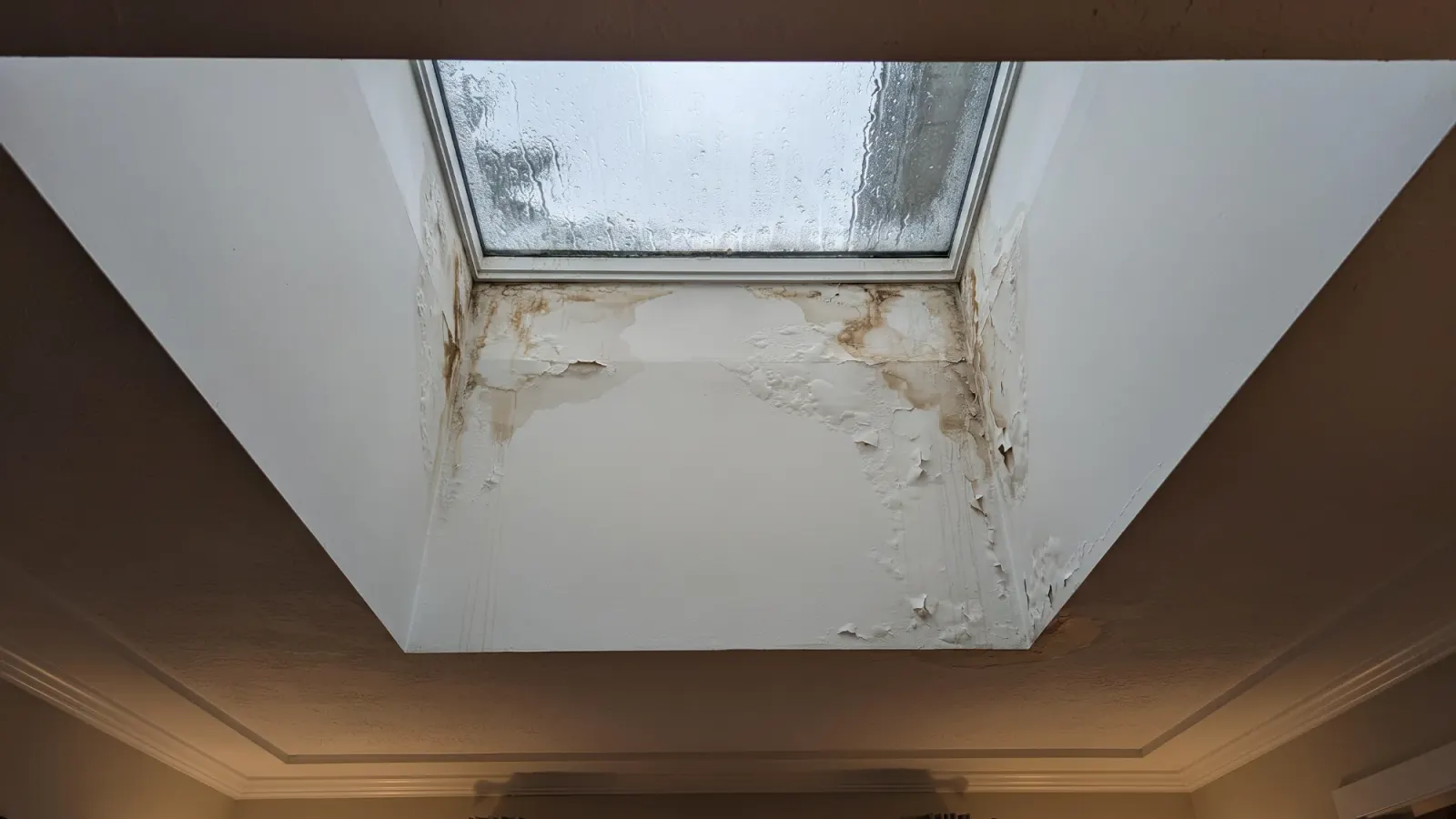
Our guide to reading a ceiling stain has more on telling a roof leak from condensation and plumbing.
A Skylight, Up Close
- The glass or dome
the part you look through, glass panes or a plastic dome.
- The frame and its seal
the seal between the glass and the frame keeps water out of the unit itself.
- The curb
the raised box the skylight sits on, built up from the roof deck to lift the skylight above the water running down the roof.
- The flashing
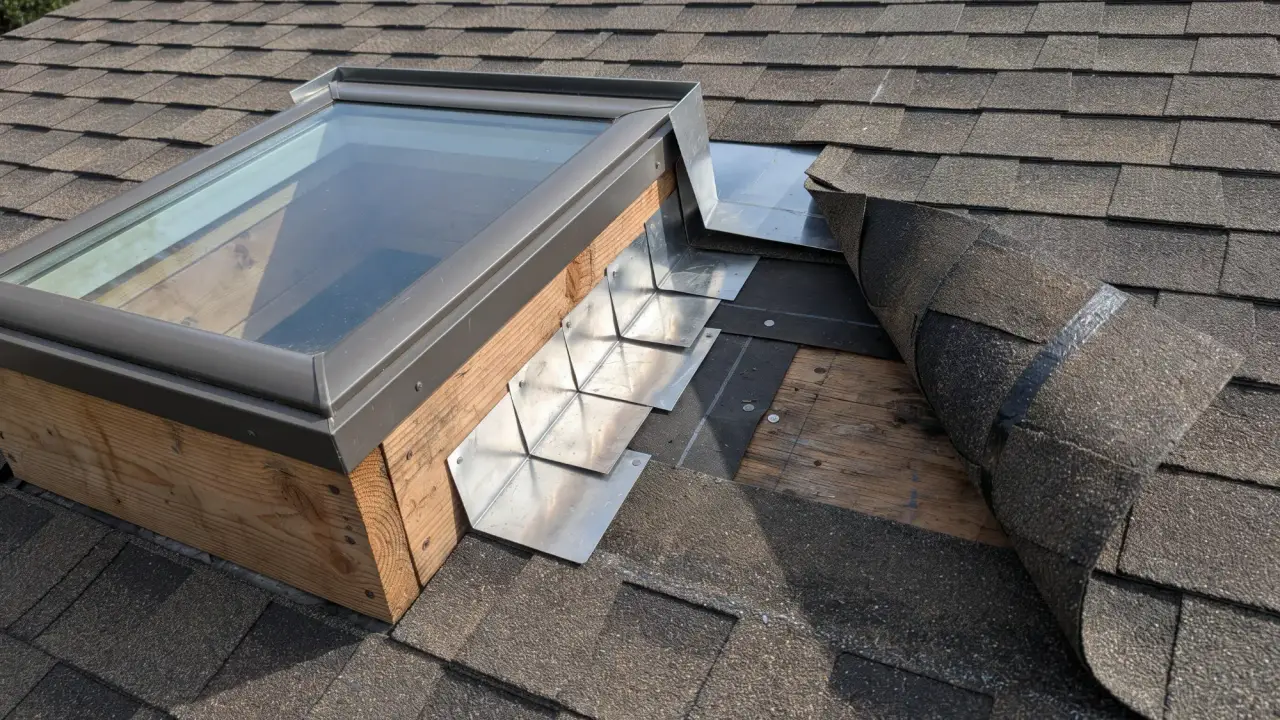
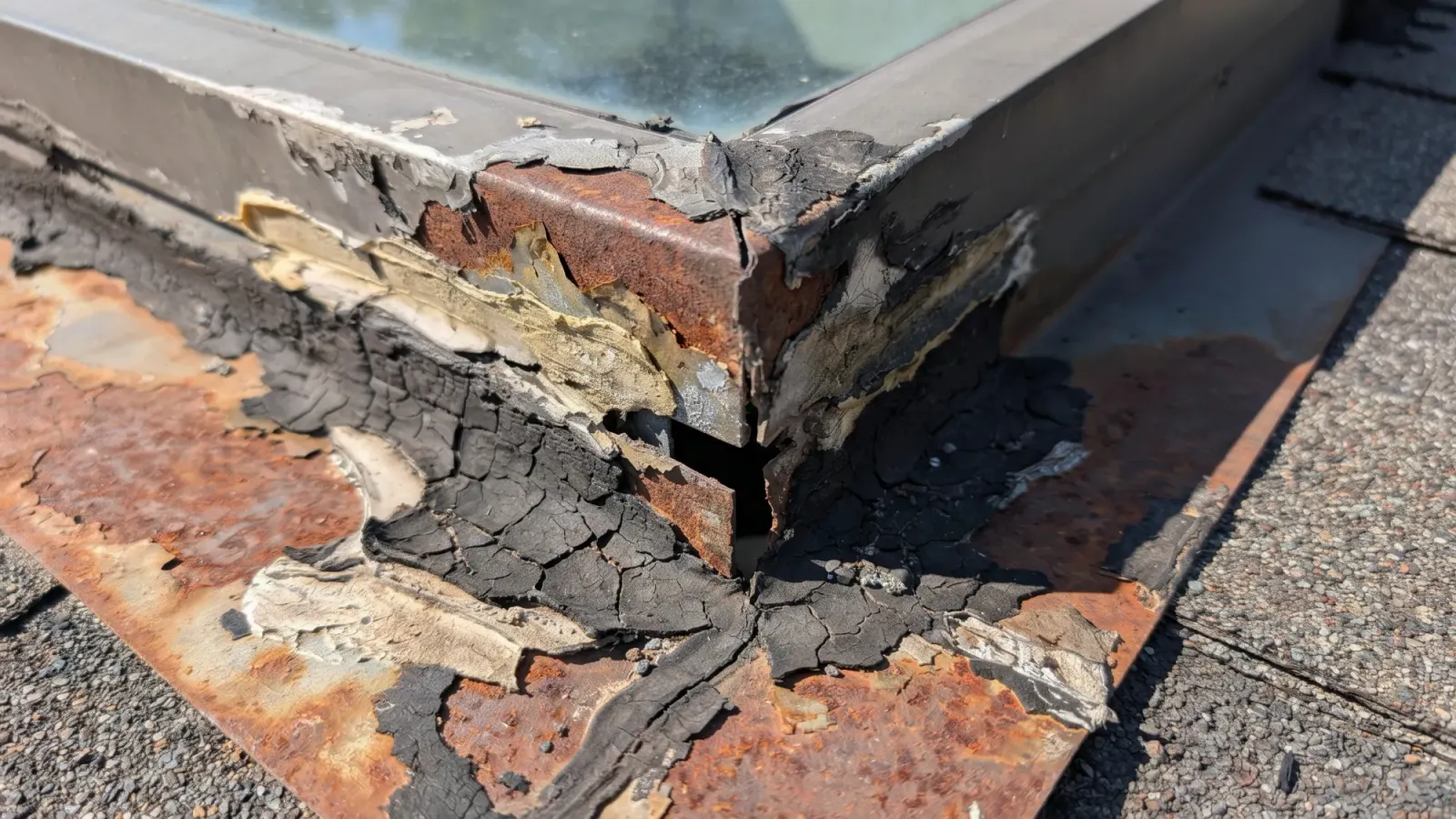
metal or membrane pieces that turn water around the curb. On a shingle roof that is step flashing up the sides, a head flashing on the uphill side and an apron at the bottom. On a flat roof the curb is wrapped in roofing membrane. On a tile roof the flashing sits under the tiles.
- The roofing around it
the shingles, tiles or membrane that lap over or under the flashing.
- The shaft
the opening through the ceiling below, where the stains usually show.
Where Skylight Leaks Usually Start
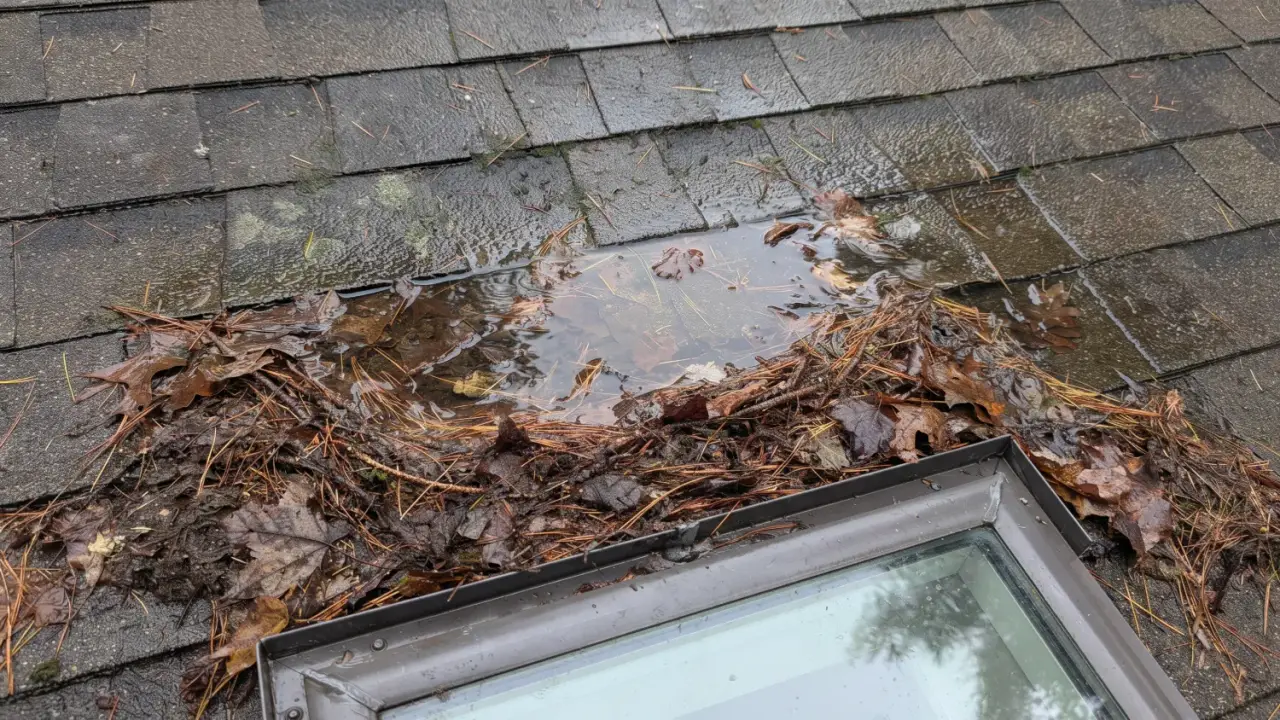
- The uphill side. Leaves and debris pile up against the head of the skylight, dam the water and push it under the flashing.
- The step flashing up the sides, where a piece has slipped, rusted or was never woven in with the shingles.
- Dried, cracked sealant that was holding the flashing in place instead of the flashing being lapped correctly.
- Worn roofing just above the skylight, where water gets under the shingles and runs down to the curb.
- A failed seal between the glass and the frame, which lets water into the unit itself.
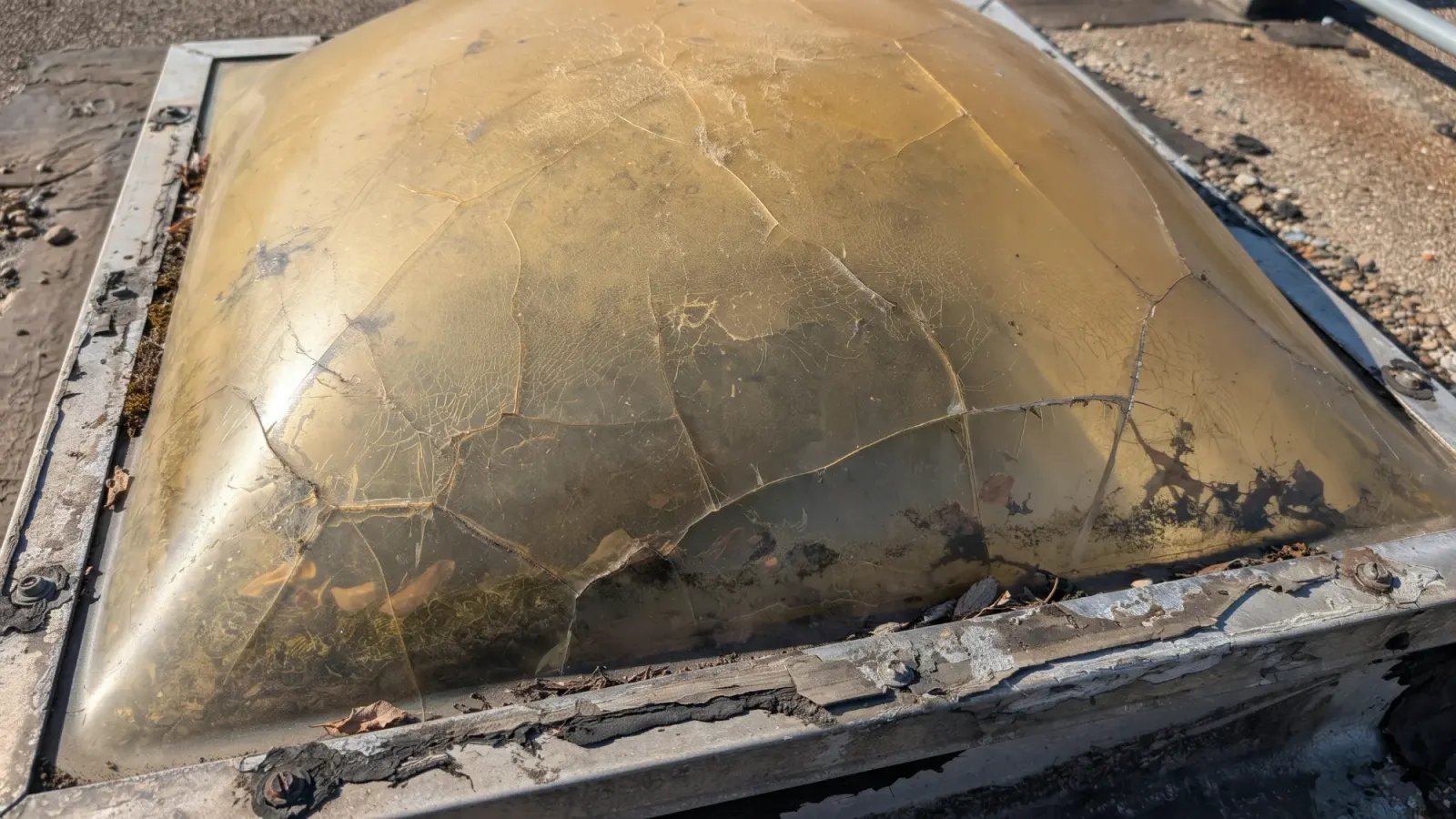
- A cracked dome or broken glass, from age, sun or something falling on it.
- A soft or rotted curb, after years of small leaks.
Reseal, Reflash or Replace? Side by Side
Reseal
- What it fixes
- A small gap in the sealant at the frame or a flashing joint
- Makes sense when
- The flashing and the roofing are sound and the gap is the only problem
- What to know
- Often a stopgap; caulk alone rarely holds where flashing has failed
Reflash
- What it fixes
- Flashing that has slipped, rusted, cracked or was installed wrong, and the roofing around the curb
- Makes sense when
- The skylight unit itself is sound
- What to know
- The most common real fix for a skylight leak; the roofing around the curb is opened and rebuilt
Replace the skylight
- What it fixes
- A unit with a cracked dome, broken glass, a failed seal or a rotted frame
- Makes sense when
- The leak or fogging is in the unit itself
- What to know
- A new skylight needs new flashing too; the best time is during a roof replacement
Which Sounds Like Your Skylight?
Which of these sounds most like your roof? Tap a card.
Stains in the upper corners of the shaft after rain
Usually points to
Water getting in at the head or the sides
Usually the fix
Reflash, and clear what dams water on the uphill side
A drip that started after a heavy storm, skylight looks fine
Usually points to
Flashing or roofing around the curb
Usually the fix
Reflash and repair the roofing around it
Old caulk smeared around the frame, leak keeps coming back
Usually points to
Sealant covering a flashing problem
Usually the fix
Reflash; take the old sealant off
Fog or moisture trapped between the panes
Usually points to
A failed seal in the unit
Usually the fix
Replace the skylight
A cracked, yellowed or brittle dome
Usually points to
The unit itself
Usually the fix
Replace the skylight
Drips only on cold mornings, no stains after rain
Usually points to
Condensation
Usually the fix
Ventilation and humidity in the room, not the roof
What Not to Do
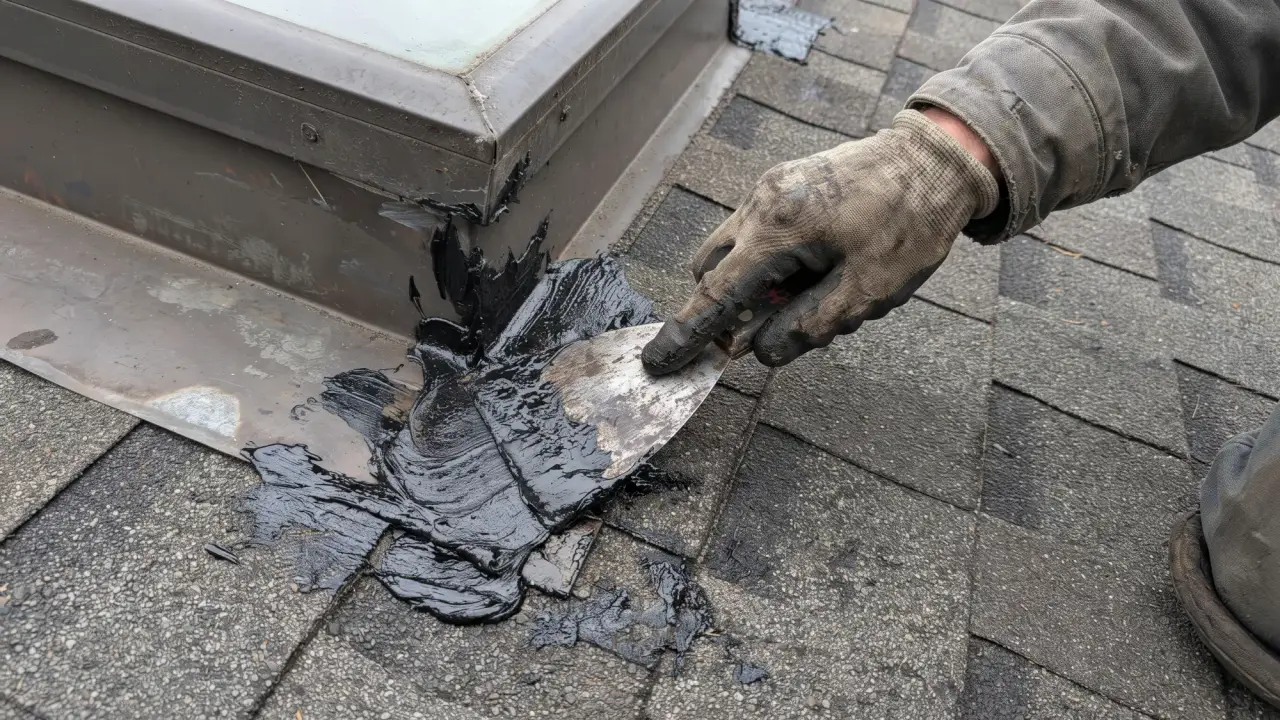
- Don’t smear roof cement around the frame
It rarely seals the real gap and makes the proper repair harder.
Don’t caulk over the flashing joints or block the small weep openings some skylights use to let water out.
- Don’t step on or lean on a skylight
Falls through skylights are a well-known roofing hazard.
- Don’t pressure wash the skylight or the roof around it
It drives water under the flashing.
Don’t wait for the next storm if the drywall in the shaft is soft. Catch the drip and call.
Our guide to the first hour of an active roof leak covers what to do while the water is still coming in.
How We Fix a Leaking Skylight
Book a free roof evaluation. A roofer looks at the roof, with RoofScan 360® drone footage and photos.
Look at the shaft first. Where the stains are inside tells us which side of the skylight to start on.
Work around and upslope of the skylight. The head, the sides, the apron, the curb and the roofing just above it, all checked and photographed.
Check the unit itself. The glass or dome, the frame and its seal, for cracks, fogging or rot.
Give you one next step in plain English, with a written scope and price before any work.
When the flashing or the roofing around the skylight has failed, the flashing is reset or rebuilt rather than covered with another layer of sealant, as a LeakRescue® repair, or a flat roof repair when the skylight sits on a flat roof. If the skylight itself has failed, we tell you so and show you in the photos.
When the whole roof is being replaced, every skylight is flashed new as part of the job, which makes a roof replacement the best time to deal with an old skylight. See our TotalShield® shingle roof replacement.
Frequently Asked Questions
Why is my skylight leaking?
Usually because the flashing around it has slipped, rusted or failed, or the roofing just above it is letting water in. Less often the seal between the glass and the frame has failed or the dome is cracked.
Can I just reseal a leaking skylight?
Only if the flashing and the roofing around it are sound and the gap is small. When the flashing has failed, caulk usually stops the drip for a while and then the leak comes back.
Should I repair or replace a leaking skylight?
If the skylight unit is sound and the leak is at the flashing, reflashing is the fix. If the glass is cracked, the dome is brittle or moisture is trapped between the panes, the skylight itself needs replacing.
Is it a leak or condensation?
A leak shows up during or after rain, usually as stains in the corners of the shaft. Condensation drips on cool mornings or after showers, even in dry weather, and fogs the inside of the glass.
Should I replace my skylight when I replace my roof?
It is the best time to decide. Every skylight is flashed new during a roof replacement, and an old skylight with a failing seal or a brittle dome is easiest to deal with while the roofing around it is off.
Do you repair skylight leaks?
Yes. We trace the leak, repair or rebuild the flashing and the roofing around the skylight, and tell you plainly if the skylight itself has failed, with photos and a written scope and price before any work.
Skylight Leaking?
Find out where the water is really getting in. Book a free roof evaluation: a roofer checks the skylight, the flashing and the roofing around it, and gives you a plain-English answer and a written scope and price before any work. Or call (310) 340-1643.
