

How to Spot Failing Chimney Flashing: A Close-Up Look at Where Chimney Leaks Start
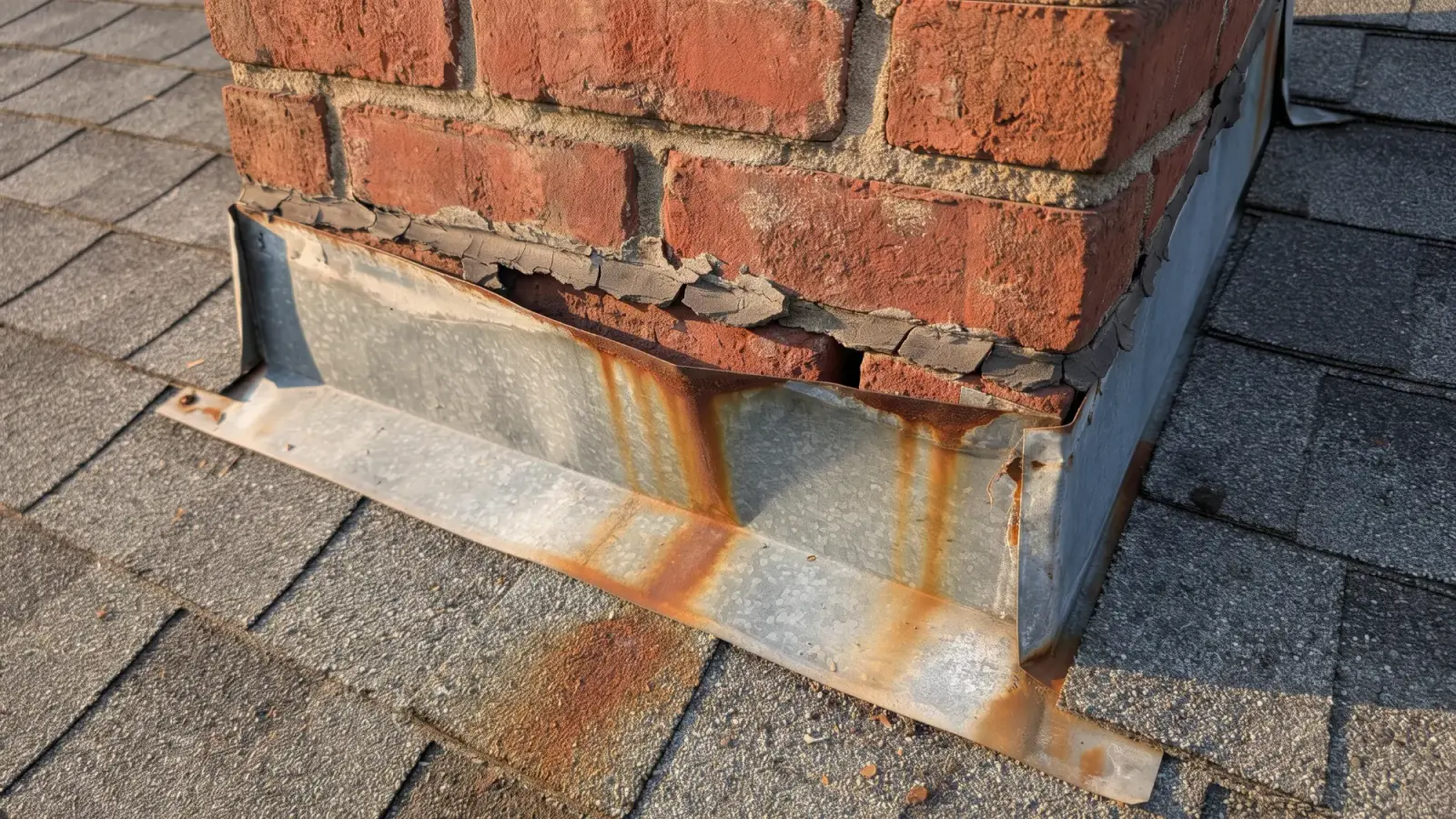
Chimney flashing is the metal that seals the gap where your roof meets the chimney, and it is one of the most common places a roof leaks. The good news: when it fails, the fix is usually a small repair around the chimney, not a new roof.
This is a close-up demo. We walk around the chimney piece by piece, show you what each part of the flashing does and what it looks like when it starts to fail, and help you tell a flashing leak from a problem with the chimney itself.
The Parts of Chimney Flashing
A chimney isn’t sealed with one piece of metal. It takes several, each doing one job, and they have to overlap in the right order so water always runs over the next piece down, never behind it.
- Base flashing (the apron). The piece across the downhill face of the chimney, lying over the shingles below it.
- Step flashing. Small L-shaped pieces up each side, woven in with the shingles one course at a time, so every shingle laps over its own piece of metal.
- Counter-flashing. The metal on the brick that laps down over the step and base flashing. It is usually set into a mortar joint cut into the brick, then sealed along the top.
- The back pan, or a cricket. On the uphill side, where water runs straight into the chimney. A cricket (also called a saddle) is a small peaked roof behind the chimney that splits the water around it; building codes usually call for one behind wider chimneys.
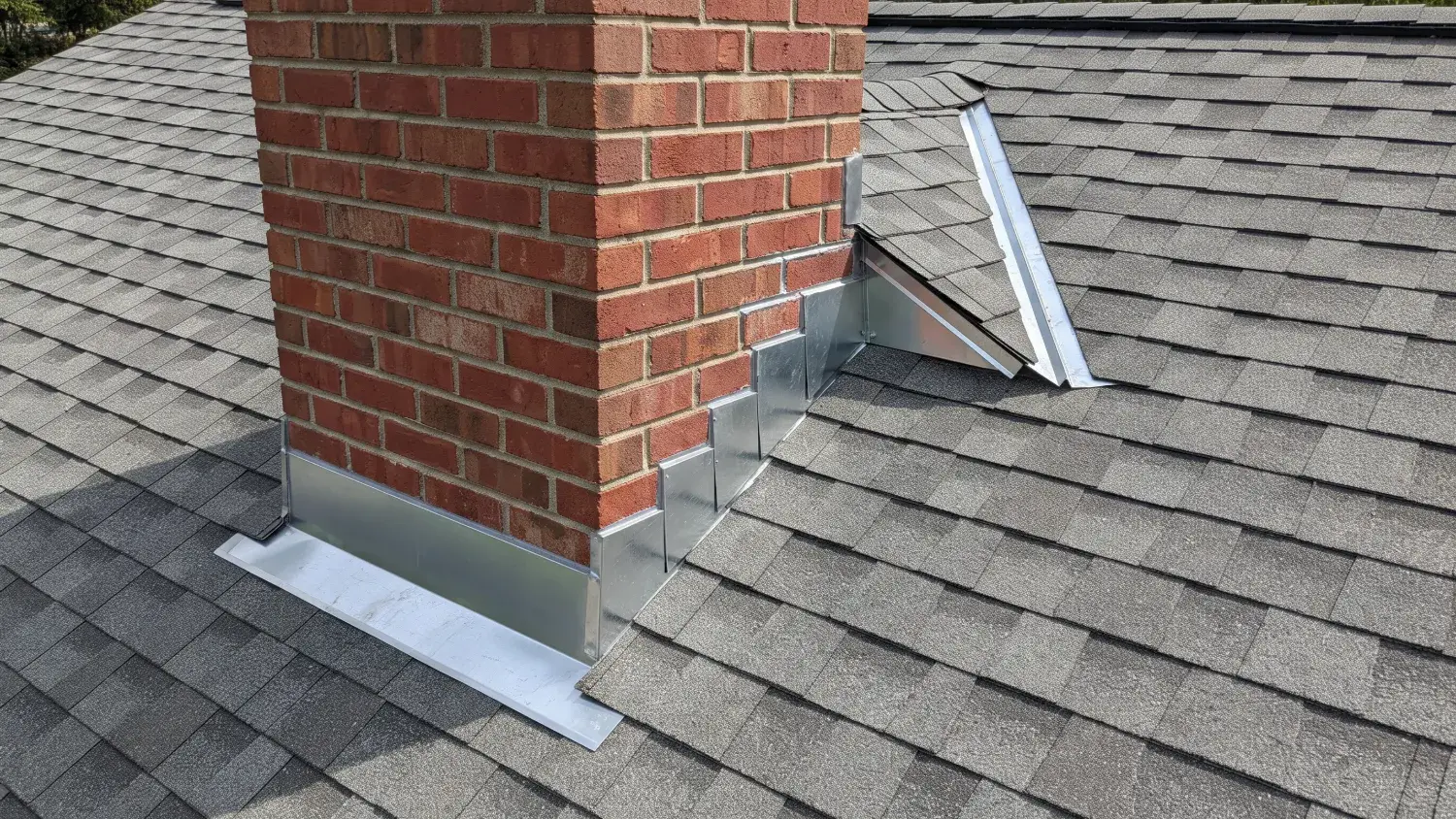
If any one of these is missing, loose or in the wrong order, water finds the gap. That is why we look at all four, not just the piece with the stain under it.
Close Up: Seven Signs Chimney Flashing Is Failing
Most of these can be seen from the ground with binoculars or your phone’s zoom. Please don’t climb onto the roof to look: the area around a chimney is steep, cluttered and easy to slip on.
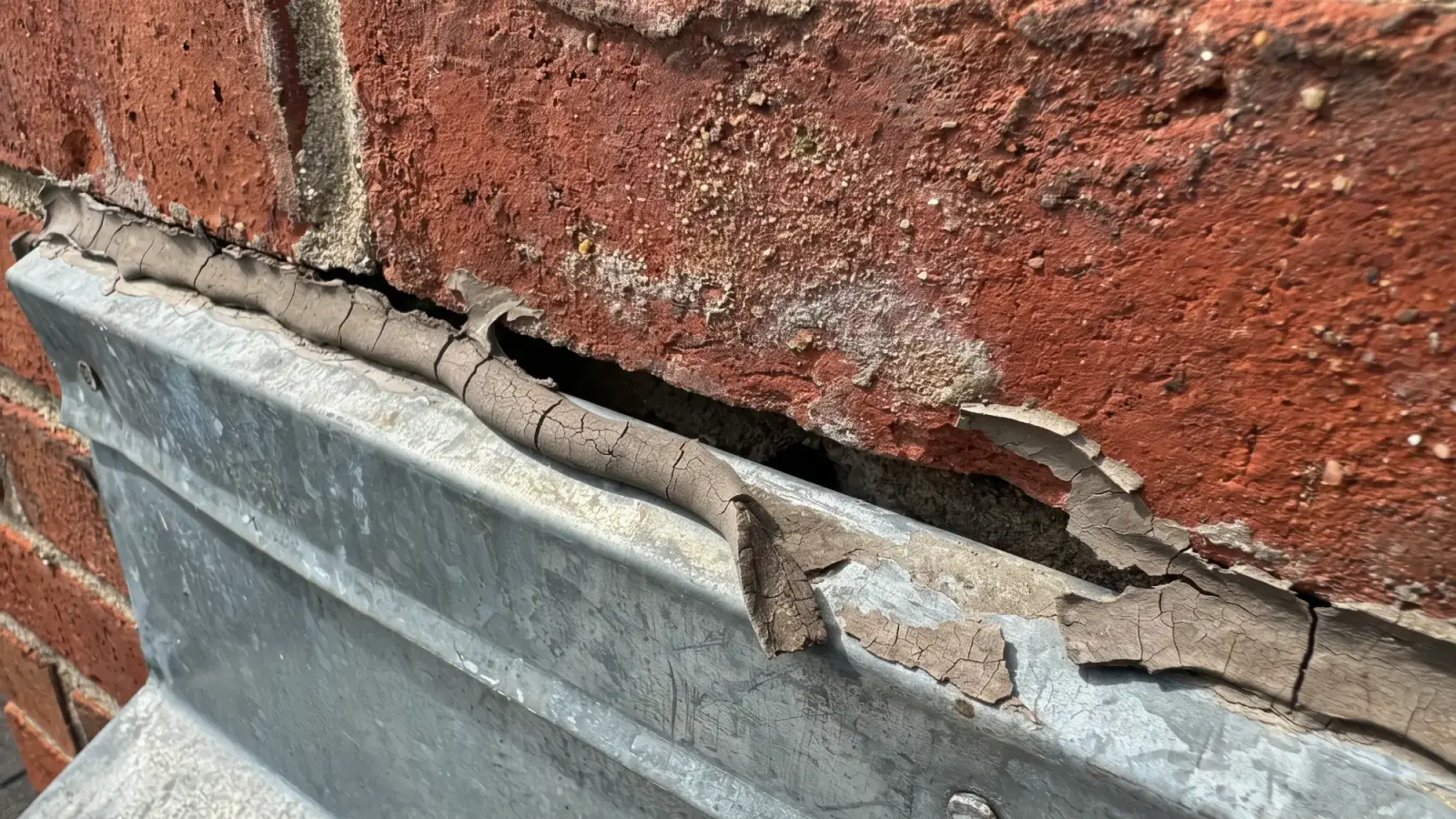
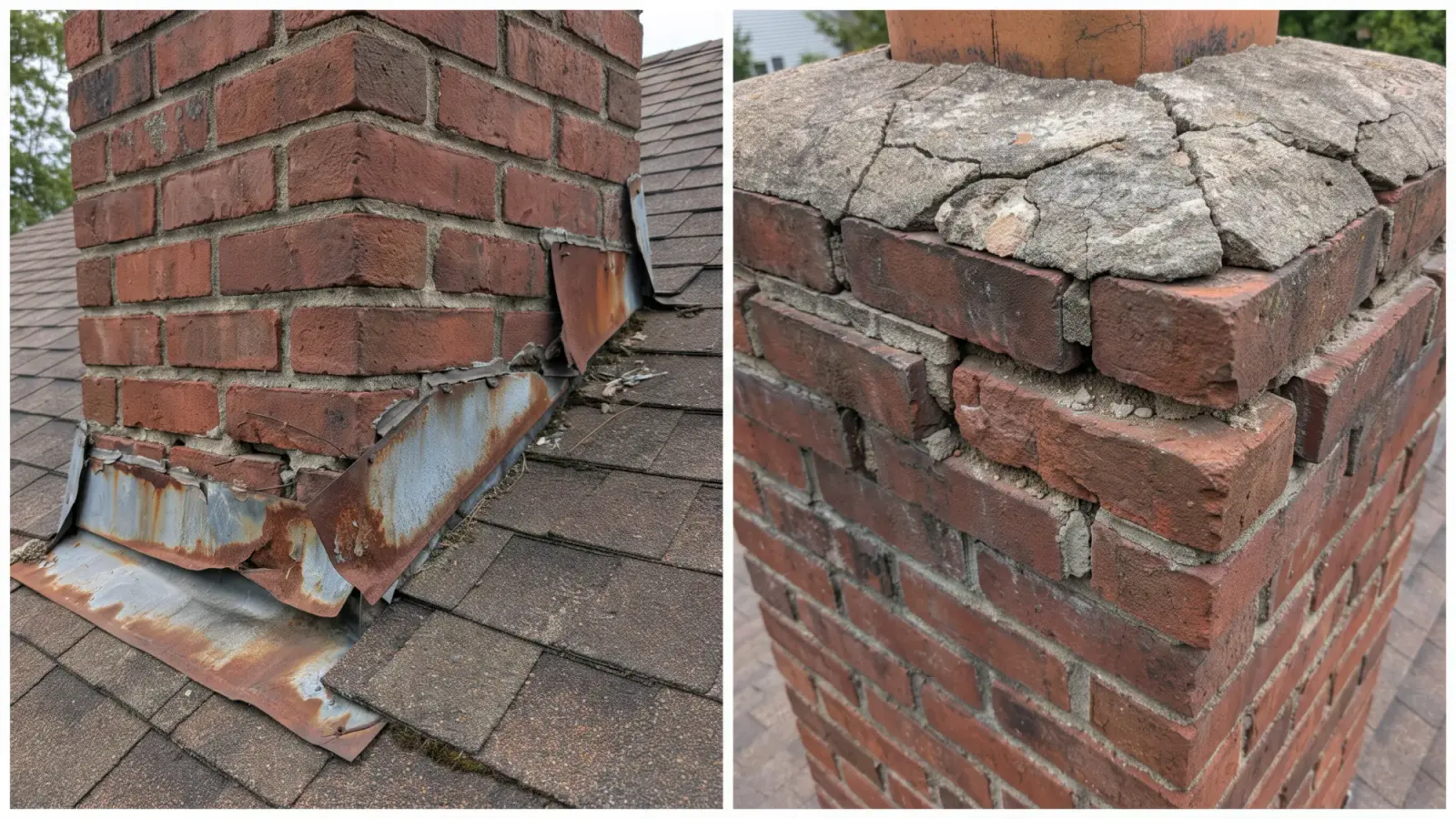
- Cracked or pulled-away sealant. The sealant along the top of the counter-flashing has dried, cracked or come away from the brick, leaving a dark line where water can run behind the metal.
- Counter-flashing pulled out of the mortar joint. The top edge of the metal has lifted away from the brick, or was never set into the joint at all and is only stuck on the face of the chimney.
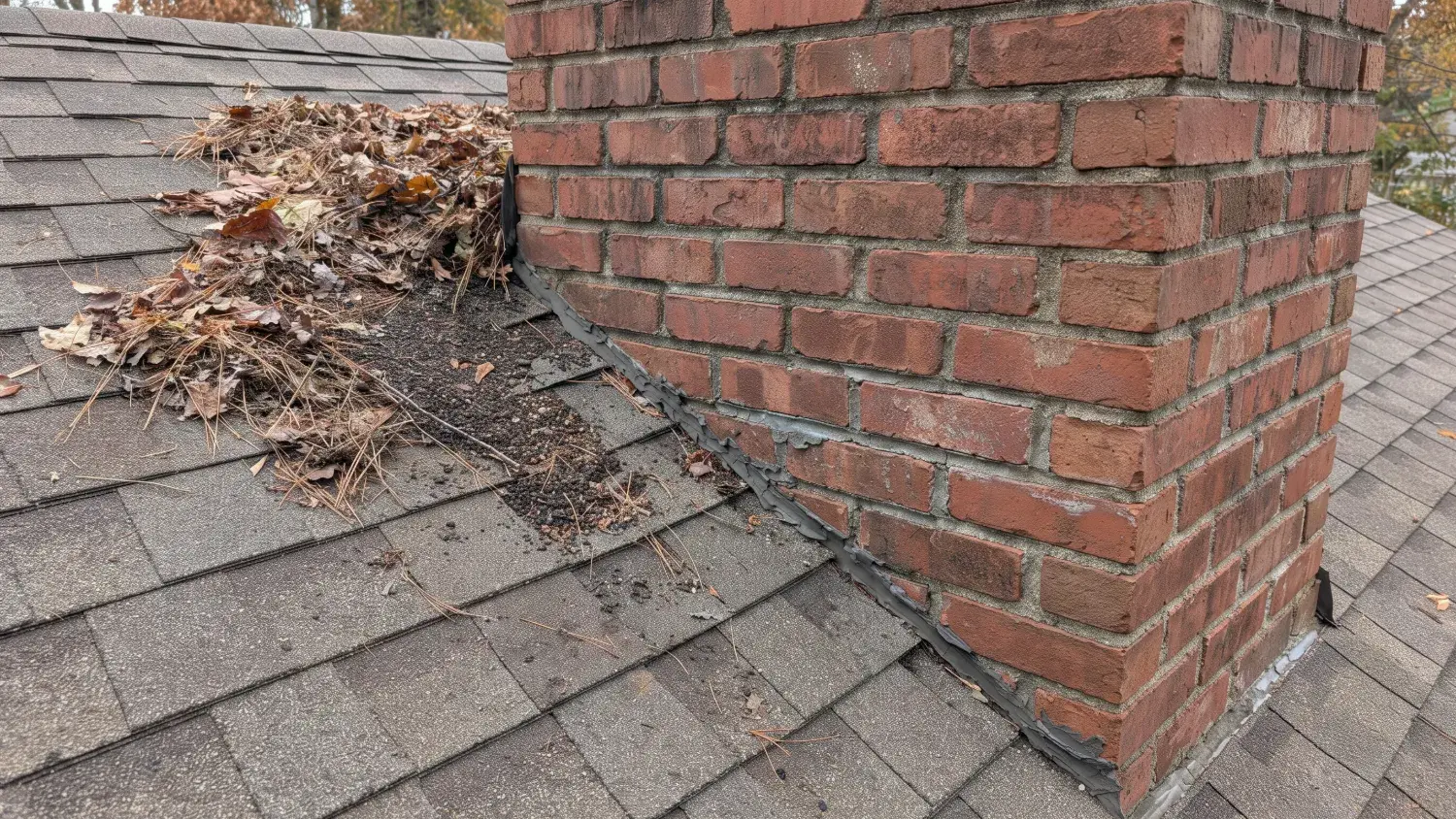
- Layers of roof cement smeared over everything. Thick black patches over the metal and the shingles are the mark of past quick fixes. They usually mean the flashing underneath failed before, and may be failing again.
- Rust. Rust streaks running down the brick or onto the shingles, or rust holes in the metal itself, mean the flashing is wearing through.
- Bent, lifted or loose metal. A corner that has lifted in the wind, or metal that moves, leaves an opening on every storm.
- No step flashing. Shingles butted against the brick with only a bead of caulk between them, and no metal weaving up the side.
- Debris piled behind the chimney. Leaves and grit collecting on the uphill side mean water pools there too. A missing or too-small cricket is often the reason.
The Signs Inside the House
Flashing leaks often show up indoors before anyone spots them on the roof. Look for:
- A stain on the ceiling or wall right next to the chimney or fireplace, often after rain driven by wind
- Peeling paint or bubbling drywall on the chimney wall
- Dark, damp wood or wet insulation around the chimney in the attic
- A musty smell in the room with the fireplace
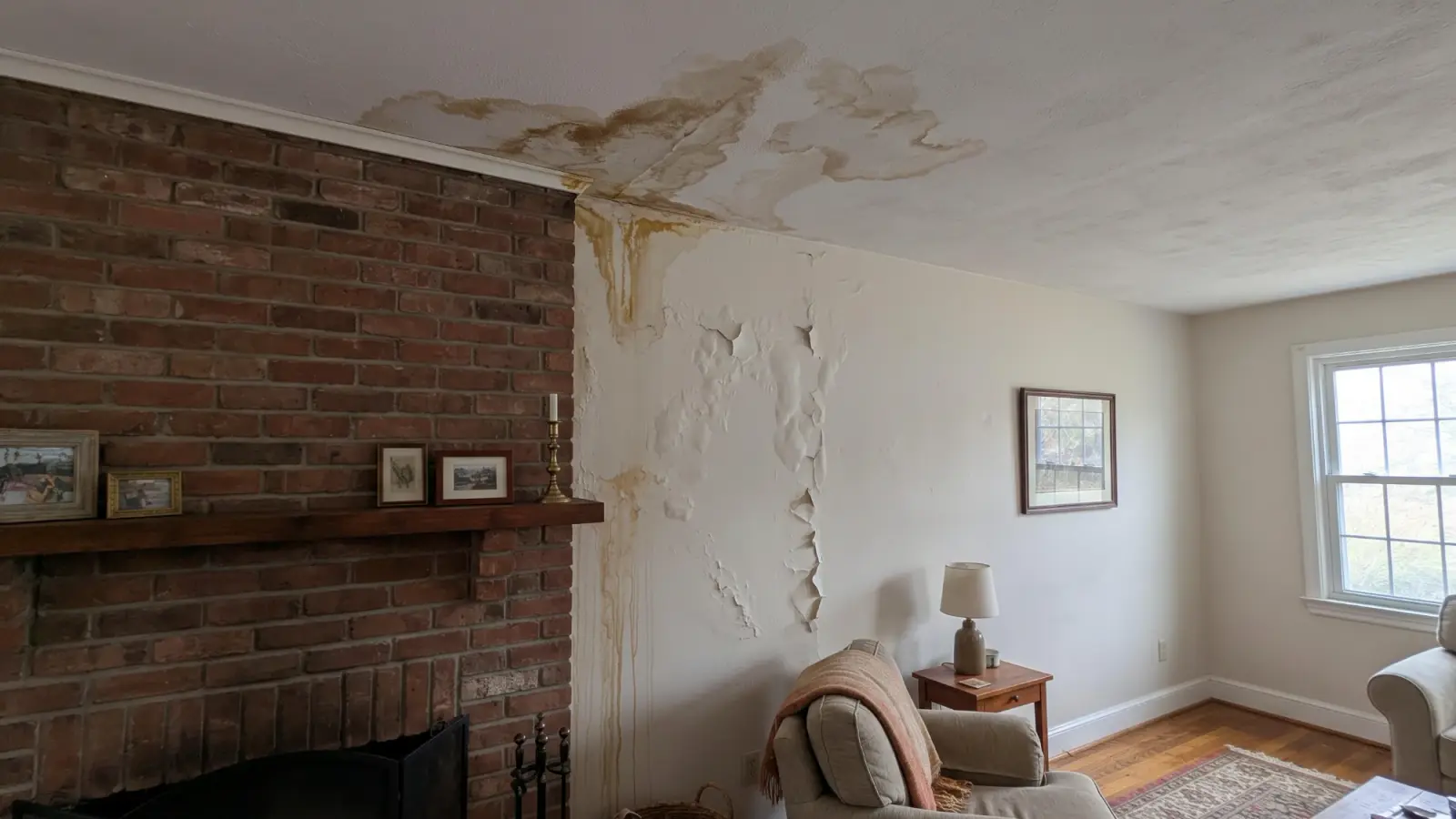
If you can get into the attic safely, a flashlight on the framing around the chimney tells you a lot. Our attic walkthrough shows what to look for, and our guide to reading a ceiling stain helps rule out condensation and plumbing.
Flashing or the Chimney Itself?
Not every chimney leak is the flashing. Water can also come through the top of the chimney or through the brick. Here is how the usual sources compare.
Chimney flashing
- What you see
- Stains on the ceiling or wall beside the chimney after rain; cracked sealant, loose, rusted or missing metal where the chimney meets the roof
- Who fixes it
- A roofer
The crown or cap at the top
- What you see
- Water in the firebox or dripping down the inside of the chimney; a cracked concrete top or a missing cap
- Who fixes it
- A chimney sweep or a mason
The brick and mortar
- What you see
- Crumbling mortar joints, damp brick, white powdery stains on the brick
- Who fixes it
- A mason
The roof around the chimney
- What you see
- Worn, cracked or missing shingles or broken tiles near the chimney
- Who fixes it
- A roofer
Often it is more than one. Counter-flashing is set into the mortar, so crumbling joints and failing flashing tend to go together. We will tell you what we find on the roof side and say plainly when the brick or the crown needs a mason too.
Why Flashing Repair Is Usually a Small Job
Chimney flashing covers a few feet of roof. Fixing it means working on that small area, not the whole roof, which is why it is one of the most common repairs we do.
- Open up the area. The shingles around the chimney are lifted carefully so the old flashing can come out.
- Take out what failed. Rusted, bent or missing pieces, and any old roof cement, come off.
- Install new flashing in the right order. Base flashing first, step flashing woven in with the shingles up each side, then the back pan or cricket on the uphill side.
- Set the counter-flashing into the brick. A joint is cut into the mortar, the counter-flashing is set into it and the top is sealed.
- Close it up and photograph it. The shingles go back down and are sealed, and you get photos of the problem and the finished repair.
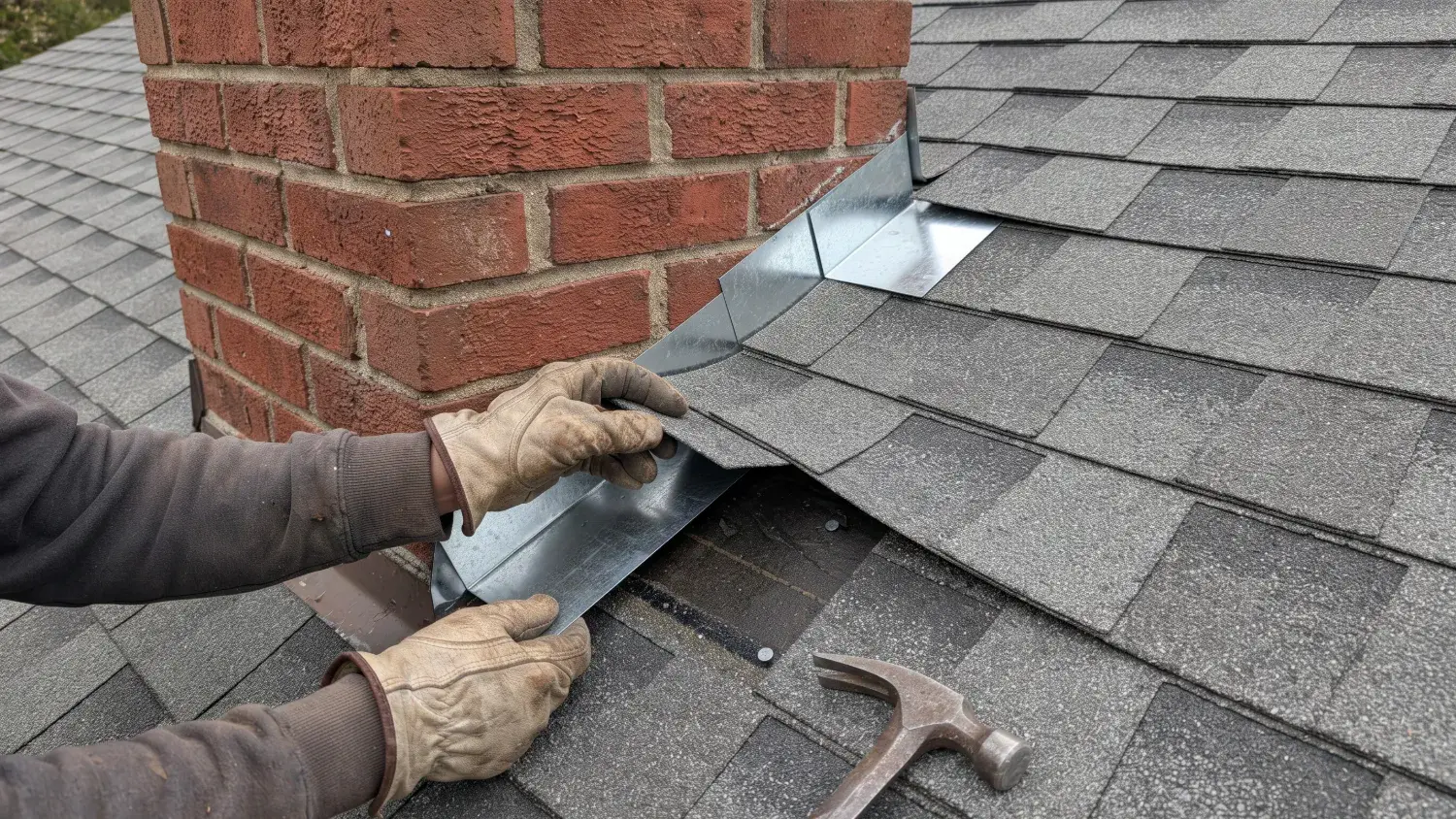
Loose counter-flashing that is still sound can sometimes be reset rather than replaced. What we don’t do is cover failed flashing with another layer of sealant: as our shingle roof repair page says, failed flashing is reset or replaced.
Why Caulk Alone Doesn’t Last
Sealant and roof cement are the first thing most people reach for, and the first thing to fail. They dry out in the sun, crack as the chimney and roof move at different rates, and pull away from the brick. A bead of caulk can stop a drip for a while, but it only covers the gap that metal in the right order is supposed to close.
If water is coming in now, a temporary fix is reasonable until a roofer can get there. Our article on how to stop a roof leak covers what you can safely do from inside, and for active leaks we take emergency roof repair calls after hours and on weekends.
When Flashing Points to a Bigger Job
Sometimes the flashing is fine and the roof around it isn’t. If the shingles near the chimney are curling, cracking or bare of granules across the whole roof, new flashing on an old roof is a short-term answer. Our articles on curling, cracked and missing shingles and granule loss explain how to tell.
In that case the chimney is re-flashed as part of a shingle roof replacement: our TotalShield® Shingle System takes the roof down to the deck and builds a complete new system, flashings included, and adds a cricket behind the chimney where one is needed.
How We Check Chimney Flashing
At QRS, a roofer looks at your roof before anyone tries to sell you one. Around a chimney, that means:
- Drone footage and photos with RoofScan 360®, including the uphill side behind the chimney, which you can’t see from the street.
- A close look at every piece of flashing: base, step, counter-flashing and the back pan or cricket.
- A check of the shingles or tiles around the chimney, and of the stain inside if there is one, to match the two up.
- One clear next step: repair, monitor, maintain or replace, explained in plain English.
If it is a repair, our roof repair service, LeakRescue®, fixes what failed and shows you photos of the problem and the finished repair. You get a written scope and price before any work starts, and for homes the roof evaluation is free.
Frequently Asked Questions
What is chimney flashing?
It is the metal that seals the joint between your roof and the chimney: base flashing across the front, step flashing up the sides, counter-flashing on the brick lapping over them, and a back pan or cricket on the uphill side.
How do I know if my chimney flashing is leaking?
Look for a stain on the ceiling or wall beside the chimney after rain, and from the ground, for cracked sealant, counter-flashing pulled away from the brick, rust, loose metal or thick patches of roof cement. A roofer can confirm it from the roof and the attic.
Can chimney flashing be repaired, or does it have to be replaced?
It depends on the metal. Counter-flashing that has pulled loose but is still sound can sometimes be reset into the mortar joint. Rusted, bent or missing pieces are replaced, and the shingles around the chimney are lifted so the new flashing goes in the right order.
Is roof cement or caulk enough to fix chimney flashing?
Only as a stopgap. Sealant dries out, cracks and pulls away from the brick, so a leak sealed that way tends to come back. Failed flashing should be reset or replaced.
Do I need a new roof to fix a chimney leak?
Usually not. Chimney flashing is a small area, and re-flashing it is a contained repair. A new roof is only the answer when the roof around the chimney is worn out too.
Who fixes a chimney leak, a roofer or a mason?
A roofer fixes the flashing and the roof around the chimney. Cracked crowns, missing caps and crumbling brick or mortar are a chimney sweep’s or a mason’s job. We will tell you which one you need.
Seeing Signs Around Your Chimney?
A small flashing problem is a small repair, if it is caught before the wood around it gets wet. Book a free roof evaluation and a roofer will check every piece of flashing around your chimney, show you the photos and give you a written scope and price before any work. Or call (310) 340-1643. If water is coming in now, it is an emergency roof repair call.
Part of our asphalt shingle roof guide.
