
What Voids a Commercial Roof Warranty? What Could Cancel Yours
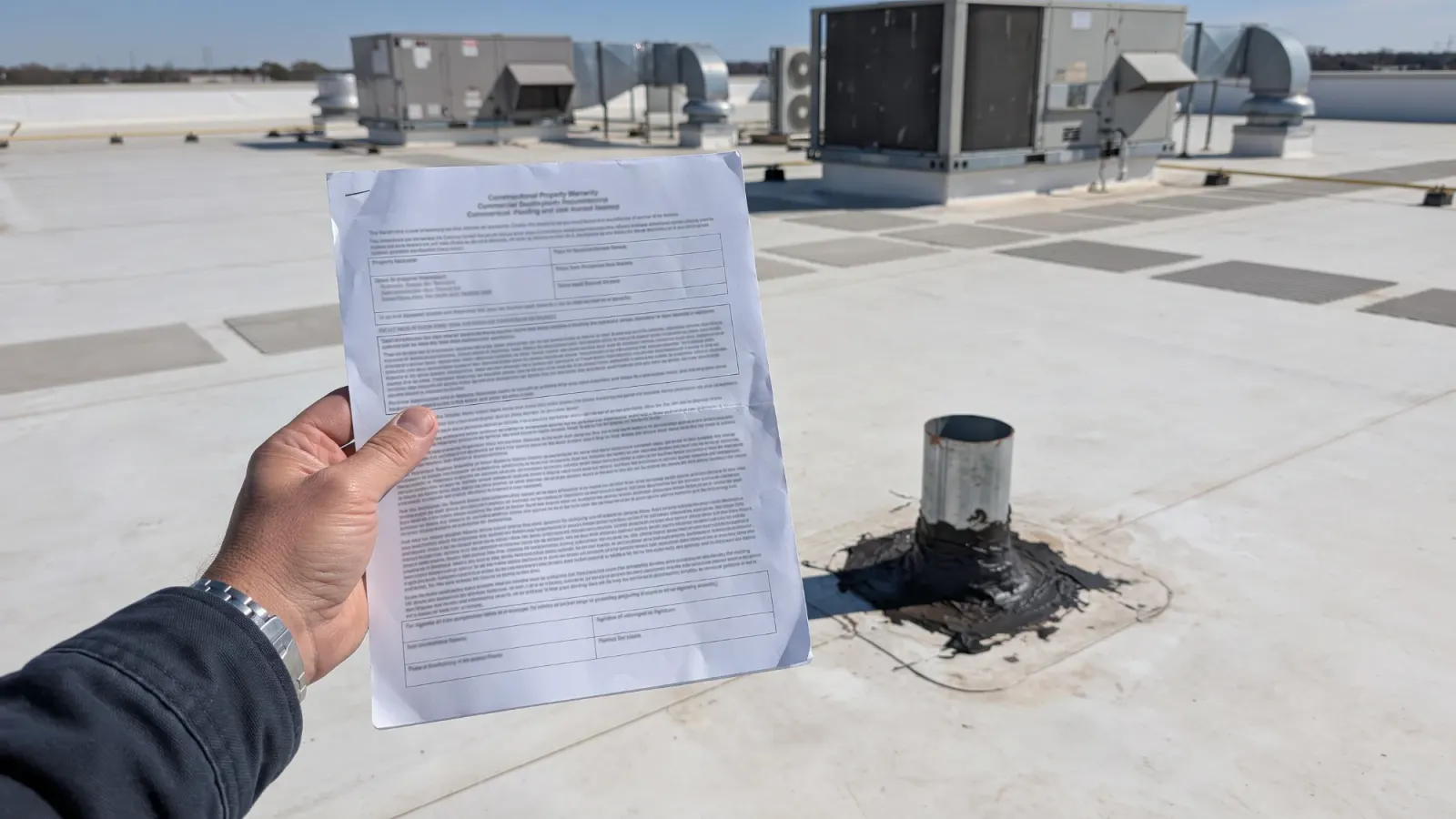
A commercial roof warranty can be lost long before the roof wears out. It rarely happens all at once: an HVAC contractor cuts a new opening, a handyman patches a leak with whatever was on the truck, a maintenance visit gets skipped, a leak goes unreported. Each one can give the warranty holder a reason to deny the next claim.
Here is what usually backs a commercial roof, the common ways owners put a warranty at risk, the difference between a voided warranty and an excluded claim, and the simple habits that keep yours valid. Every warranty document is different, so treat this as a guide to what to look for in yours.
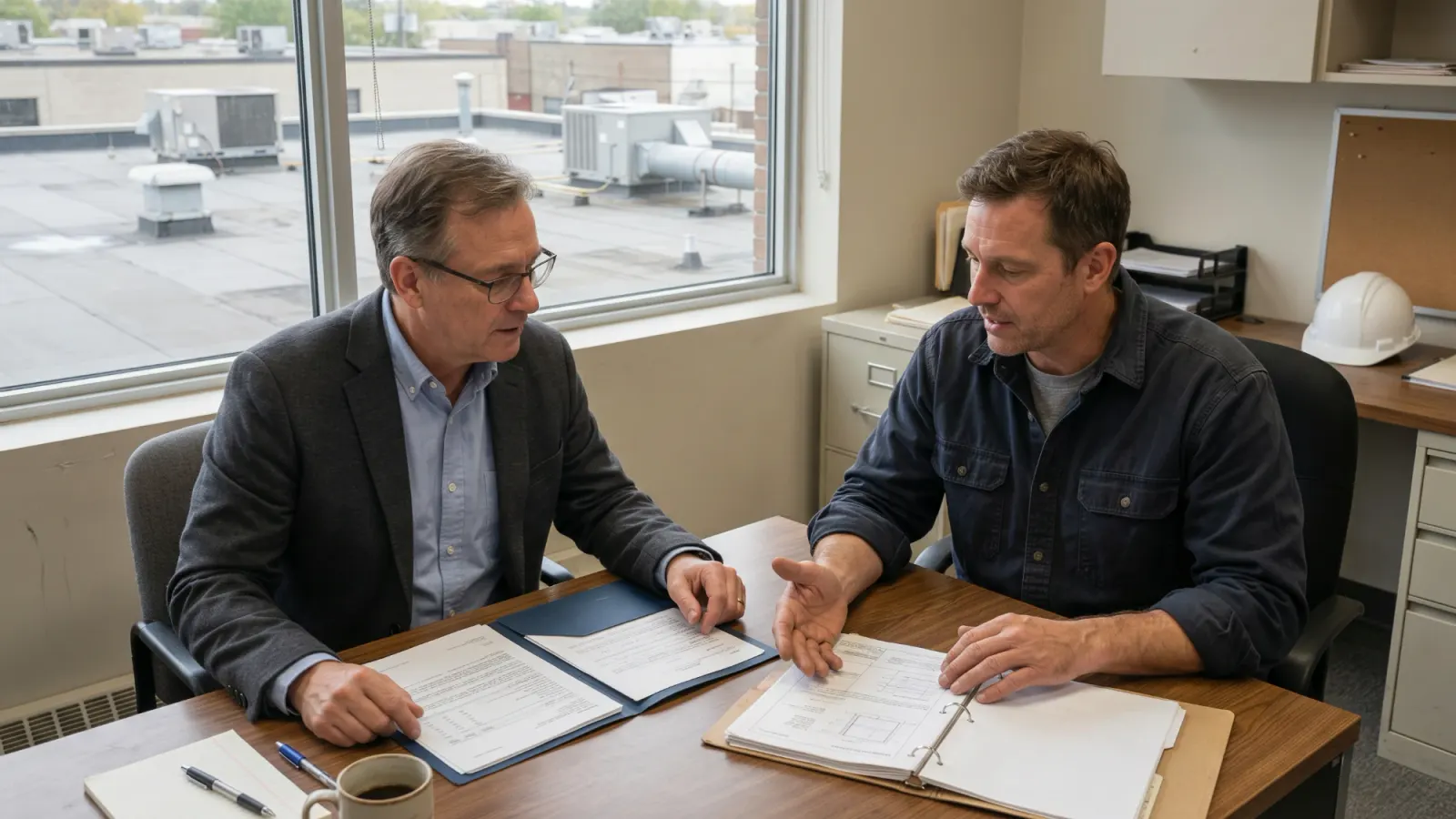
Two Warranties on One Roof
Most new commercial roofs come with two kinds of coverage, and they protect against different things.
Who backs it
- Manufacturer’s warranty
- The company that made the roofing system
- Workmanship warranty
- The roofing contractor who installed it
What it is about
- Manufacturer’s warranty
- The materials, and on some warranties the whole system
- Workmanship warranty
- How the roof was installed
What it usually depends on
- Manufacturer’s warranty
- An approved installation, registration, maintenance and following the claim process
- Workmanship warranty
- The roof being left to the installer, or to roofers who don’t undo the work
Where to look
- Manufacturer’s warranty
- The warranty document from the manufacturer
- Workmanship warranty
- The contractor’s written warranty and your contract
Our guide to roof warranties explains the two in more depth.
Common Ways a Commercial Roof Warranty Is Put at Risk
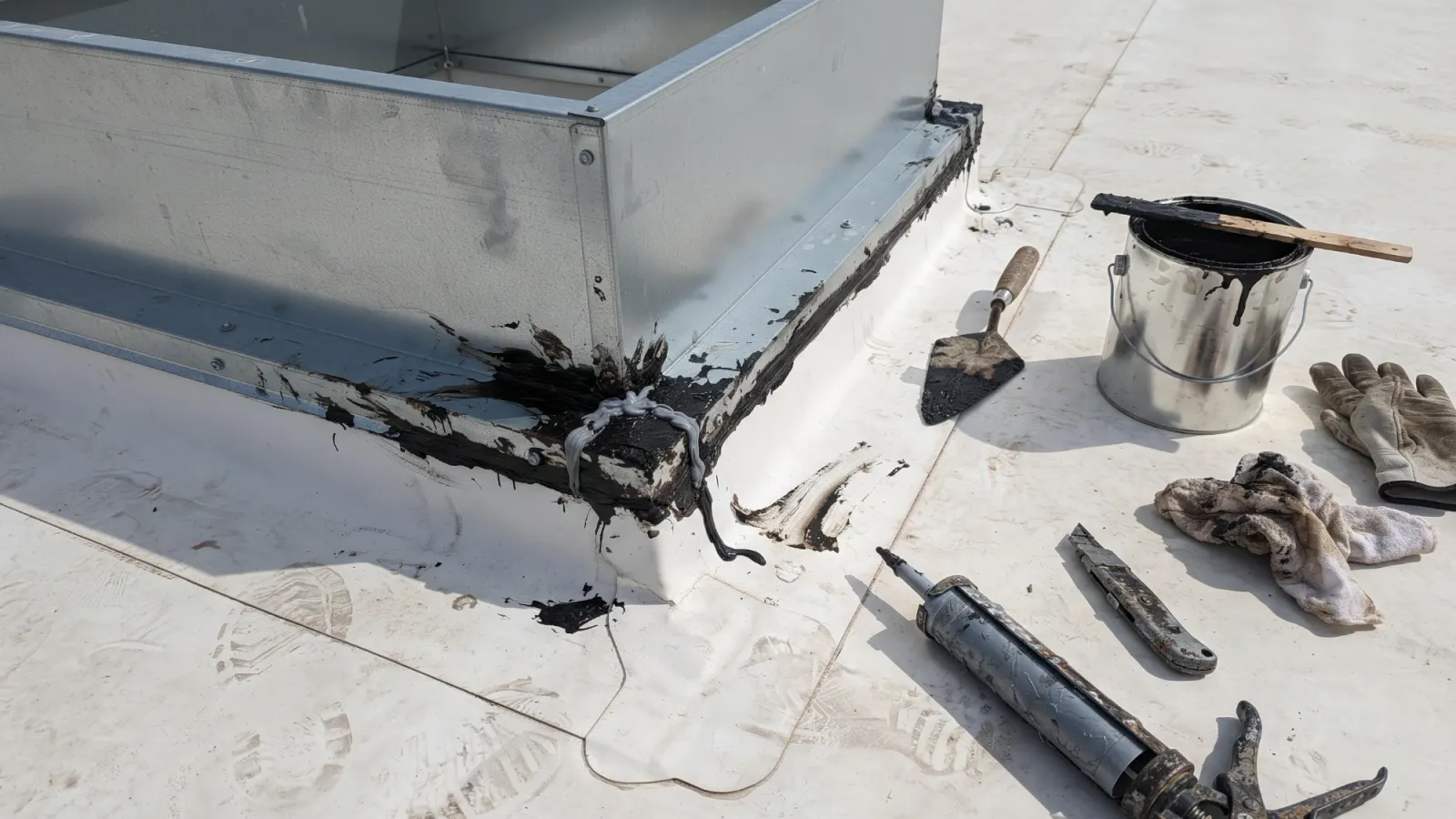
- Repairs by someone who isn’t authorized
Many warranties require repairs to be made by the installer or another approved roofer, with compatible materials.
- Other trades cutting into the roof
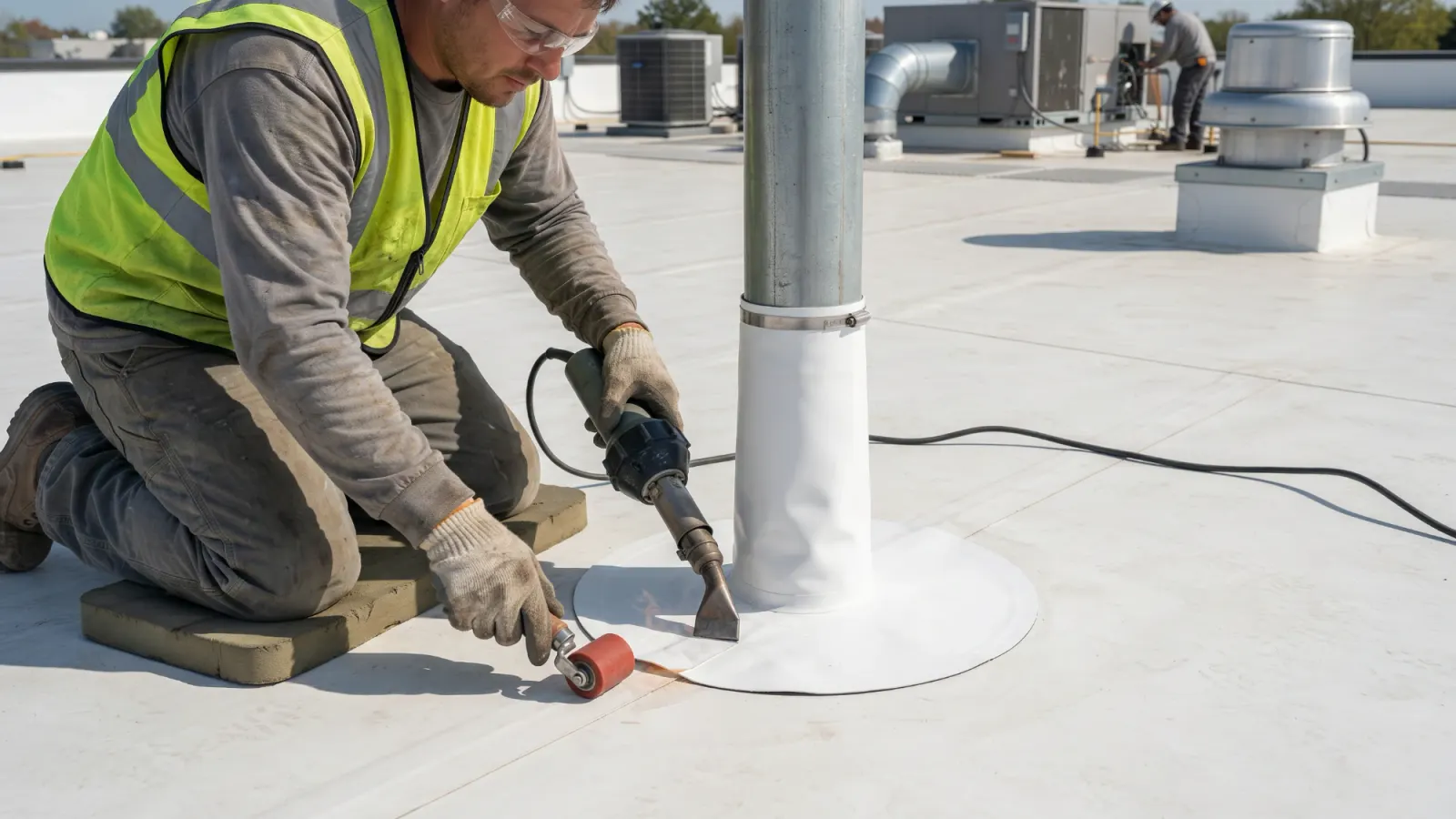
A new rooftop unit, vent, solar mount, sign or satellite dish installed without a roofer flashing it in.
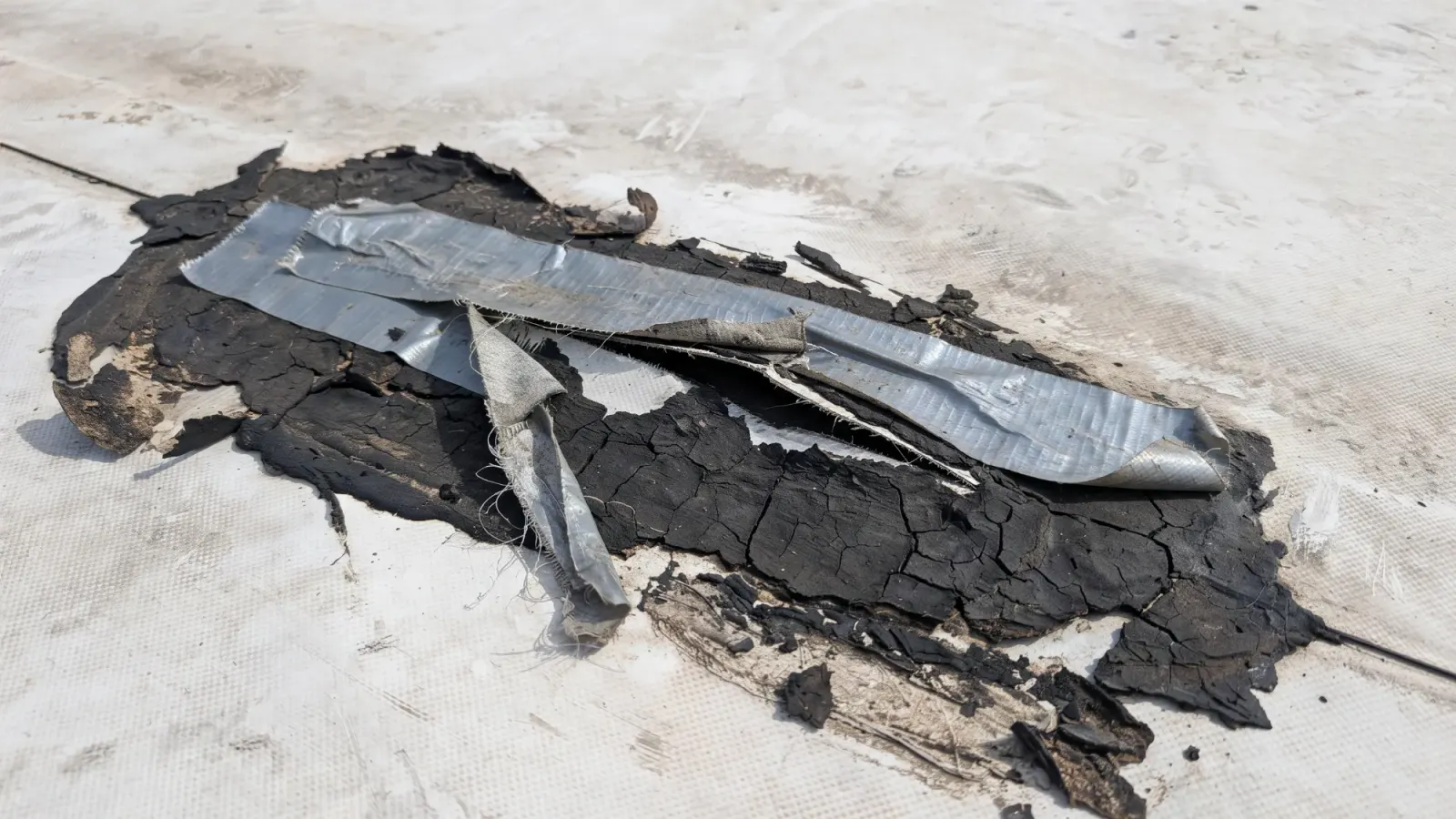
- The wrong materials
Roof cement, tape or a coating that isn’t compatible with the membrane, or isn’t approved by its manufacturer.
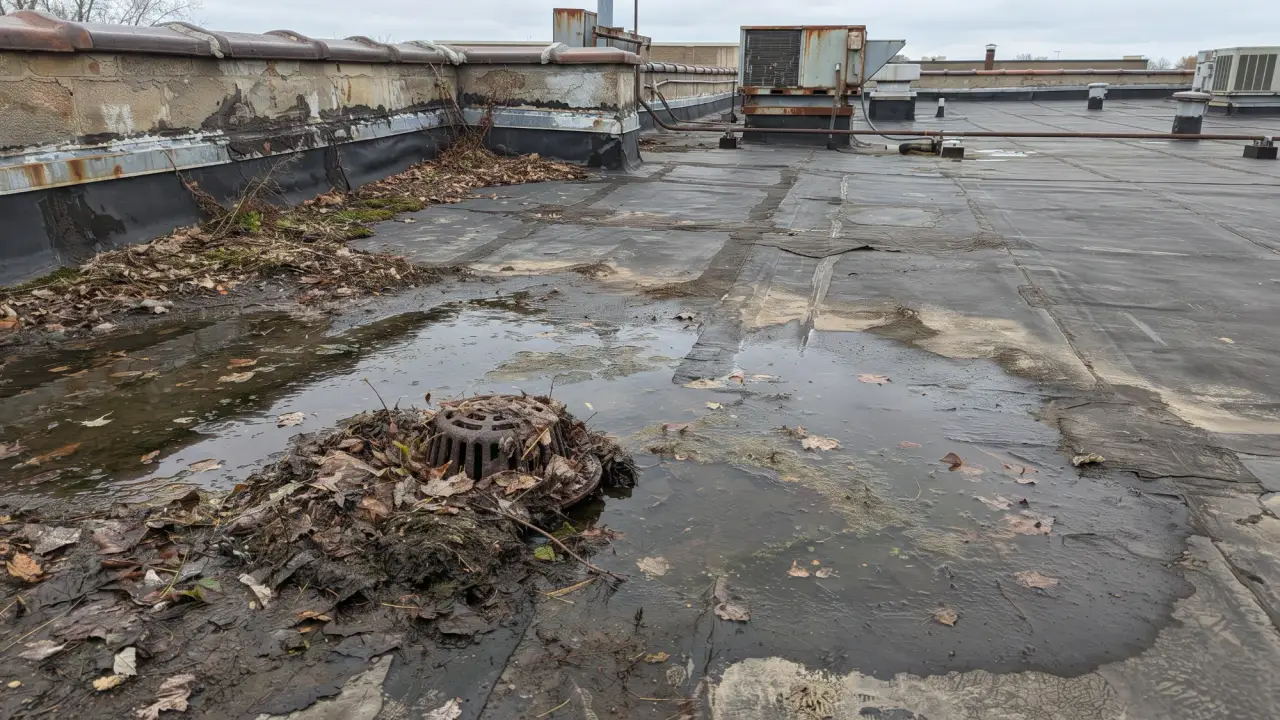
- Missed maintenance
Many warranties expect the owner to keep the roof maintained: drains clear, debris off, small problems fixed, with records to prove it.
- Late or missing leak reports
Most warranties set a time and a way to report a leak. Waiting, or letting someone else fix it first, can cost the claim.
- Damage from use
Foot traffic, dropped tools, equipment dragged across the roof, or vehicles and storage on it.
- Changes to the building
A new use, new rooftop equipment or a structural change the warranty didn’t anticipate.
- Paperwork left undone
A warranty that was never registered, fees that were never paid, or a sale of the building without following the transfer steps.
Voided or Just Not Covered?
Two different things can happen to a claim. A warranty can be voided, so nothing is covered anymore, or a particular claim can be excluded, so that damage isn’t covered while the rest of the warranty still stands.
Which of these sounds most like your roof? Tap a card.
Another trade cut a new opening and sealed it themselves
What it can mean
Leaks there may not be covered, and on some warranties the whole warranty is at risk
What to do
Have a roofer flash it properly and document it
A handyman patched a leak with roof cement
What it can mean
The repair, and leaks around it, may not be covered
What to do
Have the repair redone properly by an approved roofer
No maintenance records for years
What it can mean
A claim can be denied for lack of maintenance
What to do
Start a maintenance schedule with photo reports now
A storm beyond what the warranty covers
What it can mean
The damage is usually excluded; the warranty itself stands
What to do
Document it, call your roofer and your insurer
A leak reported weeks later
What it can mean
The claim can be refused if the notice period was missed
What to do
Report every leak right away, in the way the warranty asks
The building was sold
What it can mean
Coverage may not carry over unless the transfer steps are followed
What to do
Check the transfer terms before closing
Who Should Work on Your Roof
The simplest way to protect a warranty is to control who works on the roof. Keep a short list of who is allowed up, and make sure every trade knows the rule: nothing cuts through the membrane, and nothing is sealed to it, without a roofer.
- Repairs and leaks: the installing roofer, or a roofer the warranty allows.
- New penetrations: the trade installs the equipment, a roofer flashes it into the roof.
- Rooftop service: technicians use walk pads and report anything they damage.
- Maintenance: a roofer, on a schedule, with a written record of every visit.
What to Read in Your Warranty
- What it covers: materials only, labor too, or the whole roofing system.
- The term, and whether coverage changes over time.
- The exclusions: storms above a certain strength, ponding, foot traffic, other trades, acts of nature.
- Maintenance requirements: what the owner has to do, and what records to keep.
- How to report a leak: who to call, how, and how soon.
- Who may repair the roof, and with what materials.
- Changes and additions: what to do before adding equipment or openings.
- Transfer: what happens if the building is sold.
How to Keep Your Warranty Valid

Our guide to keeping drains and scuppers clear covers one of the simplest maintenance habits.
How We Help Protect Your Warranty
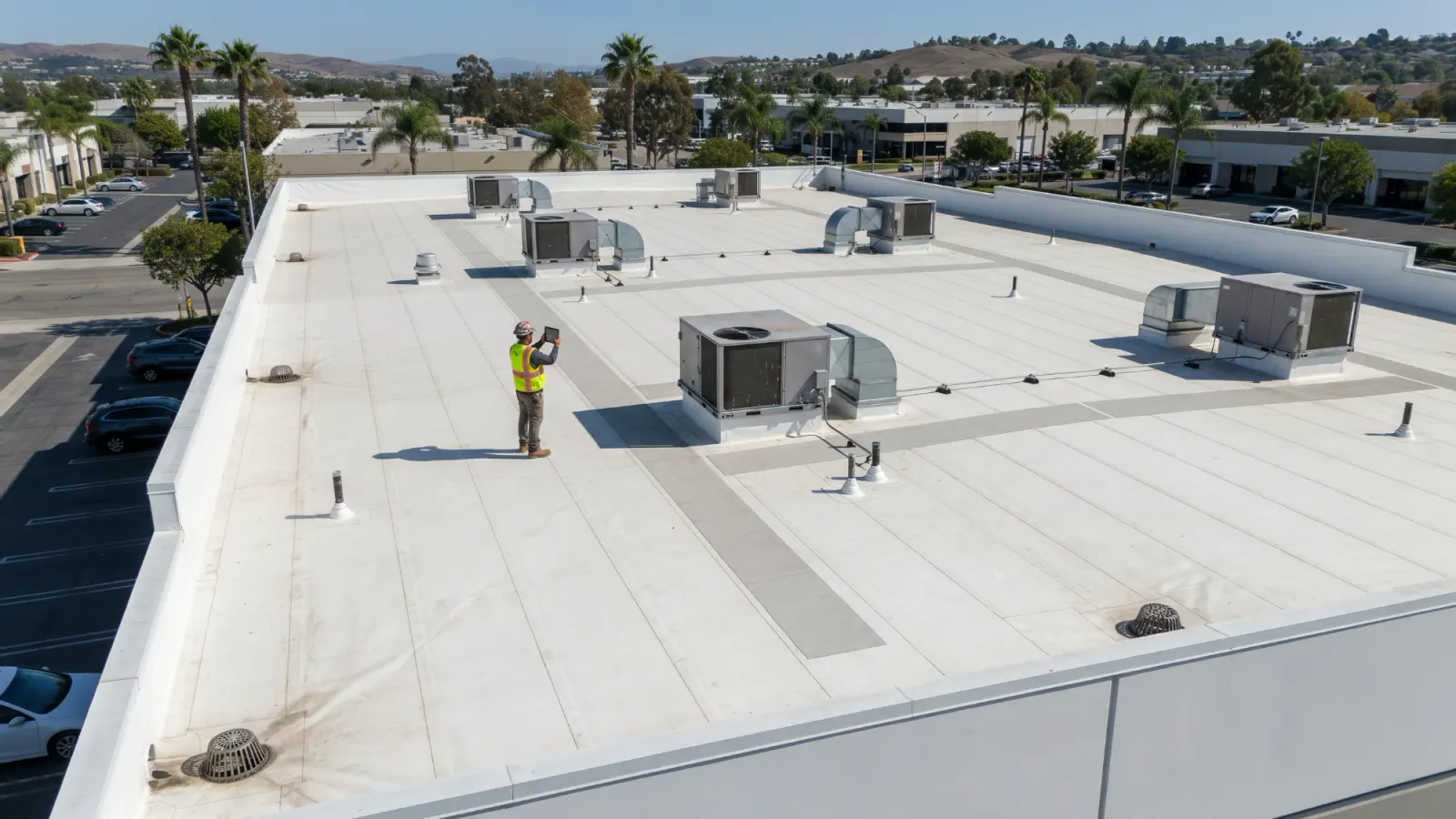
A roofer-led roof survey. A roofer walks the roof and photographs it area by area, so you have a record of its condition.
Repairs with compatible materials. A commercial roof repair matches the membrane, rather than covering it with whatever is handy.
Penetrations flashed for other trades. When new equipment goes on the roof, the roofing around it is done by a roofer.
Maintenance with a paper trail. Commercial roof maintenance clears drains and checks flashings, with a photo report every visit.
On a new roof, both warranties in writing. A commercial roof replacement comes with closeout photos and our 10-year workmanship warranty (call for details), on top of the manufacturer’s.
If you manage several buildings, see property management roofing.
Frequently Asked Questions
What voids a commercial roof warranty?
Common causes are repairs by someone who isn’t authorized, other trades cutting into the roof without a roofer, incompatible materials or coatings, missed maintenance, leaks reported late, damage from use, and paperwork like registration or transfer left undone. Every warranty is different, so check yours.
Can an HVAC contractor void my roof warranty?
They can put it at risk. A new opening cut through the roof and sealed by someone other than a roofer can mean leaks there aren’t covered. Have a roofer flash every new penetration.
Does skipping maintenance void a roof warranty?
It can be a reason a claim is denied. Many warranties expect the owner to keep the roof maintained, so scheduled maintenance with written records protects you.
Can I repair my own commercial roof without voiding the warranty?
Usually not safely. Many warranties require repairs by the installer or an approved roofer, with compatible materials. Call before anyone patches the roof.
Does a roof warranty transfer when I sell the building?
Some do, and some only if certain steps are followed. Check the transfer terms in your warranty before closing.
What warranty comes with a QRS commercial roof replacement?
The manufacturer’s warranty on the roofing system, plus our 10-year workmanship warranty (call for details), with closeout photos of the finished roof.
Want to Protect Your Roof Warranty?
Start with a record of where the roof stands. Request a roof survey: a roofer photographs the roof, tells you in plain English what it needs, and gives you a written scope and price before any work. Or call (310) 340-1643.