
Splitting Seams on a Flat Roof Membrane: Why Are My Roof Seams Opening Up?
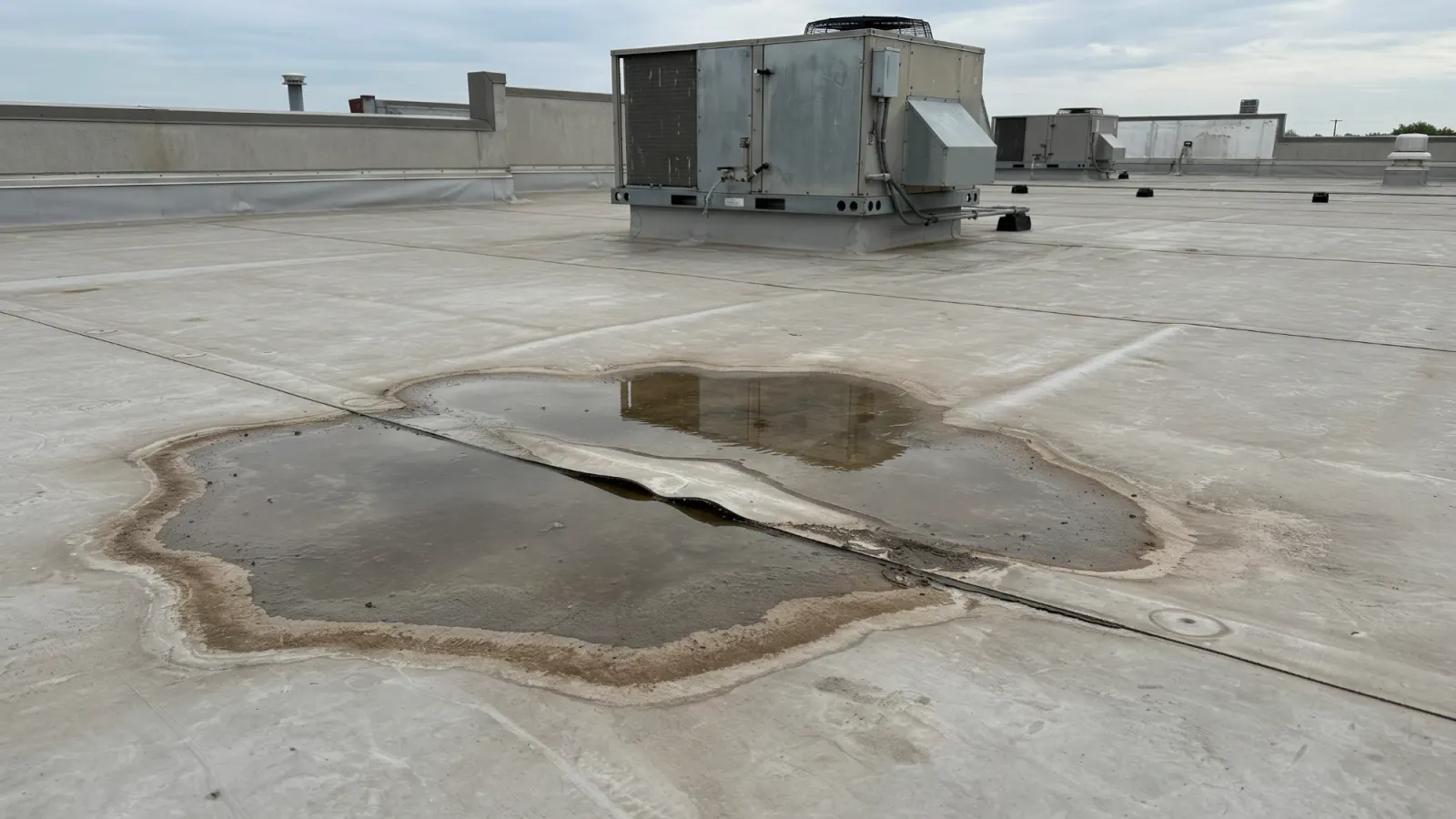
Roof seams opening up on a flat roof mean the roof is losing the one thing a flat roof can’t do without. A flat roof is made of sheets, and every place two sheets meet is a seam that has to stay closed for the life of the roof. When one starts to split, water that sits on the roof finds it, gets under the membrane and travels, often showing up inside well away from the opening.
This guide is for building owners, property managers and building engineers: how the seams on the common flat roof systems are made, why they open up, the signs to look for, how serious it is, and what a lasting seam repair looks like.
How a Flat Roof Seam Is Supposed to Hold
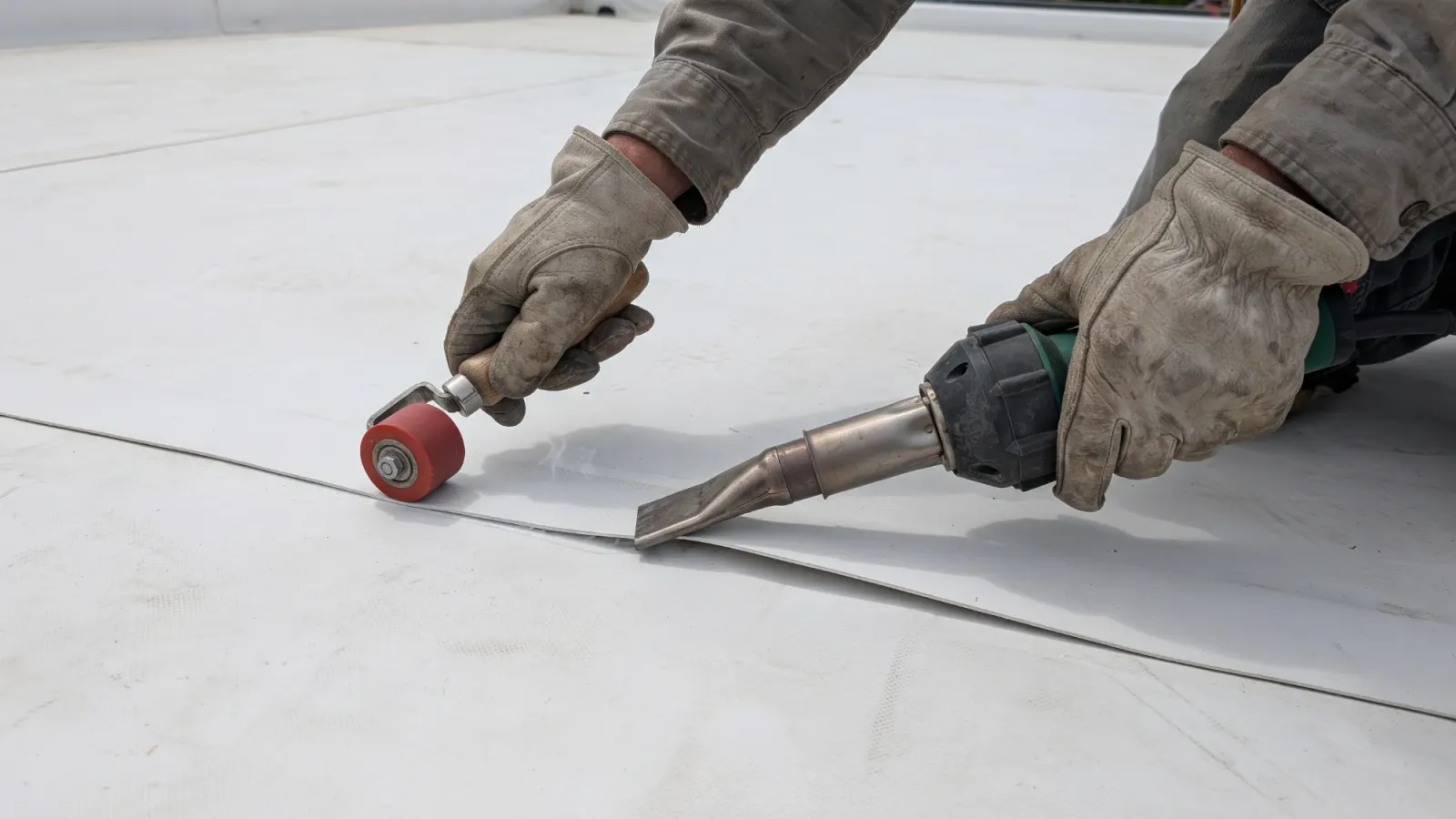
TPO
- How the seams are made
- Overlapping sheets welded together with hot air, so the seam becomes part of the membrane
- How they usually fail
- A weld that was never fully fused, or a seam stressed by movement or traffic
- What you see
- An edge you can lift, a gap at the lap, a seam that peels back
EPDM
- How the seams are made
- Overlapping sheets joined with seam tape or adhesive
- How they usually fail
- The tape or adhesive lets go with age, sun and movement
- What you see
- Seam edges curling up, a gap opening along the lap
Modified bitumen
- How the seams are made
- Overlapping layers fused with heat or self-adhered
- How they usually fail
- Laps that weren’t fully bonded, or that open as the cap sheet ages
- What you see
- Lifted lap edges, dark lines where the bond has let go, cracks along the lap
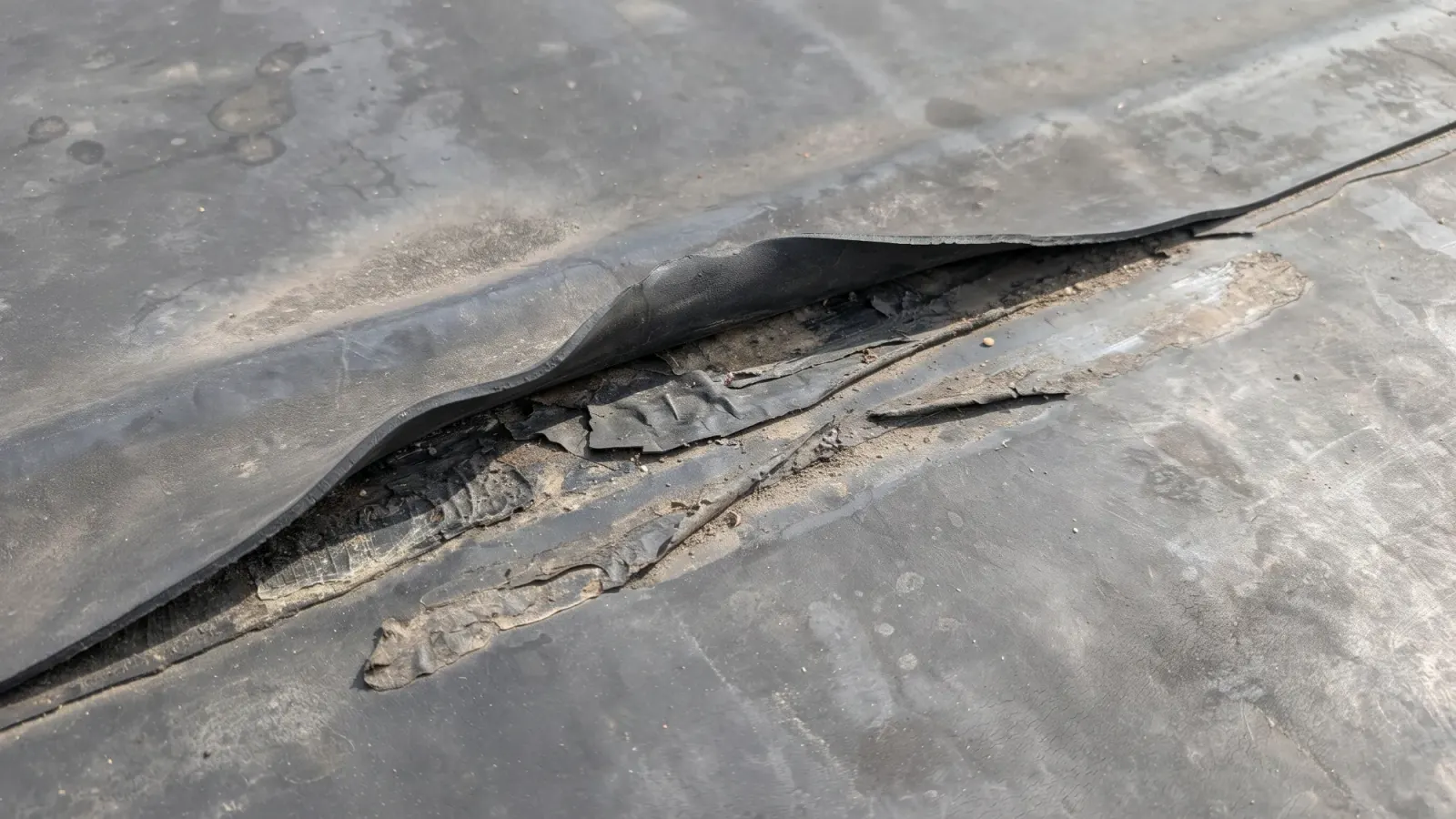
Our guide to TPO vs. EPDM vs. modified bitumen explains how the three systems differ.
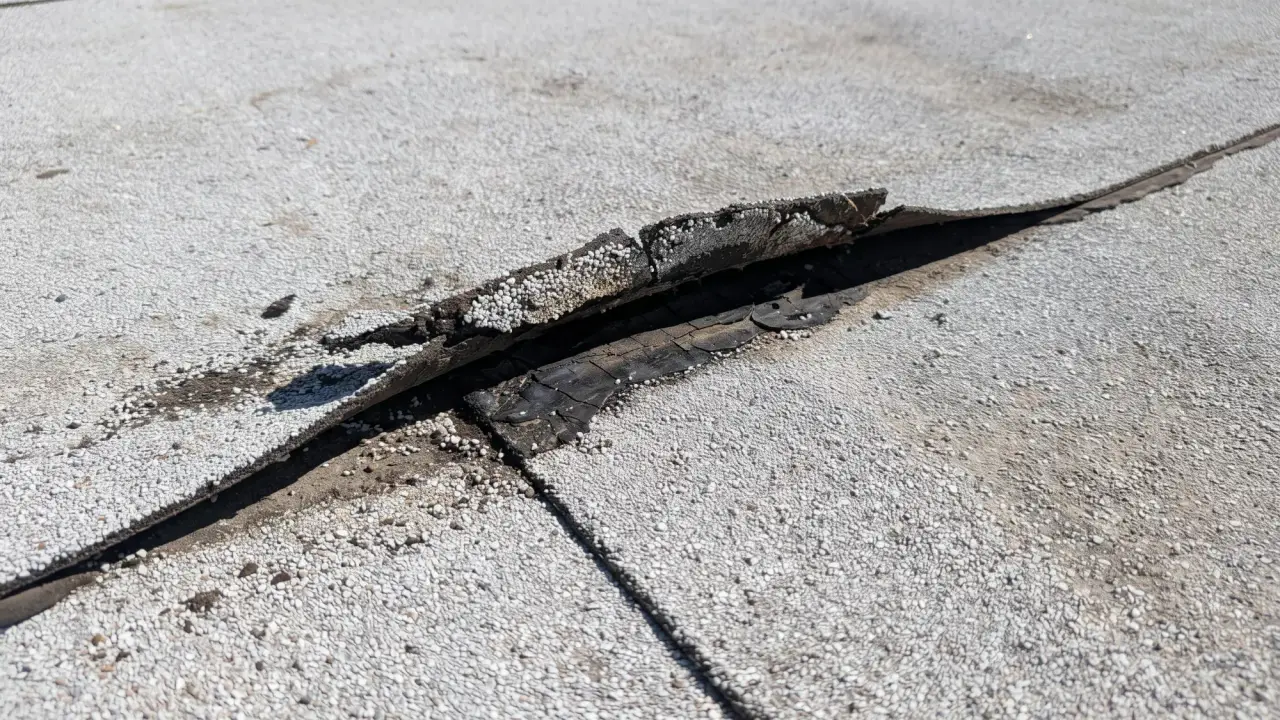
Why Roof Seams Open Up
- The seam was never fully bonded
A weld made too cold or too fast, a dirty or damp lap, or adhesive applied wrong can look fine on day one and open later.
- Sun and heat
Every day the membrane heats, expands, cools and contracts, and the seams take that movement over and over.
- Water sitting on the seam
Ponding water works on a lap far longer than rain running off ever would. Our guide to ponding water explains why.
- Laps that face the wrong way
A lap should shed water like shingles do, with the upper sheet over the lower one; one that faces uphill lets water run into it.
- Foot traffic and rooftop work
Seams on the paths to rooftop units get stepped on, kneeled on and dragged over.
- Movement in the building
Seams over a joint in the deck, at the edge of a rooftop unit or near a wall take the building’s movement.
- Wind
On a roof held down by fasteners, wind lifts the membrane between them and puts stress on the seams.
- Age
Adhesives, tapes and surfacings all wear, and seams are where that wear shows first.
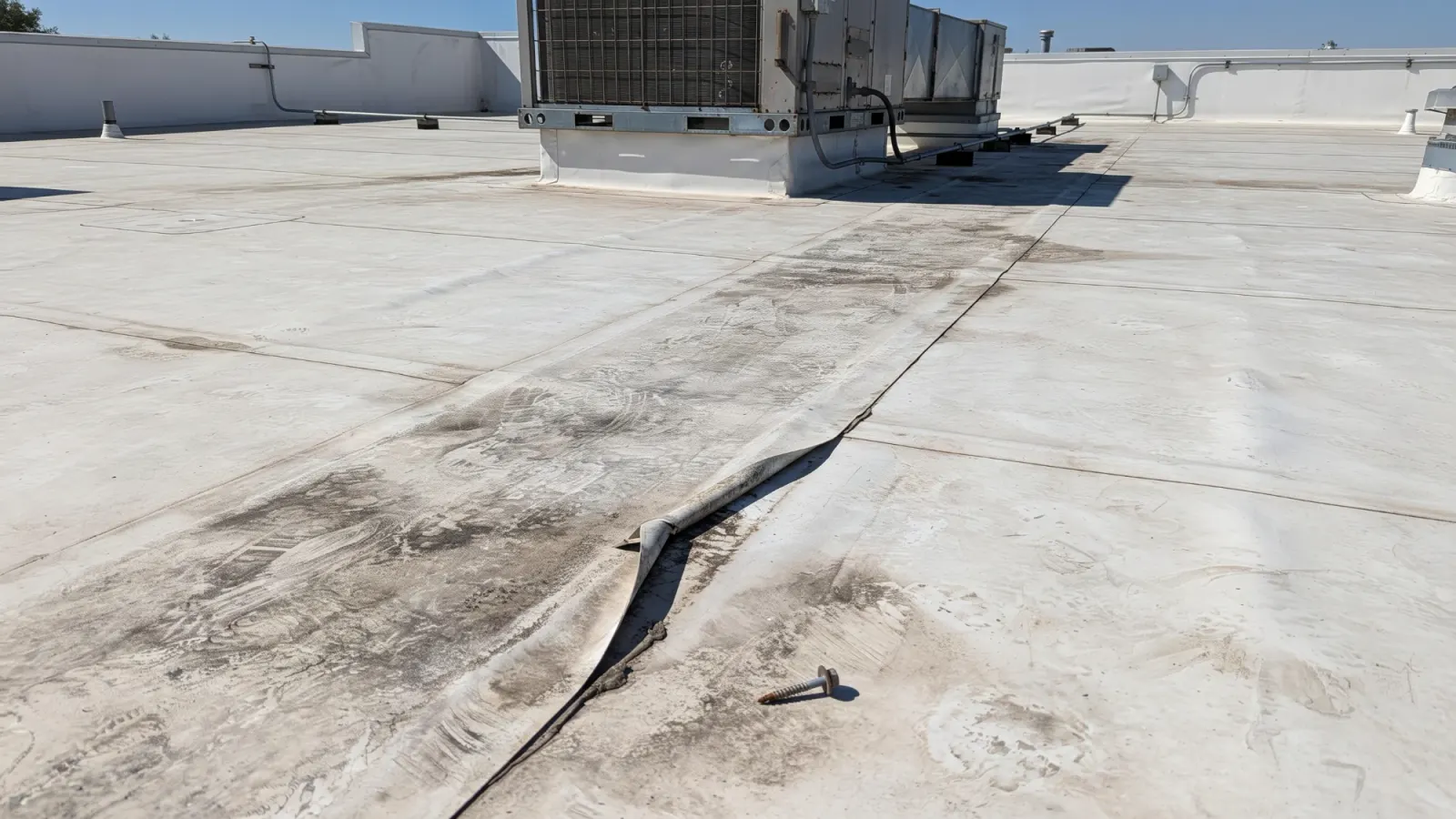
Signs Your Roof Seams Are Opening Up
A seam edge you can see lifting or curling up from the sheet below.
A gap or a dark line along a lap where the bond has let go.
Wrinkles or fishmouths running into a seam.
Old patches, tape or roof cement smeared along a seam.
Dirt lines or water rings where water has been sitting along a lap.
Soft or spongy areas next to a seam, a sign water has gotten under.
A ceiling stain inside with no obvious cause at a drain, curb or wall.
Leave the probing to a roofer. Pulling at a seam to see if it lifts can make the opening bigger.
How Serious Is an Open Seam?
Which of these sounds most like your roof? Tap a card.
One short open spot on an otherwise sound roof
What it usually means
A local problem
What to do
Repair that seam properly, then watch the next rain
Several seams opening in one area, like a service path
What it usually means
Wear from traffic or movement in that area
What to do
Repair the seams and add walk pads or fix the cause
Seams opening where water ponds
What it usually means
The seam and the drainage are both the problem
What to do
Repair the seams and deal with the drainage
Seams opening across most of the roof
What it usually means
The roof is aging, or was never bonded well
What to do
Get a survey, and plan for a replacement
Open seams with wet insulation under them
What it usually means
Water has been getting in for a while
What to do
The wet areas need to come out; a seam repair alone won’t dry them
What Not to Do
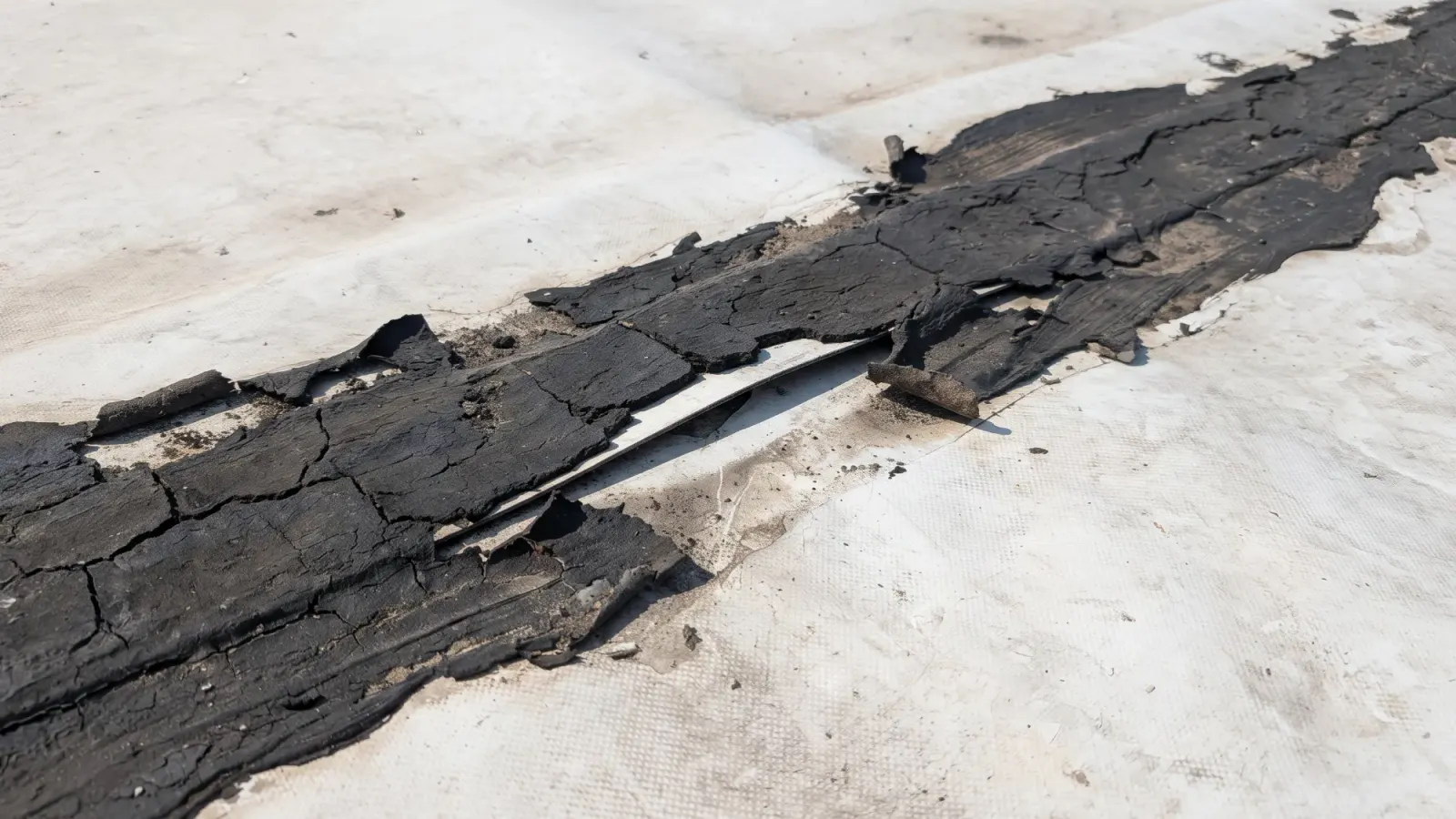
- Don’t smear roof cement or caulk along a seam. It rarely bonds to the membrane for long, and it makes the proper repair harder.
- Don’t use the wrong tape or patch. A patch that isn’t compatible with the membrane may not stick, or may damage it.
- Don’t coat over open seams. A coating covers the surface; it doesn’t rebuild a failed seam. See whether a roof coating is worth it.
- Don’t send staff onto a wet roof to look for the opening.
Questions to Ask Before a Seam Repair
How We Find and Fix Opening Seams
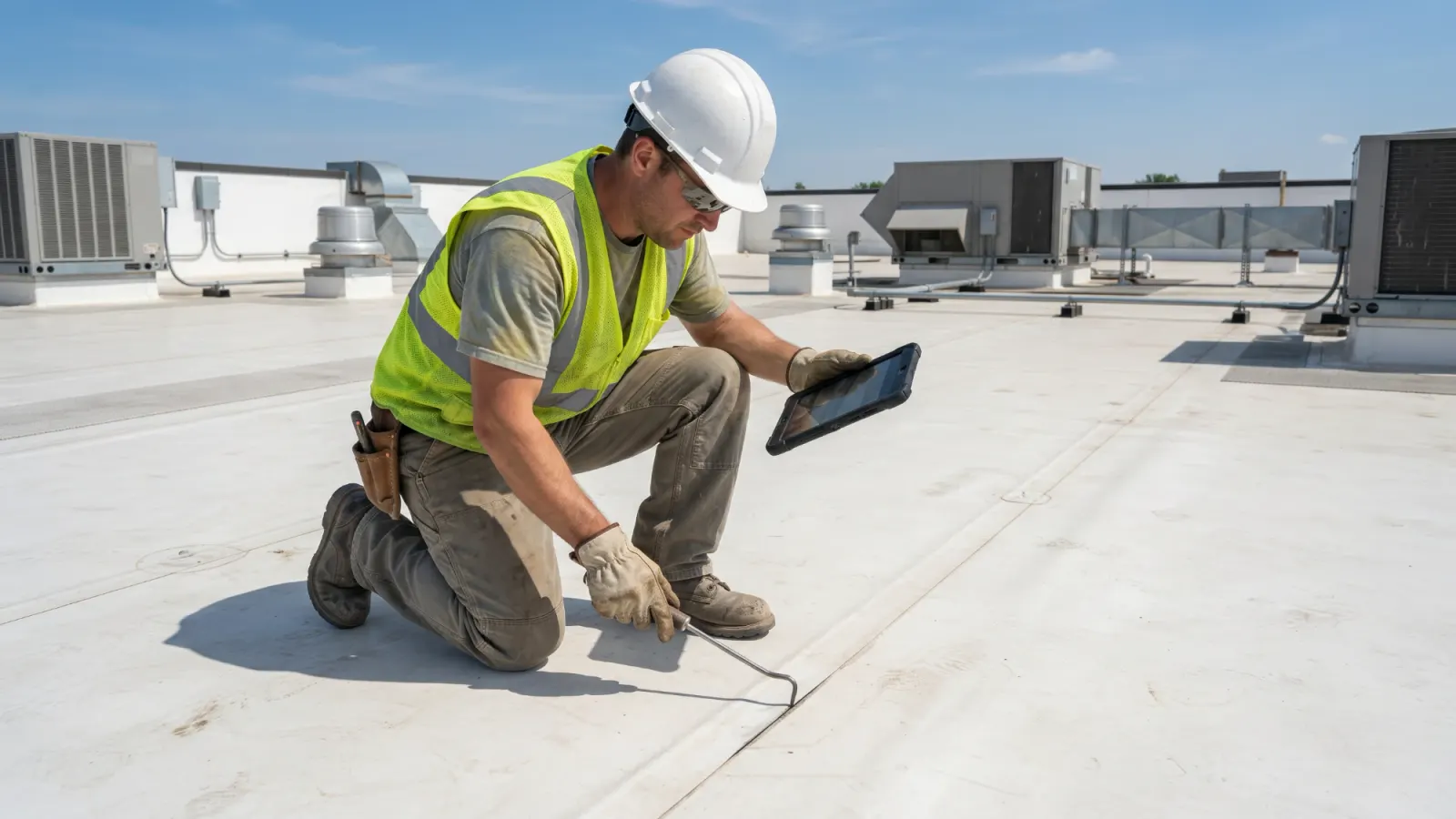
A roofer-led roof survey. A roofer walks the roof and checks the seams, laps, surfacing, past patches and soft or wet areas, photographing them area by area.
Work from the leak, if there is one. We start where the water shows up inside and work upslope, checking every seam and detail in its path.
Prove the source when it isn’t obvious. A water test one section at a time, from the bottom up, shows which seam lets water in.
Find the cause, not just the opening. Traffic, ponding, movement or age, so the repair lasts.
A written scope and price before any work, with the photos to back it up.
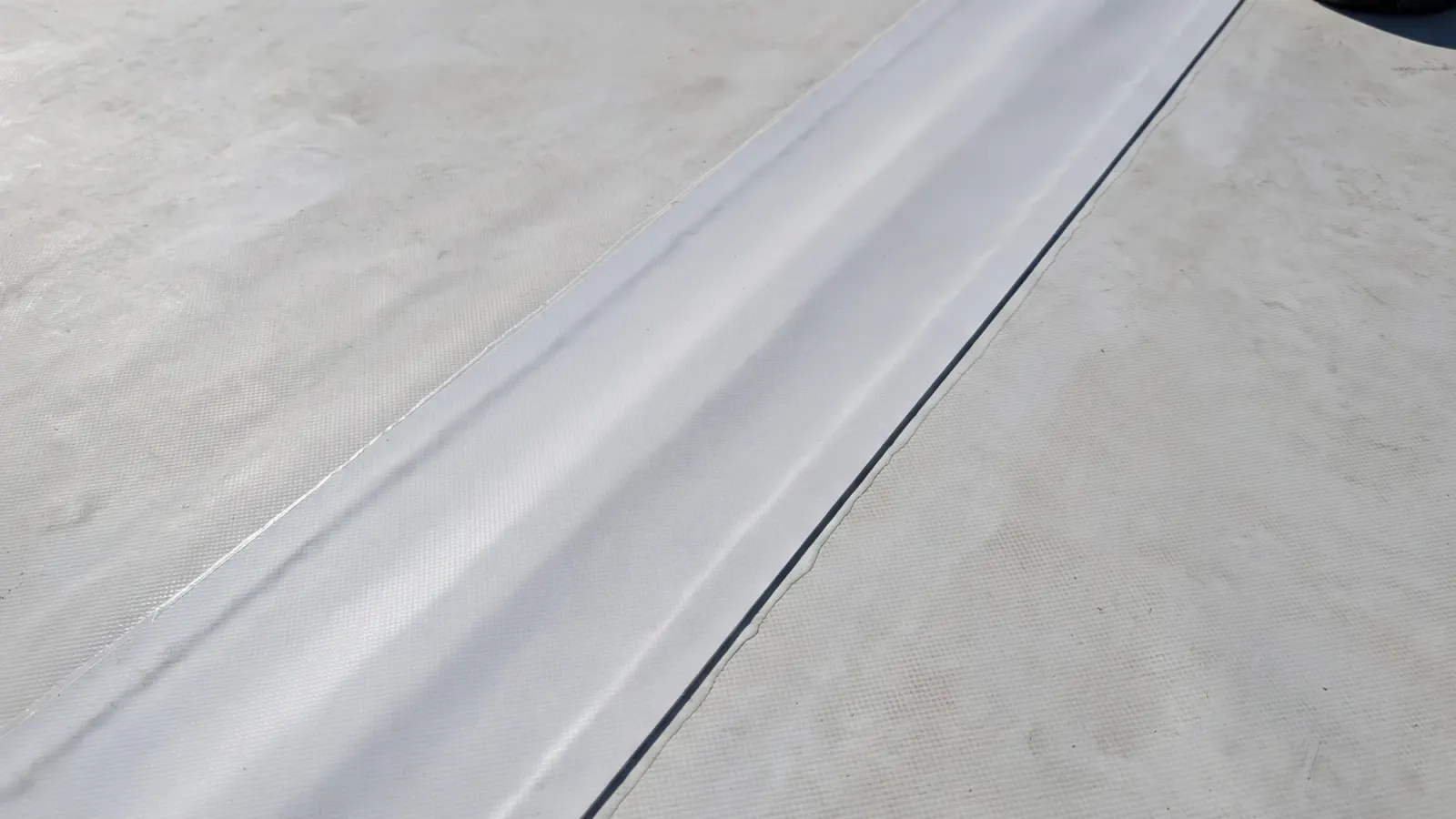
When the open seams are in one area, a commercial roof repair rebuilds them with matching material, while the building stays open. On a white TPO roof, the welded seams are the heart of the system; our TPO roofing page explains them. When seams are failing across the roof, a commercial roof replacement is phased section by section, and scheduled commercial roof maintenance keeps an eye on the seams with a photo report every visit.
Our guide to finding a flat roof leak explains why the water inside can show up so far from the open seam.
Frequently Asked Questions
Why are my roof seams opening up?
Usually because the seam was never fully bonded, or because sun, heat, standing water, foot traffic, building movement or wind have worked it loose over time. Age wears seam adhesives and tapes, and seams are where that shows first.
Can an open seam on a flat roof be repaired?
Yes, when the rest of the roof is sound. The seam is cleaned and rebuilt with material that matches the membrane, and the cause, like traffic or ponding, is dealt with so it doesn’t open again.
Is a split seam an emergency?
If water is coming in, treat it like any active leak: protect what is below and call a roofer. If it isn’t leaking yet, have it repaired before the next rain, because an open seam lets water under the membrane.
Can I just caulk or tape the seam?
Caulk and roof cement rarely bond to the membrane for long, and the wrong tape may not stick at all. A lasting repair uses material compatible with the membrane, applied the way its manufacturer calls for.
When do open seams mean the roof needs replacing?
When seams are opening across most of the roof, or when there is wet insulation under large areas. At that point, repairing seam after seam usually costs more over time than planning a replacement.
How do you find which seam is leaking?
We start where the water shows up inside, work upslope across every seam and detail in its path, and photograph what we find. When the source isn’t obvious, a water test one section at a time shows which seam lets water in.
Seams Opening on Your Roof?
Request a roof survey. A roofer checks every seam, photographs what is open, tells you in plain English whether it is a repair or a bigger plan, and gives you a written scope and price before any work. Or call (310) 340-1643.
For a flat roof on a home, see flat roof repair.