

Commercial Roof Lifespan by System: How Many Years Does Your Roof Have Left?
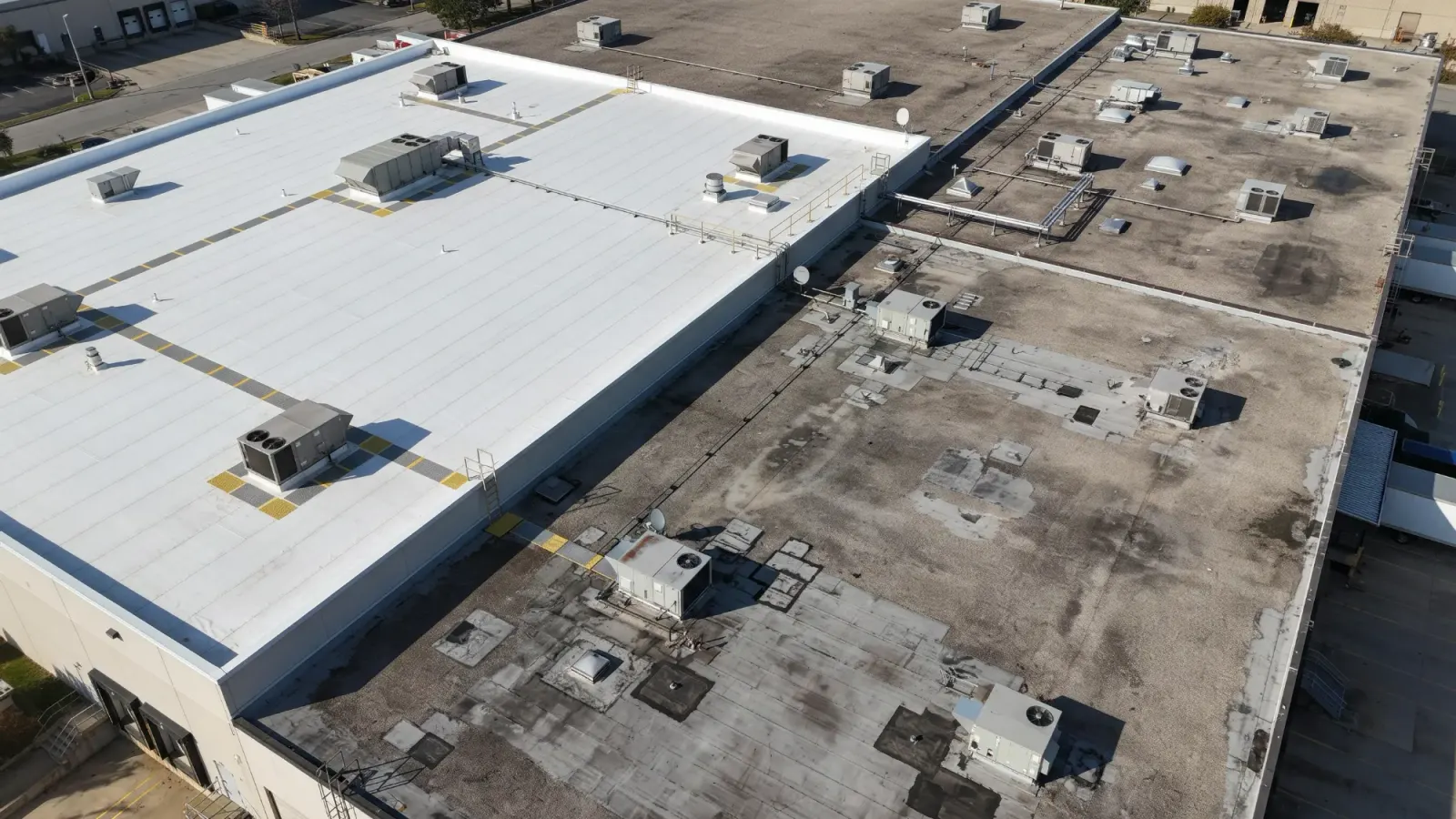
Commercial roof lifespan is the first question most owners and boards ask, usually as a number: how many years does it have left? Charts online give a range for each system, and two buildings with the same system can still be years apart.
We won’t promise a number of years, and here is why: how a roof was installed, how it drains, how it is used and how it has been maintained decide its life far more than the name of the system. What follows is what decides commercial roof lifespan, how TPO, EPDM and modified bitumen each show their age, the signs a roof is near the end, and how to find out where yours stands.
Why a Single Number Misleads
A lifespan chart describes an average roof under average conditions. Your roof isn’t average: it has its own installer, its own drains, its own rooftop equipment, its own foot traffic and its own maintenance history. A roof installed well and looked after can outlast the chart; one with poor details or standing water can fail well before it.
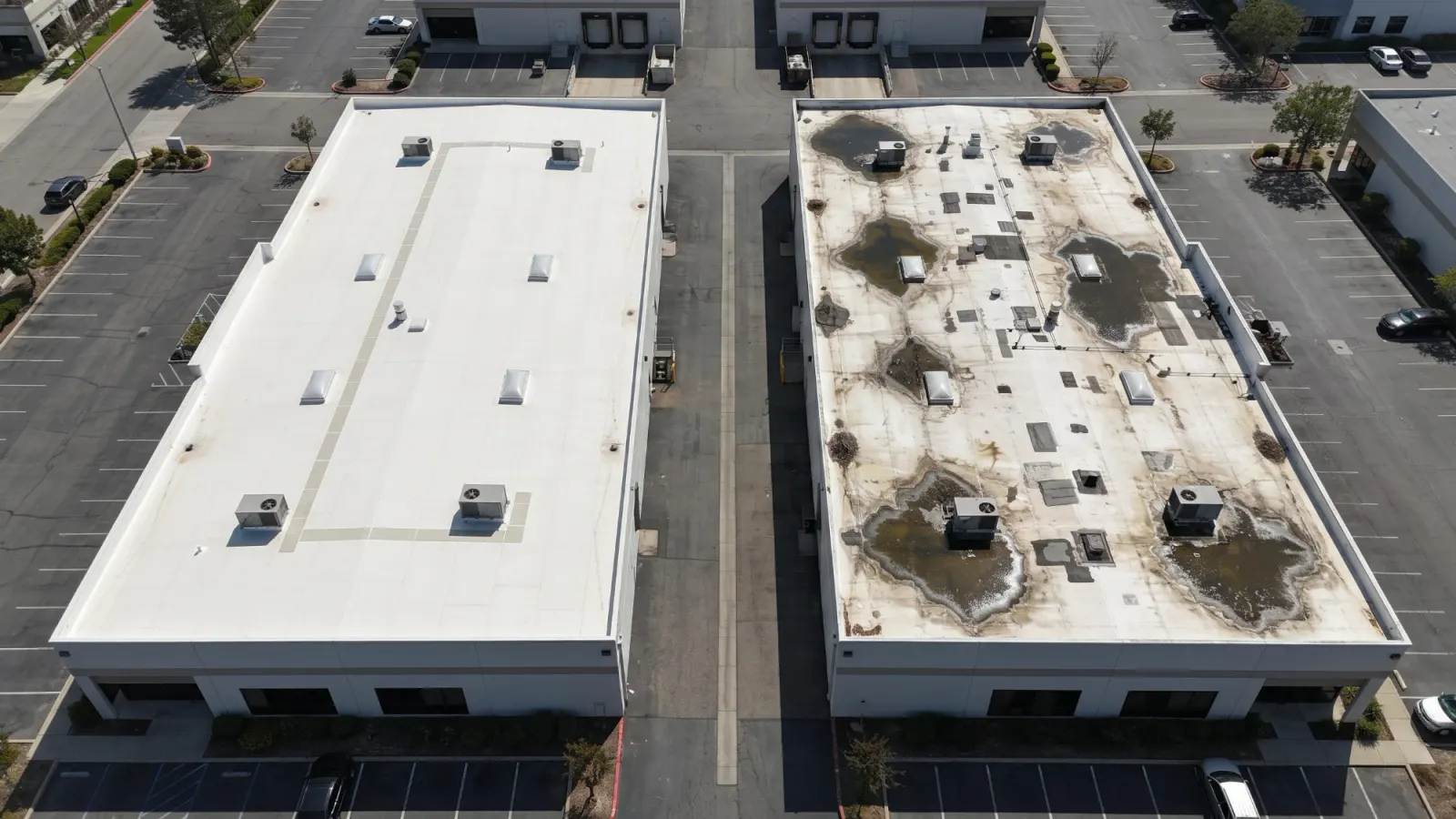
A warranty term isn’t a lifespan either. It is how long a manufacturer or a contractor will cover certain problems, under certain conditions. It tells you nothing about how the roof on your building is doing today.
What Decides How Long a Commercial Roof Lasts
- Installation and detailing
most failures start at a seam, a flashing, a curb or a drain, not in the open field. How those were done matters more than anything else.
- Drainage
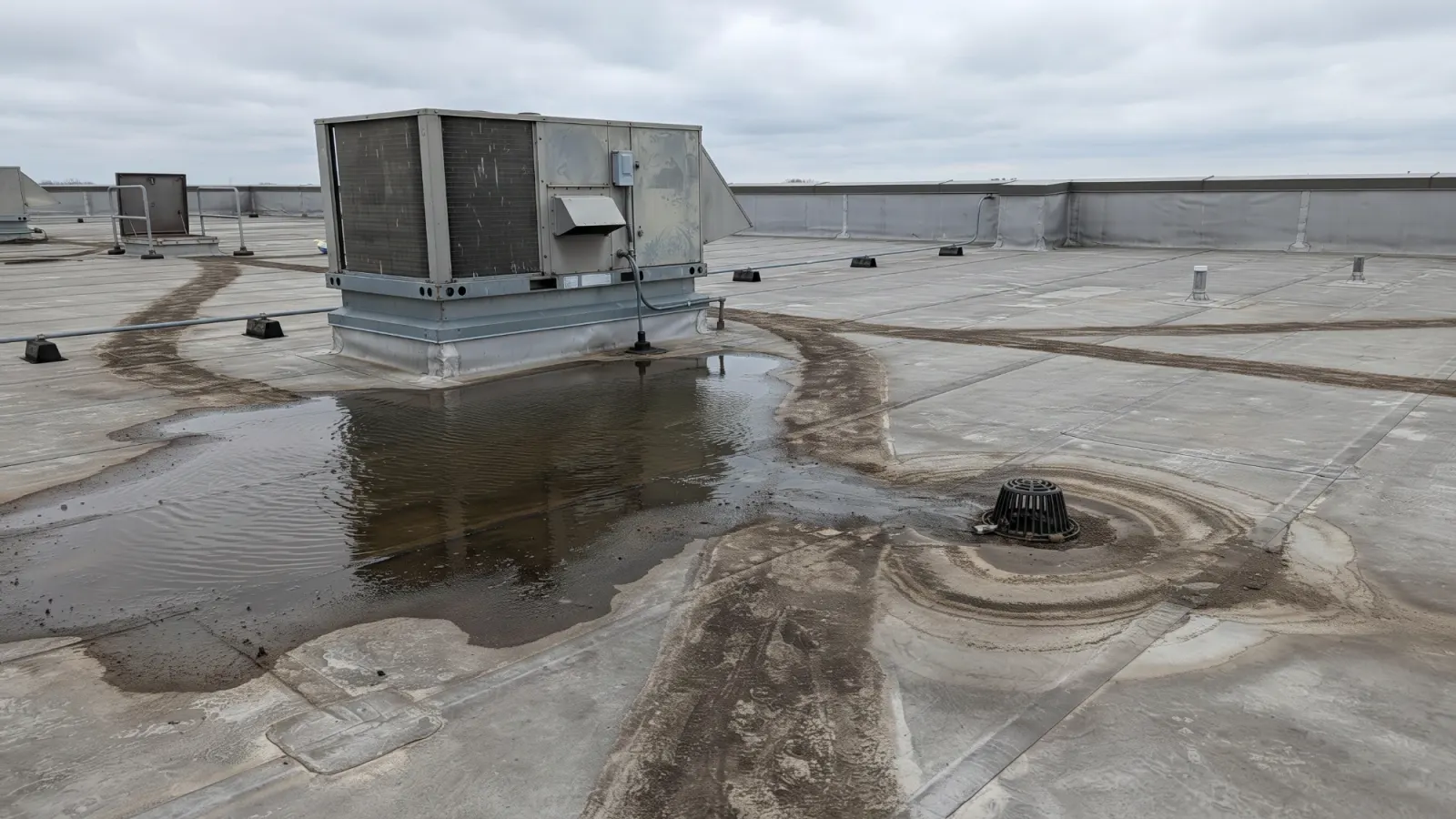
water that stands on a roof wears it fastest where it sits. A roof that drains well ages evenly.
- Sun and heat
the sun works on every roof surface, every day; a reflective surface and a sound top layer help.
- Foot traffic and rooftop equipment
service visits wear paths and puncture membranes, especially without walk pads.
- Maintenance
clear drains, resealed flashings and small repairs done early keep small problems from spreading.
- What is underneath
wet insulation, a damaged deck or several old roofs below shorten the life of whatever is on top.
- How the building is used
kitchen exhaust grease, chemicals and heavy equipment are hard on some membranes.
How Each System Shows Its Age
TPO
- How it shows its age
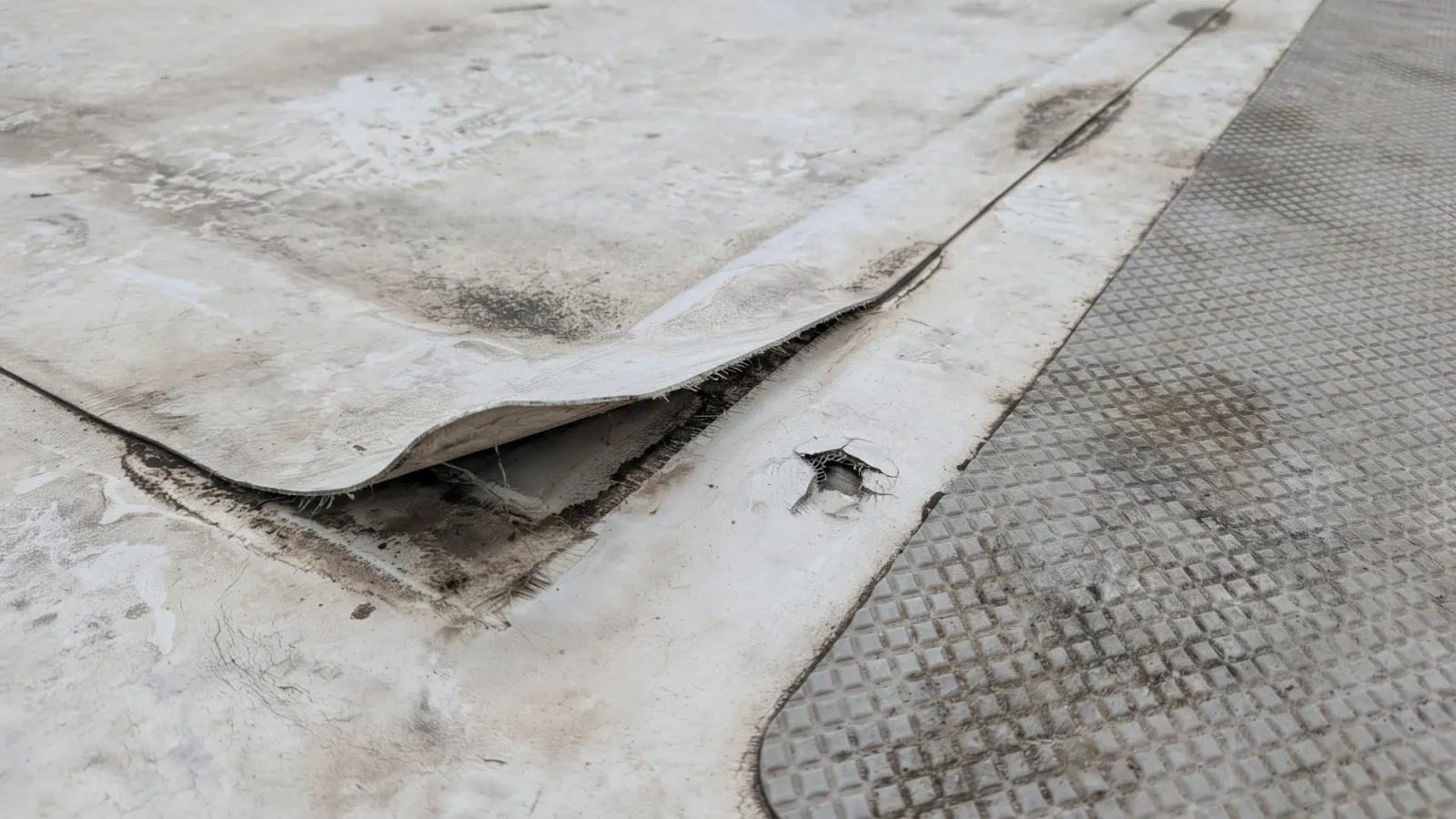
- The membrane weathers and wears thinner; seams and flashings loosen; punctures appear along service paths
- Where to look first
- Welded seams, curb and wall flashings, around rooftop units
EPDM
- How it shows its age
- The black rubber weathers; taped or glued seams start to open; the membrane can pull at its edges and flashings
- Where to look first
- Seams, perimeter edges, flashings at walls and penetrations
Modified bitumen
- How it shows its age
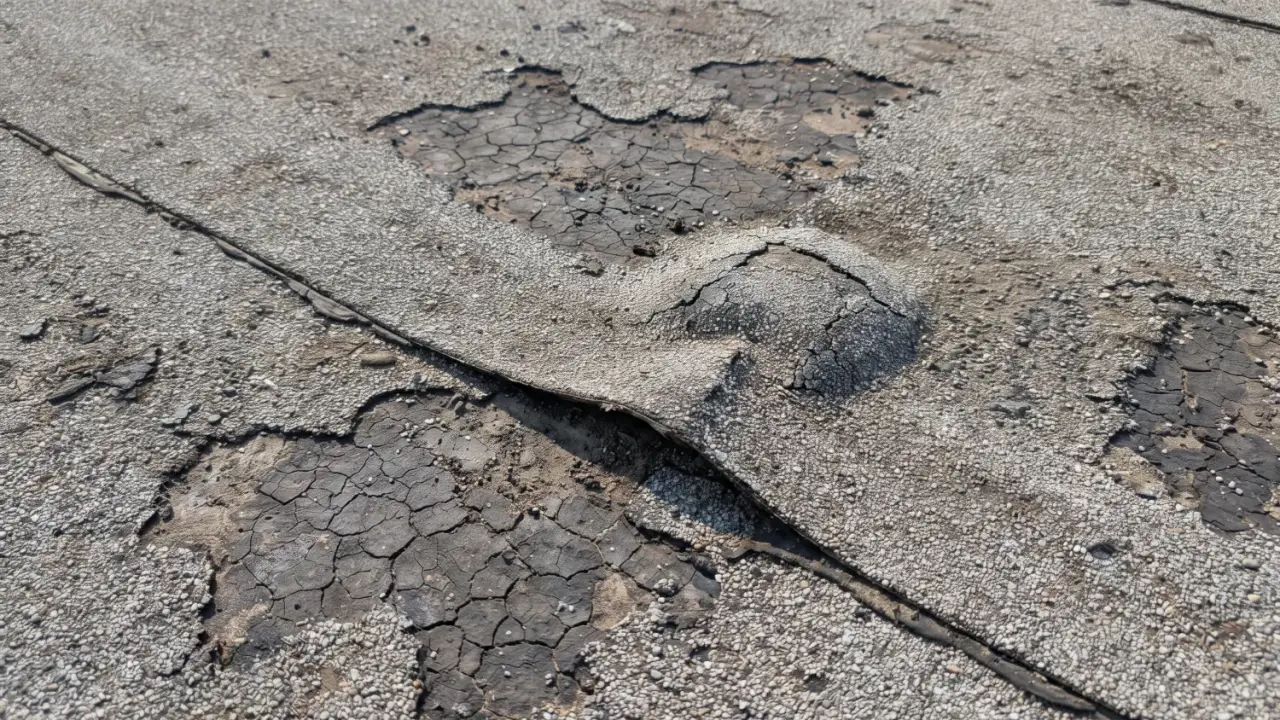
- The cap sheet loses its granules, then cracks and blisters; laps start to open
- Where to look first
- Laps, low spots, flashings at parapets, curbs and drains
A coated roof
- How it shows its age
- The coating chalks, thins, peels or lifts, often first where water ponds
- Where to look first
- Ponding areas, seams and flashings under the coating
Our guide to TPO vs. EPDM vs. modified bitumen explains how the three systems differ when they are new.
Signs a Commercial Roof Is Near the End
Leaks in different places every season, not one recurring spot.
Wet insulation across large areas, not just around one detail.
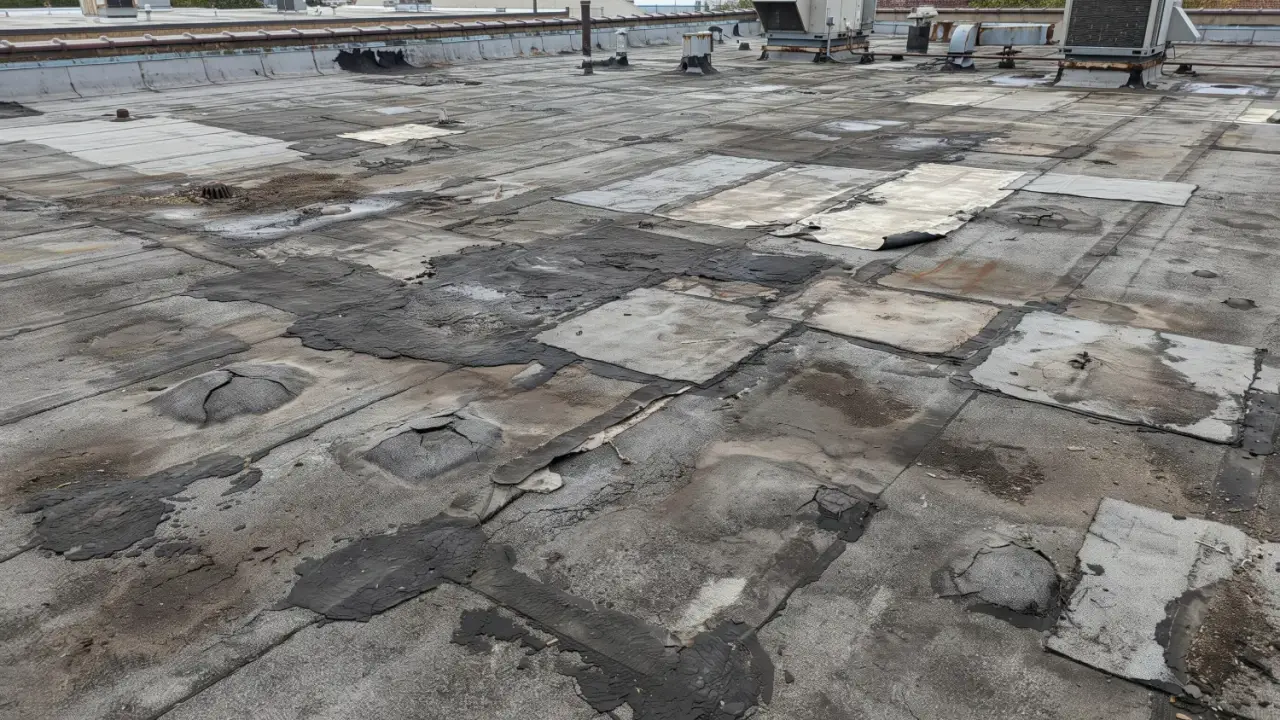
- Blisters, splits and open seams across most of the field
Ponding that spreads or gets deeper each year.
Patches on top of patches, with new leaks next to old repairs.
Soft or damaged deck found underfoot or from below.
How Many Years Does Your Roof Have Left?
The answer comes from what a roof survey finds, not from the calendar.
Which of these sounds most like your roof? Tap a card.
A sound surface, tight seams and flashings, dry insulation, good drainage
What it usually means
Real life left
What to do
Maintain it, and survey it again on a schedule
Wear at a few details, the rest sound
What it usually means
Good life left once the details are fixed
What to do
Repair those areas, then maintain
Leaks in several areas and some wet insulation
What it usually means
The roof is getting closer to the end
What to do
Repair what is urgent and start planning a replacement
Widespread wet insulation, blisters or open seams
What it usually means
Near the end
What to do
Plan a replacement, phased so the building stays open
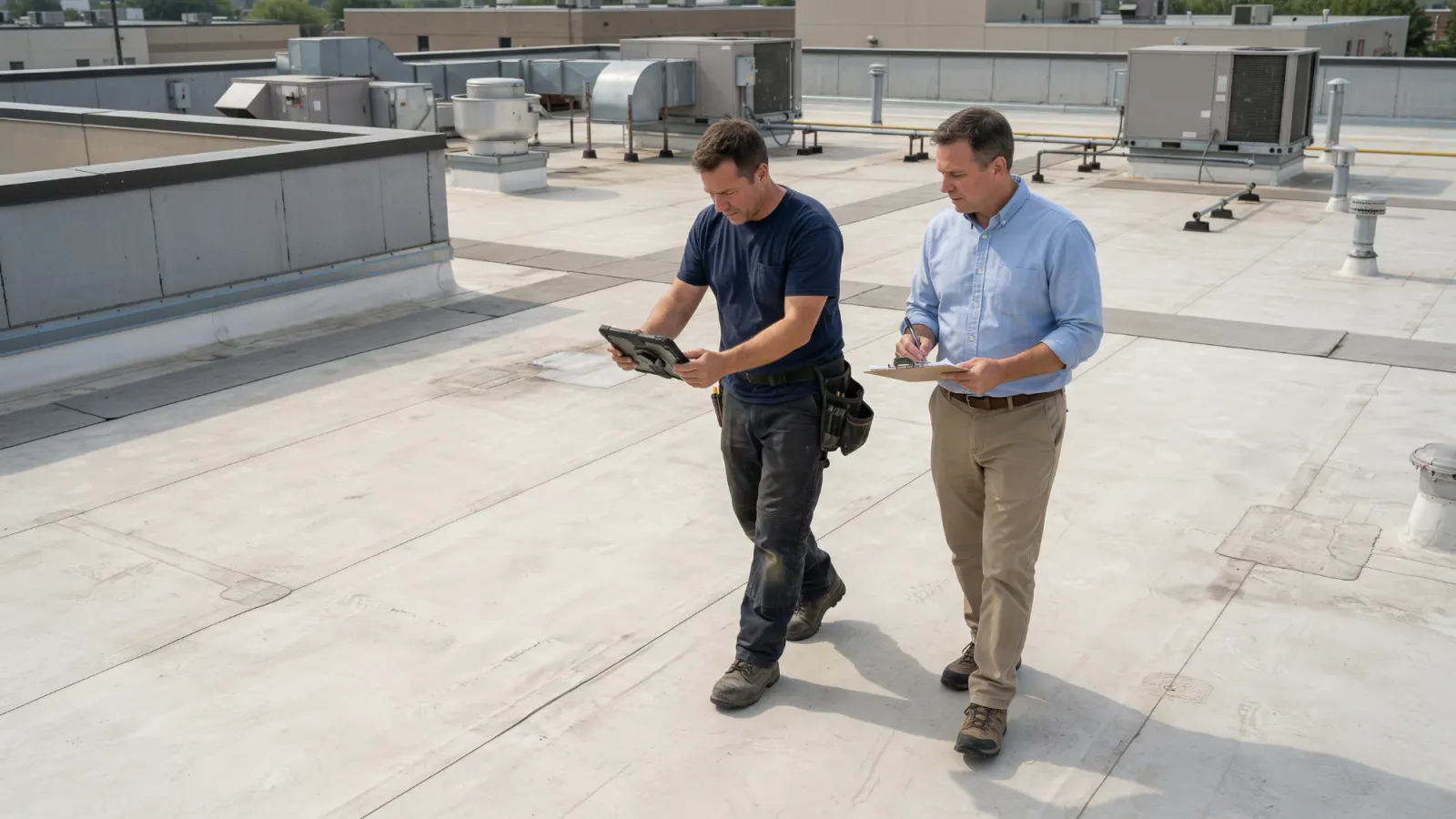
Our commercial roof inspection checklist walks through what a good survey covers.
How to Make a Commercial Roof Last
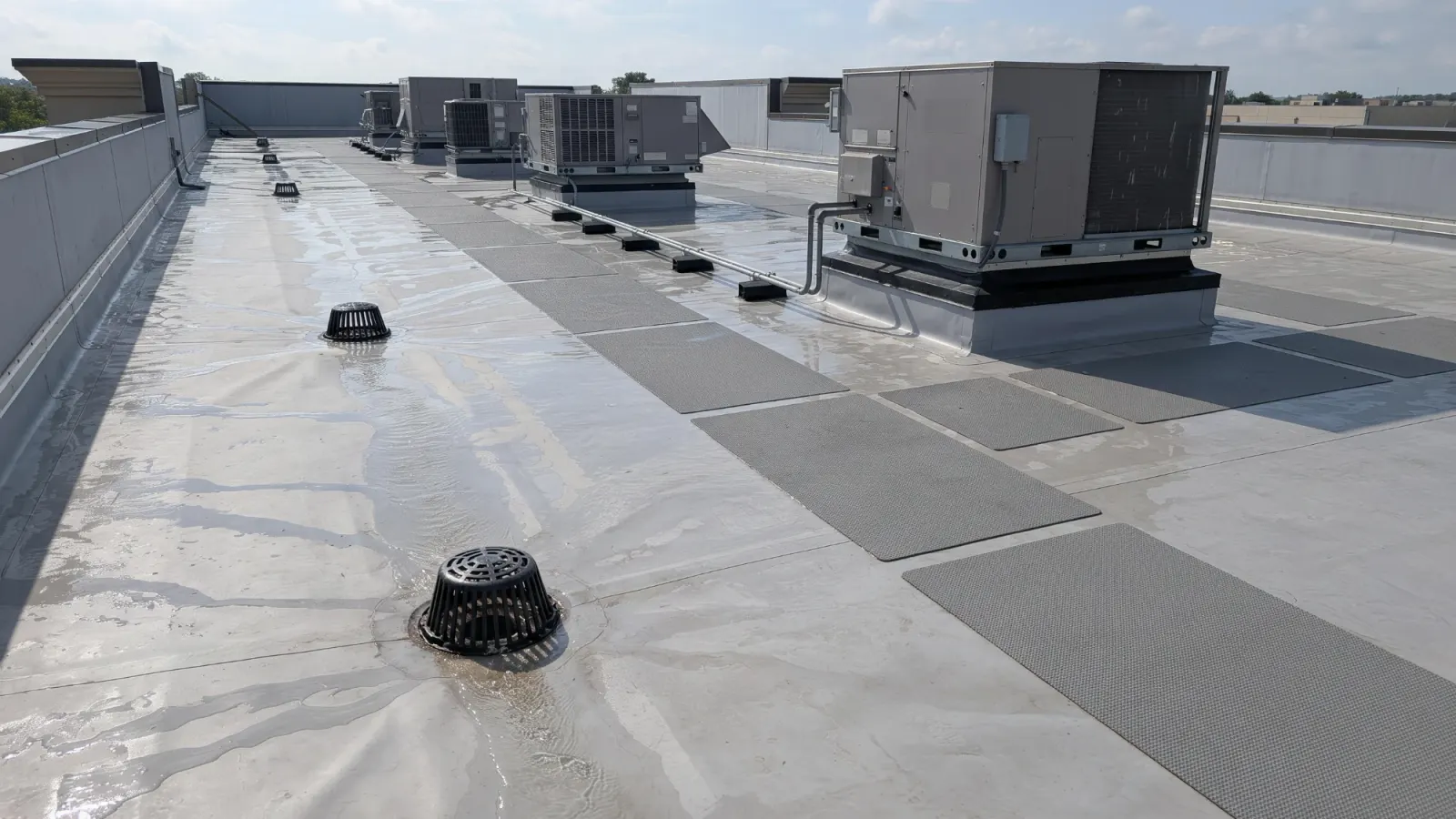
Our guide to keeping drains and scuppers clear covers the simplest one on the list.
Planning and Budgeting for the Next Roof
Knowing where a roof stands lets you plan the replacement on your timeline instead of a storm’s: put it in the budget, schedule it around tenants and operations, and replace it in phases. A photo record from every survey and maintenance visit shows the trend, so owners and boards can see the roof aging, not just hear about it.

Our guide to planning a commercial roof replacement explains how to keep the doors open while it happens.
How We Answer the Question for Your Roof
- A roofer-led roof survey: a roofer walks the whole roof, photographs it area by area and notes the seams, the surface, past patches, soft or wet areas, the drains, the curbs and the parapets.
- A plain-English answer: repair, monitor, maintain or replace, with the photos to back it up and a written scope and price before any work.
- Scheduled maintenance: drains cleared, flashings checked and resealed where needed, and a photo report every visit you can compare year to year.
- When it is time, a commercial roof replacement phased section by section, so the building stays open.
Frequently Asked Questions
How long does a commercial roof last?
There isn’t one honest number. The system matters, but how the roof was installed, how it drains, how it is used and how it has been maintained matter more. A roof survey tells you how much life your roof has left.
Which commercial roof system lasts the longest?
Any of the common systems can have a long life when it is installed and detailed well, drains properly and is maintained. A poorly installed roof of any system can fail early.
How can I tell how many years my commercial roof has left?
Have it surveyed. A roofer looks at the surface, the seams, the flashings, the drains and whether the insulation is wet, and tells you whether the roof needs maintenance, repairs or a replacement plan.
Does a long warranty mean the roof will last that long?
No. A warranty term is how long certain problems are covered, under certain conditions. It isn’t a promise about how long the roof will last, and it says nothing about the roof’s condition today.
Does maintenance make a commercial roof last longer?
It helps. Clear drains, sound flashings and small repairs done early keep small problems from spreading, and a photo record shows wear before it becomes a leak.
When should we start planning a replacement?
When a survey shows leaks in several areas, wet insulation or wear across the field. Starting early lets you budget for it and phase the work around tenants and operations.
Want to Know Where Your Roof Stands?
Request a roof survey. A roofer photographs the roof, tells you in plain English whether it needs maintenance, repairs or a replacement plan, and gives you a written scope and price before any work. Or call (310) 340-1643.
