

Commercial Cool Roofs and Cooling Costs: Can a Reflective Roof Cut Your Building’s Energy Bill?
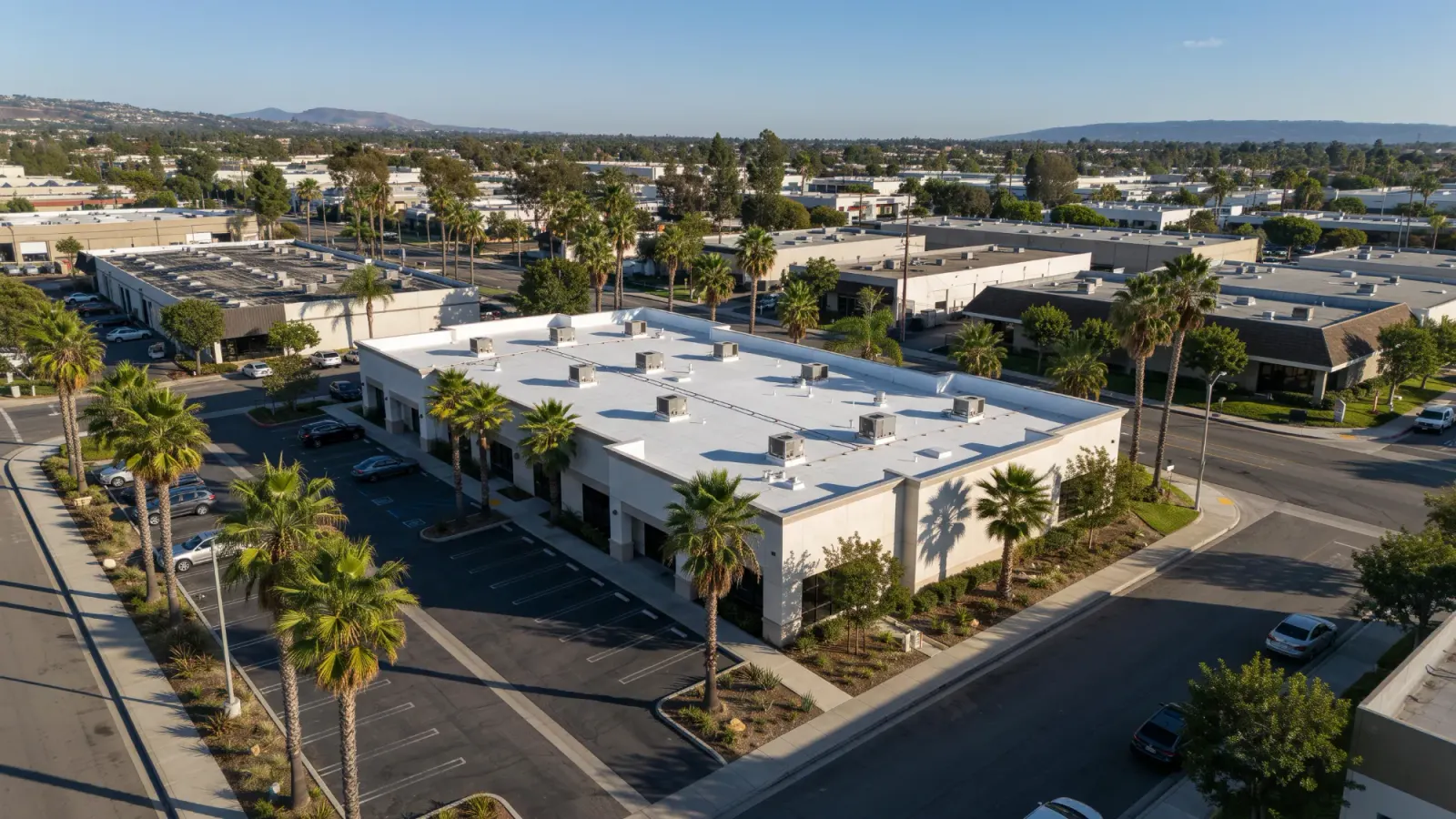
A commercial cool roof reflects more of the sun’s energy and gives off the heat it does absorb more readily than a dark roof. On a sunny afternoon the roof surface stays far cooler, and less of that heat works its way down into the building.
Whether that shows up on the energy bill depends on the building under the roof: how well it is insulated, how much of it is air-conditioned, how many floors sit under the roof and what is up there with it. Here is how a cool roof works on a commercial building, which buildings are most likely to notice it, the options, the energy code and what to ask before you choose one.
What a Cool Roof Does on a Commercial Building
Two properties make a roof “cool”:
- Solar reflectance: how much of the sun’s energy the surface reflects instead of absorbing.
- Thermal emittance: how readily the surface releases the heat it has absorbed.
The Cool Roof Rating Council (CRRC) tests roofing products for both and lists the results, and the Solar Reflectance Index (SRI) combines them into one number. A higher number means a cooler surface in the sun.
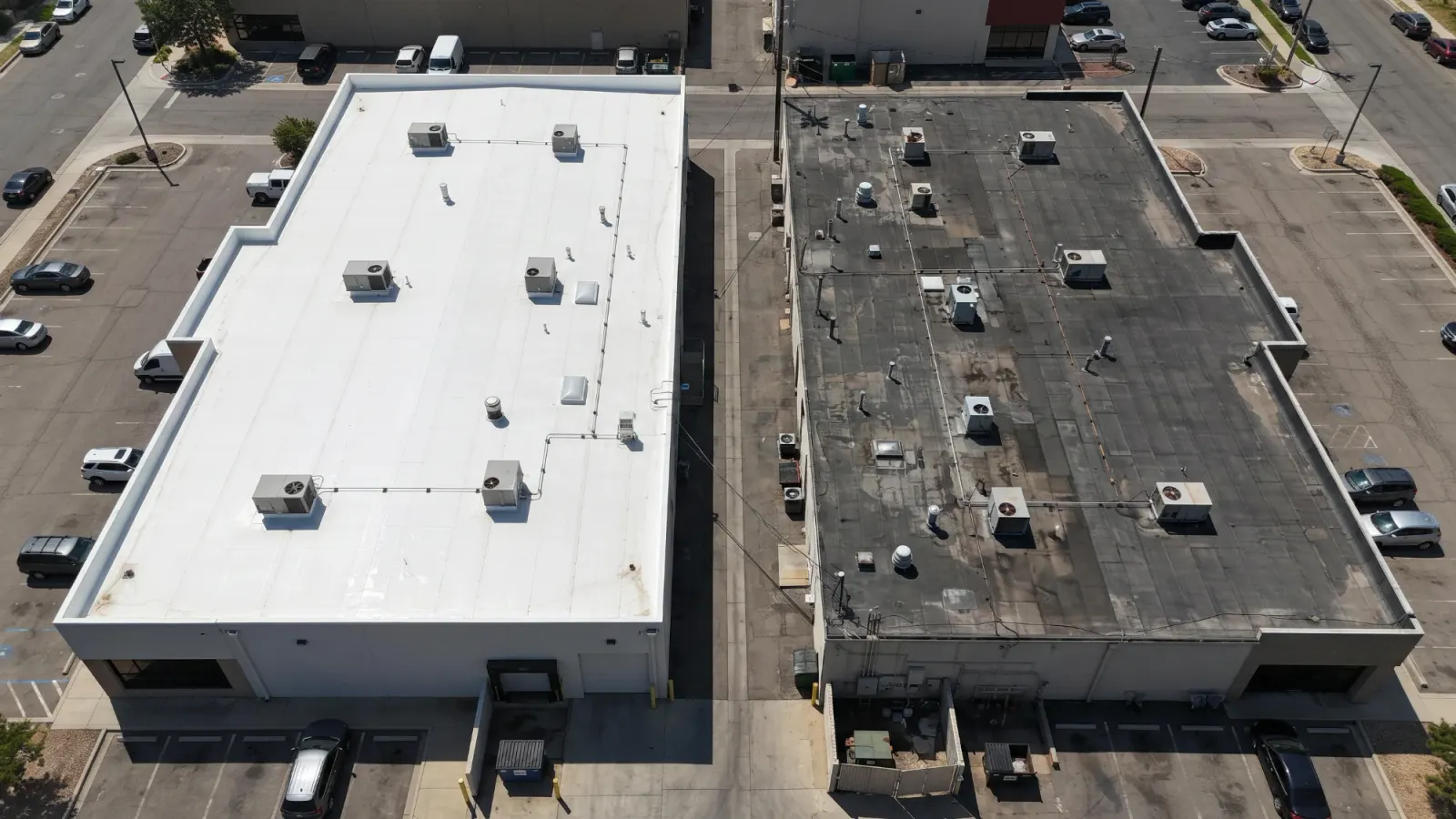
On a building, that means less heat soaking through the roof into the space below during the hottest part of the day, so the air conditioning has less of the roof’s heat to remove.
Which Buildings Are Most Likely to Notice It
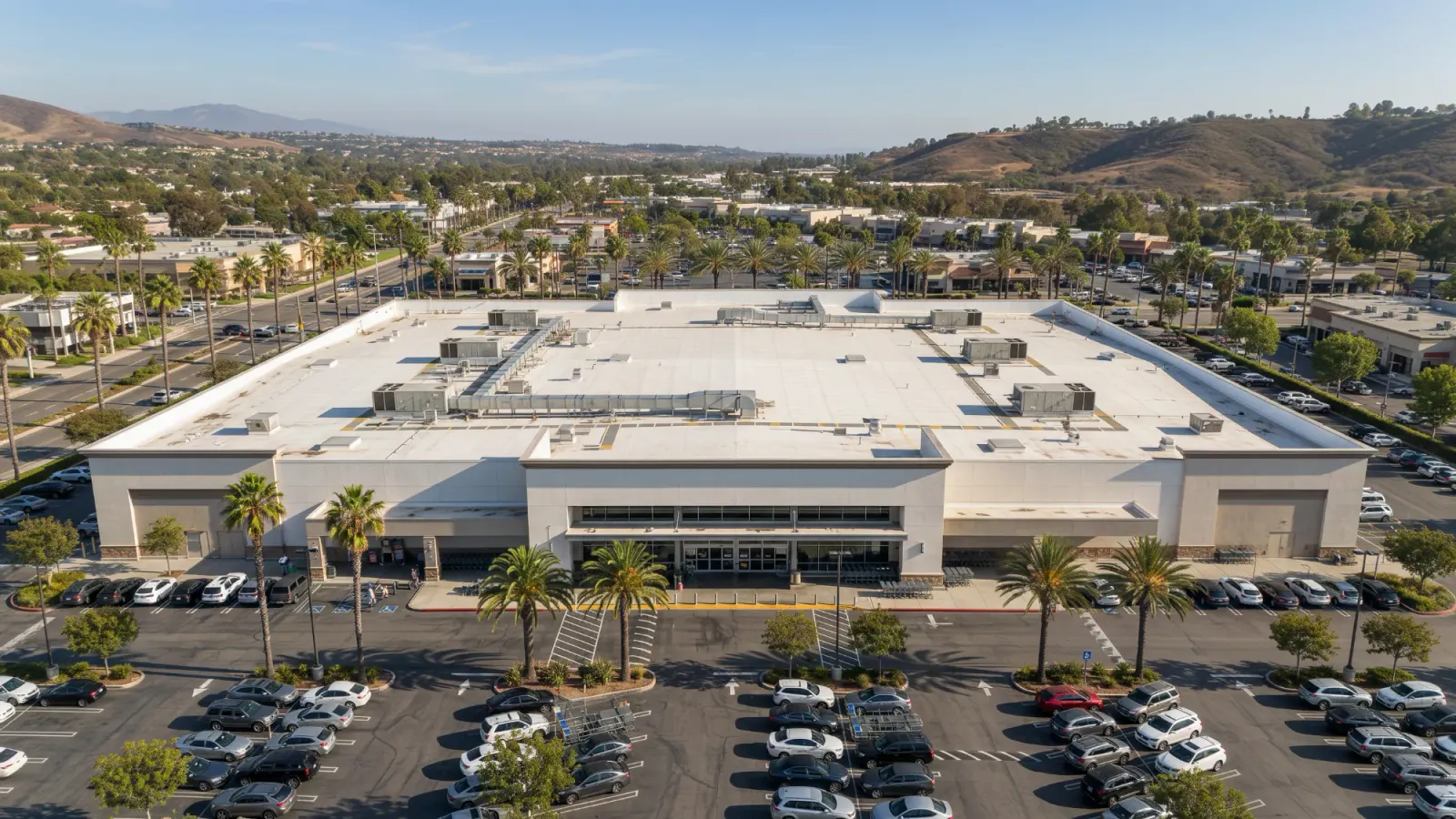
Which of these sounds most like your roof? Tap a card.
Single-story, air-conditioned, large roof, little insulation
How much a cool roof is likely to help
Most likely to notice it
Why
The roof is the biggest surface facing the sun, and little stands between it and the cooled space
Single-story, well insulated under the roof
How much a cool roof is likely to help
Some difference
Why
The insulation already slows the heat; the roof surface still runs cooler
Several floors under one roof
How much a cool roof is likely to help
Mostly the top floor
Why
The floors below are shielded by the ones above
A warehouse or shop that isn’t air-conditioned
How much a cool roof is likely to help
Comfort more than the bill
Why
Less heat comes through the roof, so the space under it stays less hot
Rooftop units and ductwork on the roof
How much a cool roof is likely to help
Can help the equipment too
Why
The air the units draw in and the ducts running across the roof sit right above the roof surface
A white roof that is dirty or worn
How much a cool roof is likely to help
Less than it should
Why
Dirt and wear lower reflectance; cleaning, repair or replacement brings it back
What Decides How Much a Cool Roof Helps
- Insulation under the roof
the less insulation there is, the more of the roof’s heat reaches the space below, and the more a cool surface matters.
- How much of the building is cooled
a fully air-conditioned office or store has more to gain than a partly cooled warehouse.
- Roof area compared with floors
a big, low building has more roof per square foot of floor than a tall one.
- Rooftop equipment and ducts
units and ductwork sitting over a cooler surface aren’t working in as much heat.
- Hours of sun
long, sunny cooling seasons give a reflective roof more to do.
- How clean it stays
dirt, debris and standing water dull a white surface.
- The roof underneath
wet insulation insulates poorly, and a failing roof is a poor place for a new surface.
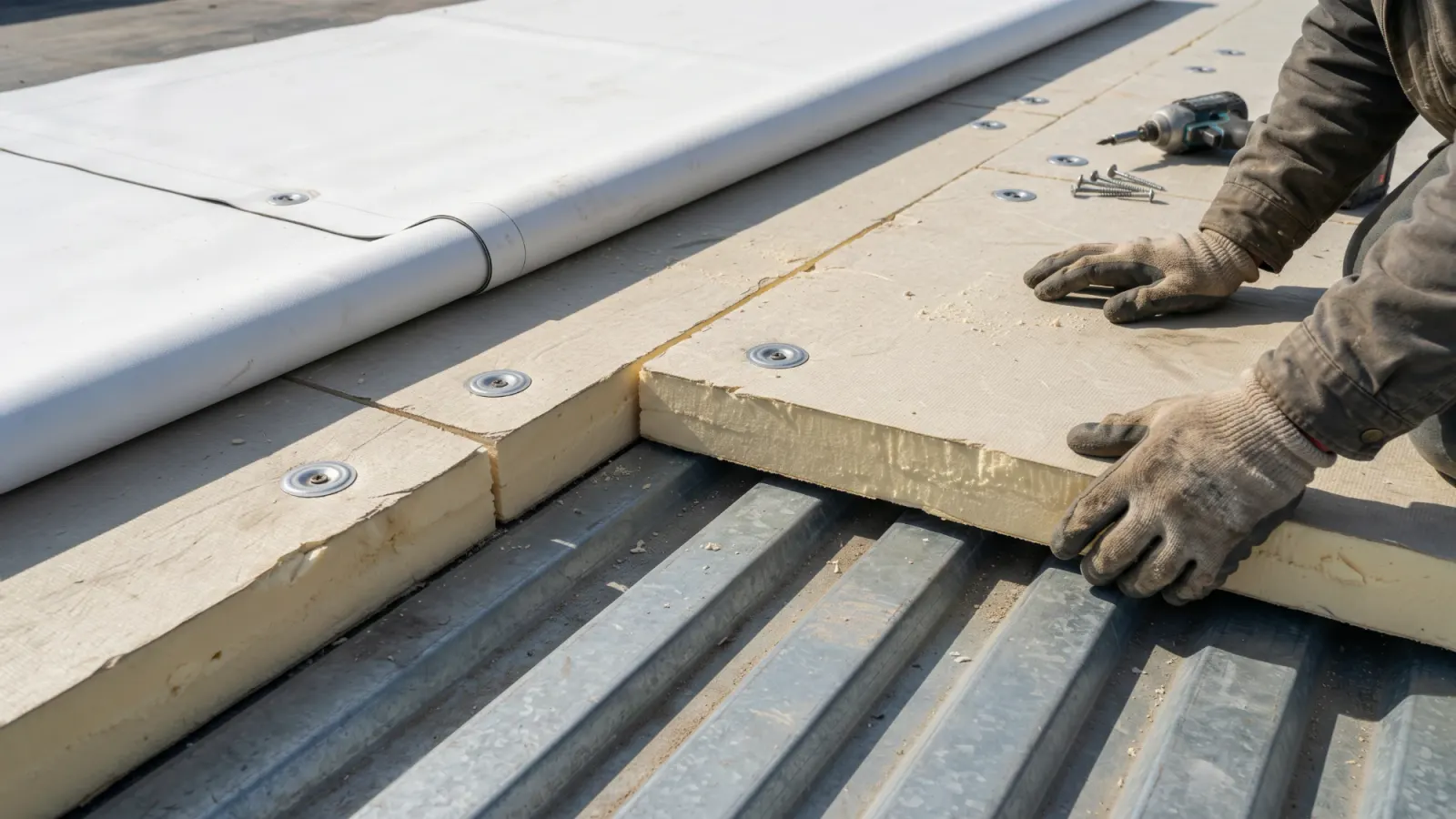
Cool Roof Options for Commercial Buildings
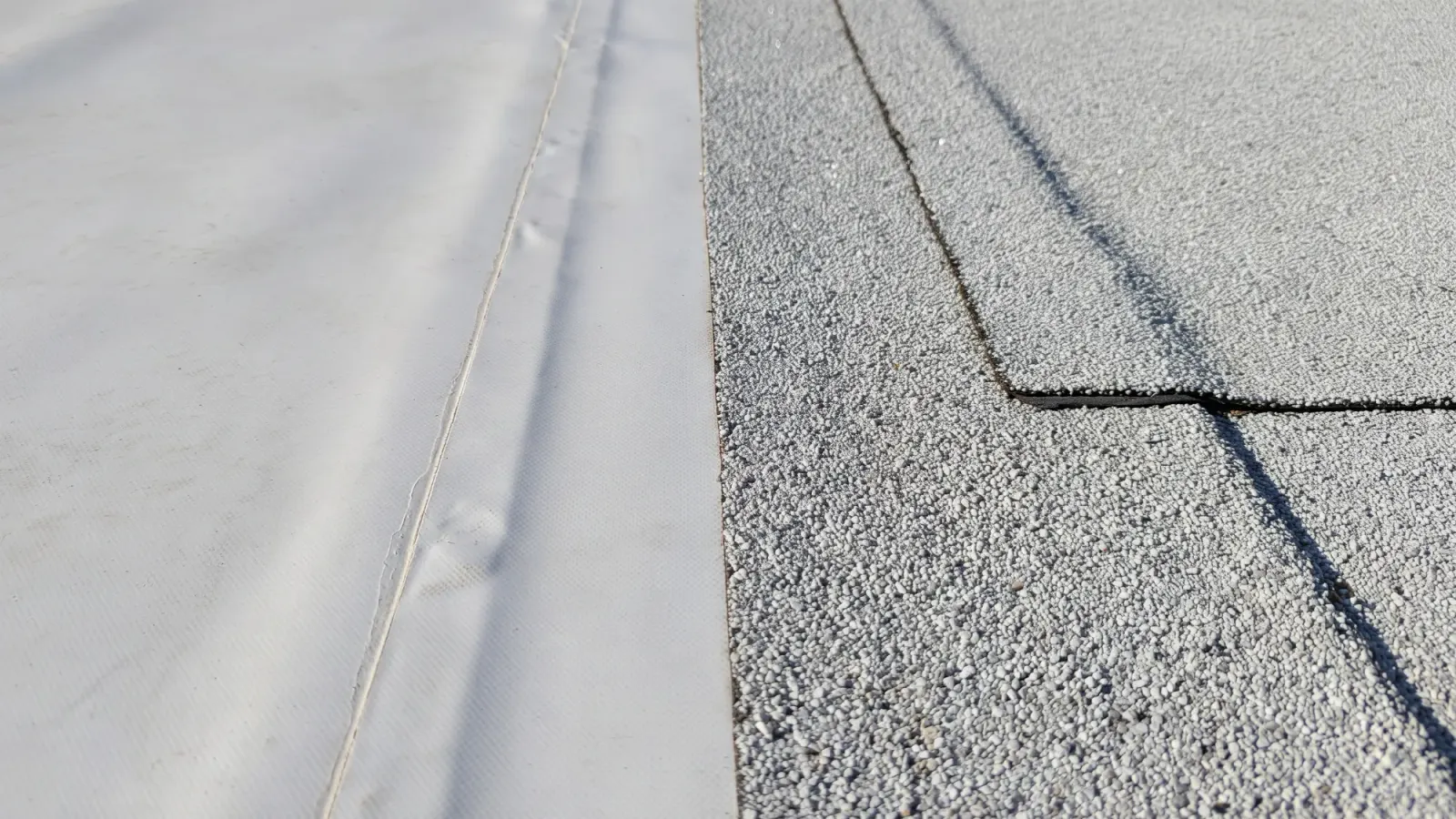
White TPO
- How it reflects
- A white single-ply membrane with hot-air welded seams
- What to know
- Reflective from the day it goes on; common on large, open roofs
Modified bitumen with a white cap sheet
- How it reflects
- White granules on the top layer of a multi-layer roof
- What to know
- Stands up well to foot traffic and many details; torch-applied or self-adhered
Reflective coating
- How it reflects
- A light-colored liquid applied over the existing roof
- What to know
- Only as good as the roof underneath; we don’t apply coatings
Our guides to TPO vs. EPDM vs. modified bitumen and whether a roof coating is worth it go further into each option. For homes, see our guide to cool roofs.
Cool Roofs and California’s Energy Code
California’s energy code (Title 24, Part 6) has cool roof requirements for many nonresidential reroofs, depending on how much of the roof is replaced, the climate zone and the building. Where they apply, the roofing product has to carry a CRRC rating that meets them.
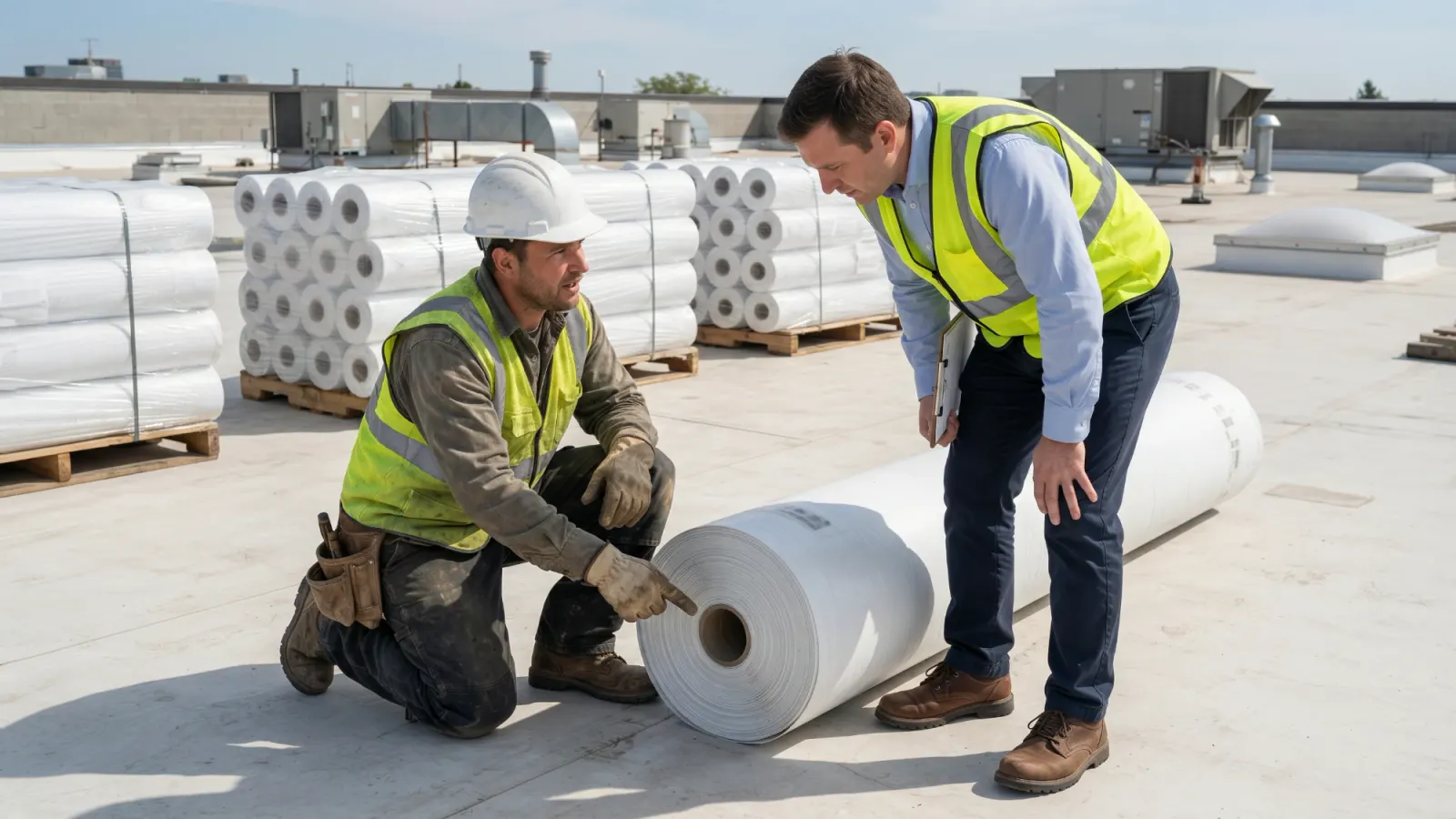
So on many commercial reroofs, the question isn’t only whether a cool roof will lower the bill; the permit may already call for one. Your roofer should know which path applies and handle it with the permit.
Before you choose a product, ask whether the permit for your reroof calls for a cool roof, and have the product and its rating named in the written scope.
What Works Against a Cool Roof
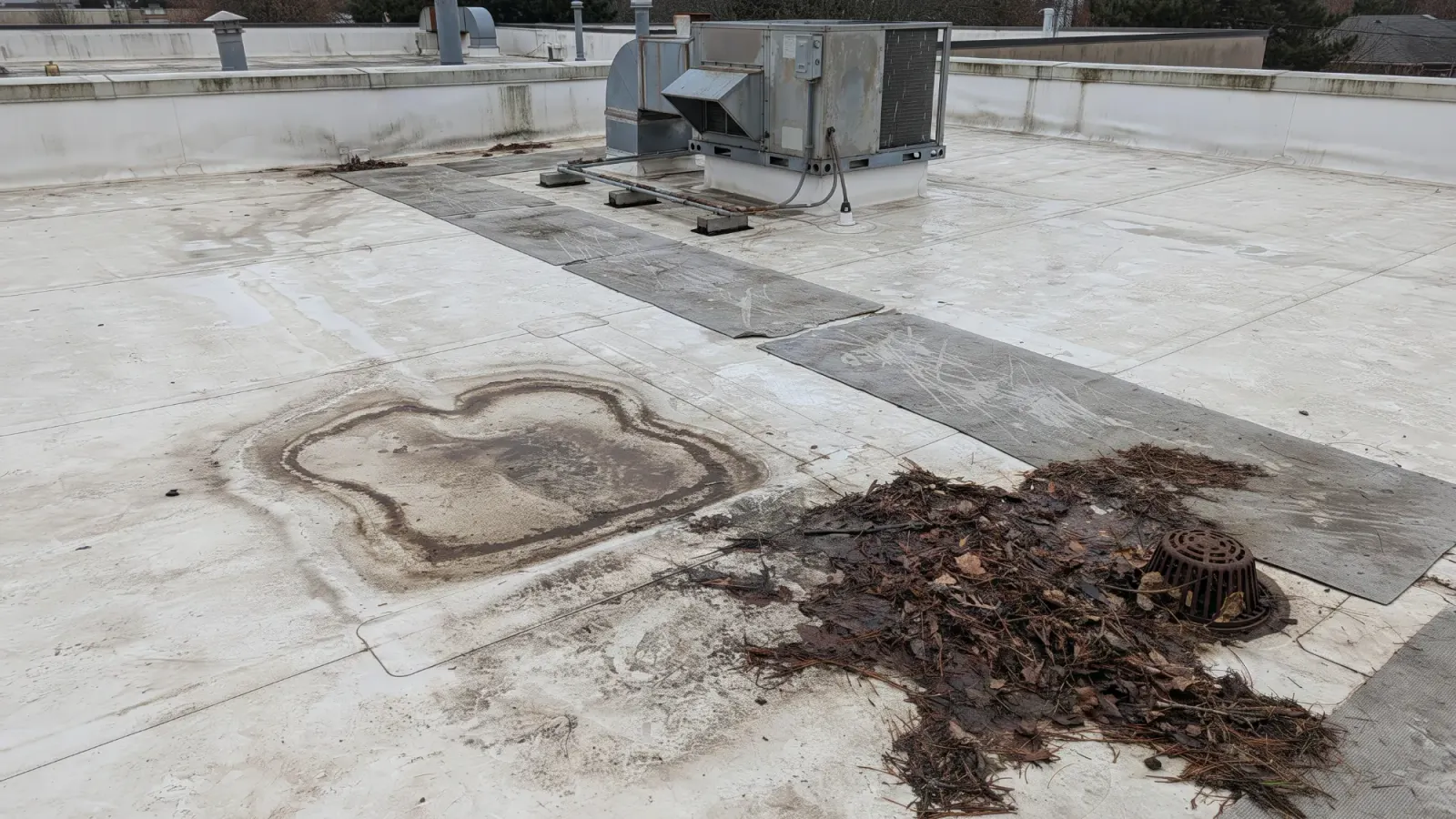
- Dirt and debris
A white roof covered in leaves, dust or grime reflects less; keeping it clear matters.
- Ponding water
Standing water leaves dirt rings and wears the surface where it sits.
- Wet insulation
It conducts heat and keeps the roof deteriorating under any surface.
- Worn service paths
Foot traffic to the rooftop units scuffs and punctures the membrane; walk pads help.
- A coating over a failing roof
A reflective surface doesn’t fix seams, flashings or wet layers underneath.
- Expecting a promised number
How much a building saves depends on the building; be wary of anyone who guarantees a figure without looking at yours.
Questions to Ask Before You Choose a Cool Roof
How We Put a Cool Roof on a Commercial Building
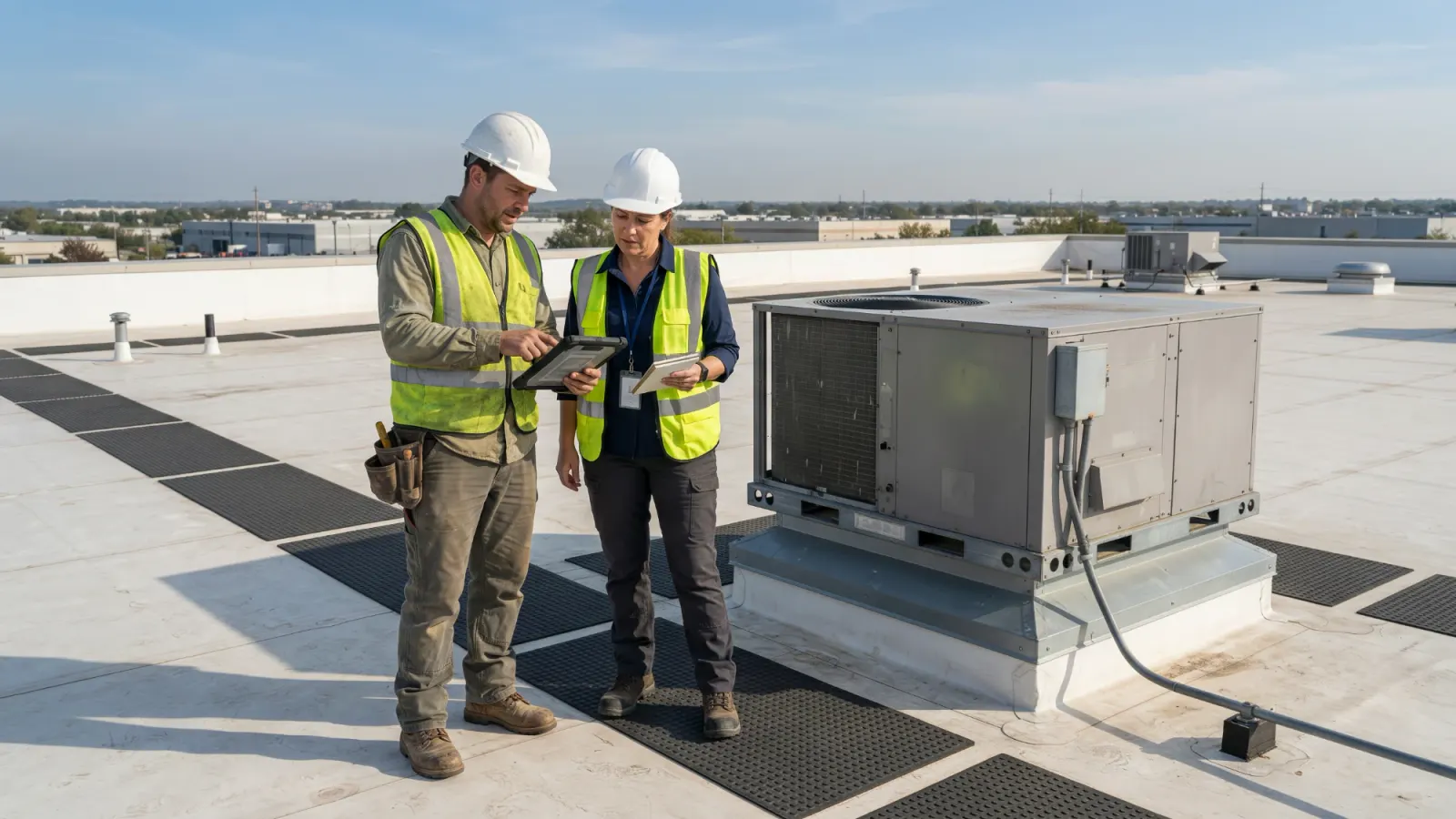
Survey the roof first. A roofer-led roof survey photographs the surface, the seams, the flashings, the drains and any soft or wet areas.
Make sure the roof underneath is sound. Wet insulation and damaged deck come out before anything new goes on.
Choose the system for the building. A white TPO membrane or a modified bitumen roof with a white cap sheet, picked for the roof’s drainage, equipment and foot traffic.
Name it in writing. The written scope names the product, and its cool rating where the permit calls for one, with the price, before any work.
Phase the work. A commercial roof replacement goes section by section, so the building stays open.
Keep it working. Scheduled maintenance keeps the drains and the surface clear, with a photo report every visit.
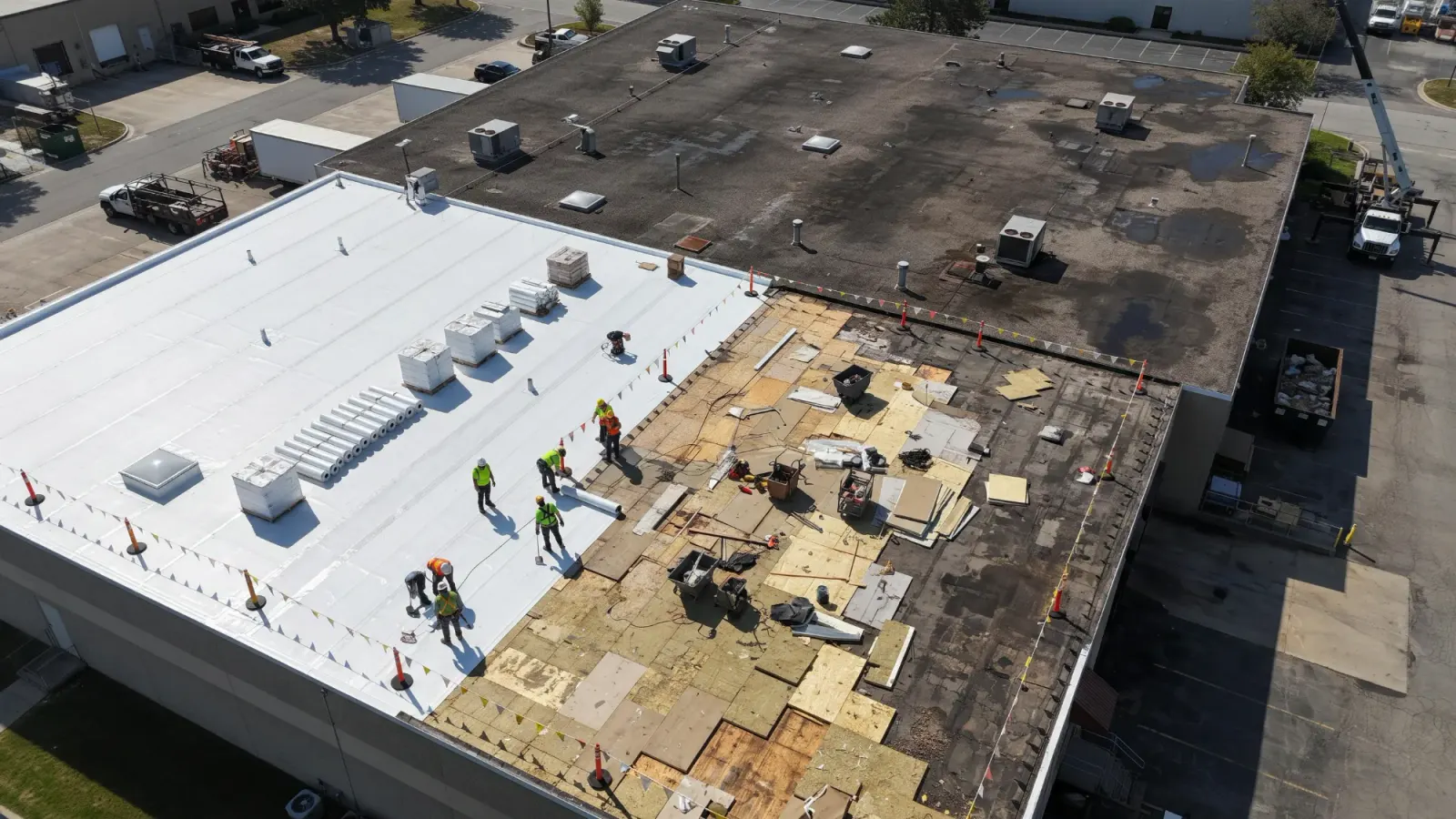
On a commercial building in Los Angeles, a new white cap sheet went over the whole roof and up the parapet walls. Our TPO roofing page explains the white membrane option.
Frequently Asked Questions
Can a cool roof lower my building’s energy bill?
It can reduce how much of the sun’s heat comes through the roof, which can reduce how hard the air conditioning works. How much depends on the building: its insulation, how much of it is cooled, how many floors sit under the roof and how clean the roof stays.
Which commercial buildings benefit most from a cool roof?
Usually single-story, air-conditioned buildings with large roofs and little insulation under them. A well-insulated or multistory building tends to notice less, mostly on the top floor.
Does a commercial cool roof have to be white?
White is the most reflective and the most common on commercial flat roofs, as a white TPO membrane or a white granulated cap sheet. Other light colors can be cool-rated too; the CRRC rating tells you how a product performs.
Is a cool roof required on a commercial reroof in California?
Often. California’s energy code (Title 24, Part 6) has cool roof requirements for many nonresidential reroofs, depending on how much of the roof is replaced, the climate zone and the building. The permit for the job sets what applies.
Does a white roof stay reflective?
It loses some reflectance as it gets dirty or worn. Keeping drains and the surface clear, preventing ponding and putting walk pads on service paths help it keep working.
Can you make our existing roof a cool roof?
We don’t apply roof coatings. When a commercial roof is replaced, we install a white TPO membrane or a modified bitumen roof with a white cap sheet, after a roofer-led roof survey shows what the roof needs.
Wondering if a Cool Roof Fits Your Building?
Start with the roof you have. Request a roof survey: a roofer photographs the roof, tells you in plain English what it needs and whether a reflective system fits, and gives you a written scope and price before any work. Or call (310) 340-1643.
