
How to Spot Attic Condensation Before It Turns to Mold: An Attic Close-Up
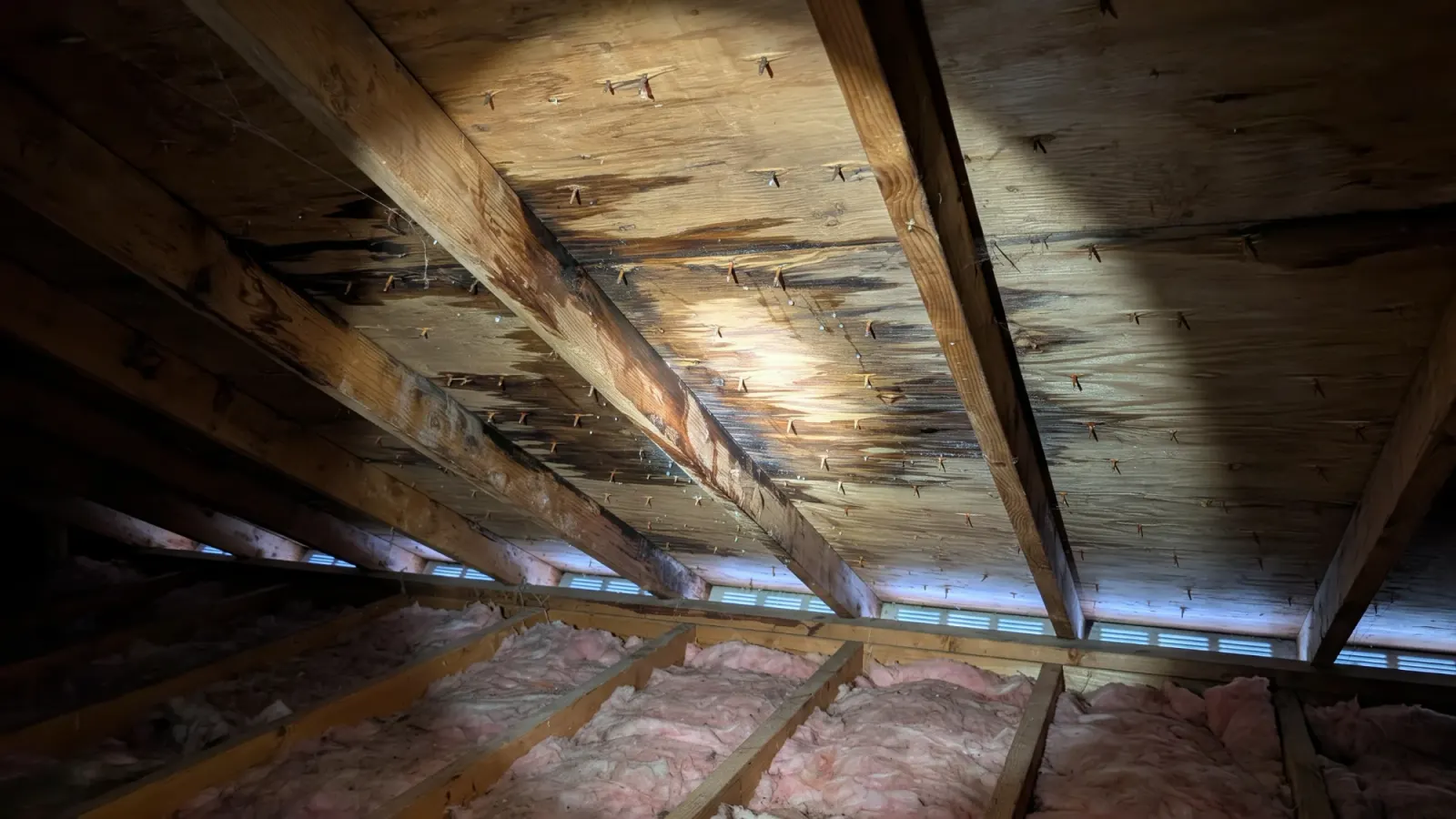
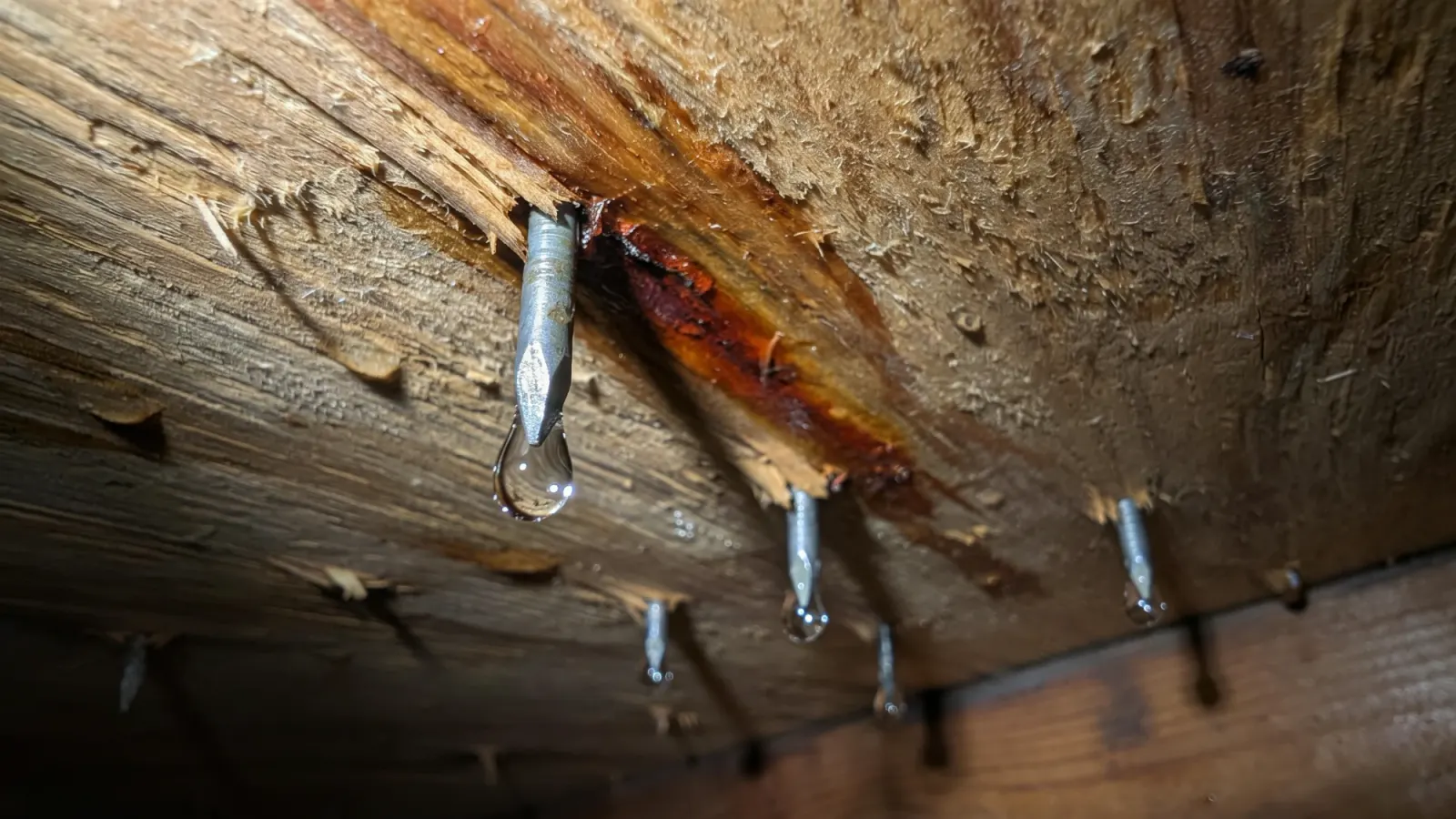
Attic condensation is water that forms on the underside of the roof when warm, damp air from the house meets a cold roof deck. It shows up on cool mornings as droplets on nail tips and dark stains on the wood, and it can look a lot like a roof leak. Left alone, the same damp spots can grow mold and soften the deck.
Here is how to spot it up close before it turns to mold: what to look for in the attic, how to tell it from a roof leak, what causes it, what not to do, and how it gets fixed, from the vents to the decking.
What Attic Condensation Is
Every home puts moisture into the air: showers, cooking, laundry, even breathing. Some of that warm, damp air rises into the attic. On a cool night the roof deck cools down, and when the damp air touches it, the moisture turns to water on the coldest surfaces first: the underside of the deck and the tips of the roofing nails poking through it.
A well-ventilated attic carries that damp air out before it settles. When the air can’t move, the moisture stays, night after night, and the wood stays damp long enough for stains, rot and mold to start.
Condensation or a Roof Leak?
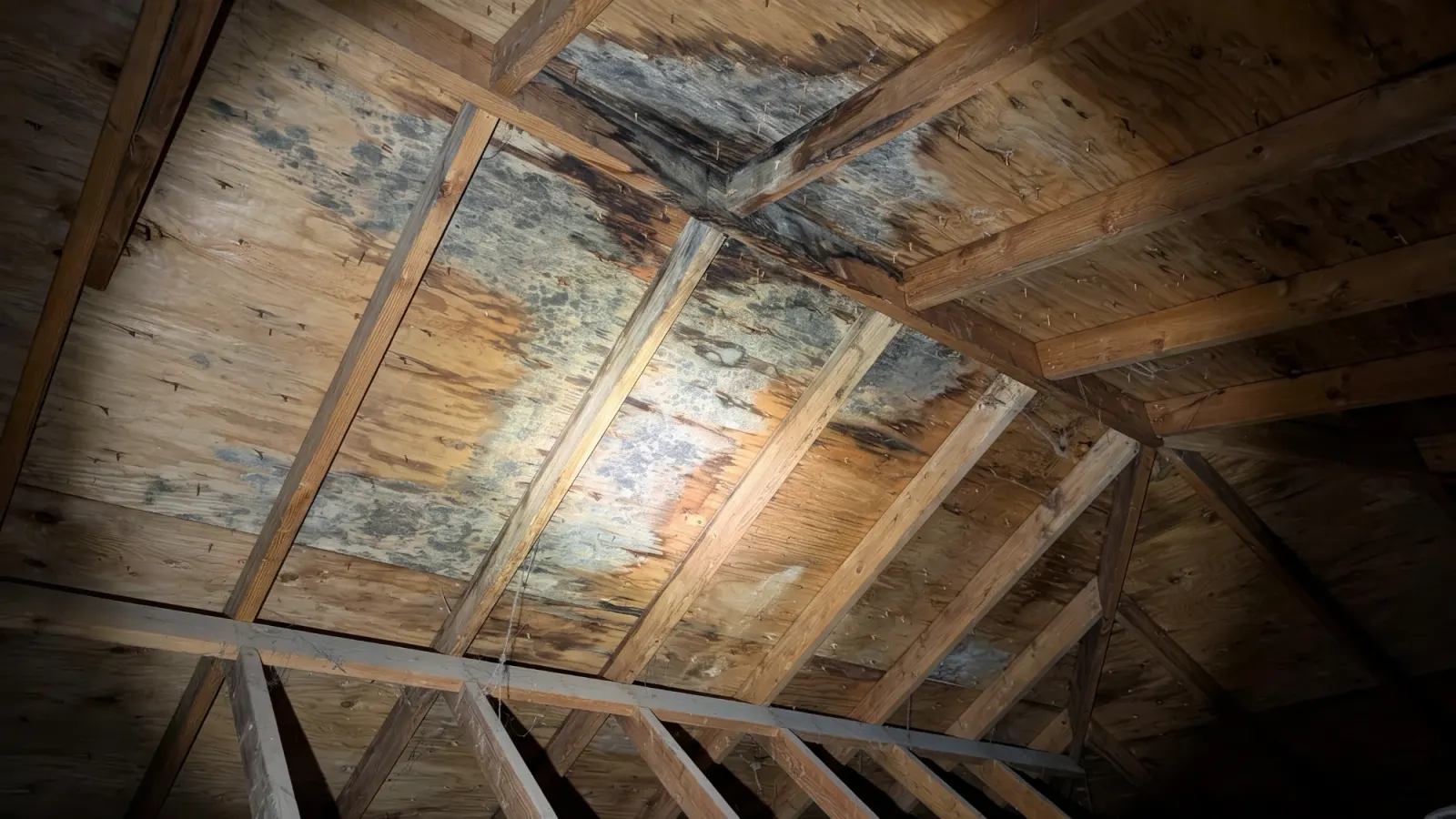
When it happens
- Attic condensation
- Cool mornings, often in dry weather
- A roof leak
- During or after rain
Where it shows
- Attic condensation
- Spread across the underside of the deck, often worst high up near the ridge or on the coolest side
- A roof leak
- One spot or a trail, below a vent, flashing, valley or damaged roofing
What the nails look like
- Attic condensation
- Droplets or rust on many nail tips across the attic
- A roof leak
- Rust or drips around one area
The stain pattern
- Attic condensation
- Even darkening or spotting over a wide area
- A roof leak
- A trail running downhill from one point
What fixes it
- Attic condensation
- Ventilation, and stopping the moisture at its source
- A roof leak
- Finding and repairing the opening in the roof
Our guides to tracing a roof leak in the attic and reading a ceiling stain cover the leak side of the question.
An Attic Close-Up: What to Look For
Only go up if the attic has a safe way in and a floor or joists to stand on. Step only on the joists or a walkway, never on the ceiling between them, and take a bright flashlight.
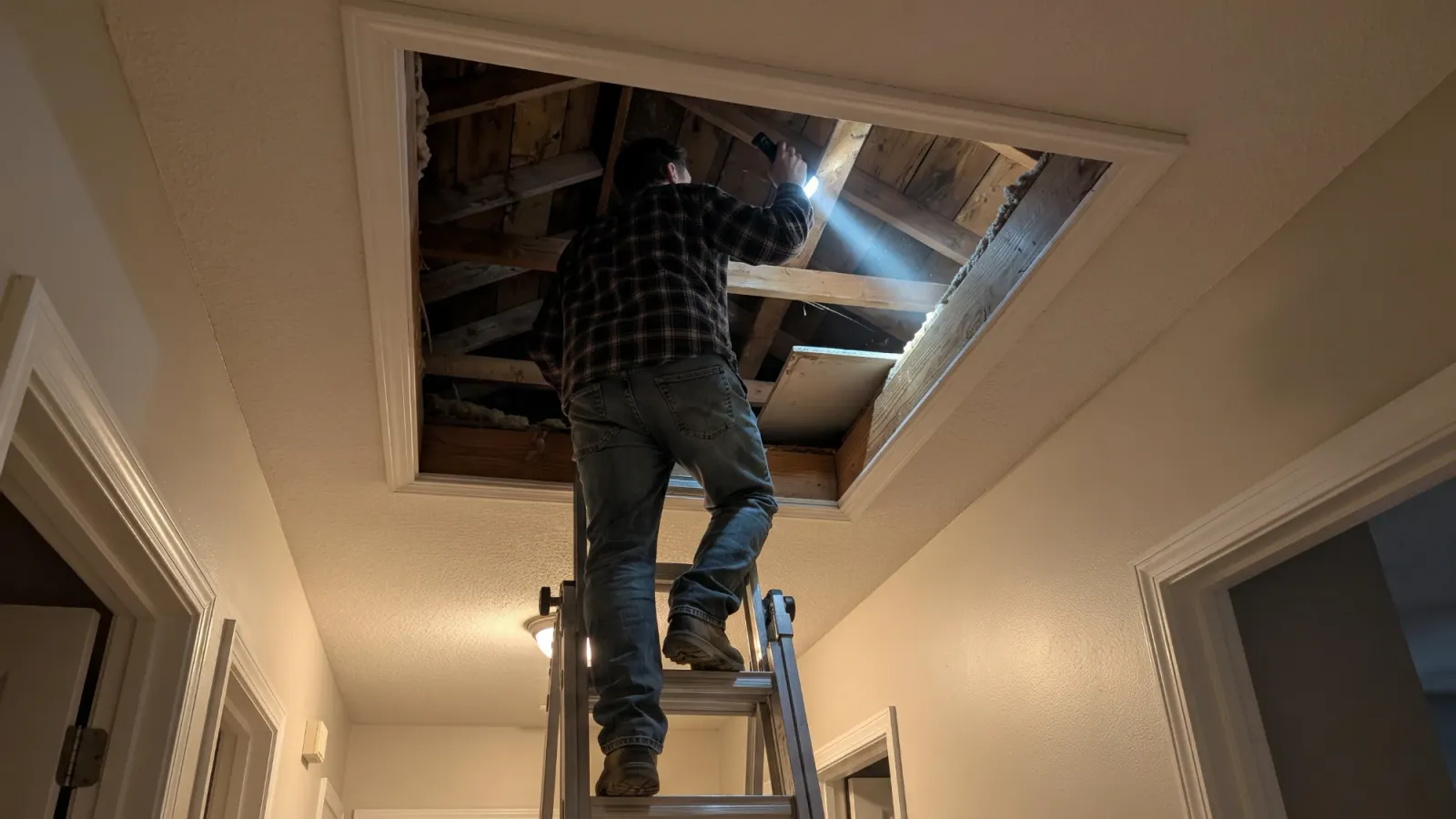
At the hatch, smell first. A musty, damp smell is often the first sign.
Look at the nail tips. On a cool morning, droplets hanging from the nails that poke through the deck, or rust streaks running from them, point to condensation.
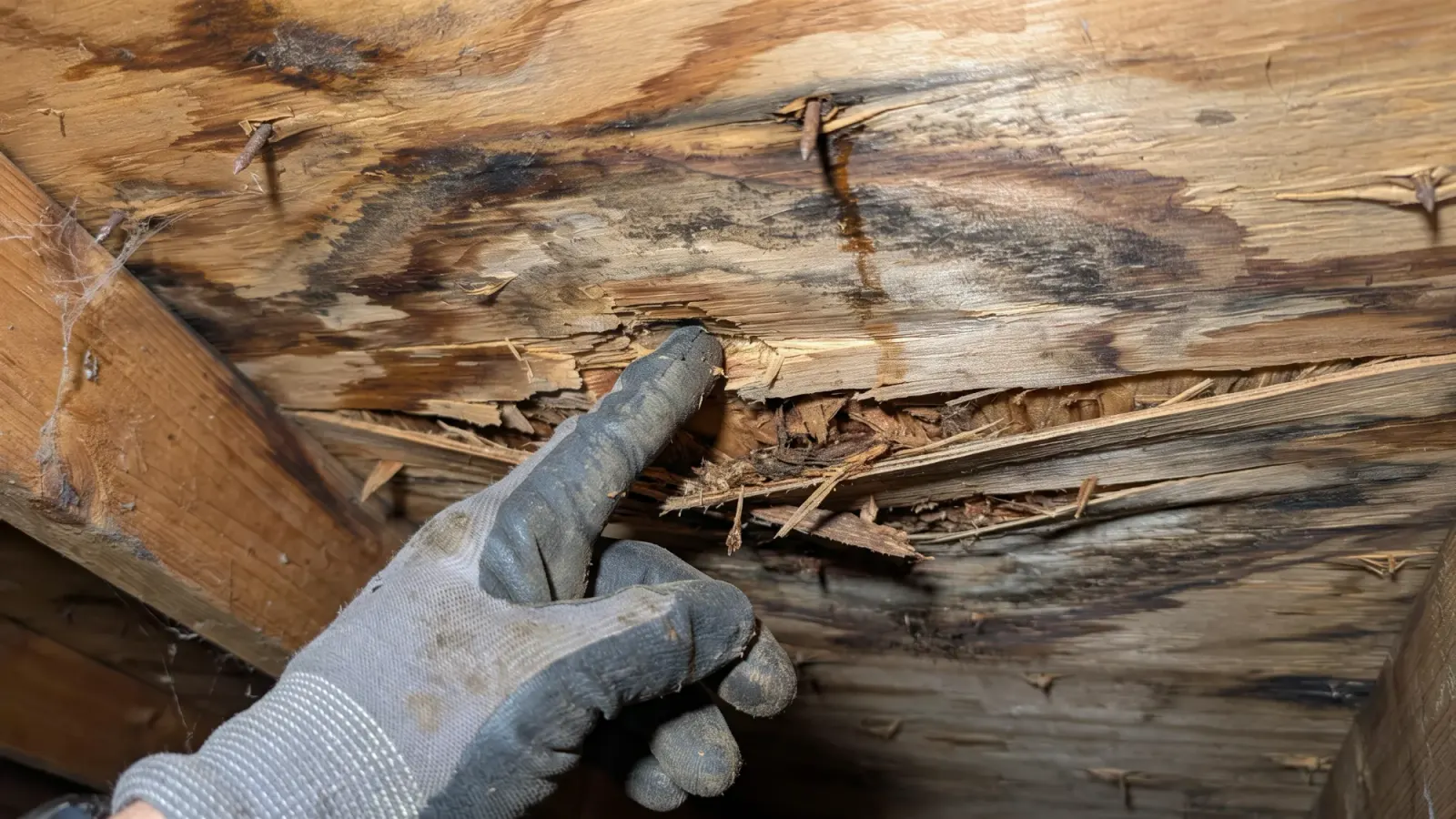
Look at the underside of the deck. Dark staining, black spotting or a blotchy grey film spread over a wide area, often worst high up.
Feel for damp. Insulation that is damp, matted or compressed, and wood that feels soft when pressed.
Look at the eaves. Insulation pushed against the soffit vents blocks the air coming in.
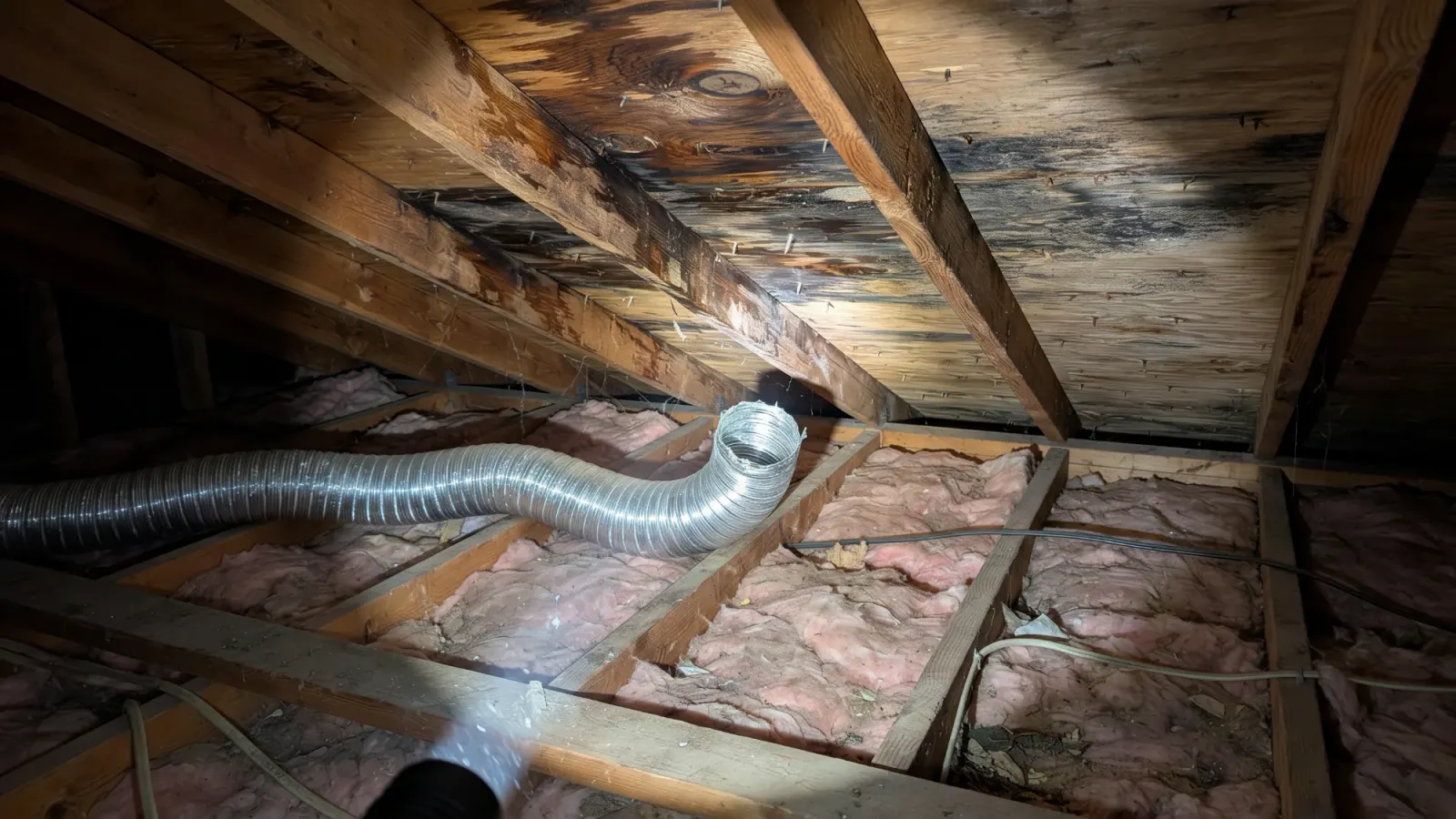
Follow the ducts. A bathroom, kitchen or dryer duct that ends loose in the attic is blowing damp air straight into it.
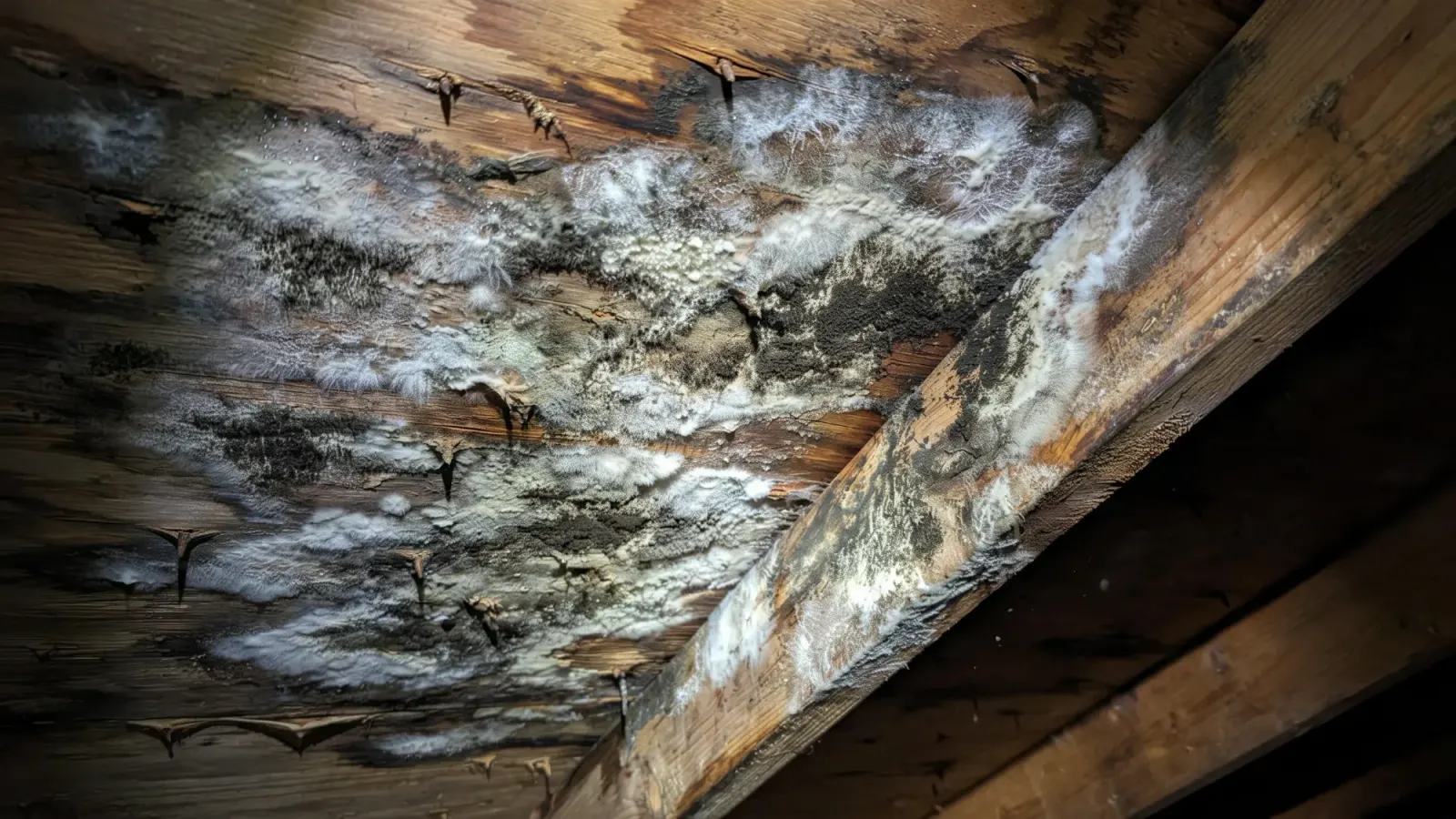
Look for fuzz or spots. White, green or black fuzzy growth on the wood is likely mold, and a reason to call a professional.
Photograph everything. A roofer can tell a lot from your photos of the deck, the nails and the eaves.
What Causes Attic Condensation
- Too little ventilation
Not enough intake at the eaves, not enough exhaust near the ridge, or the two out of balance.
- Blocked intake
Insulation, paint or debris covering the soffit and eave vents, so air can’t come in low.
- Exhaust fans venting into the attic
Bathroom, kitchen or dryer ducts that stop in the attic instead of going outside.
- Air leaks from the house
Gaps around light fixtures, the attic hatch and pipes let warm, damp air rise into the attic.
- Extra moisture inside
Long showers without the fan, drying laundry indoors, many people under one roof.
- Cool, damp mornings
Near the coast and in the cooler months, the marine layer and cold nights make the deck the coldest thing around.
Early Signs or Mold Already?
Which of these sounds most like your roof? Tap a card.
Droplets on nail tips on cool mornings, wood still sound
What it usually means
Early condensation
What to do
Fix the ventilation and the moisture sources now
Rust streaks from many nails, dark staining on the deck
What it usually means
Condensation that has been happening for a while
What to do
Fix the cause and have the deck checked
Damp, matted insulation near the eaves
What it usually means
Blocked intake, or moisture collecting low
What to do
Clear the intake, check the insulation
Fuzzy white, green or black growth on the wood
What it usually means
Likely mold
What to do
Call a mold remediation company, then fix the cause
Wood that is soft, delaminating or crumbling
What it usually means
Damage to the deck
What to do
Have a roofer check it; damaged decking gets replaced
What Not to Do
Don’t block the vents to keep the attic warmer. It traps the moisture in.
Don’t add more roof vents without checking the intake. Exhaust with nothing feeding it can pull damp air up from the house.
- Don’t paint over or spray mold and leave it
Covering it doesn’t fix the moisture that grew it.
- Don’t step between the joists
The ceiling below won’t hold you.
Don’t assume it’s a roof leak and pay for patching shingles. Check the timing and the pattern first.
Who Fixes What
- A roofer balances the ventilation: clearing blocked intake at the eaves and soffits, repairing, replacing or adding vents, and flashing every vent into the roof. A roofer also replaces soft or damaged roof decking.
- The contractor who installs your fans and ducts extends bathroom, kitchen and dryer ducts to the outside. Where a duct exits through the roof, the vent cap is flashed into the roofing.
- A mold remediation company cleans up mold that has already grown.
- You cut the moisture at the source: run the bathroom fan during and after showers, use the kitchen hood, and vent the dryer outside.
Your Attic Condensation Checklist
How We Help
Book a free roof evaluation. A roofer checks the vents from the roof and, where it can be reached, from the attic.
Photograph every vent and finding. The intake at the eaves, the exhaust near the ridge, the decking and the insulation.
Explain the likely cause in plain English: a blocked intake, a missing side of the system, a duct ending in the attic, or a roof leak after all.
Give you a written scope and price before any work: which vents to clear, repair, replace or add, and where.
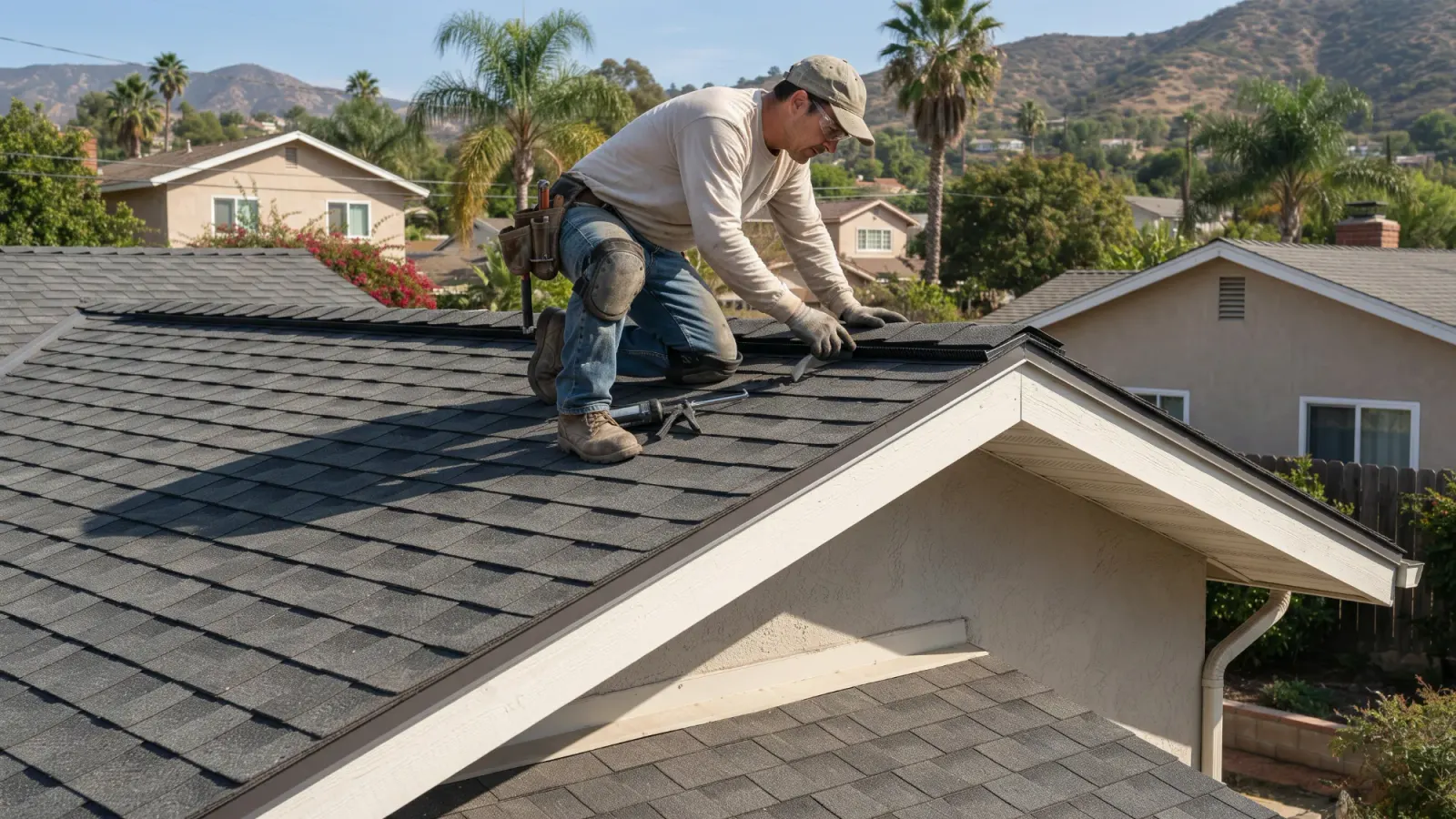
The vents are fixed as our attic ventilation work, every one flashed into the roof so it doesn’t become a leak. Soft or damaged decking found under the roofing is replaced, and when a roof is near the end of its life, the ventilation is planned with a shingle roof replacement, where the deck is checked and photographed while it is exposed.
Frequently Asked Questions
What causes condensation in the attic?
Warm, damp air from the house reaching a cold roof deck. It happens when the attic doesn’t vent well, when the intake at the eaves is blocked, when bathroom, kitchen or dryer ducts end in the attic, or when air leaks up from the rooms below.
How do I know if it’s condensation or a roof leak?
Condensation shows up on cool mornings, often in dry weather, spread across the deck and on many nail tips. A roof leak shows up with rain, in one spot or a trail running downhill from an opening.
Can attic condensation cause mold?
Yes. Wood that stays damp night after night can grow mold and eventually soften. Fixing the ventilation and the moisture sources early keeps it from getting that far.
Will more roof vents fix attic condensation?
Only if the system is balanced. Air has to come in low at the eaves and leave high near the ridge. Adding exhaust without intake can make it worse.
Do you remove attic mold?
No. Mold cleanup is a job for a mold remediation company. We fix the ventilation that let the moisture build up and replace roof decking that has been damaged.
Do you replace damaged roof decking?
Yes. Soft or damaged decking found under the roofing is replaced, during a repair or when the roof is replaced, and photographed so you can see it.
Seeing Droplets or Stains in the Attic?
Find out whether it is condensation or a leak. Book a free roof evaluation: a roofer checks the vents and, where it can be reached, the attic, photographs what is there and gives you a written scope and price before any work. Or call (310) 340-1643.