
What’s Under Your Shingles: Underlayment, Decking and Drip Edge, Explained
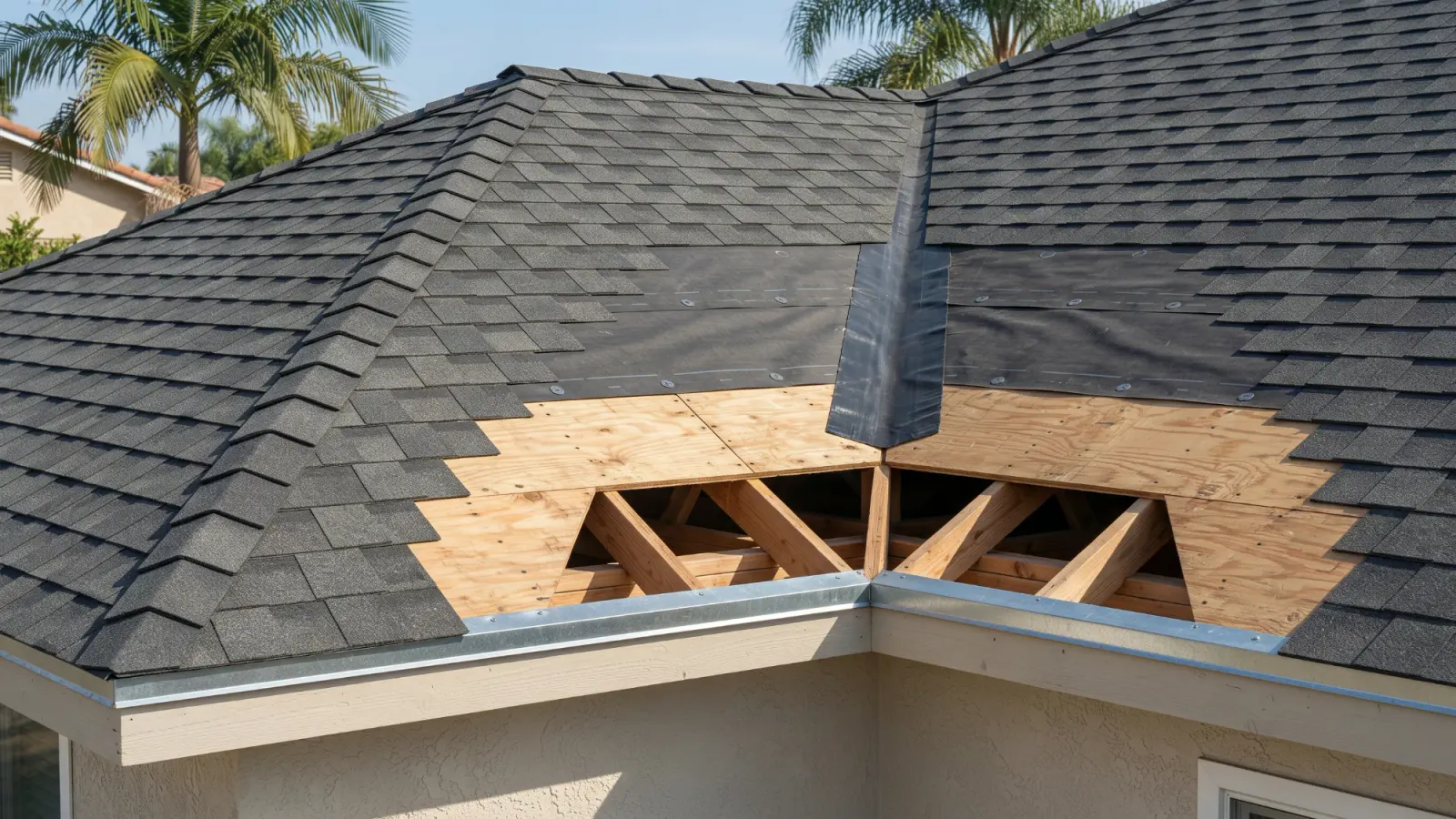
What’s under your shingles matters more than the shingles themselves. The shingles are the part you see from the street, but the deck, the underlayment, the drip edge, the flashings and the vents underneath them are what keep the water out and the roof lasting.
They are also the lines in a roofing quote that are easiest to skim past. Here is a cutaway of a shingle roof from the framing up, what each layer does, what each line item in your quote means, and what to ask so you know what you are paying for.
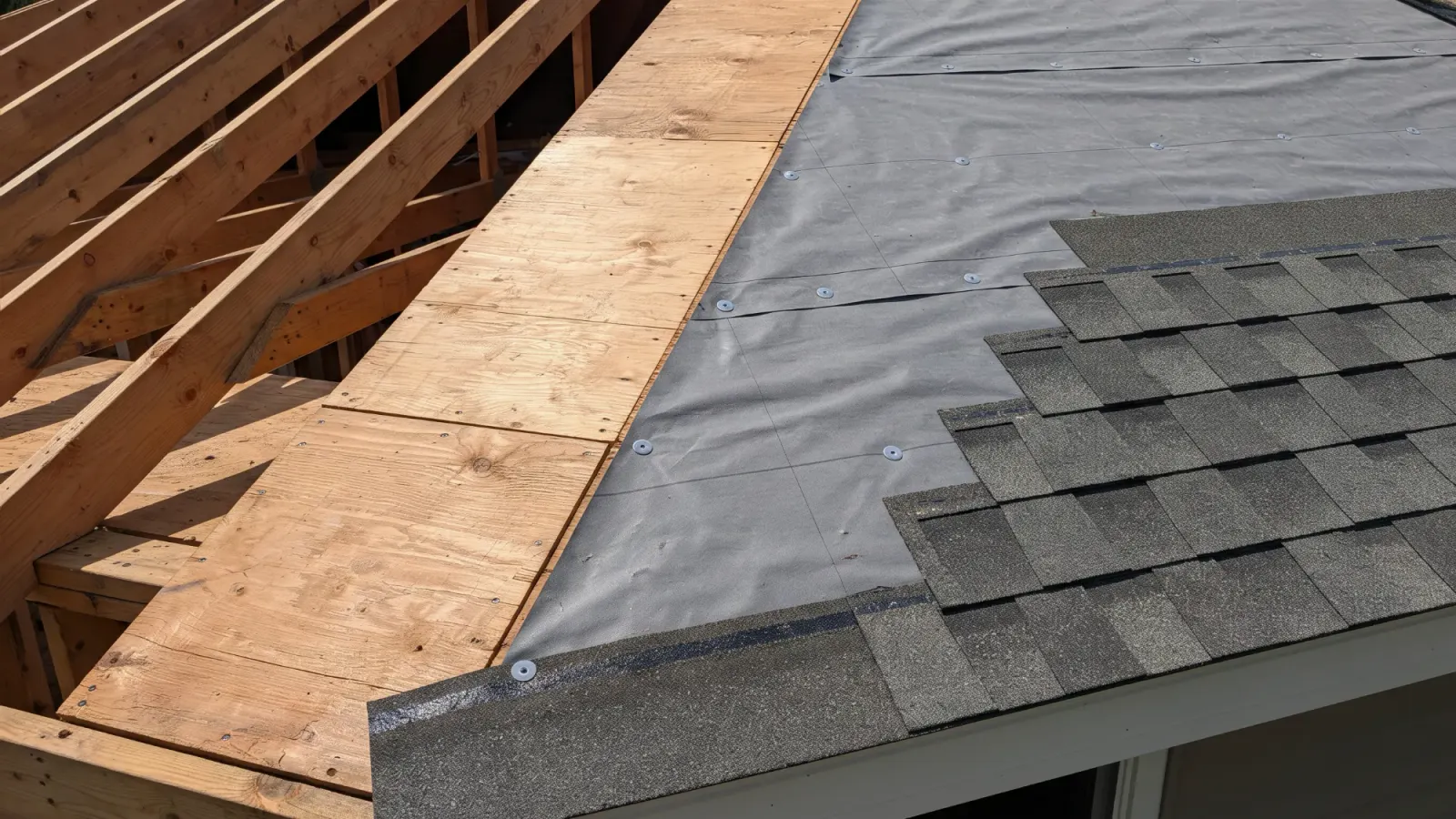
The Layers, From the Bottom Up
- The framing
the rafters or trusses that hold the roof up. You see them from the attic.
- The deck
plywood or OSB sheets, or older plank boards, nailed to the framing. Everything else is fastened to it.
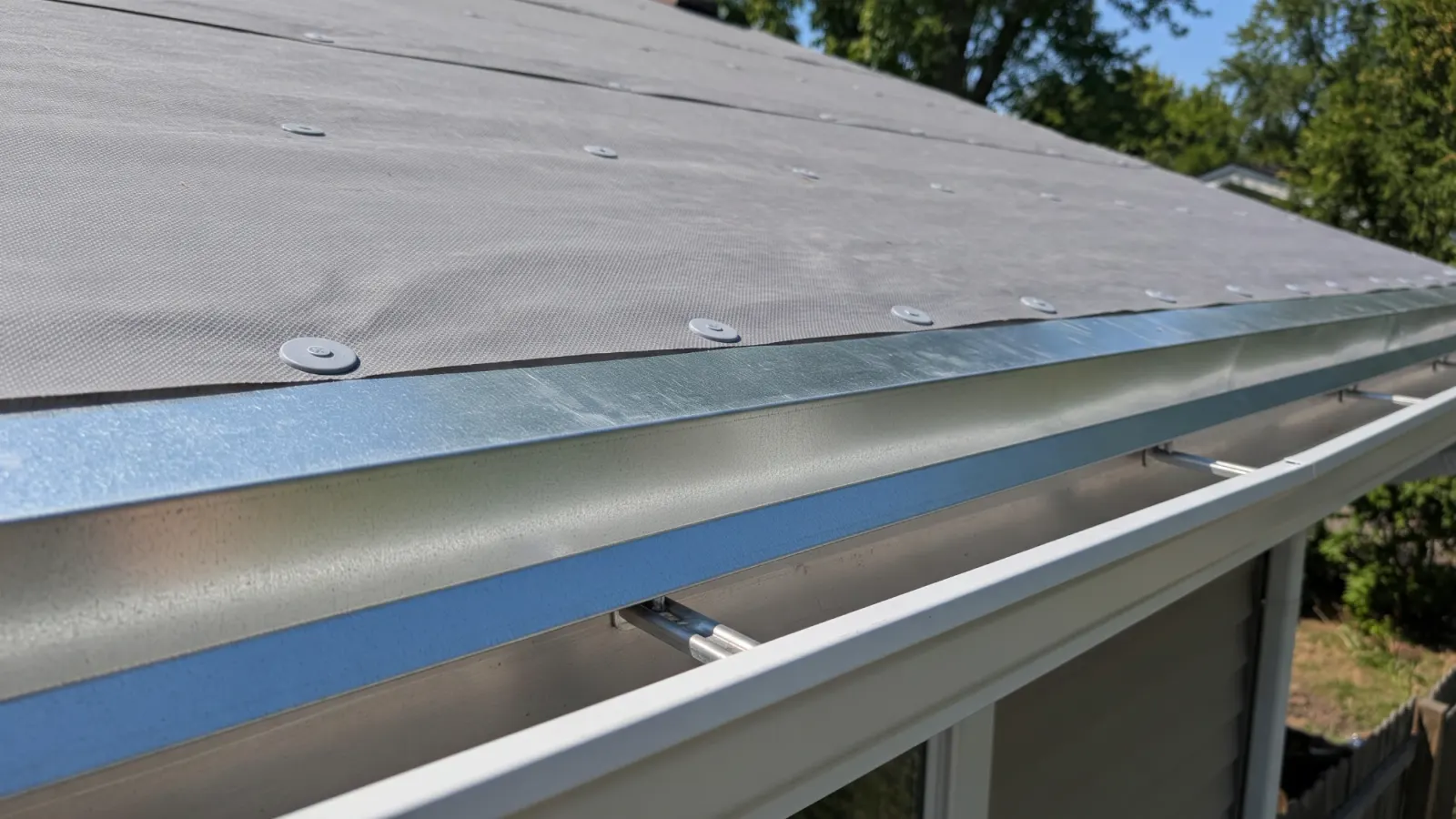
- Drip edge
a metal strip along the edges of the roof that turns water into the gutter and away from the fascia boards.
- Underlayment
a water-resistant layer over the whole deck, the backup that keeps water off the wood if anything gets past the shingles.
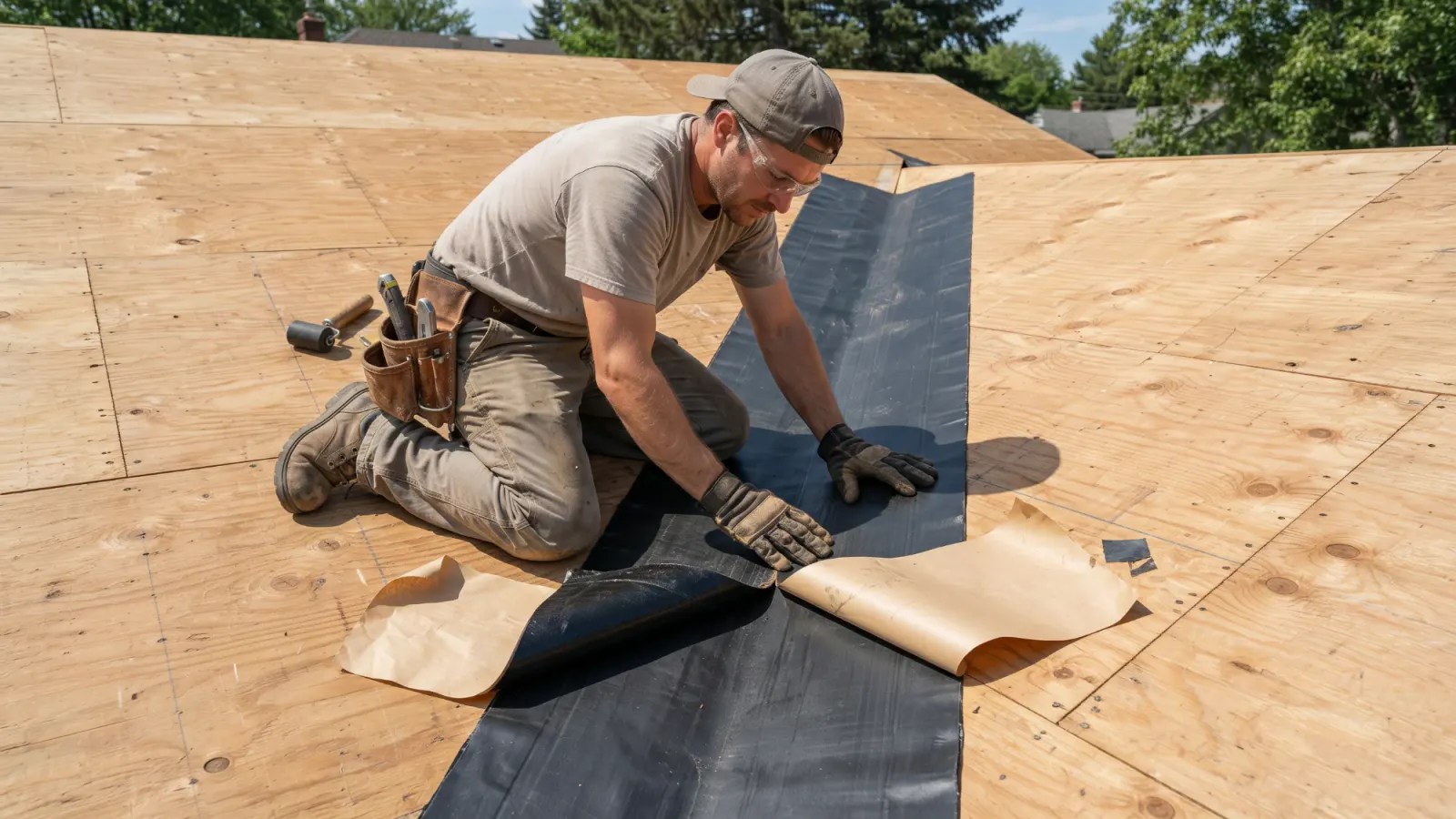
- Self-adhered membrane
a sticky, waterproof sheet in the places water collects or moves fastest, like valleys and low-slope sections.
- Starter strip
the first course along the eaves, which seals the bottom edge of the roof.
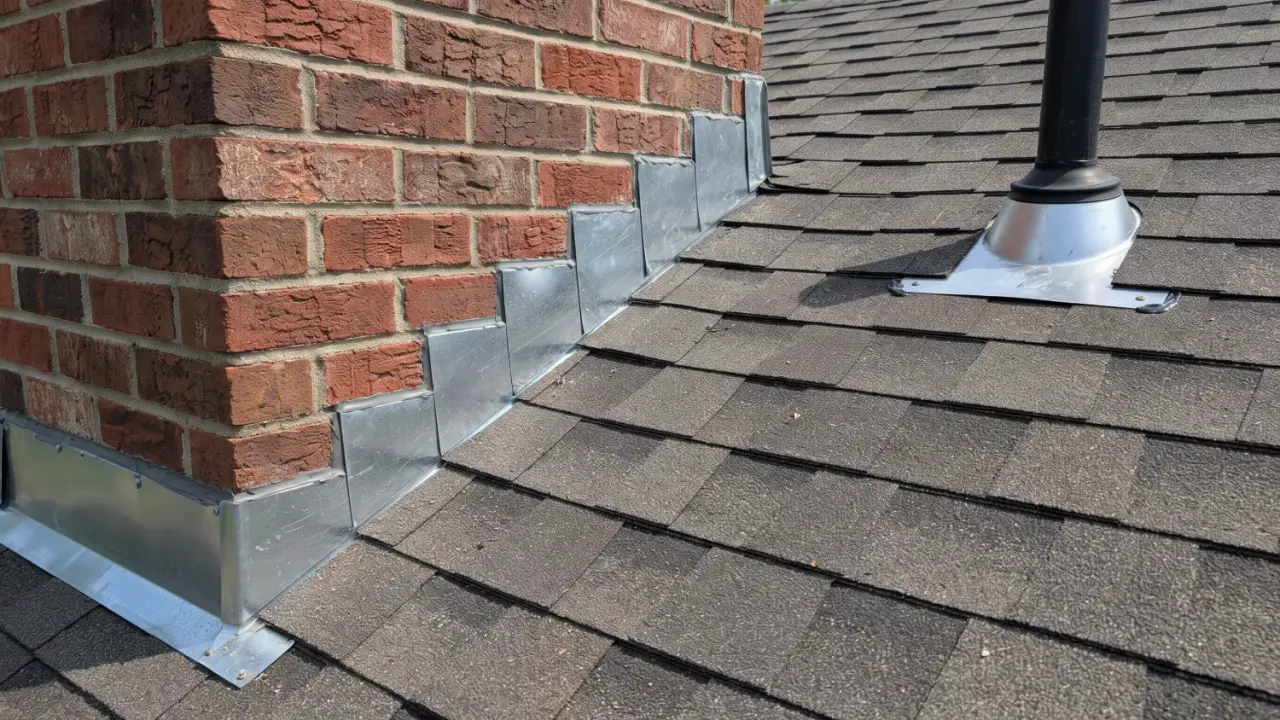
- Flashings
metal pieces at walls, chimneys, skylights and valleys, and boots around pipes, where the roof meets anything else.
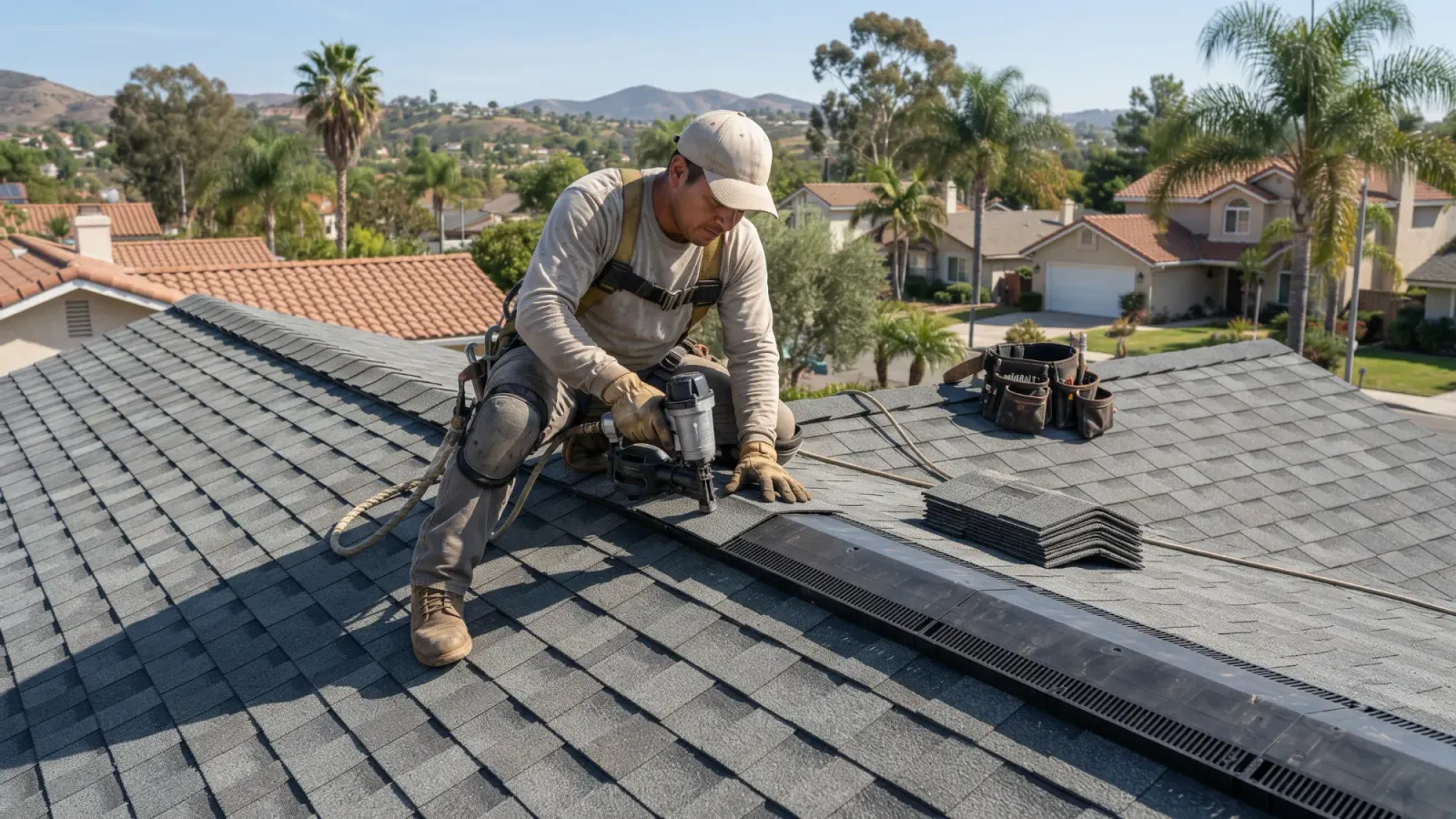
- Shingles
the layer you see, nailed course by course from the eaves up, each lapping over the one below.
- Ventilation and ridge caps
vents low at the eaves and high near the ridge so the attic can breathe, and caps that finish the top of the roof.
The Line Items in Your Quote
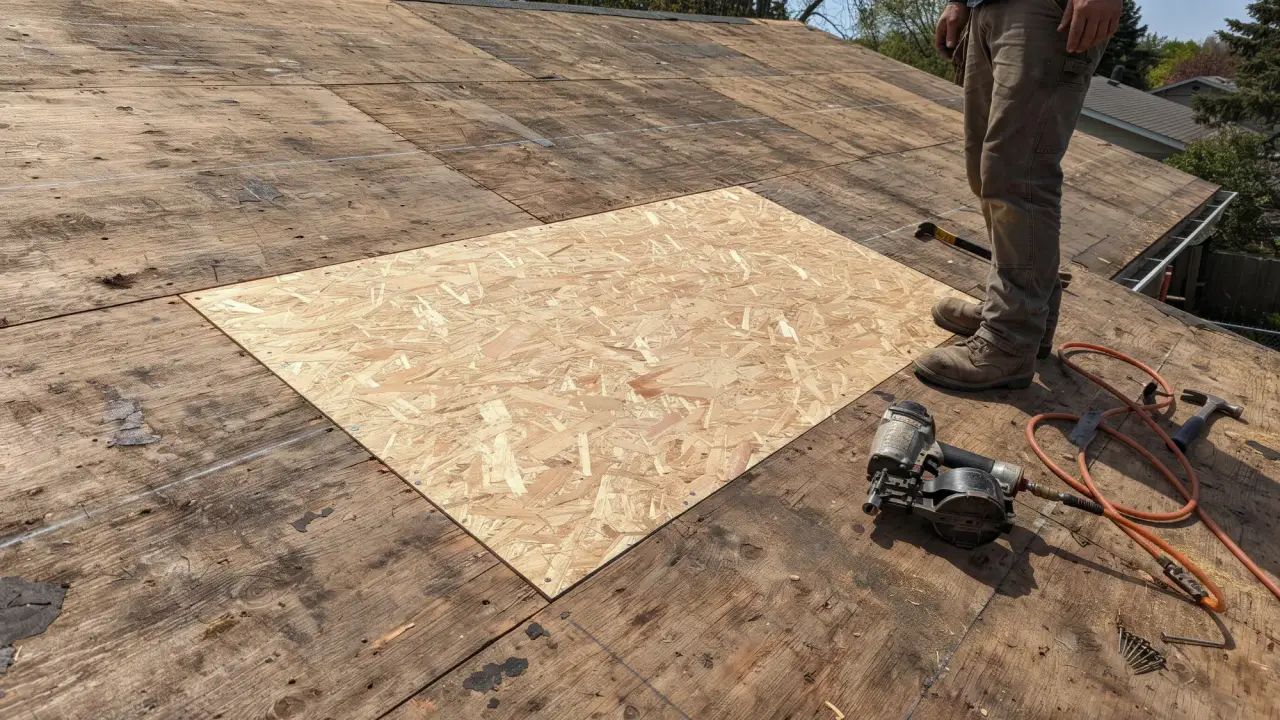
Tear-off to the deck
- What it means
- The old roof comes off down to the wood
- What to ask
- How many layers come off, and where the debris goes
Deck repair or replacement
- What it means
- Soft or damaged sections of the deck are replaced
- What to ask
- How damaged deck is handled and priced, and whether you see photos first
Underlayment
- What it means
- The water-resistant layer over the whole deck
- What to ask
- What kind, synthetic or felt, and which brand
Self-adhered membrane
- What it means
- A waterproof sheet where water collects
- What to ask
- Where it goes: valleys, low-slope areas, around penetrations
Drip edge
- What it means
- Metal at the eaves and rakes
- What to ask
- Is it new, and does it match the roof or the trim
Flashings
- What it means
- Metal at walls, chimneys, skylights and valleys, boots at pipes
- What to ask
- Are they replaced, or reused
Ventilation
- What it means
- Intake at the eaves, exhaust near the ridge
- What to ask
- Is the system balanced, and are vents added or replaced
Shingles and ridge caps
- What it means
- The finished surface
- What to ask
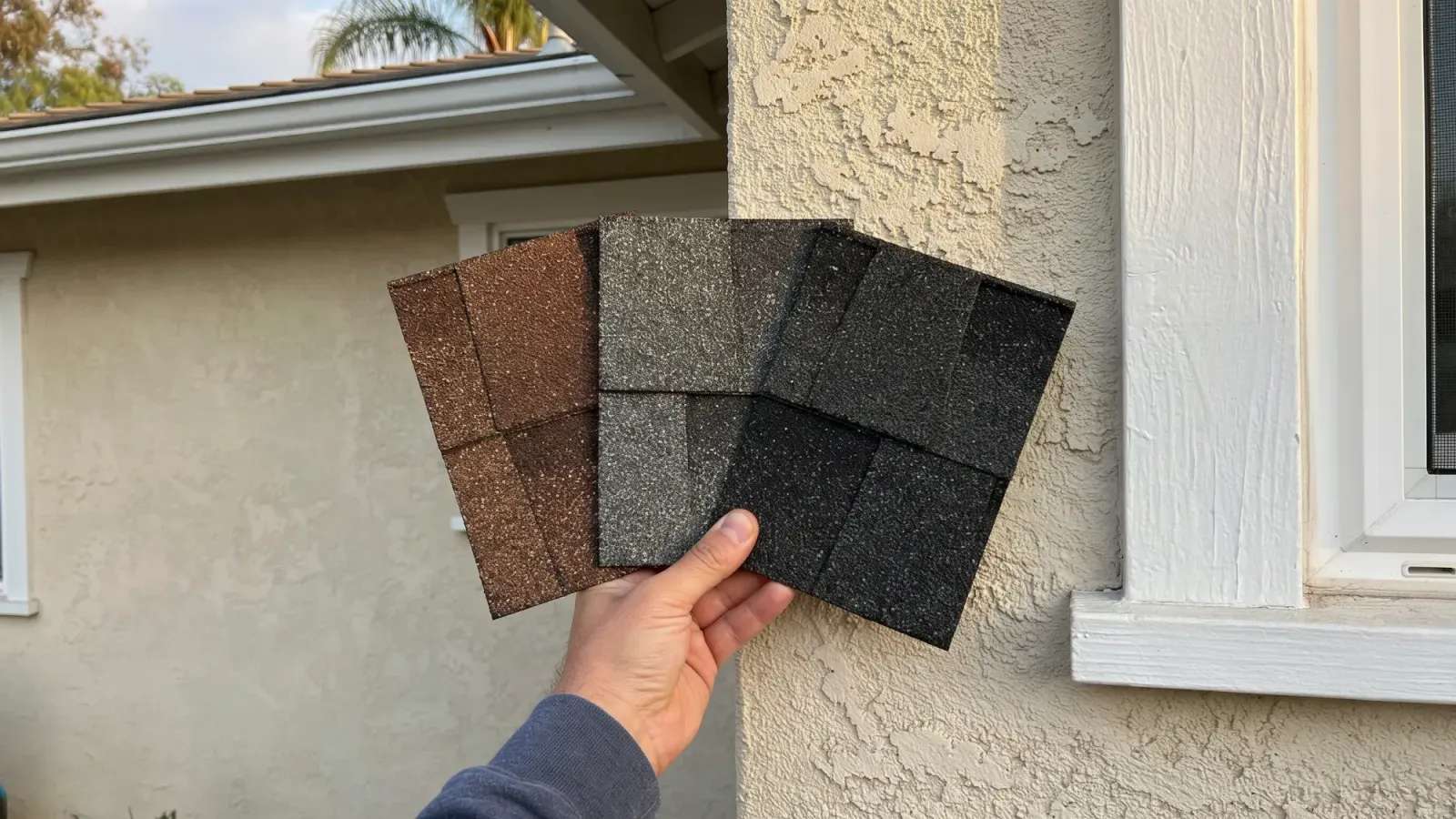
- Which shingle, which color, and the manufacturer’s warranty
Permit and inspection
- What it means
- The building department’s sign-off
- What to ask
- Who pulls the permit and books the inspection
Our guide to the types of asphalt shingles explains the top layer, and our guide to drip edge flashing goes further into the edge.
Signs a Hidden Layer Has Failed
Which of these sounds most like your roof? Tap a card.
A soft or spongy spot when the roof is walked
The layer that usually failed
The deck
What it usually means
Wood that has been wet; it gets replaced during a repair or replacement
A sagging line or dip in the roof
The layer that usually failed
The deck or the framing
What it usually means
Have it looked at soon; our guide to a sagging roofline explains
Stains on the fascia or rotted edges below the gutter
The layer that usually failed
The drip edge
What it usually means
Water is running behind the gutter instead of into it
A leak around a chimney, skylight or pipe
The layer that usually failed
The flashing
What it usually means
The metal or boot has failed, not the shingles
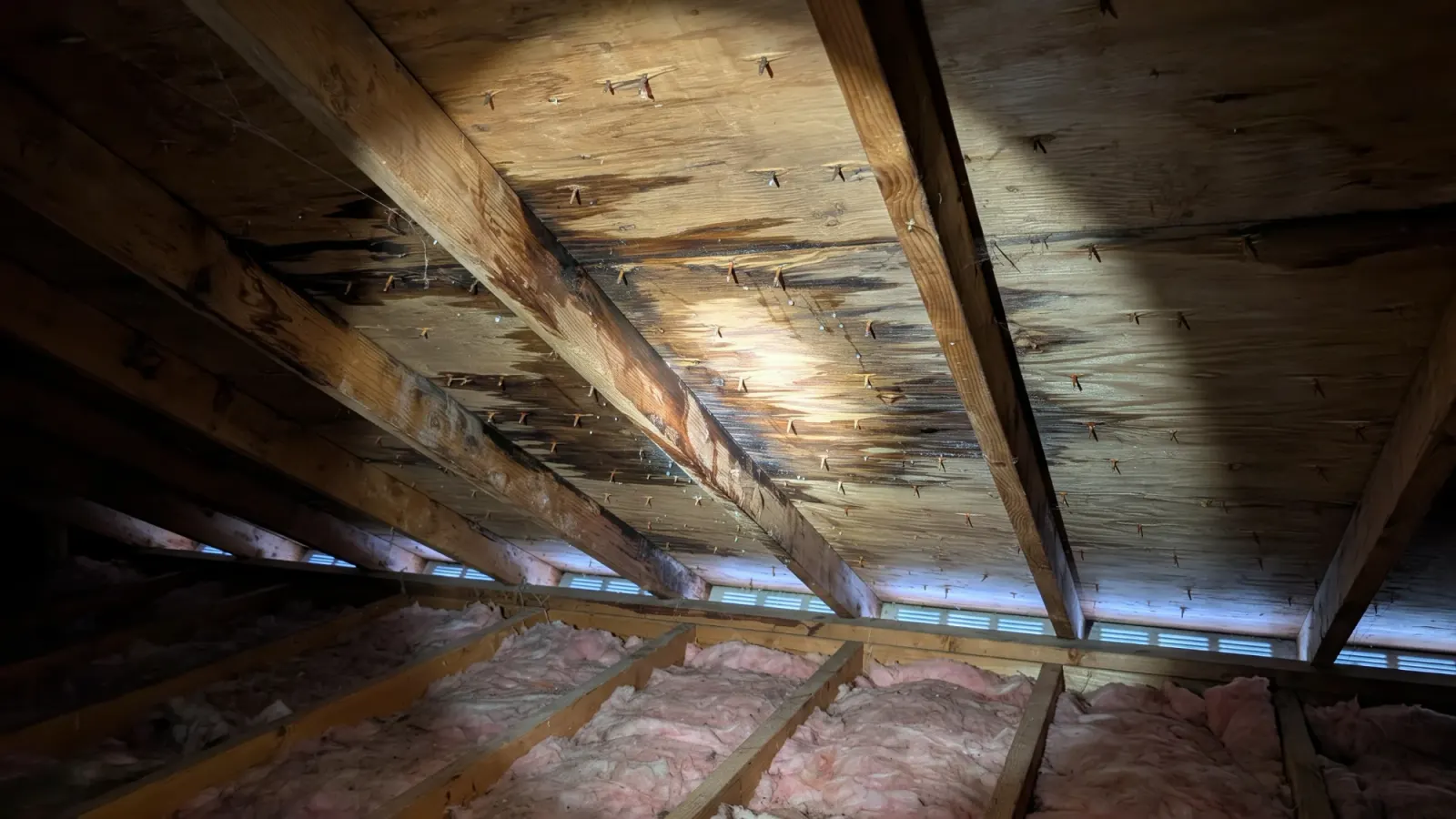
Damp, stained wood in the attic across the roof
The layer that usually failed
Ventilation, or the underlayment
What it usually means
Moisture trapped in the attic, or water getting past the shingles
Curling, blistering shingles across the roof
The layer that usually failed
Ventilation, or the shingles’ age
What it usually means
Heat trapped under the roof wears shingles faster
What a Thin Quote Leaves Out

- No mention of the deck
Damaged wood found later becomes a surprise charge.
- “Underlayment” with no type or brand
You can’t compare it to another bid.
- Old drip edge and flashings reused
New shingles laid against tired metal leak at the edges.
- Nothing about ventilation
A new roof over an attic that can’t breathe ages early.
- New shingles over the old ones
The deck and underlayment underneath are never seen. Our guide to shingles over old shingles explains why we tear off.
Our guide to why the cheapest roofing quote can cost you more compares two quotes line by line.
How to Read the Layers in Your Quote
How We Build a Shingle Roof From the Deck Up
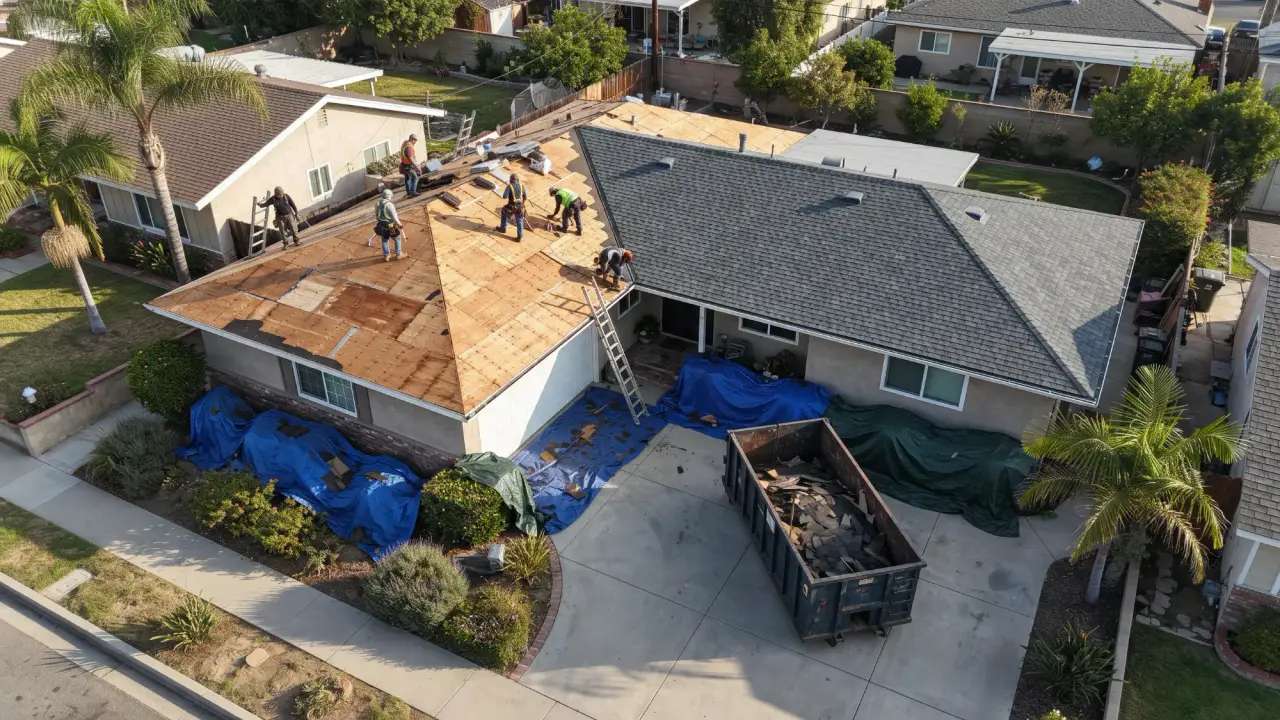
Tear-off to the deck, with the landscaping tarped and debris going straight to a bin or truck.
The deck checked and photographed while it is open, and soft or damaged sections replaced as your written scope says.
Drip edge and underlayment. On recent projects that has meant Owens Corning DeckDefense synthetic underlayment, with self-adhered membrane where water collects.
Flashings and vents. New flashings at walls, chimneys and valleys, boots at every pipe, and balanced ventilation, intake low and exhaust high.
Shingles and ridge caps, each course lapping over the one below.
Cleanup and a walkthrough, with a magnetic sweep for nails.
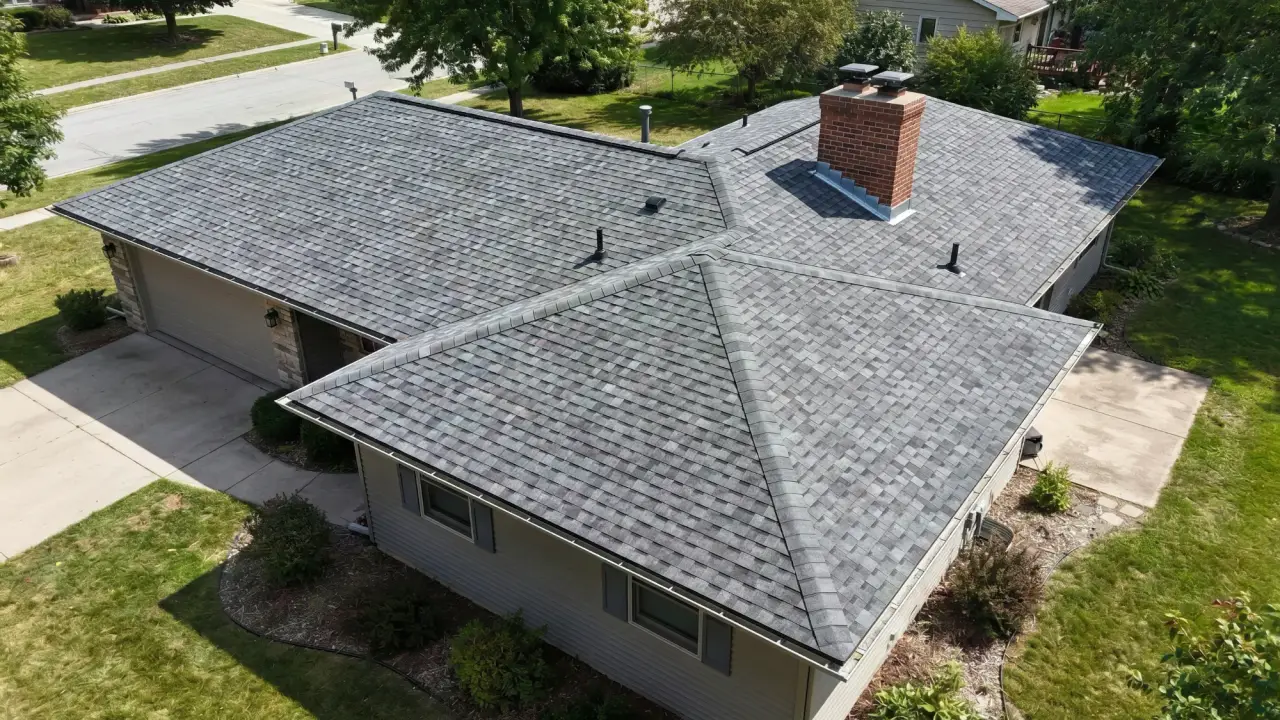
That is our TotalShield® shingle roof replacement, usually 3 to 5 days, with every layer named in a written scope and price before any work. Installs are backed by our 10-year workmanship warranty (call for details). On a solar home in Pico Rivera, the gapped plank deck was covered with new OSB before the new layers went on.
Frequently Asked Questions
What is under the shingles on a roof?
From the bottom up: the framing, the deck, the drip edge at the edges, the underlayment over the whole deck, self-adhered membrane where water collects, the starter strip, the flashings, then the shingles, the vents and the ridge caps.
What does roof underlayment do?
It is the water-resistant layer over the deck, the backup that keeps water off the wood if anything gets past the shingles, and it protects the deck while the roof is being built.
What is roof decking?
The plywood, OSB or older plank boards nailed to the framing. Everything else on the roof is fastened to it, which is why soft or damaged sections are replaced during a roof replacement.
Do I need a new drip edge with a new roof?
In most cases, yes. A new drip edge goes on with the underlayment so water is turned into the gutter and away from the fascia boards.
Why does my roofing quote list so many items?
Because a roof is a system of layers, and each one matters. A detailed quote shows what is being replaced and how, so you can compare bids line by line.
How do I know if my roof deck is damaged?
Soft or spongy spots, a sag in the roofline or stained wood in the attic are common signs. On a replacement, the deck is checked and photographed while it is open.
Want to Know What’s Under Your Shingles?
Book a free roof evaluation. A roofer looks at your roof, explains what is under it in plain English, and gives you a written scope and price with every layer named before any work. Or call (310) 340-1643.
Part of our asphalt shingle roof guide.